
Listen to this podcast for free in the app: Download for free in the App Store
radio.net
Sleep timer
Save favourites
116 episodes
#116 The Hype vs. Data on Saturated Fat, Red Meat, & Seed Oils | Dr. Dariush Mozaffarian
2026/11/06 | 2h 43 mins.Get access to more than 200 episodes of my premium podcast (The Aliquot) when you sign up as a FoundMyFitness Premium Member
What should you eat when everyone disagrees about nutrition? In this episode, Dr. Dariush Mozaffarian, cardiologist and director of the Food is Medicine Institute at Tufts, joins Dr. Rhonda Patrick to reexamine the evidence on saturated fat, red meat, seed oils, and the true drivers behind the obesity epidemic. He also explains how the GRAS loophole allows food companies to introduce additives without FDA review, and makes the case for using healthcare dollars to expand access to nutritious, minimally processed foods.
Timestamps:
(00:00) Introduction
(07:19) Why medical training overlooks nutrition
(10:03) Does LDL tell the whole story about saturated fat?
(16:01) Butter vs. cream—why do they affect LDL differently?
(21:17) Why butter's effects depend on what it replaces
(22:57) How vitamin discoveries shaped dietary guidelines
(29:48) Why wheat, rice, and corn came to dominate our diets
(33:43) The problem with reducing chronic disease to one nutrient
(36:55) What whole foods offer beyond isolated nutrients
(47:31) Processed vs. unprocessed meat—why the distinction matters
(50:59) What links red meat to diabetes and colorectal cancer?
(54:43) Can cruciferous vegetables reduce cancer risk from red meat?
(57:43) Does regenerative grazing change red meat's risks?
(58:40) Can TMAO track your response to red meat?
(59:56) Can unsaturated fats offset saturated fat's effects on LDL?
(1:01:18) Seafood vs. plant omega-3s—does the source matter?
(1:03:39) Do omega-6 fats increase inflammation—or reduce it?
(1:06:25) Are olive oil's benefits really from monounsaturated fat?
(1:08:32) Could low omega-3 intake account for as many deaths as trans fats?
(1:09:47) Why fats are biological information, not just calories
(1:14:18) Do seed oils deserve their bad reputation?
(1:20:16) Which oils should you cook with?
(1:23:10) What fueled the rise of ultra-processed foods?
(1:27:06) How food additives can bypass FDA review
(1:29:47) What counts as ultra-processed food?
(1:33:27) How ultra-processing changes digestion and the gut microbiome
(1:39:54) How to judge carbohydrate quality
(1:43:30) Can the GRAS loophole be closed?
(1:45:07) Why states are taking on food additives
(1:49:10) Did refined starch help drive the obesity epidemic?
(1:53:03) Why are obesity rates increasing despite stable calorie intake?
(1:55:39) Could reduced thermogenesis help explain rising obesity?
(2:00:16) Does more brown fat mean more weight loss?
(2:02:32) What the FTO gene reveals about obesity
(2:04:03) Does diet affect metabolic slowdown after weight loss?
(2:07:59) Can the gut microbiome influence calorie partitioning?
(2:09:31) Why nutrition still matters with GLP-1 drugs
(2:12:32) Can exercise reduce visceral fat without weight loss?
(2:15:08) What healthy eating does beyond weight loss
(2:16:05) How the new dietary guidelines rethink fat and protein
(2:21:54) Is whole-fat dairy really worse than low-fat?
(2:24:48) Is plant milk actually better than dairy?
(2:26:03) Should APOE4 carriers choose low-fat dairy?
(2:28:25) Can food policy make nutritious food more accessible?
(2:37:56) Food as medicine—what it can and can't do
Show notes are available by clicking here
Watch this episode on YouTube#115 The Science of Blueberries for Brain and Vascular Health
2026/10/01 | 1h 10 mins.Get access to more than 200 episodes of my premium podcast (The Aliquot) when you sign up as a FoundMyFitness Premium Member
One cup of blueberries a day can improve vascular function, support the aging brain, and tighten glucose control in ways that go far beyond antioxidant activity. In this episode, Dr. Rhonda Patrick breaks down how blueberry anthocyanins and their downstream metabolites act as signaling molecules that support endothelial function and memory, while long-term studies link regular blueberry intake to slower cognitive decline and lower dementia risk. She also details the evidence for post-meal glucose control and insulin sensitivity, and explains why blending blueberries with bananas may reduce polyphenol availability.
Timestamps:
(00:00) Introduction
(02:27) What can one cup of blueberries per day change?
(03:42) Why blueberry polyphenols are more than antioxidants
(05:28) Which compounds in blueberries matter most?
(07:45) What does the evidence show for cognitive aging?
(08:57) Can blueberries improve memory and cognitive flexibility?
(11:32) What long-term studies suggest about cognitive decline
(12:42) Do blueberries lower dementia and Alzheimer's risk?
(16:00) What may explain the brain benefits beyond blood flow?
(18:45) Can blueberries improve how arteries respond to increased demand?
(23:50) One cup vs. half a cup for endothelial function
(26:36) Does the vascular benefit extend to postmenopausal women?
(26:59) What anthocyanin studies reveal about cardiovascular risk
(29:36) How blueberry metabolites act as vascular and genetic signals
(35:42) Blueberries and insulin sensitivity—why findings conflict
(39:38) Do blueberries improve HbA1c and triglycerides?
(40:21) Can blueberries improve post-meal glucose control?
(42:18) What observational studies suggest about type 2 diabetes risk
(42:44) Blueberries for glucose control—who benefits most?
(43:47) Can blueberries improve gut symptoms without reshaping the microbiome?
(47:37) Could poorly absorbed polyphenols strengthen the gut barrier?
(49:11) Exercise performance vs. recovery—where is the benefit?
(52:20) Can bananas alter blueberry polyphenol availability?
(55:49) Direct vs. indirect effects of banana PPO on blueberry polyphenols
(59:06) What the human banana smoothie study showed
(1:04:55) Should you avoid bananas in blueberry smoothies?
(1:07:25) The case for one cup of blueberries per day
Show notes are available by clicking here
Watch this episode on YouTube#114 How Meditation Rewires Your Brain, Gut, & Immune System | Dr. Richard Davidson
2026/08/24 | 1h 49 mins.Get access to more than 200 episodes of my premium podcast (The Aliquot) when you sign up as a FoundMyFitness Premium Member
Five minutes of daily meditation can measurably lower a marker of inflammation and alter pathways in the gut microbiome. In this episode, Dr. Richard Davidson explains how exercise and meditation can work together to shape resilience and support the biology of flourishing. He also shows how meditation can be folded into exercise and ordinary routines, with benefits comparable to formal sit-down practice.
Timestamps:
(00:00) Introduction
(05:22) Why meditate when you can exercise?
(09:05) How loneliness and connection alter our biology
(10:44) Can compassion be trained like a muscle?
(13:14) Does timing meditation around exercise matter?
(16:30) What are the four pillars of well-being?
(22:38) The six emotional styles that shape well-being
(30:11) Can an emotional style become too extreme?
(32:02) Can we intentionally shape neuroplasticity?
(34:45) When increased neuroplasticity backfires
(36:33) Does doing hard things build resilience?
(40:19) Why children may be more resilient than adults
(42:14) Why strength training may be a form of mindfulness
(48:15) Can mindset alone change your biology?
(52:44) Why mindset training may need to be personalized
(54:26) Can five minutes of meditation reduce inflammation?
(59:34) How meditation alters the gut microbiome
(1:03:49) The insula's role in linking stress and inflammation
(1:08:22) Can meditation protect against stress-related inflammation?
(1:09:59) Does meditation have to be done sitting still?
(1:13:17) Turning everyday meals into a gratitude practice
(1:15:00) Why meditation may initially increase anxiety
(1:17:24) How children absorb their parents' emotional state
(1:22:33) Does social connection increase longevity?
(1:25:30) How social connection shifts attention beyond the self
(1:28:02) Does spending money on others make us happier?
(1:30:20) What does it mean to have a purpose?
(1:34:55) Can curiosity help overcome pessimism?
(1:38:24) Can you flourish without formal meditation?
(1:40:55) The core practices for a flourishing life
Show notes are available by clicking here
Watch this episode on YouTube#113 Why AI Could Add Decades to Your Lifespan | Dr. Derya Unutmaz
2026/07/19 | 2h 45 mins.Get access to more than 200 episodes of my premium podcast (The Aliquot) when you sign up as a FoundMyFitness Premium Member
The next 10 years may add decades to human lifespan by compressing the time it takes to understand, treat, and prevent disease. In this episode, Dr. Derya Unutmaz explains why accelerating AI could transform drug discovery, shorten clinical trials, and push cancer treatment toward increasingly personalized interventions. He also reframes AI not as an existential threat, but as a medical enabler that doctors may soon be ethically obligated to use.
Timestamps:
(00:00) Introduction
(07:11) Why the next 10 years may add 50 to your lifespan
(11:19) How AI is transforming drug discovery
(16:50) Could digital twins shorten clinical trials?
(19:25) Can AI predict drug safety and efficacy?
(23:40) Have we already reached AGI?
(29:23) Why AI may be medicine's greatest force multiplier
(35:35) Can AI replicate a scientist's biological intuition?
(42:16) Is it malpractice for doctors not to use AI?
(48:18) What happens when AI monitors disease in real time?
(51:52) Which AI models should doctors trust?
(57:29) Claude vs. GPT—does the model matter for diagnosis?
(1:00:58) Generalist vs. specialized AI—which works better in medicine?
(1:04:25) Why cancer is so hard to cure
(1:08:18) Could cancer be curable within a decade?
(1:12:29) Can AI design cancer treatments on demand?
(1:14:31) How AI could curb overtreatment and side effects
(1:17:28) Predicting cancer years before it forms—is it possible?
(1:23:50) Why biology could go exponential with AI
(1:28:58) Why aging may be easier to prevent than reverse
(1:34:51) Can the body be engineered to resist aging?
(1:40:07) Can AI model how gene therapy will behave?
(1:44:12) What people who reach 110+ reveal about Human 2.0
(1:46:21) From Dolly to Yamanaka factors—the case for cellular age reversal
(1:50:56) Why full-body rejuvenation is an engineering problem
(1:58:44) What happens when AI reasons longer about biology?
(2:01:25) The biosecurity dilemma of powerful AI
(2:06:12) What should we actually measure to track aging?
(2:12:34) How old immune cells distort aging clocks
(2:15:22) Why reversing brain aging is uniquely difficult
(2:21:49) The ultimate prompt for extending lifespan
(2:23:50) What data does a true digital twin need?
(2:28:32) How to build a mini digital twin today
(2:33:26) How to give AI a long-term memory of your data
(2:36:33) Why personal baselines matter for AI advice
Show notes are available by clicking here
Watch this episode on YouTube#112 How To Slow Biological Aging With a Multivitamin, Vegetables, & Omega-3 | Dr. Steve Horvath
2026/06/07 | 2h 47 mins.Get access to more than 200 episodes of my premium podcast (The Aliquot) when you sign up as a FoundMyFitness Premium Member
The strongest anti-aging strategy may be less about dramatic reversal and more about removing what accelerates aging in the first place. In this episode, Dr. Steve Horvath maps out the science behind biological age and how aging clocks are changing the way researchers evaluate longevity interventions. He also explains why omega-3s, a daily multivitamin, and sufficient vegetable intake stand out as evidence-backed, compounding levers for shifting biological age over time.
Timestamps:
(00:00) Introduction
(07:05) What exactly is biological aging?
(12:39) Do all aging clocks measure the same thing?
(18:22) PhenoAge vs. GrimAge—how methylation reveals mortality risk
(20:27) Why GrimAge is a powerful mortality predictor
(24:10) How your epigenome remembers long-term stress
(28:08) Can parents pass stress to offspring through the epigenome?
(30:12) Why standard aging clocks fail in sperm
(31:35) Can lifestyle changes reverse GrimAge?
(33:24) How DunedinPACE tracks your aging speed
(37:26) Which clock is best for testing longevity interventions?
(39:47) Can methylation clocks replace long-term mortality studies?
(43:33) Which interventions most reliably reverse epigenetic age?
(46:31) Can someone reverse biological age by 5 years in 7 months?
(50:49) Can GrimAge predict when you'll die?
(52:36) Why a younger GrimAge doesn't mean more years of life
(57:21) What epigenetic clocks fail to capture
(1:03:26) Why aging clocks measure more than just inflammation
(1:06:02) Does younger blood rejuvenate the whole body?
(1:09:52) Can calorie restriction really slow biological aging?
(1:14:00) Do GLP-1 drugs reverse epigenetic age?
(1:17:29) Can a daily multivitamin slow epigenetic aging?
(1:26:11) Omega-3, vitamin D, and exercise—which slows aging best?
(1:34:01) Does correcting vitamin D deficiency reverse age acceleration?
(1:36:29) Vegetables vs. exercise—which matters more for epigenetic age?
(1:42:04) Does red meat accelerate epigenetic aging?
(1:43:44) How much exercise is needed to slow epigenetic aging?
(1:51:05) Can heat exposure mimic exercise?
(1:52:29) Does a lower core body temperature slow aging?
(1:54:54) How sleep disruption shows up on aging clocks
(1:56:25) The role of social connection in biological aging
(2:02:55) Are consumer biological age tests worth it?
(2:07:52) How to choose a reliable biological age test
(2:12:38) Why two epigenetic age tests might give different results
(2:17:27) Can AI build better aging clocks?
(2:18:58) Partial reprogramming—can cells become younger without losing identity?
(2:22:52) What partial reprogramming can (and can't) reverse
(2:27:43) Do DNA mutations actually drive aging?
(2:29:59) Why no single intervention can stop aging
(2:34:29) Why genetics aren't your destiny
(2:38:38) Steve Horvath's longevity routine
(2:43:11) Does short-term stress accelerate epigenetic aging?
Show notes are available by clicking here
Watch this episode on YouTube
More Health & Wellness podcasts
Trending Health & Wellness podcasts





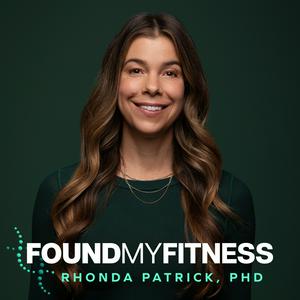
About FoundMyFitness
A podcast about health, science, nutrition, aging, and fitness.
Podcast websiteListen to FoundMyFitness, The Mindset Mentor and many other podcasts from around the world with the radio.net app
Get the free radio.net app
- Stations and podcasts to bookmark
- Stream via Wi-Fi or Bluetooth
- Supports Carplay & Android Auto
- Many other app features
FoundMyFitness: Podcasts in Family
 South Africa

