
Listen to this podcast for free in the app: Download for free in the App Store
radio.net
Sleep timer
Save favourites
83 episodes
What Changes When You Stop Relying On Yourself
2026/11/18 | 19 mins.Some weeks knock you flat, and foster parenting does not pause just because you are sick, tired, or overwhelmed. I start with a real story about getting hit hard by the flu and realizing how much of my day-to-day life depends on being able to stand up and keep going. That wake-up call points to something deeper many foster and adoptive parents feel but rarely say out loud: we are trying to fight battles that are bigger than our strength.
We talk a lot about trauma-informed care, attachment, and nervous system regulation, and I will keep bringing you those practical tools because they matter. But there is a piece we cannot afford to treat like an afterthought. Foster care and adoption can put you on the front lines against hopelessness and despair, and scripture is clear that the struggle is not only flesh and blood. When we forget the spiritual reality, we can show up with all our plans and none of our power.
I walk through three ways to prepare spiritually for the work: starting with humility, “tithing your tongue” by giving God your first and best words, and praying continuously as a posture throughout the day. This is for the parent headed into a tough visit, a hard court date, a meltdown, or just another bedtime when you have nothing left. If you are running on empty, you do not have to do this alone. Subscribe, share with another foster parent, and leave a review so more families can find support and steady encouragement.
Connect with me on Instagram:
@nicoletbarlow https://www.instagram.com/nicoletbarlow/
On Facebook: https://www.facebook.com/profile.php?id=61558410502165
Website: https://nicoletbarlow.com/How Foster Parents Build Safety In Uncertainty with Kristen Dobson
2026/10/21 | 52 mins.The hardest questions foster kids ask are often the ones we cannot answer: Will I get to stay here? Is my mom okay? What happens next? When you are wired to fix problems, saying “I don’t know” can feel like failure. We see it differently. Sometimes the most healing thing you can do is sit down beside a child in the middle of the unknown and refuse to leave them alone in it.
I’m joined by Kristen Dobson, foster mom of more than a decade and author of the children’s book But Here. Kristen shares the real story of how her family entered foster care, the vulnerability of getting licensed, and what the system has taught her about trust, surrender, and advocating with open hands. We also talk about the limits every caregiver faces and why remembering “I’m not the savior” is not cold. It is honest, stabilizing, and deeply freeing.
We get practical about building felt safety for kids from hard places: predictable routines, consistent mealtimes, bedtime rhythms, and small daily actions that communicate, “You are safe and you are loved.” We also explore how to merge a child’s needs into your home with respect, from food to traditions, and why listening without fixing can be the most powerful form of support. If you’ve been craving language for big feelings, But Here offers a gentle starting point for kids and the adults caring for them.
If this encourages you, subscribe, share it with a foster or adoptive parent who feels worn out by uncertainty, and leave a quick rating and review so more families can find this support.
But Here Kickstarter: https://www.kickstarter.com/projects/lollybooksbuthere/but-here
Website: www.kristendobson.com
Facebook: https://www.facebook.com/profile.php?id=61572371564395
Instagram: https://www.instagram.com/Kristen_N_Dobson
Connect with me on Instagram:
@nicoletbarlow https://www.instagram.com/nicoletbarlow/
On Facebook: https://www.facebook.com/profile.php?id=61558410502165
Website: https://nicoletbarlow.com/Building Belonging with Mary Ann McMillan
2026/10/14 | 1hWe talk with former foster youth and adoptee Mary Ann McMillan about why belonging is a deep need that shapes identity, relationships, and resilience. We dig into practical ways to protect our kids’ dignity, tell the truth about hard stories, and keep showing up in the ordinary moments that build safety over time.
• Mary Ann’s foster care and adoption background and how early loss affects relationships
• why same-race adoption can still carry major belonging and culture gaps
• building identity through open conversation and safe connection to biological family
• faith as an anchor for being fully known and finding stability
• inviting outside mentors and community so kids hear truth from more than parents
• standing up for kids with extended family and guarding what gets shared online
• teaching boundaries and self-advocacy without excusing harmful behavior
• naming grief and gratitude as a lifelong reality and normalizing therapy for parents and kids
• simple daily “thorns and joys” practice to spot good without demanding gratitude
So keep those messages coming.
And if this episode or the show has been a help to you, would you just take a minute and leave a rating and review?
Book: https://www.lifeway.com/en/product/bridging-resilience-P005851233
Instagram: https://www.instagram.com/m.a.mcmillan/
Connect with me on Instagram:
@nicoletbarlow https://www.instagram.com/nicoletbarlow/
On Facebook: https://www.facebook.com/profile.php?id=61558410502165
Website: https://nicoletbarlow.com/Moving Towards Regulation with Dana Hargus
2026/09/16 | 1h 5 mins.Trauma-informed care isn’t a better behavior chart. It’s a whole new way of seeing what’s happening underneath the behavior in the body, the brain, and the nervous system and it changes how we parent the moment we truly get it.
We sit down with Dana Hargus, a mental health counselor with 25 years of experience and the founder of Biofeedback and Counseling and Restore of Ada. Dana explains why so many foster and adoptive kids don’t need “more discipline” first, they need regulation and felt safety. We talk about what constant transitions and multiple placements do to a child’s trust, why correction without connection backfires, and how expecting gratitude from kids who are grieving can quietly break attachment. Along the way, we connect the dots between trauma, fight flight freeze, developmental delays, and the real-life moments that push parents into reactivity and burnout.
Dana also walks us through biofeedback (neurofeedback) in plain language: what it is, how it works, and why it can help with anxiety, rage, sleep issues, PTSD symptoms, and chronic stress by training the brain toward calmer patterns. We dig into the Restore of Ada model and why a whole-person approach matters, including gut health, toxins, heart rate variability, and practical nervous system supports that don’t require perfection. You’ll leave with doable next steps like grounding, morning sunlight, hydration, protein, breathing, and building one sustainable habit at a time.
If you’ve been looking for trauma-informed parenting tools that actually match what your child’s nervous system can handle, this conversation will give you a clearer lens and real hope. Subscribe, share this with a foster or adoptive parent who needs it, and leave a review so more families can find this support.
Dana's Links:
Restore of Ada: https://restoreofada.com/
Facebook: http://www.facebook.com/restoreofada
Instagram: https://instagram.com/restoreofada
Connect with me on Instagram:
@nicoletbarlow https://www.instagram.com/nicoletbarlow/
On Facebook: https://www.facebook.com/profile.php?id=61558410502165
Website: https://nicoletbarlow.com/The Impact of Saying Yes with Judy Wright
2026/09/09 | 46 mins.“Would you please hold her until she dies?” That question stopped us in our tracks, and it’s where Judy Wright’s story begins. Judy and her husband foster for 12 years, welcome 55 babies, and think they’ve seen it all, until a two-month-old leaves the NICU weighing four pounds with intense medical needs and an uncertain future. What follows is a raw look at medically fragile foster care, where love and skill have to grow side by side, sometimes on no sleep and with a lot of fear.
We walk through what it actually takes to bring a fragile infant home: learning monitors, preparing for CPR, doing glucometer checks, and giving insulin injections to a tiny baby. Judy also shares the emotional side that foster parents don’t always say out loud, the tension of nurturing attachment while also doing painful but necessary care, and the steady faith that carries her through the hardest nights.
Then the story turns into a masterclass in foster parent advocacy. Judy notices patterns others dismiss, pushes for donated breast milk, finds a pediatrician willing to think outside the box, and watches dramatic changes unfold. The medical mystery deepens with a discovery that reshapes everything: Jaden is born with no pancreas. We also talk about trauma-informed care, medical trauma in the NICU, and why foster and adoptive parents often become the most accurate experts on a child’s “normal.”
We end with permanency, adoption transition, and what it looks like when adults choose the child’s best interest over their own comfort. If you’ve ever wondered whether you could handle a high-needs placement, or you’re in the thick of it right now, this conversation will give you language, courage, and hope. Subscribe, share with a foster parent friend, and leave a review to help more families find this support. What’s one area where you need courage to advocate today?
JUDY WRIGHT:
Alongside her late husband, John, Judy Wright fostered fifty-five children over twelve years, many of them medically fragile. Their home became a place where readiness was ordinary: bassinets carried up in the night, doctor visits folded into the week, and children held without any promise of what would happen next.
The work brought her inside hospitals, courtrooms, case plans, and the daily realities of caring for children whose lives were already marked by instability, medical trauma, and loss. In 2012, she and John were named Michigan Foster Parents of the Year by the Michigan Supreme Court.
She did not set out to become a writer. She became one because some things she witnessed could not go unwritten. Just Hold Her drawn from the spiral notebooks she kept during one child’s long medical vigil, is her debut memoir.
The memoir came later. The work of staying came first.
Judy speaks to foster, medical, and faith-aware communities about presence, caregiving, and the courage required to remain available.
Book: https://justholdher.com/
Connect with me on Instagram:
@nicoletbarlow https://www.instagram.com/nicoletbarlow/
On Facebook: https://www.facebook.com/profile.php?id=61558410502165
Website: https://nicoletbarlow.com/
More Christianity podcasts



Trending Christianity podcasts








About Foster Parent Well
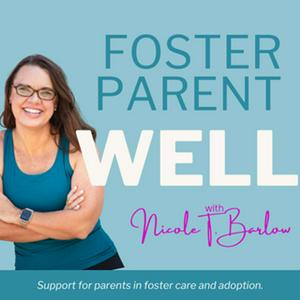
Foster Parent Well is the go-to podcast for foster and adoptive parents who are navigating the complexities of parenting children with trauma while trying to stay sane in the process. Hosted by Nicole T Barlow, a foster and adoptive mom of six, and parent trainer, this podcast is where faith, resilience, and practical strategies come together. If you're feeling burnt out, overwhelmed, or just plain exhausted from the daily realities of foster care and adoption- you're not alone. Here, we have real conversations about the hard stuff: attachment struggles, secondary trauma, parenting beyond behaviors, and the deep emotional weight of loving kids from hard places. But we also talk about you- your health, your nervous system, leaning into Jesus, and the small, sustainable ways you can care for yourself so you can keep showing up for your kids. Expect practical tips, faith-based encouragement, expert insights, and zero sugarcoating- just real, honest talk about what it takes to foster well, adopt well, and most importantly, stay well in the process. Because parenting kids with trauma is a marathon, not a sprint, and you were never meant to run it alone. 🎧 Subscribe now and let’s do this together!
Podcast websiteListen to Foster Parent Well, Elevation with Steven Furtick and many other podcasts from around the world with the radio.net app
Get the free radio.net app
- Stations and podcasts to bookmark
- Stream via Wi-Fi or Bluetooth
- Supports Carplay & Android Auto
- Many other app features
 South Africa