
Listen to this podcast for free in the app: Download for free in the App Store
radio.net
Sleep timer
Save favourites
440 episodes
Q&A: Am I wrong...or did my doctor give bad parenting advice?
2026/10/06 | 11 mins.Beyond the Sessions is answering YOUR parenting questions! In this episode, Dr. Rebecca Hershberg, Dr. Emily Upshur, and I talk about...
What to make of advice that tells you not to comfort your child when they're distressed.
Why a frightened toddler at the doctor's office is communicating something very different than "bad behavior."
The common misunderstanding about reinforcement that leaves many parents second-guessing themselves.
Whether responding to your child's fears actually makes them more dependent or "too attached."
How to know when it's okay to trust your instincts, even when they conflict with advice from an authority figure.
What attachment research actually says about soothing, separation, and healthy independence.
Why one difficult interaction doesn't have to become something you worry about "damaging" your child.
If you've ever left a doctor's appointment feeling unsettled by advice that didn't sit right, or found yourself wondering whether comforting your child is helping or hurting, this episode will give you the confidence to better understand what's happening beneath your child's behavior and trust your instincts as a parent.
REFERENCES AND RELATED RESOURCES:
👉 Want extra support in your parenting journey? Upshur Bren Psychology Group offers therapy and coaching to give parents the tools to feel more grounded and confident as they navigate parenthood and learn how to most effectively support their child. Visit upshurbren.com to explore our services and schedule a free 30-minute consultation call to find the support that's right for your family.
🎧 Is it better for my kids if I send them to daycare, have a nanny, or become a stay-at-home mom?
CHECK OUT ADDITIONAL PODCAST EPISODES YOU MAY LIKE:
🎧 Listen to my podcast episode with the basics of attachment theory
🎧 Listen to my podcast episode with a deep dive into strengthening your child's attachment as they grow: What children need from us at every stage of development
🎧 Listen to my podcast episode about how secure attachment influences children's ability to make sense of their experiences and cope in the face of adversity with Dr. Alan Sroufe
WE WANT TO HEAR FROM YOU:
Go to https://drsarahbren.com/question to send us a question or a topic you want to hear us answer on Securely Attached - Beyond the Sessions!Back by Popular Demand: How to support your child's secure attachment even if you didn't grow up with it with Dr. Miriam Steele
2026/08/25 | 50 mins.As part of our 5-Year Anniversary Summer Series, we're bringing back one of the most meaningful and foundational conversations in Securely Attached history.
Many parents worry that if they didn't experience a secure attachment in their own childhood, they'll unknowingly repeat those same patterns with their children. But one of the most hopeful findings in attachment research is that our past does not have to determine our children's future.
In this conversation, I sit down with renowned attachment researcher Dr. Miriam Steele to explore how secure attachment develops, how insecure attachment patterns are passed from one generation to the next, and, most importantly, how we can break those cycles.
Together we discuss:
What secure and insecure attachment really mean, and some of the biggest misconceptions surrounding attachment theory.
How children develop different attachment strategies in response to their early caregiving experiences.
Why secure attachment is built through consistent responsiveness, not perfect parenting.
The surprising research showing that parents don't need to be attuned all the time for children to develop secure attachment.
What reflective functioning is and how it helps parents interrupt intergenerational cycles of insecure attachment.
Why understanding your own childhood experiences can transform the way you parent your children.
The difference between attachment science and popular "attachment parenting."
Why repair matters more than getting it right every time.
Practical ways to strengthen your relationship with your child, even if you didn't grow up with secure attachment yourself.
The hopeful message that it is never too late to create a more secure future for your family.
This conversation is a powerful reminder that secure attachment is not about perfection, nor is it determined by the childhood you had. It is built through thousands of ordinary moments of connection, curiosity, repair, and reflection. Dr. Steele's research offers tremendous hope that when we become more aware of our own patterns and learn to respond with greater understanding, we have the power to change the trajectory not only of our own lives, but of future generations.
⭐ Celebrating 5 Years of Securely Attached ⭐
If you've enjoyed the podcast over the years, we'd love your help celebrating this milestone. Our birthday wish is simple: five stars for five years. If these conversations have supported you and your family, please consider leaving a five-star review on Apple Podcasts, Spotify, or wherever you listen. Your support helps more parents discover the show and allows us to continue bringing these conversations to families around the world.Q&A: What should I do if my child has intrusive thoughts?
2026/08/20 | 33 mins.Beyond the Sessions is answering YOUR parenting questions! In this episode, Dr. Rebecca Hershberg, Dr. Emily Upshur, and I talk about...
What intrusive thoughts actually are.
How to recognize when a repetitive question or worry is more than ordinary curiosity, and the subtle clues that can help you tell the difference.
The types of topics (like private parts, germs, or order) that are most common in intrusive thinking.
The simple shift that can help your child stop identifying with the thought and begin seeing it as something separate from who he or she is.
Why reassurance often brings only temporary relief, and what tends to work better in the long run.
Practical, child-friendly strategies that can help kids feel more in control when their brains get "stuck" on a thought.
How to respond in ways that reduce shame, build confidence, and help your child develop the skills to cope with intrusive thoughts over time.
Whether your child is experiencing intrusive thoughts because of anxiety, OCD, PANS/PANDAS, or you're simply wondering if what you're seeing is developmentally typical, this episode will help you better understand what's happening inside your child's mind and give you practical tools to respond with confidence and compassion.
REFERENCES AND RELATED RESOURCES:
👉 Looking for support for a child struggling with anxiety, OCD, or intrusive thoughts? Upshur Bren Psychology Group offers evidence-based treatment for children and families, including SPACE (Supportive Parenting for Anxious Childhood Emotions), Cognitive Behavioral Therapy (CBT), and a combination of approaches tailored to your child's unique needs. Visit upshurbren.com to learn more or schedule a free 30-minute consultation with our care team. We'll listen carefully, answer your questions, and help you determine the best next step for your family.
📚 What to Do When Your Brain Gets Stuck: A Kid's Guide to Overcoming OCD by Dawn Huebner
CHECK OUT ADDITIONAL PODCAST EPISODES YOU MAY LIKE:
🎧 Listen to my podcast episode about PANS and PANDAS and why some children develop sudden OCD, anxiety, or tics after illness with Dr. Nancy O'Hara
🎧 Listen to my podcast episode about Supportive Parenting for Anxious Childhood Emotions (SPACE) with Dr. Eli Lebowitz
🎧 Listen to my podcast episode about how to know when your child's anxiety requires a mental health intervention
WE WANT TO HEAR FROM YOU:
Go to https://drsarahbren.com/question to send us a question or a topic you want to hear us answer on Securely Attached - Beyond the Sessions!Q&A: How can I get my child to be potty trained at night?
2026/08/13 | 18 mins.Beyond the Sessions is answering YOUR parenting questions! In this episode, Dr. Rebecca Hershberg, Dr. Emily Upshur, and I talk about...
Why staying dry overnight is very different from daytime potty training, and what many potty training books get wrong.
The surprising reason some children simply aren't biologically ready, no matter how motivated they or their parents are.
How to recognize the difference between a child who needs more practice and one who simply needs more time.
The low-pressure approach that can actually make nighttime potty training feel easier for everyone.
Small ways to build your child's confidence and independence, even if they're still waking up wet.
Why paying attention to your child's internal body signals may matter more than sticker charts or rewards.
When bedwetting is still completely within the range of typical development, and when it's worth bringing it up with your pediatrician.
If your child is still wearing pull-ups at night or nighttime potty training hasn't gone the way you expected, this episode will help you better understand the biology behind nighttime dryness and offer practical, compassionate strategies to support the process without adding unnecessary pressure.
REFERENCES AND RELATED RESOURCES:
👉 Want extra support in your parenting journey? Upshur Bren Psychology Group offers therapy and coaching to give parents the tools to feel more grounded and confident as they navigate parenthood and learn how to most effectively support their child. Visit upshurbren.com to explore our services and schedule a free 30-minute consultation call to find the support that's right for your family.
CHECK OUT ADDITIONAL PODCAST EPISODES YOU MAY LIKE:
🎧 Listen to my podcast episode with everything you need to know to successfully potty train your child
🎧 Listen to my podcast episode about what to do if your child is potty trained, but still won't poop on the potty
🎧 Listen to my podcast episode about potty training, bed wetting, constipation and pediatric pelvic health with Quiara Smith
WE WANT TO HEAR FROM YOU:
Go to https://drsarahbren.com/question to send us a question or a topic you want to hear us answer on Securely Attached - Beyond the Sessions!Q&A: Does my child have anxiety or are they just highly sensitive?
2026/08/06 | 22 mins.Beyond the Sessions is answering YOUR parenting questions! In this episode, Dr. Emily Upshur and I talk about...
Why some children seem to worry about everything, from strange noises to monsters under the bed, even when nothing dangerous is happening.
How to tell the difference between anxiety, a highly sensitive temperament, and a nervous system that's simply taking in the world more intensely.
Why your response to your child's fears may matter more than finding the perfect explanation or reassurance.
The subtle ways parents can accidentally strengthen anxiety, and what to do instead.
What behaviors like lip picking, nail biting, or constantly chewing on things may actually be communicating.
Simple ways to help your child's nervous system feel calmer without making anxiety the center of attention.
When it's worth seeking professional guidance, and why getting support early doesn't necessarily mean something is wrong.
If your preschooler seems to worry about everyday things, startles easily, or always seems to be on high alert, this episode will help you better understand what's driving those behaviors and give you practical, compassionate strategies to help them feel safer, more regulated, and more confident.
REFERENCES AND RELATED RESOURCES:
🎧 Listen to my podcast episode about Supportive Parenting for Anxious Childhood Emotions (SPACE) with Dr. Eli Lebowitz
👉🏻 Are you parenting a child with anxiety or OCD and looking for tools to support them? CLICK HERE to learn more about Upshur Bren Psychology Group's SPACE (Supportive Parenting for Anxious Childhood Emotions) program or SCHEDULE A FREE CALL to see if it's the right fit for your family.
CHECK OUT ADDITIONAL PODCAST EPISODES YOU MAY LIKE:
🎧 Listen to my podcast episode about how you can support your sensitive, "spicy," highly emotional child
🎧 Listen to my podcast episode about the line between supporting your child and feeding their anxiety
🎧 Listen to my podcast episode about temperament, personality, and parenting with Dr. Koraly Pérez-Edgar
WE WANT TO HEAR FROM YOU:
Go to https://drsarahbren.com/question to send us a question or a topic you want to hear us answer on Securely Attached - Beyond the Sessions!
More Health & Wellness podcasts









Trending Health & Wellness podcasts
















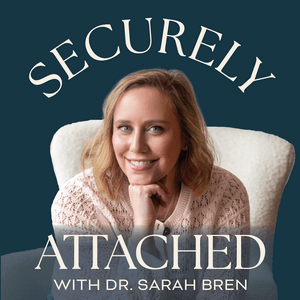
About Securely Attached
Securely Attached is your go-to parenting podcast, supporting moms and dads from pregnancy all the way through their child's adolescence and every stage in between.
Join us every Tuesday as clinical psychologist and mom of two Dr. Sarah Bren shares her expertise and interviews top experts in the field, simplifying complicated concepts and pulling back the curtain on the brain science and psychology that drives and shapes the parent-child relationship.
And now, every Thursday, Dr. Sarah Bren is joined by Dr. Emily Upshur and Dr. Rebecca Hershberg for a special segment, Beyond The Sessions. We're answering YOUR parenting questions from the perspective of clinical psychologists highly trained in developmental science and real-life moms who get that parenting is messy, and sometimes we have to laugh, cry, and throw out the "rules."
From toddler tantrums, to effective discipline strategies, to leaning into the principles of respectful parenting, and to managing your own mental wellness as a parent—this podcast is your ultimate resource for judgment-free, research-backed information you know you can trust.
About Sarah Bren, PhD
Dr. Sarah Bren is a licensed clinical psychologist and mom of two who helps parents understand the building blocks of child development and how secure relationships form and thrive. Her work is focused on helping parents find their inner confidence so they can respond to any parenting problem that comes along and raise kids who are healthy, resilient, and kind.
Podcast websiteListen to Securely Attached, ZOE Science & Nutrition and many other podcasts from around the world with the radio.net app
Get the free radio.net app
- Stations and podcasts to bookmark
- Stream via Wi-Fi or Bluetooth
- Supports Carplay & Android Auto
- Many other app features
Get the free radio.net app
- Stations and podcasts to bookmark
- Stream via Wi-Fi or Bluetooth
- Supports Carplay & Android Auto
- Many other app features

Securely Attached
Scan code,
download the app,
start listening.
download the app,
start listening.
 South Africa
