
Listen to this podcast for free in the app: Download for free in the App Store
radio.net
Sleep timer
Save favourites
20 episodes
Episode 20: The Twice-Exceptional Brain: When Giftedness and Neurodivergence Collide with Dr. Matt Zakreski, PsyD
2026/09/25 | 44 mins.In this episode of Tuning In To Development, Kassie Allison talks with clinical psychologist and professional speaker Dr. Matt Zakreski, PsyD about twice exceptionality (2E): the intersection of giftedness and neurodivergence. Together, they explore what 2E can look like when giftedness masks a disability, or when neurodivergence makes giftedness harder to recognize.
Kassie and Dr. Matt discuss asynchronous development, executive functioning, perfectionism, imposter syndrome, anxiety, emotional intensity, and the unique challenges that can emerge when a child is intellectually advanced but still developing social, emotional, or self-regulation skills. The conversation also explores burnout and the cost of constantly pushing through high-demand environments.
Dr. Matt offers practical ideas for parents, educators, and clinicians, including supporting strengths while accommodating areas of difficulty, protecting downtime, creating meaningful opportunities for social development and play, and recognizing that struggling in one area does not erase a person's strengths.
Above all, this conversation is a reminder that development does not happen on a single timeline—and that when we understand the whole person, small changes can make a difference across every area of life.
Key Takeaways
Twice-exceptional individuals can have significant strengths and significant areas of difficulty at the same time. Giftedness may compensate for—or conceal—challenges with executive functioning, learning, attention, or other areas.
Development can also be asynchronous. A child capable of sophisticated intellectual thinking may still need age-appropriate—or sometimes greater—support with emotional regulation, social skills, daily routines, and executive functioning.
And perhaps most importantly, support doesn't have to mean pushing harder. Downtime, play, accommodations, structure, opportunities for genuine social development, and building from a child's strengths can all matter.
As Dr. Matt and Kassie discuss near the end of the episode, different areas of a child's life are interconnected. A positive change in one area can have an impact across many others.
Resources
About Dr. Matt Zakreski
https://www.drmattzakreski.com/
----
Learn more about Profectum and all its programs!
https://www.profectum.org/author/dashboard
Learn more about the DIR® model
https://www.profectum.org/course/introduction-to-dir
Sign up for a Free Visionary Lecture
https://www.profectum.org/courses-vls
Sign up for the Free Parent Toolbox
https://www.profectum.org/course/profectum-parent-toolbox
Follow us IG and Facebook
https://www.instagram.com/profectumfoundation/
https://www.facebook.com/profectumfoundationEpisode 19: Back to School: Supporting Regulation, Connection, and Learning with LaChan V. Hannon, PhD and Michael Hannon, PhD
2026/08/31 | 48 mins.The return to school can bring excitement and new opportunities, but it can also introduce changes in routines, relationships, sensory experiences, and expectations that may feel overwhelming for children and families.
In this episode of Tuning In to Development, guest host Jennie Trocchio, PhD with guests LaChan V. Hannon, PhD and Michael Hannon, PhD explore how parents, caregivers, educators, and professionals can support children as they transition into a new school year. The conversation looks beyond simply preparing school supplies and schedules to consider the developmental foundations children need to feel safe, connected, regulated, and ready to learn.
Listeners will hear practical ideas for easing transitions, preparing for unfamiliar environments, recognizing signs of stress or dysregulation, and collaborating with teachers and school teams. The episode also emphasizes the importance of understanding each child’s individual differences rather than expecting every student to adjust to school in the same way or on the same timeline.
Whether a child is beginning school for the first time, entering a new classroom, or returning to a familiar setting, this episode offers a compassionate reminder that successful learning begins with relationships, emotional safety, and support that is responsive to the individual child.Episode 18: Water, Wandering, and What Every Family Should Know with Katie Wentley
2026/07/29 | 49 mins.Wandering, also known as elopement, is one of the most significant safety concerns facing many Autistic individuals and their families. Nearly half (49%) of Autistic individuals will wander at some point, and among Autistic children under the age of 14, 91% of deaths following wandering are the result of drowning. These sobering statistics underscore the importance of understanding why wandering happens and how families and communities can help keep children safe.
In this episode of Tuning Into Development, host Kassie Allison is joined by Katie Wentley of the Autism Society of America to explore the many reasons individuals may wander, from sensory needs and curiosity to dysregulation and changes in routine. Together, they dispel common misconceptions, discuss the connection between wandering and water safety, and share compassionate, practical strategies that empower families to reduce risk while supporting each child's unique developmental profile.
Listeners will come away with actionable guidance on home safety modifications, swim instruction, emergency planning, and free resources available through the Autism Society of America. Whether you are a parent, caregiver, educator, or professional, this episode offers valuable insights and practical tools to help create safer, more supportive environments for Autistic individuals and their families.Episode 17: An Autistic SLPs Perspective on Social Connection and Advocacy with Rachel Dorsey
2026/06/30 | 44 mins.In this episode of Tuning in to Development, host Kassie Allison sits down with Rachel Dorsey, an autistic speech-language pathologist in the Greater Boston area, to explore how authentic relationships can foster social confidence, connectedness, and resilience. Rachel shares her approach to creating natural opportunities for social engagement while actively neutralizing shame and affirming neurodivergent identities. She discusses the importance of being a genuinely interested, safe adult who embraces clients’ passions to support self-esteem and meaningful relationships. The conversation also examines how interventions intended to support autistic children may unintentionally communicate that a child needs to be “fixed” while overwhelming the nervous system, and why advocacy often takes the form of quietly building resilience through trust and connection. Finally, Rachel highlights the profound impact of loneliness and the motor-planning challenges that can limit social participation for nonspeaking or unreliably speaking individuals.Episode 16: Staying Curious, Staying Connected with Sherri Cawn and Cindy Harrison
2026/05/29 | 47 mins.In celebration of Speech-Language-Hearing Month, guest host Sherri Cawn sits down with longtime colleague and friend Cindy Harrison for a thoughtful conversation about communication, relationships, and the evolution of developmental practice. Together, they reflect on decades of experience as speech-language pathologists, early pioneers in the DIR Model movement, and advocates for relationship-based care.
Cindy shares her perspective as both a clinician and parent of an autistic son, speaking candidly about what communication truly means beyond words — the ability to express hopes, fears, identity, and connection. The conversation explores the importance of family-centered practice, interdisciplinary collaboration, emotional development, and assuming competence in every child.
Sherri and Cindy also reflect on how the field has changed over the years, the role of mentorship and lifelong learning, and the importance of creating systems of care where families feel seen, safe, and supported. This warm and deeply personal episode is a reminder that communication always happens within the context of relationships and that staying curious and connected remains at the heart of meaningful practice.
More Health & Wellness podcasts









Trending Health & Wellness podcasts





















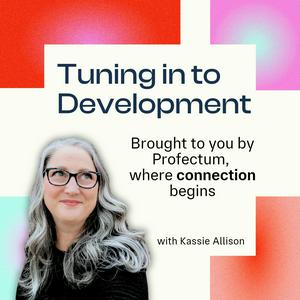
About Tuning In to Development
Join Profectum’s Kassie Allison on a journey into the transformative world of development through the lens of the DIR® model. Together, we’ll unpack key insights, share practical strategies, and explore the latest research—all while keeping the focus on connection, growth, and potential for individuals and families.Along the way, we’ll chat with some truly inspiring guests, bringing you valuable perspectives and real-world experiences. Whether you’re a parent, professional, or simply curious about development across the lifespan, this is the place for you!
Podcast websiteListen to Tuning In to Development, Huberman Lab and many other podcasts from around the world with the radio.net app
Get the free radio.net app
- Stations and podcasts to bookmark
- Stream via Wi-Fi or Bluetooth
- Supports Carplay & Android Auto
- Many other app features
Get the free radio.net app
- Stations and podcasts to bookmark
- Stream via Wi-Fi or Bluetooth
- Supports Carplay & Android Auto
- Many other app features
Tuning In to Development
Scan code,
download the app,
start listening.
download the app,
start listening.
 South Africa
