
Listen to this podcast for free in the app: Download for free in the App Store
radio.net
Sleep timer
Save favourites
318 episodes
#319: What Supplements Do You Take?
2026/10/15 | 1h 11 mins.Jeff, Eric, and Brian share their perspectives on supplements, what they are currently taking, and advice for those who want to optimize all the variables in order to maximize progress. What were the coaches’ first experiences with supplements? What creates the placebo effect? What actually causes a pump? What is the “supplement treadmill”? Which supplements actually work? Why is it important to have realistic expectations for the supplements you choose to take? If you’re supplementing with creatine but you don’t feel it working, does that mean it’s not working? What are the risks that come with taking a lot of supplements? The answers to these questions and many more are covered in this episode.
Timestamps
0:00- Introduction
4:26- The changing perspective on supplements in the natural-bodybuilding community
9:55- Jeff’s first experience with supplements
23:34- Brian’s first experience with supplements and how his perspective on supplements has evolved over time
32:21- How powerful the placebo effect and groupthink can be
43:16- The supplements Jeff currently takes
46:19- Having realistic expectations for the supplements you choose to take
52:29- The supplements Eric is currently taking
56:24- The risks of taking a lot of supplements
1:06:56- Remember to keep supplements in perspective
Selected Links From This Episode
Coaching By Team 3DMJ- https://3dmusclejourney.com/coaching
Nutrition For Hypertrophy & Strength (Online Course)- https://www.3dmusclejourney.com/nutrition
Monthly Applications In Strength Sport (MASS)- https://www.3dmusclejourney.com/mass
Thanks for listening to The 3D Muscle Journey Podcast 💪
GET COACHING AND COURSES - https://www.3dmusclejourney.com/
Watch our show on YouTube - https://www.youtube.com/team3dmj#318: Post-Season Blues
2026/10/01 | 1h 5 mins.Alberto and Brian discuss how athletes commonly feel after their bodybuilding season is over and what you can do to get back to feeling like yourself as soon as possible. What are some strategies to help minimize post-season blues? How normal is it to not feel like yourself physiologically after prep is over? What is the thing that most lets Brian know how recovered he is? Why do the coaches want their athletes to have other things going on while they’re prepping? What frequently stops people from gaining the weight they know they probably need to gain? Why don’t the coaches recommend reverse dieting at a slow pace after your season is over? The answers to these questions and many more are covered in this episode.
Timestamps
0:00- Introduction
2:44- The coaches’ first preps
11:39- How normal is it to not feel like yourself physiologically after prep is over?
21:32- The redistribution of body fat when you first start gaining weight after prep
22:44- Expect to overshoot
31:56- Post-season blues
40:32- Why gaining weight after your season is over is so important and framing to help make gaining weight easier
53:24- There is an element of experience to getting shredded
1:01:26- Additional tips
Selected Links From This Episode
Coaching By Team 3DMJ- https://3dmusclejourney.com/coaching
The Off-Season Mastery Course- https://www.3dmusclejourney.com/off-season
Thanks for listening to The 3D Muscle Journey Podcast 💪
GET COACHING AND COURSES - https://www.3dmusclejourney.com/
Watch our show on YouTube - https://www.youtube.com/team3dmj#317: Is The Mind-Muscle Connection Overrated?
2026/09/17 | 1h 11 mins.Alberto, Jeff, and Brad discuss what the mind-muscle connection is, how important it is for muscle growth, who can benefit the most from focusing on it, and what you can focus on instead. Does the speed of your reps matter? Why is Jeff intentional about maintaining control of the weight when he’s lifting? What are the coaches’ thoughts on stricter reps versus less-strict reps? What do the coaches think about when they’re training and the intensity of the burning sensation is building? What can you think about so that your sessions don’t feel like you’re just checking things off a list? What are some signs that an exercise is a good fit for you? The answers to these questions and many more are covered in this episode.
Timestamps
0:00- Proprioception vs. Mind-muscle connection
9:48- Why Jeff is intentional about maintaining control of the weight when he’s lifting
19:15- Stricter reps vs. Less-strict reps
30:24- More examples of how focusing too much on the mind-muscle connection can be misleading
36:47- What the coaches think about when they’re training and the intensity of the burning sensation is building
50:09- Visualization, intraset focus, and background noise
53:40- The adjustments Brad made to his back training which have led to a more muscular back
59:24- Signs that an exercise is a good fit for you
Selected Links From This Episode
Coaching By Team 3DMJ- https://3dmusclejourney.com/coaching
Monthly Applications In Strength Sport (MASS)- https://www.3dmusclejourney.com/mass
Strength Training Anatomy (Third Edition)- https://www.amazon.com/dp/0736092269?lv=shuf&channelId=500&plpRedirect=mhFallback
Thanks for listening to The 3D Muscle Journey Podcast 💪
GET COACHING AND COURSES - https://www.3dmusclejourney.com/
Watch our show on YouTube - https://www.youtube.com/team3dmj#316: Maintenance Phases in Bodybuilding
2026/09/03 | 1h 12 mins.Brian, Alberto, and Brad discuss the benefits of maintenance phases, why they are sometimes superior to gaining phases, and what to consider when setting your rate-of-weight-gain goal. Why do the coaches program less intentional surpluses than they used to? What is the difference between weight maintenance and progress maintenance? Are DEXA scans helpful for programming? How do elite powerlifters put on muscle while minimizing fat gain? If you gain 30 lbs. and your dumbbell bench press goes up 15 lbs., is that progressive overload? Do the coaches ever have athletes do dreamer bulks anymore? In what situations do the coaches tend to program an intentional surplus instead of a maintenance phase? The answers to these questions and more are covered in this episode.
Timestamps
0:00- Introduction
1:32- Why the coaches program less intentional surpluses than they used to
13:43- Weight maintenance vs. Progress Maintenance
19:50- When setting up a gaining phase, consider the profit margin
30:21- If you gain 30 lbs. and your dumbbell bench press goes up 15 lbs., is that progressive overload?
34:34- Do the coaches ever have athletes do dreamer bulks anymore?
39:00- Situations where the coaches program an intentional surplus
48:53- Are DEXA scans (and other methods that estimate body composition) helpful for programming?
58:33- The behavioral aspects and usefulness of maintenance phases
Selected Links From This Episode
Coaching By Team 3DMJ- https://3dmusclejourney.com/coaching
The Off-Season Mastery Course- https://www.3dmusclejourney.com/off-season
3DMJ Podcast Episode #238: Cutting Weight For Powerlifting- https://www.youtube.com/watch?v=TZ3B-rC5A1c&t=46s
Thanks for listening to The 3D Muscle Journey Podcast 💪
GET COACHING AND COURSES - https://www.3dmusclejourney.com/
Watch our show on YouTube - https://www.youtube.com/team3dmj#315: The Identity Trap of Bodybuilding
2026/08/20 | 1h 10 mins.Jeff, Brian, and Brad discuss how a person’s identity as a bodybuilder can change across their training career, why it’s important to see yourself as more than just a bodybuilder, and how having a limited identity can ultimately hold you back. What was Jeff’s relationship with bodybuilding like when he was in his 20s and why does he consider it “ugly”? What did Brad’s life look like when he was too obsessed with bodybuilding? What advice would Brian give his 16-year-old self? How can a person’s identity interfere with them being able to tone things down and have a more balanced approach? How can being hardcore actually be a symptom of being insecure? Why is it important to not tie your identity to a particular type of training? The answers to these questions and more are covered in this episode.
Timestamps
0:00- Introduction
1:39- Who is Jeff without bodybuilding?
13:02- The time in Brad’s life when he was too obsessed with bodybuilding
17:52- What Brian would tell his 16-year-old self
23:31- How a person’s identity can interfere with toning things down and taking a more balanced approach
35:53- Brad’s equalizer analogy
42:36- Sometimes you just need a break from bodybuilding
46:15- Don’t tie your identity to a particular type of training
49:02- How Jeff wears his different hats and how he views bodybuilding as a vessel
55:54- Do the coaches think bodybuilding attracts people with bigger egos, or do they think it attracts people who want to feel better about themself?
1:01:03- Strive for excellence not perfection
Selected Links From This Episode
Coaching By Team 3DMJ- https://3dmusclejourney.com/coaching
Monthly Applications In Strength Sport (MASS)- https://www.3dmusclejourney.com/mass
Thanks for listening to The 3D Muscle Journey Podcast 💪
GET COACHING AND COURSES - https://www.3dmusclejourney.com/
Watch our show on YouTube - https://www.youtube.com/team3dmj
More Fitness podcasts




Trending Fitness podcasts


About 3D Muscle Journey
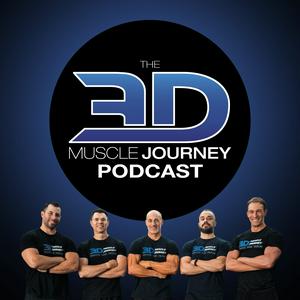
The 5 natural bodybuilding and powerlifting coaches from 3D Muscle Journey come together for conversations dissecting the art and science of muscle and strength. Be a fly on the wall as this collective of coaches discuss the ins and outs of helping athletes reach their potential on the stage, platform and in their personal lives. Dedication. Discipline. Desire. #Team3DMJ
Podcast websiteListen to 3D Muscle Journey, Perform with Dr. Andy Galpin and many other podcasts from around the world with the radio.net app
Get the free radio.net app
- Stations and podcasts to bookmark
- Stream via Wi-Fi or Bluetooth
- Supports Carplay & Android Auto
- Many other app features
Get the free radio.net app
- Stations and podcasts to bookmark
- Stream via Wi-Fi or Bluetooth
- Supports Carplay & Android Auto
- Many other app features
3D Muscle Journey
Scan code,
download the app,
start listening.
download the app,
start listening.
 South Africa
