
Listen to this podcast for free in the app: Download for free in the App Store
radio.net
Sleep timer
Save favourites
248 episodes
How to Raise Strong Kids: Protein, Strength Training and Building Bone Before Adulthood
2026/10/22 | 25 mins.Childhood and adolescence provide a one-time biological opportunity: our kids' bodies are primed to grow, build tissue, and develop cognitive capacity. But to do that, they need the right raw materials.
In this video, we break down why restricting nutrient-dense foods in growing children puts their development at risk. We explore the critical role of highly bioavailable nutrients like heme iron and vitamin B12, how nutrient status directly impacts academic performance and attention, and why building muscle and metabolic reserve early protects your health decades later.
Don't wait until your children are 40 and struggling with their health to teach them what strong looks like.
Thank you to our sponsor:
Rula: https://www.rula.com/drlyon
Chapters:
00:00 - Introduction: Why We Must Start in Childhood
01:14 - Kids Are Not "Little Adults": Growth vs. Maintenance
02:25 - Puberty & Protein Metabolism: The Role of Leucine
03:50 - How Much Protein Do Kids Actually Need? (RDA vs. Modern Data)
06:10 - Protein Requirements for Active and Athletic Youth
08:35 - Upgrading the Typical Kid Diet: High-Quality Protein Sources
11:47 - Bone Accrual & Debunking the Youth Strength Training Myth
14:10 - Neurological Strength: Why Kids Get Stronger Without Bulking Up
17:15 - Resistance Training for Girls: Hormones, Strength & Busting the "Bulk" Fear
20:50 - Critical Micronutrients for Brain & Body: Iron and B12
22:45 - Building Lifelong Biological Reserve: Raising Capable Humans
Explore More from Dr. Gabrielle Lyon
Weekly newsletter: Recipes, podcast updates, and practical weekly insights https://drgabriellelyon.com/sign-up/
Apply to become a patient: Personalized care with Dr. Lyon’s clinical team https://drgabriellelyon.com/new-patient
Connect with Dr. Gabrielle Lyon:
Instagram: https://www.instagram.com/drgabriellelyon
TikTok: https://tiktok.com/@drgabriellelyon
X (Twitter): https://x.com/drgabriellelyon
Facebook: https://www.facebook.com/doctorgabriellelyon
Studies mentioned in the podcast:
https://pubmed.ncbi.nlm.nih.gov/42752819/
https://pubmed.ncbi.nlm.nih.gov/35020179/
https://pubmed.ncbi.nlm.nih.gov/35011099/
If you found this episode valuable, share it with someone who would benefit from it.
Disclaimers: This episode includes paid sponsorships.
The Dr. Gabrielle Lyon Podcast and YouTube are for general information purposes only and do not constitute the practice of medicine, nursing, or other professional health care services, including the giving of medical advice, and no doctor/patient relationship is formed. The use of information on this podcast, YouTube, or materials linked from this podcast or YouTube is at the user's own risk. The content of this podcast is not intended to be a substitute for professional medical advice, diagnosis, or treatment. Users should not disregard or delay in obtaining medical advice for any medical condition they may have and should seek the assistance of their health care professional for any such conditions.Dr. Dariush Mozaffarian: How the Food System Got Us Sick. Can We Fix It?
2026/10/20 | 1h 33 mins.What you choose to eat is the single most important decision you make every day—impacting your metabolic health, your family, the economy, and the future of our food supply.
In this episode, world-renowned cardiologist and nutrition expert Dr. Dariush Mozaffarian breaks down the "Food is Medicine" movement, cuts through dietary confusion (fats vs. carbs, food label marketing, and ultra-processed ingredients), and reveals how public demand, science, and policy can repair a broken food system. If you have ever felt overwhelmed in the grocery aisle or wondered how to separate real nutrition science from industry marketing, this conversation provides a clear, practical roadmap.
Thank you to our sponsors:
BodyHealth: 20% off at https://bodyhealth.com with code LYON20
Timeline: 20% off at http://www.timeline.com/lyon
Wildgrain: $40 off first box + free croissants for life at http://www.wildgrain.com/drlyon40 with code LYON40
Food is Medicine by Dr. Dariush Mozaffarian: https://us.macmillan.com/books/9781250394286/foodismedicine/
Chapters:
00:00 - The Reality of Our Current Food System
05:12 - Carbs vs. Fats: Breaking Down the Science
18:40 - How to Read a Food Label Like an Expert
32:15 - Ultra-Processed Foods & Why Real Food Spoils
48:30 - The History of Food Policy: From the Green Revolution to Today
01:05:10 - The Economics of Chronic Illness
01:21:40 - The Crucible: Science, Government, and Consumer Power
01:31:54 - "Food is Medicine" & Dr. Mozaffarian's Ultimate Message
Explore More from Dr. Gabrielle Lyon
Weekly newsletter: Recipes, podcast updates, and practical weekly insights https://drgabriellelyon.com/sign-up/
Apply to become a patient: Personalized care with Dr. Lyon’s clinical team https://drgabriellelyon.com/new-patient
Connect with Dr. Gabrielle Lyon:
Instagram: https://www.instagram.com/drgabriellelyon
TikTok: https://tiktok.com/@drgabriellelyon
X (Twitter): https://x.com/drgabriellelyon
Facebook: https://www.facebook.com/doctorgabriellelyon/
If you found this episode valuable, share it with someone who would benefit from it. Disclaimers: This episode includes paid sponsorships. The Dr. Gabrielle Lyon Podcast and YouTube are for general information purposes only and do not constitute the practice of medicine, nursing, or other professional health care services, including the giving of medical advice, and no doctor/patient relationship is formed. The use of information on this podcast, YouTube, or materials linked from this podcast or YouTube is at the user's own risk. The content of this podcast is not intended to be a substitute for professional medical advice, diagnosis, or treatment. Users should not disregard or delay in obtaining medical advice for any medical condition they may have and should seek the assistance of their health care professional for any such conditions.How Much Protein Do You Need? Top Scientists Still Disagree
2026/10/15 | 21 mins.Protein is in everything right now: coffee, chips, cookies, bars. But despite the massive marketing hype, the world’s leading scientists are still debating fundamental questions about how much protein we actually need and how the body uses it. Fresh off the Protein Summit 3.0 at Texas A&M, Dr. Gabrielle Lyon breaks down what top researchers agreed on, why treating protein as a single number is a major mistake, and how to stop falling for "high-protein" health halos in the grocery store.
Find Dr. Gabrielle Lyon at:
Protein is in everything right now: coffee, chips, cookies, bars. But despite the massive marketing hype, the world’s leading scientists are still debating fundamental questions about how much protein we actually need and how the body uses it. Fresh off the Protein Summit 3.0 at Texas A&M, Dr. Gabrielle Lyon breaks down what top researchers agreed on, why treating protein as a single number is a major mistake, and how to stop falling for "high-protein" health halos in the grocery store.
Explore More from Dr. Gabrielle Lyon:
Instagram: https://www.instagram.com/drgabriellelyon/
TikTok: tiktok.com/@drgabriellelyon
Facebook: facebook.com/doctorgabriellelyon
YouTube: youtube.com/@DrGabrielleLyon
X: x.com/drgabriellelyon
Apply to become a patient: https://drgabriellelyon.com/new-patient-inquiry/
Weekly newsletter: https://institute-for-muscle-centric-medicine.ck.page
Order my new book: https://www.amazon.com/exec/obidos/ASIN/1668085623
Chapters:
00:00 - Introduction & Protein Summit
02:30 - Amino Acids Beyond Muscle
05:55 - Minimum vs. Optimal Protein
08:13 - Lab Studies vs. Real Life
10:33 - Context & Individual Needs
12:04 - The Fortification Trap
14:41 - The Whole Food Matrix
16:18 - Research Funding & Transparency
18:00 - The Future of Protein
Disclaimer: The Dr. Gabrielle Lyon Podcast and YouTube are for general information purposes only and do not constitute the practice of medicine, nursing, or other professional health care services, including the giving of medical advice, and no doctor/patient relationship is formed. The use of information on this podcast, YouTube, or materials linked from this podcast or YouTube is at the user's own risk. The content of this podcast is not intended to be a substitute for professional medical advice, diagnosis, or treatment. Users should not disregard or delay in obtaining medical advice for any medical condition they may have and should seek the assistance of their health care professional for any such conditions.Dr. Tiffany Moon: Is Anesthesia Safe? What Patients Fear vs. What Actually Happens
2026/10/13 | 1h 8 mins.In this episode, board-certified anesthesiologist, researcher, and former Real Housewives of Dallas star Dr. Tiffany Moon pulls back the curtain on modern medicine, surgical pain management, and the reality of navigating elite academia. From addressing widespread public fears around clinical fentanyl use to detailing why she was branded an "embarrassment" by academic peers for appearing on reality television, Dr. Moon speaks candidly about breaking stereotypes, the gender pay gap in healthcare, and using a massive public platform to advocate for science and mentorship.
What You'll Learn In This Episode:
The Clinical Truth About Fentanyl: Why it is the standard of care for 90% of surgeries, and why post-op patients shouldn't fear becoming addicted.
The Reality TV Fallout: How appearing on The Real Housewives led to institutional blowback—and why she’d do it again.
Leveraging Fame for Science: Turning pop culture visibility into serious advocacy for mentorship, healthcare equity, and closing the gender pay gap.
Shattering Stereotypes: Moving past appearances to run clinical trials, publish randomized controlled studies, and teach the next generation of physicians.
Thank you to our sponsors:
Cozy Earth: cozyearth.com Use code DRLYON for 20% off
Our Place: fromourplace.com Use code DRLYON for 10% off
Branch Basics: branchbasics.com Use code DRLYON for 15% off Premium Starter Kit
Explore More from Dr. Gabrielle Lyon
Weekly newsletter: Recipes, podcast updates, and practical weekly insights https://drgabriellelyon.com/sign-up/
Apply to become a patient: Personalized care with Dr. Lyon’s clinical team https://drgabriellelyon.com/new-patient
Find Dr. Tiffany Moon at:
Instagram: instagram.com/tiffanymoonmd (@tiffanymoonmd)
TikTok: tiktok.com/@tiffanymoonmd (@tiffanymoonmd)
YouTube: youtube.com/@TiffanyMoonMDOfficial (@TiffanyMoonMDOfficial)
Website: tiffanymoonmd.com
Facebook: facebook.com/tiffanymoonmd (@tiffanymoonmd)
X (Twitter): x.com/TiffanyMoonMD (@TiffanyMoonMD)
Connect with Dr. Gabrielle Lyon:
Instagram: / drgabriellelyon
TikTok: / drgabriellelyon
X (Twitter): https://x.com/drgabriellelyon
Facebook: / doctorgabriellelyon
Chapters
00:00 – The Truth About Fentanyl in Surgery
01:18 – Breaking Stereotypes in Academic Medicine
12:00 – Pain Protocols, Anesthesia Safety & Clinical Trials
25:00 – Reality TV, Academic Backlash & Healthcare Equity
40:00 – Career Reinvention & Overcoming Physician Burnout
1:00:00 – Why Preventive Medicine Is the Future
1:08:39 – Longevity Medicine, GLP-1s & Muscle Health
If you found this episode valuable, share it with someone who would benefit from it.
Disclaimers: This episode includes paid sponsorships. The Dr. Gabrielle Lyon Podcast and YouTube are for general information purposes only and do not constitute the practice of medicine, nursing, or other professional health care services, including the giving of medical advice, and no doctor/patient relationship is formed. The use of information on this podcast, YouTube, or materials linked from this podcast or YouTube is at the user's own risk. The content of this podcast is not intended to be a substitute for professional medical advice, diagnosis, or treatment. Users should not disregard or delay in obtaining medical advice for any medical condition they may have and should seek the assistance of their health care professional for any such conditions.Hormones and Attraction: What We Think We Know vs. What the Science Says
2026/10/08 | 17 mins.Can you tell someone's testosterone or estrogen levels just by looking at their face? Is "jawmaxxing" actually backed by science? In this video, we dive deep into the real science of hormones, physical attraction, and evolutionary biology.
We debunk popular myths around high testosterone, facial masculinity, and ovulation preferences, revealing what the research actually shows about human mate selection. Discover why facial structure isn't a hormone panel, how estrogen impacts skin and collagen as women age, and why physical strength accounts for 70% of perceived bodily attractiveness.
If you want to understand how hormones shape our development—and why muscle is the single most modifiable signal of health and longevity—this episode is for you.
Find Dr. Gabrielle Lyon at:
- Instagram: https://www.instagram.com/drgabriellelyon/
- TikTok: tiktok.com/@drgabriellelyon
- Facebook: facebook.com/doctorgabriellelyon
- YouTube: youtube.com/@DrGabrielleLyon
- X: x.com/drgabriellelyon
- Apply to become a patient: https://drgabriellelyon.com/new-patient-inquiry/
- Weekly newsletter: https://institute-for-muscle-centric-medicine.ck.page
- Order my new book: https://www.amazon.com/exec/obidos/ASIN/1668085623
Chapters:
00:00 What role do hormones play in the traits we find attractive?
00:46 High vs. low testosterone: does it change who we pick?
01:44 The ovulation story: do women seek out masculine men?
03:19 Two questions: can you see hormones, and what's modifiable?
04:12 What testosterone and estrogen build during development
05:23 Does winning raise testosterone? What a masculine face tells you
06:26 Selection, training and genes: why muscle isn't just testosterone
07:54 Are women attracted to testosterone? What the longitudinal studies show
09:29 Face vs. strength: what predicts mating success
10:08 The 70% finding: strength and bodily attractiveness
11:44 Why strength is a hard-to-fake health signal
13:41 Can you see estrogen? Facial ratings and why more isn't better
14:41 Culture moves beauty standards, and estrogen shows up in skin
16:08 Estrogen therapy and skin: what it can and can't do
16:36 Can you see hormones? Muscle is the system you can see and change
Disclaimer: The Dr. Gabrielle Lyon Podcast and YouTube are for general information purposes only and do not constitute the practice of medicine, nursing, or other professional health care services, including the giving of medical advice, and no doctor/patient relationship is formed. The use of information on this podcast, YouTube, or materials linked from this podcast or YouTube is at the user's own risk. The content of this podcast is not intended to be a substitute for professional medical advice, diagnosis, or treatment. Users should not disregard or delay in obtaining medical advice for any medical condition they may have and should seek the assistance of their health care professional for any such conditions.
More Health & Wellness podcasts

Trending Health & Wellness podcasts



About The Dr. Gabrielle Lyon Show
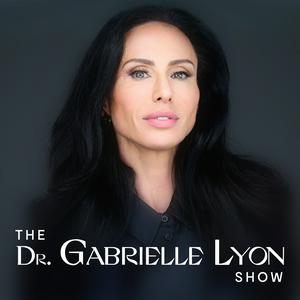
The Dr. Gabrielle Lyon Show promotes a healthy world, and in order to have a healthy world, we must have transparent conversations. This show is dedicated to such conversations as the listener; your education, understanding, strength, and health are the primary focus. The goal of this show is to provide you with a framework for navigating the health and wellness space and, most importantly, being the champion of your own life. Guests include highly trustworthy professionals that bring both the art and science of wellness aspects that are both physical and mental. Dr. Gabrielle Lyon is a Washington University fellowship-trained physician who serves the innovators, mavericks, and leaders in their fields, as well as working closely with the Special Operations Military. She is the founder of the Institute of Muscle-Centric Medicine® and serves patients worldwide.
Podcast websiteListen to The Dr. Gabrielle Lyon Show, On Purpose with Jay Shetty and many other podcasts from around the world with the radio.net app
Get the free radio.net app
- Stations and podcasts to bookmark
- Stream via Wi-Fi or Bluetooth
- Supports Carplay & Android Auto
- Many other app features
Get the free radio.net app
- Stations and podcasts to bookmark
- Stream via Wi-Fi or Bluetooth
- Supports Carplay & Android Auto
- Many other app features

The Dr. Gabrielle Lyon Show
Scan code,
download the app,
start listening.
download the app,
start listening.
 South Africa
