
Listen to this podcast for free in the app: Download for free in the App Store
radio.net
Sleep timer
Save favourites
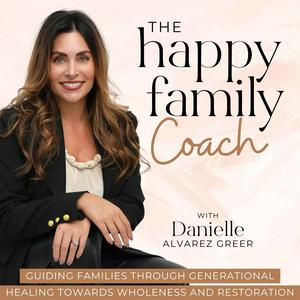
The Happy Family Coach Podcast - Break Generational Cycles of Dysfunction, Heal Past Wounds, Transform Your Faith, Learn Relationship Skills, Practical Parenting Strategies, and Whole Person Wellness
Danielle Alvarez Greer - Biblical Counselor, Family Coach & Conflict Resolution Guide
Latest episode
133 episodes
132. The Overfunctioning Spouse and the Resentful Marriage | When Love Isn’t the Problem, Part 5
2026/10/21 | 1h 11 mins.Part 5 of When Love Isn’t the Problem
Do you feel like you are the person who remembers everything?
The appointments.
The bills.
The schedules.
The groceries.
The kids.
The forms.
The deadlines.
The things your spouse said they were going to handle three days ago.
You plan. You anticipate. You remind. You fix. You follow up.
And eventually you find yourself thinking:
Why do I have to do everything around here?
But what if the problem goes deeper than an uneven to-do list?
What if somewhere underneath all that doing is a belief that says:
If I don’t hold this together, everything is going to fall apart.
In Part 5 of the When Love Isn’t the Problem marriage series, we will explore the complicated relationship between overfunctioning, underfunctioning, resentment, control, responsibility, and trust in God.
Because overfunctioning often begins with something good.
Being helpful.
Being competent.
Serving your family.
Taking responsibility.
But over time, helping can become rescuing.
Competence can become control.
Service can become resentment.
And one spouse can begin functioning so much that the other gradually functions less.
But this episode goes even deeper.
I share something God has been confronting me with through my own study of Scripture:
God does not need us.
He is completely self-sufficient.
Acts 17 tells us that God is not served by human hands “as though he needed anything.”
And Colossians 1:17 reminds us that it is Jesus—not us—in whom “all things hold together.”
That truth changes the conversation.
Because sometimes we say we believe God is sovereign while living as though everything depends on us.
We attempt to become the fixer.
The rescuer.
The reminder system.
The emotional regulator.
The person responsible for making everyone else grow, behave, repent, mature, or change.
And eventually we become exhausted trying to carry responsibilities God never assigned to us.
In this episode, we will explore the difference between bearing one another’s burdens and carrying another adult’s load, using the tension found in Galatians 6:2 and Galatians 6:5.
I also talks honestly about both sides of this marriage dynamic.
The spouse who overfunctions may need to examine anxiety, control, perfectionism, rescuing, hidden expectations, and the need to feel indispensable.
But the spouse who underfunctions has responsibility too.
If your husband or wife has to repeatedly notice the problem, remind you, assign the task, follow up, check whether it happened, and rescue you when it doesn’t—you haven’t actually removed anything from their mental load.
And over time, marriages can quietly shift from adult-to-adult partnership into parent-child dynamics that damage respect, friendship, admiration, and intimacy.
In Episode 132, we talk about:
why overfunctioning and underfunctioning often reinforce one another
how helping can quietly become controlling
the hidden contracts that create resentment
why natural consequences can sometimes be necessary for growth
the difference between serving and saving
why “just tell me what you need me to do” may not actually remove the mental load
how Jesus served sacrificially without allowing every demand to control Him
why human limitations are not failures
how to recognize what God has actually entrusted to you
why “we’ll try harder” is not a system
how Bossy Helper, Blaming Bully, and Helpless Baby show up in marriage
why your spouse was never meant to be your god—and you were never meant to be theirs
and how learning to trust God can begin loosening our grip on things that were never ours to control
One of the central questions in this episode is:
What am I carrying that God never asked me to carry?
The Three-Column Exercise
I introduce a simple but powerful framework:
MINE TO CARRY
My words.
My attitude.
My obedience.
My commitments.
My boundaries.
My repentance.
My responsibilities.
My follow-through.
THEIRS TO CARRY
Their choices.
Their responsibilities.
Their emotions.
Their consequences.
Their spiritual growth.
Their repentance.
Their response to truth.
GOD’S TO CARRY
Changing hearts.
Conviction.
Timing.
Outcomes.
The future.
Another person’s transformation.
Salvation.
Things only a sovereign God can accomplish.
Some of us are exhausted because we have placed things in the Mine column that belong in the God column.
And maybe the opposite of overfunctioning isn’t simply doing less.
Maybe it’s trusting God more.
Read the Companion Blog
This episode will also have a practical companion article:
The Overfunctioning Spouse and the Resentful Marriage: What’s Yours to Carry, What’s Theirs, and What Belongs to God
Inside, you’ll be able to work through the Responsibility Audit, the Mine / Theirs / God’s exercise, questions that help distinguish serving from rescuing, and practical tools for redistributing responsibility without creating another fight.
Catch Up on the When Love Isn’t the Problem Series
This marriage series is designed to build episode by episode:
Episode 128 — When Intimacy Starts to Feel Like a Chore
What if the accelerator isn’t broken—but the brakes are on?
Episode 129 — The Thousand Tiny Resentments That Kill Intimacy
How small disappointments become emotional distance when they are never repaired.
Episode 130 — “I’m Sorry” Isn’t Repair
Why apology, repentance, forgiveness, reconciliation, trust, and repair are not the same thing.
Episode 131 — When Touch Starts Feeling Like Pressure
How couples get trapped in a pursue-withdraw cycle and begin rebuilding affection without guilt or expectation.
And now:
Episode 132 — The Overfunctioning Spouse and the Resentful Marriage
Need Help Untangling the Pattern?
If this episode has you thinking:
This has been our marriage for years,
you may need more than another chore chart.
Danielle offers biblical counseling and faith-based coaching for individuals, couples, teens, and families who want help identifying unhealthy relational patterns, taking responsibility for what actually belongs to them, creating healthier boundaries, repairing conflict, and growing toward greater freedom and maturity in Christ.
Visit The Happy Family Coach website for current counseling and coaching information.
The Happy Kid Toolkit
Overfunctioning is also a perfect example of how our Happy Kid Toolkit roles can show up in marriage.
Bossy Helper: “I’ll just do it myself.”
Blaming Bully: “I have to do everything around here.”
Helpless Baby: “If I stop carrying this, everything will fall apart.”
The upcoming Happy Kid Toolkit online training course will help individuals, couples, parents, and families go deeper into the beliefs, stories, emotions, and behaviors driving these roles—and learn practical, biblically grounded ways to respond differently.
Stay connected through the podcast, website, and email list for course updates.
Created on Purpose — Mallorca, Spain
For women craving intentional space to slow down, reconnect with God, rest, laugh, explore, and consider what He may be inviting them into next:
Created on Purpose — Mallorca, Spain
May 16–22, 2027
This Christ-centered women’s retreat is designed around rest, friendship, worship, reflection, purpose, adventure, beautiful meals, unforgettable experiences, and space to hear from God away from the noise of everyday life.
Current registration details and payment options are available through The Happy Family Coach website.
Coming Next
Episode 133: Vacation Marriage vs. Real-Life Marriage
Why can you laugh, flirt, explore, connect, and actually enjoy each other on vacation…
then come home and somehow become two stressed-out logistics coordinators arguing over schedules, money, dishes, kids, and the garage door?
In Part 6 of When Love Isn’t the Problem, we’ll explore what vacation temporarily removes from a marriage, what everyday life puts back in, and how couples can bring more friendship, play, connection, and freedom into ordinary life—without needing a boarding pass.
Because your marriage was never meant to advertise how much you can carry.
Maybe it was meant to advertise how sufficient God is.
And you were never meant to be the savior of your marriage.
You were meant to point your marriage toward the Savior.
xoxo,
Danielle131. When Touch Starts Feeling Like Pressure | When Love Isn’t the Problem Marriage Series, Part 4
2026/10/14 | 1h 1 mins.Part 4 of the When Love Isn’t the Problem Marriage Series
What happens when a hug stops feeling like just a hug?
When a kiss feels like it comes with an expectation?
When one spouse reaches for connection—and the other immediately starts wondering:
“Where is this going?”
And what happens on the other side, when the spouse doing the reaching starts thinking:
“Do you even want me anymore?”
In Episode 131, we’re talking about one of the most painful cycles couples can fall into:
One spouse feels pressure, so they withdraw.
The other feels rejected, so they pursue harder.
The more one pursues, the more the other withdraws.
And before long, even ordinary affection can begin carrying emotional weight neither spouse intended.
This episode is not about deciding who is right.
It is about understanding both sides of the cycle.
The spouse who feels rejected may genuinely be lonely and longing for connection.
The spouse who feels pressured may genuinely love affection—but has begun associating touch with expectation, guilt, or obligation.
Both people can be hurting.
And both may be trying to solve the disconnection in ways that unintentionally create even more distance.
In this episode, we talk about:
Why affection can gradually start feeling like pressure
How the pursuer-withdrawer cycle develops
What repeated rejection can feel like for the pursuing spouse
Why the withdrawing spouse may begin avoiding even touch they actually enjoy
Subtle ways pressure can be communicated without ever making a direct demand
Why love languages are helpful—but are not entitlements
How resentment, exhaustion, and overfunctioning can affect physical connection
What Scripture teaches about mutuality, honor, patience, self-control, and marital intimacy
Why pressure may produce compliance but rarely produces genuine desire
How to receive a “no” without making honesty emotionally expensive
How the withdrawing spouse can stay engaged without forcing themselves
and how couples can begin rebuilding affection that feels free, mutual, and connected again
Practical Tools From This Episode
I’m also giving you several exercises you can begin using right away:
The No-Agenda Affection Reset
Create specific moments of affection where both spouses already know:
This touch does not have to lead anywhere.
A hug can just be a hug.
A kiss can simply be affection.
A cuddle can be complete in itself.
The Affection Menu
Identify the kinds of touch that currently feel:
Green: usually welcome
Yellow: depends on energy, mood, or context
Red: currently uncomfortable or pressuring
The goal isn’t to create permanent rules. It’s to give couples language for understanding one another better.
The Seven-Day Pressure-Free Affection Challenge
For seven days, choose one simple form of affection each day with no expectation attached—and pay attention to what happens emotionally and physically for each of you.
Read the Companion Blog
Be sure to read the practical companion article for this episode:
When Touch Starts Feeling Like Pressure: How Couples Can Rebuild Affection Without Fear, Guilt, or Expectation
The companion blog will include the No-Agenda Affection Reset, Affection Menu, reflection questions for both the pursuing and withdrawing spouse, and the Seven-Day Pressure-Free Affection Challenge so you can work through them alone or together.
This Series Isn’t Only for Married Couples
If you’re married, I encourage you to listen together and approach these conversations with curiosity rather than accusation.
Remember the rule for this whole series:
Invitation. Not ammunition.
If you’re single, this episode can help you understand your own attachment, boundaries, reactions to rejection, and ways of responding when another person needs more or less closeness than you do.
And if you’ve experienced divorce, this may help you understand patterns from a previous relationship without living in the past—so you can heal what belongs to you and carry greater wisdom into future relationships.
Need Help Breaking the Cycle?
If you and your spouse are caught in a pursue-withdraw pattern and cannot seem to find your way back toward one another, I offer biblical counseling and faith-based coaching for individuals, couples, and families.
Sometimes we need someone outside the cycle to help us slow it down, understand what each person is experiencing, and begin practicing healthier ways of connecting.
You can learn more about counseling and coaching through The Happy Family Coach website.
The Happy Kid Toolkit
The Happy Kid Toolkit can also help you recognize the roles you step into when you feel rejected, pressured, hurt, disappointed, or out of control—including Helpless Baby, Bossy Helper, and Blaming Bully—and begin practicing healthier responses through Happy Kid, Caring Friend, and Respectful Leader.
My upcoming Happy Kid Toolkit online training course will take this work much deeper for individuals, couples, parents, and families who want practical, biblically grounded tools for changing relational patterns.
Watch the podcast, website, and email list for course updates.
Created on Purpose — Mallorca, Spain
For the women listening who are craving intentional space to slow down, reconnect with God, rest, and consider what He may be inviting you into next, you can also explore:
Created on Purpose — Mallorca, Spain
May 16–22, 2027
This Christ-centered women’s retreat is designed around rest, friendship, worship, meaningful teaching, reflection, adventure, and creating space to step into your next season with greater clarity and purpose.
Current retreat details, registration information, counseling options, free resources, HKT updates, and upcoming trainings can all be found through the events page of The Happy Family Coach website.
Coming Next in When Love Isn’t the Problem
Episode 132: The Overfunctioning Spouse and the Resentful Marriage
What happens when one spouse becomes the planner, fixer, rememberer, scheduler, problem-solver, and keeper of the invisible list…
while the other increasingly waits, reacts, or depends on them to keep life moving?
And what happens when the overfunctioning spouse finally says:
“I have to do everything around here!”
Next week we’ll talk about why overfunctioning can look loving while quietly feeding resentment—and how to step out of that cycle without becoming controlling, checked out, or bitter.
Because true closeness cannot be forced.
It is cultivated.
xoxo,
Danielle130. “I’m Sorry” Isn’t Repair | When Love Isn’t the Problem, Part 3
2026/10/07 | 1h 10 mins.Part 3 of the When Love Isn’t the Problem Marriage Series
“I said I was sorry.”
But what happens when you’ve heard the same apology for the same behavior over and over again?
The argument ends.
Someone apologizes.
Maybe there are tears.
Maybe you hug.
Maybe you pray together.
Everybody agrees to move forward.
And then a few weeks later…
same conflict.
same reaction.
same wound.
same apology.
Eventually, one spouse begins thinking:
I don’t need another apology. I need something to actually change.
In Episode 130 of The Happy Family Coach Podcast, we’re continuing the When Love Isn’t the Problem marriage series by talking about the difference between saying “I’m sorry” and actually repairing what was damaged.
Because a sincere apology can be completely real—and still be incomplete.
In this episode, we unpack the important differences between:
apology
confession
repentance
forgiveness
reconciliation
restored trust
genuine repair
We’ll also talk about why remorse is not the same thing as repentance, how trust is rebuilt over time, why forgiveness does not require pretending nothing happened, and what it actually looks like when repentance begins producing fruit.
And I’m giving you a practical framework you can use after conflict:
The REPAIR Framework
R — Recognize specifically
Own exactly what happened.
E — Empathize with the impact
Understand what your behavior was like for the other person.
P — Put repentance into practice
Identify what you will actually do differently.
A — Act where restitution is needed
Make right what can reasonably be made right.
I — Invite accountability
Give trusted people permission to help you recognize the pattern.
R — Repeat new fruit over time
Because trust is rebuilt through consistency—not one beautiful apology.
We also talk about what happens when you’ve already had the same conversation twenty times and realize that the problem may no longer be communication.
Sometimes the missing piece is implementation.
Because:
“We’ll try harder” is not a system.
And one of the biggest questions in this episode is:
What is my sorrow actually producing?
Biblical repentance does not mean perfection.
But over time, there should be fruit.
Read the Companion Blog
I created a practical companion article for this episode:
“I’m Sorry” Isn’t Repair: Why Apologies Don’t Always Change the Pattern—and What Genuine Repair Actually Looks Like
Inside the blog, you’ll find:
the complete REPAIR framework
the 24-Hour Return Practice
three questions to ask before apologizing
three questions to ask when receiving an apology
a guided repair conversation you can work through alone or with your spouse
This is a great resource to save, journal through, or work through together after listening.
This Series Isn’t Only for Married Couples
If you’re married, I encourage you to listen together and use these conversations as invitations toward greater honesty, humility, and connection.
Remember our rule: Invitation. Not ammunition.
If you’re single, this series can help you recognize how you respond to conflict, correction, disappointment, boundaries, and repair before entering a future marriage.
And if you’ve experienced divorce, these conversations may help you understand patterns from your past without staying trapped there—so you can heal what belongs to you and carry greater wisdom into future relationships.
Need Help Breaking the Cycle?
If your relationship keeps moving through the same pattern—
hurt,
apology,
temporary peace,
repeat—
I offer biblical counseling and faith-based coaching for individuals, couples, and families.
Sometimes we need someone outside the cycle to help us slow it down enough to identify what is actually happening and determine what genuine repair would require.
You can learn more about counseling and coaching through The Happy Family Coach website.
The Happy Kid Toolkit
If you recognize yourself moving into Helpless Baby, Bossy Helper, or Blaming Bully when conflict or correction happens, the Happy Kid Toolkit can help you identify those patterns and practice healthier ways of responding.
My upcoming Happy Kid Toolkit online training course will take this work even deeper, helping individuals, couples, parents, and families recognize unhealthy patterns, renew their thinking with biblical truth, communicate differently, establish healthy boundaries, and create lasting change.
Watch my website, email list, and podcast for course updates and enrollment information.
Created on Purpose — Mallorca, Spain
If you’re longing for intentional space to step away from the noise, reconnect with God, and ask what He is inviting you into next, I would love for you to explore my upcoming women’s retreat:
Created on Purpose — Mallorca, Spain
May 16–22, 2027
A Christ-centered girls’ getaway filled with rest, meaningful teaching, friendship, adventure, worship, prayer, beautiful beaches and villages, incredible food, and intentional space to consider your gifts, calling, and next season with God.
You can find current retreat details, payment options, and registration through The Happy Family Coach website.
You’ll also find my current retreats, workshops, free resources, counseling options, and upcoming trainings there.
Coming Next in When Love Isn’t the Problem
Episode 131: When Touch Starts Feeling Like Pressure
What happens when affection no longer feels like affection?
When a hug seems to carry an expectation?
When one spouse longs for more physical closeness while the other begins avoiding touch because they’re worried about where it will lead?
In Part 4, we’re going to look at both sides of that cycle and talk about how couples can begin rebuilding affection that feels safe, free, mutual, playful, and genuinely connected.
Because an apology may end the argument. Repair changes the pattern.
See you next week.
xoxo,
Danielle129. The Thousand Tiny Resentments That Kill Intimacy | When Love Isn’t the Problem, Part 2
2026/09/30 | 1h 1 mins.Part 2 of the When Love Isn’t the Problem Marriage Series
Sometimes marriage doesn’t grow distant because of one dramatic betrayal.
Sometimes it happens one tiny resentment at a time.
The sigh.
The unfinished task.
The comment about money.
The promise that never gets followed through on.
The moment you ask for help and immediately regret asking.
Individually, these things can seem small. But when they keep piling up without repair, they start to mean something bigger:
Can I depend on you?
Do you care about what matters to me?
Are my needs a burden?
Are we really on the same team?
In Episode 129, we’re talking about how resentment quietly builds, how it affects emotional and physical intimacy, and how to deal with the “little things” before they become a wall between two people who genuinely love each other.
Inside this episode, we explore:
why resentment is often grief wearing armor
the difference between what happened and the meaning you attached to it
how resentment and overfunctioning feed each other
how to tell if you truly let something go—or just kept the receipt
why emotional disengagement can look peaceful while creating distance
how to communicate hurt without attacking your spouse’s character
what biblical forgiveness does—and does not—mean
why healthy marriages are not perfect; they are repairable
Companion Blog
Be sure to read the companion blog:
The Thousand Tiny Resentments That Kill Intimacy: How Small Disappointments Become Emotional Distance—and What Healthy Repair Actually Looks Like
Inside, you’ll find three practical exercises you can work through alone or with your spouse:
The Resentment Audit
The Two-Sentence Repair Starter
The One-Brick-at-a-Time Exercise
This Episode Is for More Than Married Couples
If you’re married, listen together and use this as an invitation—not ammunition.
If you’re single, this can help you recognize conflict patterns, overfunctioning, resentment, and communication habits before entering a future relationship.
If you’ve been through divorce, this can help you process what you learned, identify what belongs to you to heal, and carry greater wisdom into future relationships.
Need Support?
If you feel stuck in repeating patterns, I offer biblical counseling and faith-based coaching for individuals, couples, and families.
You can also explore the Happy Kid Toolkit, free resources, retreats, workshops, and current ways to work with me through The Happy Family Coach.
Coming Next
Episode 130: “I’m Sorry” Isn’t Repair
Because sometimes the argument ends…
but nothing actually changes.
I will see you next week.
xoxo,
Danielle128. When Intimacy Starts to Feel Like a Chore | When Love Isn’t the Problem, Part 1
2026/09/23 | 1h 11 mins.Part 1 of the When Love Isn’t the Problem Marriage Series
What happens when you genuinely love your spouse, enjoy being with them, still laugh together, cuddle, travel well together, and want closeness… but physical intimacy suddenly feels exhausting?
Like one more thing on the list.
That is the very personal question that opened the door to this brand-new marriage series, When Love Isn’t the Problem.
In this episode, I’m sharing honestly from my own marriage and from patterns I continue to see in the counseling room. Because sometimes the problem isn’t that love is gone.
Sometimes love is still very much there—but resentment, exhaustion, unresolved conflict, pressure, overfunctioning, financial stress, or years of small relational disappointments have quietly begun pressing the brakes on intimacy.
And if we only keep asking, “How do we get the spark back?” we may completely miss the more important question:
What keeps pressing the brakes?
Using the simple picture of desire having both an accelerator and brakes, we’ll look underneath the surface of marital intimacy and explore why date nights, vacations, romance, and affection may not be enough when deeper relational issues remain unresolved.
In this episode, we talk about:
The difference between losing love and feeling relationally exhausted
Why intimacy can begin to feel like “one more person needing something from me”
The emotional impact of repeated grumbling, criticism, unfinished responsibilities, and unresolved conflict
Why the “little things” in marriage are often not little at all
How overfunctioning can quietly turn into resentment
Why affection can start feeling like pressure when every touch seems to carry an expectation
The difference between an apology and genuine repair
How to identify the relational cycle instead of simply deciding who the villain is
What Philippians 2 teaches us about humility, service, and even the spirit with which we care for one another
Seven practical questions to help you understand what may be happening underneath your own intimacy struggles
The Accelerator + Brakes Exercise you can use with your spouse this week
This is not an episode about blaming husbands.
It is not an episode about blaming wives.
And it is certainly not about using Scripture to pressure one another.
It is an invitation for both spouses to become curious, honest, humble, and willing to ask:
What is happening in me? What belongs to me? What is happening between us? And what might God be inviting us to repair?
Because sometimes physical disconnection is simply where emotional disconnection becomes impossible to keep ignoring.
And maybe the goal isn’t to force more intimacy.
Maybe the first step is understanding what has made intimacy feel difficult in the first place.
Read the Companion Blog
For an even more practical version of today’s conversation—including the seven reflection questions, the Accelerator + Brakes Exercise, HKT application, and a simple way to begin this conversation with your spouse—read the companion article:
When Intimacy Starts to Feel Like a Chore: What Your Lack of Desire May Be Trying to Tell You About Your Marriage
Need Support?
If you recognize yourself, your marriage, or your family in this episode and you feel stuck inside patterns you cannot seem to change on your own, I offer biblical counseling and faith-based coaching for individuals, couples, and families.
You can also explore the Happy Kid Toolkit, along with my free resources designed to help you recognize unhealthy patterns, renew your thinking, communicate more clearly, establish healthy boundaries, and move toward healing and restoration.
Visit The Happy Family Coach website to learn more about counseling, coaching, the Happy Kid Toolkit, upcoming trainings, retreats, workshops, podcast resources, and ways to continue doing this work with me.
And if you know a husband or wife who needs this conversation, share this episode with them.
Not as ammunition. As an invitation.
Coming Next in the When Love Isn’t the Problem Series:
Episode 129: The Thousand Tiny Resentments That Kill Intimacy
Because sometimes marriages don’t become disconnected through one enormous betrayal.
Sometimes it happens through the sighs, the eye rolls, the unfinished tasks, the comments about money, the broken promises, and all the little moments that were never truly repaired.
And those little things?
They may not be little at all.
xoxo,
Danielle
More Christianity podcasts








Trending Christianity podcasts



















About The Happy Family Coach Podcast - Break Generational Cycles of Dysfunction, Heal Past Wounds, Transform Your Faith, Learn Relationship Skills, Practical Parenting Strategies, and Whole Person Wellness
The Go-To Podcast for Christian Families Who Want to Rewrite Their Legacy!
Do you ever wonder why you parent the way you do? Why, no matter how hard you try, you still lose your patience, react instead of respond, or fall into the same family conflicts you swore you’d avoid? Do you see patterns of dysfunction, chronic stress, or unhealthy relationship dynamics in your home?
✨ You don’t have to stay stuck. There is hope, healing, and a new way forward. ✨
I’m Danielle Alvarez Greer, Certified Biblical Counselor, Family Life Coach, and creator of The Happy Kid Toolkit™, and I’m here to help you break generational cycles and build a strong, faith-filled family.
Inside The Happy Family Coach Podcast, you’ll discover how to:
✔ Heal past wounds and parent with wisdom, grace, and discernment
✔ Strengthen your marriage and family relationships through biblical principles
✔ Set healthy boundaries and navigate conflict with love and respect
✔ Resolve conflict biblically—without blame, shame, or avoidance
✔ Communicate effectively with your spouse and children
✔ Equip your kids with the tools to handle emotions and disagreements in a Christ-centered way
✔ Recognize the “Unhappy Kid Triangle™” and step into healthier relationships using The Happy Kid Toolkit™
✔ Walk in confidence, knowing God is guiding your family’s growth.
Join me as we explore faith-based family transformation with practical tools, real-life strategies, and biblical truth—trusting God’s wisdom to lead the way.
👨👩👧👦 Ready to create a home filled with peace, joy, and purpose? Hit subscribe and let’s dive in!
📲 Connect with me in my Facebook group and on social media for even more family resources!
Podcast websiteListen to The Happy Family Coach Podcast - Break Generational Cycles of Dysfunction, Heal Past Wounds, Transform Your Faith, Learn Relationship Skills, Practical Parenting Strategies, and Whole Person Wellness, Joyce Meyer Enjoying Everyday Life® TV Audio Podcast and many other podcasts from around the world with the radio.net app
Get the free radio.net app
- Stations and podcasts to bookmark
- Stream via Wi-Fi or Bluetooth
- Supports Carplay & Android Auto
- Many other app features
Get the free radio.net app
- Stations and podcasts to bookmark
- Stream via Wi-Fi or Bluetooth
- Supports Carplay & Android Auto
- Many other app features

The Happy Family Coach Podcast - Break Generational Cycles of Dysfunction, Heal Past Wounds, Transform Your Faith, Learn Relationship Skills, Practical Parenting Strategies, and Whole Person Wellness
Scan code,
download the app,
start listening.
download the app,
start listening.
 South Africa

