
Listen to this podcast for free in the app: Download for free in the App Store
radio.net
Sleep timer
Save favourites
Disordered: Anxiety Help
Josh Fletcher and Drew Linsalata
Latest episode
186 episodes
Recovered But Still Anxious and Doubting (Episode 183)
2026/11/27 | 40 mins.Send a question or comment via text message
"As you both recovered now, do you still experience doubt when anxiety shows up? Or do you just think, oh, it's a wave, and it'll be over soon?" A listener sent in this question, and a lot of people carry it around during recovery. Drew and Josh answer from their own experience: yes, the doubt still shows up sometimes. What changed is what they do next and how much it costs them.
We cover why there is no delete button for old anxious pathways, why a trigger can still produce a flash of fear with a "what was that?" attached, and what that moment looks like now: dropping the shopping bags, then picking them back up instead of staring at them for two hours. Josh describes a sauna session where his heart rate stayed high, and Drew a tired evening on the sofa. Both lasted minutes.
We also look at the "how will I know I'm recovered?" question and why asking it repeatedly is often more certainty-seeking. Instead, we talk about measuring functional impact: how long it took, how much of your day it used, and whether you did what non-anxious you would have done. A hard day can be a one-off reunion episode, not a six-season series. Josh explains why he avoids the word "recovered," and Drew shares what he asks former clients who get in touch after a rough patch: how much impact did it have?
Topics in this episode:
The threat response exists to get your attention and make you act, and every "do something" response tells your brain the alarm was right.
Shifting from the content of a thought to the process, including noticing when you're ruminating about ruminating.
Why "yeah, but" arguments with doubt can't be won.
Why your rational brain can still handle real problems, like a sick child, without anxiety supplying the urgency.
Checking basic needs like food, water and sleep before assuming a bad feeling means relapse.
Recovery OCD and the inner critic.
Lauren Rosen's broken spotlight image for a wandering mind.
For health anxiety, response prevention often means not doing what you feel most pulled to do to protect yourself or loved ones.
Plus Did It Anyway wins: staying at a first aid and defibrillator course with cardiophobia and frequent PVCs, getting through nine days in hospital with repeated scans and MRIs while living with panic disorder, and staying for a scary movie night without using AI or Google when a child gets sick.
----
Want to talk about this episode, interact with us, and communicate with others that are sharing your experience? We're hanging out in the Disordered Community Space
https://disordered.fm/community
----
The Disordered Guide to Health Anxiety is available now:
https://www.disordered.fm/the-disordered-guide-to-health-anxiety/
---
Struggling with worry and rumination that you feel you can't stop or control? Check out Worry and Rumination Explained, a two hour pre-recorded workshop produced by Josh and Drew.
-----
Got questions or did it anyways to share? Send us an email or voicemail on our website.
https://disordered.fm
---
Disclaimer: Disordered is not therapy or a replacement for therapy. Listening to Disordered does not create a therapeutic relationship between you and the hosts or guests of the podcast. Information here is provided for psychoeducational purposes. As always, please consult your mental health and/or medical care providers. If you are having a mental health crisis, always reach out immediately for in-person help.What If It's Anxiety or OCD AND The Bad Thing Is Happening? (Episode 182)
2026/11/20 | 39 mins.Send a question or comment via text message
"I know I have OCD, but what if it's OCD and the bad thing is actually happening?" This week we act out the "yeah, but" conversation that OCD and anxiety love to have, with health, relationship, exposure and "am I going crazy" versions, and talk about why you can't be certain and don't need to be, including Dr. Sally Winston's idea of being "sure enough."
We get into why obsessional doubt carries a burning sense of urgency that ordinary doubt doesn't, why OCD will argue that it isn't OCD, and how a worried voice and false comfort keep rumination going. We also look at why every theme runs on the same mechanism, how compulsions feed it, and why a ritual has no actual connection to the bad thing it's supposed to prevent.
At the heart of this episode is the fact that much of human life is uncertain. This is a fact that OCD and anxiety disorders simply refuse to leave alone or accept!
Plus Did It Anyway wins: going under general anesthetic after a panic attack, a long weekend in Paris with severe pain and IBS fears, and going back to a fishing dock the day after a near-drowning.
----
Want to talk about this episode, interact with us, and communicate with others that are sharing your experience? We're hanging out in the Disordered Community Space
https://disordered.fm/community
----
The Disordered Guide to Health Anxiety is available now:
https://www.disordered.fm/the-disordered-guide-to-health-anxiety/
---
Struggling with worry and rumination that you feel you can't stop or control? Check out Worry and Rumination Explained, a two hour pre-recorded workshop produced by Josh and Drew.
-----
Got questions or did it anyways to share? Send us an email or voicemail on our website.
https://disordered.fm
---
Disclaimer: Disordered is not therapy or a replacement for therapy. Listening to Disordered does not create a therapeutic relationship between you and the hosts or guests of the podcast. Information here is provided for psychoeducational purposes. As always, please consult your mental health and/or medical care providers. If you are having a mental health crisis, always reach out immediately for in-person help.Urgency and Impatience in Anxiety Recovery (Episode 181)
2026/11/13 | 40 mins.Send a question or comment via text message
"It's not working. I'm doing something wrong. What else can I do?"
This week we talk about urgency and impatience in anxiety recovery, and why pushing harder so often backfires.
We get into why urgency is part of the threat response itself, so behaving urgently tells your brain the alarm was right. We also talk about why "how long will this take?" has no answer we can give you, why a deadline like a wedding or a move can add pressure to the very process you're trying to ease, and what happens when a lifelong problem solver or high achiever tries to fix anxiety the way they fix everything else. We also look at self-compassion as a practical tool, and at why a good therapist never makes you feel behind. Our view here is clinical opinion, and it doesn't apply when there's a real danger.
Plus Did It Anyway wins, including a first family reunion in over thirty years and a delayed breakfast after a blood draw.
Drew's book Seven Percent Slower is mentioned in this episode. Find it here:
https://geni.us/baH7N
----
Want to talk about this episode, interact with us, and communicate with others that are sharing your experience? We're hanging out in the Disordered Community Space
https://disordered.fm/community
----
The Disordered Guide to Health Anxiety is available now:
https://www.disordered.fm/the-disordered-guide-to-health-anxiety/
---
Struggling with worry and rumination that you feel you can't stop or control? Check out Worry and Rumination Explained, a two hour pre-recorded workshop produced by Josh and Drew.
-----
Got questions or did it anyways to share? Send us an email or voicemail on our website.
https://disordered.fm
---
Disclaimer: Disordered is not therapy or a replacement for therapy. Listening to Disordered does not create a therapeutic relationship between you and the hosts or guests of the podcast. Information here is provided for psychoeducational purposes. As always, please consult your mental health and/or medical care providers. If you are having a mental health crisis, always reach out immediately for in-person help.Is Exposure Therapy Traumatizing? (Episode 180)
2026/11/06 | 44 mins.Send a question or comment via text message
Is exposure therapy traumatizing? It's a question we hear often, and one that makes some therapists hesitate to use exposure at all. This week we take it on directly, with the caveat that this is our clinical opinion and not a substitute for care tailored to you.
We talk about the difference between a crisis, where your ability to cope is temporarily overwhelmed, and trauma, and why intense fear or discomfort doesn't automatically mean someone has been traumatized. We also explain when a history of genuinely dangerous events changes the approach, why trauma-informed work may need to come first for some people, and why a good clinician formulates the problem and builds a graduated hierarchy before anyone is sent into the hardest situation. We also get into how the words we choose shape the story we tell ourselves.
Plus did it anyway wins, including a first day back at work with agoraphobia, a trip away from a safe person, and a Halloween gig.
----
Want to talk about this episode, interact with us, and communicate with others that are sharing your experience? We're hanging out in the Disordered Community Space
https://disordered.fm/community
----
The Disordered Guide to Health Anxiety is available now:
https://www.disordered.fm/the-disordered-guide-to-health-anxiety/
---
Struggling with worry and rumination that you feel you can't stop or control? Check out Worry and Rumination Explained, a two hour pre-recorded workshop produced by Josh and Drew.
-----
Got questions or did it anyways to share? Send us an email or voicemail on our website.
https://disordered.fm
---
Disclaimer: Disordered is not therapy or a replacement for therapy. Listening to Disordered does not create a therapeutic relationship between you and the hosts or guests of the podcast. Information here is provided for psychoeducational purposes. As always, please consult your mental health and/or medical care providers. If you are having a mental health crisis, always reach out immediately for in-person help.Anxiety and The Obsession With Optimizing EVERYTHING (Episode 179)
2026/10/30 | 45 mins.Send a question or comment via text message
Optimization OCD seems to be a thing. Actually, across a large number of anxious people, the pull to get recovery, sleep, food, fitness, and even your own feelings exactly right is pretty common. This week we're talking about the drive to optimize recovery ... or anything.
We talk about how "I should" is an anxious thought, why optimizing can mean sending yourself dozens of daily messages that you're not good enough as you are, and why "am I doing this right?" quietly treats some feelings as unwelcome. We also get into resource gathering, tracking devices, outsourcing discomfort to AI, and why you can't optimize your way out of uncertainty. None of this applies to medical conditions that need active management, and what we share about tracking, AI, and wellness culture is our clinical opinion.
Plus Did It Anyway wins, including opening the shop on an anxious Monday, a panic attack in a conference room followed by a packed stadium, and a wedding speech given anxious.
----
Want to talk about this episode, interact with us, and communicate with others that are sharing your experience? We're hanging out in the Disordered Community Space
https://disordered.fm/community
----
The Disordered Guide to Health Anxiety is available now:
https://www.disordered.fm/the-disordered-guide-to-health-anxiety/
---
Struggling with worry and rumination that you feel you can't stop or control? Check out Worry and Rumination Explained, a two hour pre-recorded workshop produced by Josh and Drew.
-----
Got questions or did it anyways to share? Send us an email or voicemail on our website.
https://disordered.fm
---
Disclaimer: Disordered is not therapy or a replacement for therapy. Listening to Disordered does not create a therapeutic relationship between you and the hosts or guests of the podcast. Information here is provided for psychoeducational purposes. As always, please consult your mental health and/or medical care providers. If you are having a mental health crisis, always reach out immediately for in-person help.
More Health & Wellness podcasts








Trending Health & Wellness podcasts
























About Disordered: Anxiety Help
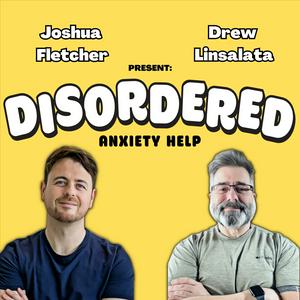
Disordered is the podcast that delivers real, evidence-based, actionable talk about anxiety disorders and anxiety recovery in a kind, compassionate, community-oriented environment. Josh Fletcher is a qualified psychotherapist in the UK. Drew Linsalata is a therapist practicing under supervision in the US. They're both bestselling authors in the anxiety and mental health space. Josh and Drew are funny, friendly, and they have a knack for combining lived experience, formal training, and professional experience in an encouraging, inspiring, and compassionate mental health message.
Podcast websiteListen to Disordered: Anxiety Help, The School of Greatness and many other podcasts from around the world with the radio.net app
Get the free radio.net app
- Stations and podcasts to bookmark
- Stream via Wi-Fi or Bluetooth
- Supports Carplay & Android Auto
- Many other app features
 South Africa