

Listen to this podcast for free in the app: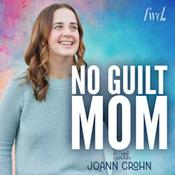 Download for free in the App Store
radio.net
Sleep timer
Save favourites
No Guilt Mom | Overcoming Mom Guilt, Mental Load & Parenting Tips for Moms
JoAnn Crohn | Parenting Coach & Mom Guilt Support
Latest episode
562 episodes
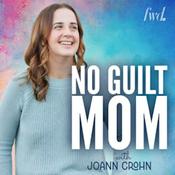
Why Your Kid Still Won't Listen No Matter How Many Times You Say It with Dr. Siggie
2026/09/29 | 36 mins.New here? Start with our Start Here playlist, five episodes that will change how you think about motherhood.
You validate your kid's feelings. You explain the reasoning behind every rule. And your kid still melts down anyway. Child development specialist and author Dr. Siggie Cohen joins JoAnn to explain the missing piece: why kids speak the language of emotion while parents default to logic, and exactly what to say when bedtime, screens, or "get ready" turns into a nightly fight.
In this episode, you'll learn:
Why explaining the "why" behind a boundary doesn't get your kid to comply
The real reason "how many times do I have to tell you" backfires every time
How to validate your kid's feelings without caving to what they want
The exact language to use during transitions like bedtime and screen time
Why staying calm and confident, not permissive, is what actually helps your kid through a meltdown
Resources mentioned in this episode:
You Are the Parent by Dr. Siggie Cohen
The Happy Mom Reset (free class)
Ready to feel calmer and more confident in your parenting? Join us for the free Happy Mom Reset class.
Protect your loved ones without spying on them. Go to https://heypolo.com/ngm or use code NGM and get 70% off your first year!
Learn more about your ad choices. Visit podcastchoices.com/adchoicesWhy You're Still the Default Parent (And The 7 Rules that Got Me Out)
2026/09/24 | 29 mins.If you're carrying the mental load and wondering how to stop being the default parent, this episode is for you.
New here? Start with our Start Here playlist — five episodes that will change how you think about motherhood.
Nobody sits down and decides to become the default parent. It happens one "I'll just grab it" at a time. In this solo episode, I share the seven rules I follow so I'm not the default parent in my house, from the "go ask Dad" rule I started when my kids were little to the overflowing trash I refuse to take out.
In this episode, you'll learn:
Why being the default parent is a set of habits, not a personality trait
How to end the "I do everything" fight by seeing the real split in your house
Why doing your partner's jobs to be nice backfires, and what to say instead
The simple "go ask Dad" rule that retrains your kids
Why "it's just easier if I do it" is a trap, and how to let your partner do it his way
Resources mentioned in this episode:
Home Responsibility Calculator (free): see the real split in your house
Skylight Calendar: $30 off the 15-inch calendar #ad #sponsored
The Fair Play Deck by Eve Rodsky
The Best Mom is a Happy Mom by JoAnn Crohn
No Guilt Mom on Instagram: come tell me your calculator results
Learn more about your ad choices. Visit podcastchoices.com/adchoicesWhy You Keep Abandoning Yourself to Keep Everyone Else Happy with Jessica Anne Pressler
2026/09/22 | 35 mins.New here? Start with our Start Here playlist — five episodes that will change how you think about motherhood.
If you've ever struggled with people pleasing and wondered why you put everyone else's needs before your own even when it's costing you, this episode is for you.
Psychotherapist Jessica Anne Pressler joins JoAnn to talk about self-abandonment, the pattern of putting everyone else first until you disappear from your own life. They dig into where it starts in childhood, how it shows up as people pleasing and trauma bonding in adult relationships, and how to finally start trusting yourself again.
In this episode, you'll learn:
What self-abandonment actually means, and why most moms do it without realizing it
Why your kids learn more from watching you take care of yourself than from anything you tell them
What a trauma bond is and why it can feel like an addiction
The gray rock method for dealing with someone who wants a reaction from you
A simple script for talking back to the inner voice that keeps you stuck (Jessica calls it "the traitor within")
Resources mentioned in this episode:
Jessica Anne Pressler on Instagram
Jessica's novel, Traitor Within, out now
The Happy Home Ladder
No Guilt Mom Inner Circle
The Happy Mom Reset (free class)
The Best Mom is a Happy Mom (JoAnn's book)
No Guilt Mom podcast page
Listen on Apple Podcasts
Listen on Spotify
No Guilt Mom on Instagram
No Guilt Mom on YouTube
Learn more about your ad choices. Visit podcastchoices.com/adchoicesWhy You Feel Powerless When Your Daughter Gets Dress Coded (And What Actually Helps)
2026/09/17 | 28 mins.If gentle parenting has you wanting to back your daughter up without shaking things up at school, but you're stuck on why she keeps getting dress coded in the first place, this episode is for you.
New here? Start with our Start Here playlist — five episodes that will change how you think about motherhood.
JoAnn goes solo this week on a topic she's been sitting with since her own middle school uniform battles: dress codes, and why they land so much harder on girls than boys. She pulls the research on where dress codes actually came from, what "self-objectification" does to a girl's brain and test scores, and ties it directly into this week's Sydney Sweeney ad backlash. Then she gives you the exact conversation to have with your daughter the next time she comes home dress coded.
In this episode, you'll learn:
Why dress codes were never really about safety, and where they actually came from
The research showing it's girls' bodies, not their behavior, that dress codes target
What "self-objectification" is, and how it can measurably lower a girl's test performance
Exactly what to say (and not say) when your daughter comes home dress coded
How to help her decide whether to comply or push back, in her own words
Resources mentioned in this episode:
The Happy Home Ladder — our family cooperation system
The Best Mom is a Happy Mom by JoAnn Crohn
No Guilt Mom website
No Guilt Mom on Instagram
Learn more about your ad choices. Visit podcastchoices.com/adchoicesWhy You Give Until You're Empty (And What To Do Instead)
2026/09/15 | 37 mins.If you've ever dealt with mom burnout and wondered why you can't stop giving until there's nothing left, this episode is for you.
New here? Start with our Start Here playlist — five episodes that will change how you think about motherhood.
Therapist Dr. Julie Merriman joins the podcast to talk about why so many moms quietly minimize themselves until they're running on empty, and why the idea that "you can't give from an empty cup" is actually a myth, because we do it all the time. We get into little T trauma, why your worth might be tied to productivity, and Julie's five-step framework for coming back to yourself after burnout.
In this episode, you'll learn:
Why moms give until they hit "empty cup" burnout, and why the belief that you can't give from empty isn't true
What "little T trauma" is and why almost everyone has some, even without a dramatic backstory
Julie's five-step framework for recovering from burnout: reflection, a nervous system inventory, a reappearance checklist, a self-return ritual, and daily affirmations
A simple full-body-scan technique to check in with your nervous system in under a minute
Why tying your worth to productivity makes it impossible to just sit and relax
Resources mentioned in this episode:
The Happy Home Ladder — No Guilt Mom's family cooperation system
Dr. Julie Merriman's website
Julie's free Desire Reset Guide
The Best Mom is a Happy Mom by JoAnn Crohn
No Guilt Mom Podcast page
No Guilt Mom on Instagram
Learn more about your ad choices. Visit podcastchoices.com/adchoices
More Health & Wellness podcasts
 ZOE Science & NutritionEducation, Health & Wellness, Nutrition, Science
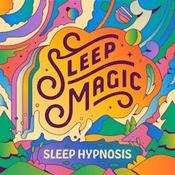 Sleep Magic: Sleep Hypnosis & Meditation for Sleep PodcastAlternative Health, Education, Health & Wellness, Self-Improvement
 Wisdom & Wellness with Mpoomy LedwabaHealth & Wellness, Mental Health
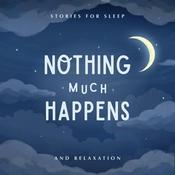 Nothing much happens: bedtime stories to help you sleepFiction, Health & Wellness
 The Mindset MentorBusiness, Education, Health & Wellness
 On Purpose with Jay ShettyBusiness, Health & Wellness, Mental Health
 Feel Better, Live More with Dr Rangan ChatterjeeAlternative Health, Health & Wellness
 Mindful Mondays with ShuduHealth & Wellness, Mental Health
 Huberman LabHealth & Wellness, Life Sciences, Science
 Get Sleepy: stories for sleepAlternative Health, Drama, Fiction, Health & Wellness, Kids & Family, Stories for Kids
Trending Health & Wellness podcasts
 Black Girls HealEducation, Health & Wellness, Mental Health, Self-Improvement
 Guided Sleep Meditation & Sleep Hypnosis from Sleep CoveHealth & Wellness, Mental Health
 Erotic StoriesDrama, Fiction, Health & Wellness, Sexuality
 Listen To Sleep - Quiet Bedtime Stories & MeditationsHealth & Wellness, Mental Health
 Perform with Dr. Andy GalpinFitness, Health & Wellness, Science
 Meet me in my corner with Dr KEducation, Health & Wellness, Mental Health, Relationships, Self-Improvement, Society & Culture
 The Dr. Gabrielle Lyon ShowHealth & Wellness, Life Sciences, Medicine, Science
 Savage LovecastHealth & Wellness, Relationships, Sexuality, Society & Culture
 Culture Apothecary with Alex ClarkHealth & Wellness
 The Art of Being WellHealth & Wellness
 Psychology UnpluggedHealth & Wellness, Medicine, Mental Health, Science, Social Sciences
 NHS Couch to 5KFitness, Health & Wellness, Running, Sports
 Anaesthesia on AirEducation, Health & Wellness, Medicine, Science
 Heart Led WellnessHealth & Wellness
 Harrison's PodClass: Internal Medicine Cases and Board PrepEducation, Health & Wellness, Life Sciences, Medicine, Science
 The Ultimate Human with Gary BreckaHealth & Wellness
 The Dr. Lee Warren PodcastChristianity, Education, Health & Wellness, Life Sciences, Mental Health, Religion & Spirituality, Science, Self-Improvement
 Strange HealthHealth & Wellness, Medicine, Nutrition
 Talk Sex with AnnetteEducation, Health & Wellness, Relationships, Sexuality, Society & Culture
About No Guilt Mom | Overcoming Mom Guilt, Mental Load & Parenting Tips for Moms
Tired of yelling at your kids, drowning in mom guilt, and carrying the entire mental load of your family?
No Guilt Mom gives you gentle parenting strategies that actually work for real, tired moms, plus permission to stop doing it all.
Host JoAnn Crohn, M.Ed, certified parenting coach and author of The Best Mom is a Happy Mom, brings you real talk on strong-willed kids, working mom burnout, ADHD parenting, and self-compassion- no shame, no perfection required. New episodes every Tuesday and Thursday.
Podcast websiteListen to No Guilt Mom | Overcoming Mom Guilt, Mental Load & Parenting Tips for Moms, ZOE Science & Nutrition and many other podcasts from around the world with the radio.net app

Get the free radio.net app
- Stations and podcasts to bookmark
- Stream via Wi-Fi or Bluetooth
- Supports Carplay & Android Auto
- Many other app features
Get the free radio.net app
- Stations and podcasts to bookmark
- Stream via Wi-Fi or Bluetooth
- Supports Carplay & Android Auto
- Many other app features

No Guilt Mom | Overcoming Mom Guilt, Mental Load & Parenting Tips for Moms
Scan code,
download the app,
start listening.
download the app,
start listening.
 South Africa