

Listen to this podcast for free in the app: Download for free in the App Store
radio.net
Sleep timer
Save favourites
83 episodes
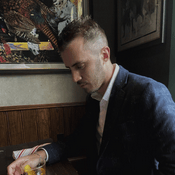
Jung and Phenomenology with Roger Brooke, PhD
2026/09/04 | 52 mins.To donate to my PayPal (thank you): https://paypal.me/danieru22?country.x=US&locale.x=en_US
Roger Brooke joins us to discuss his book, Jung and Phenomenology. We hope you enjoy.
Jung and Phenomenology: https://www.amazon.com/dp/0415097126?lv=shuf&channelId=500&plpRedirect=mhFallback
AI Generated Description:
What if phenomenology is a radically practical way to see guilt, dreams, symbols, and therapy more clearly?
In this conversation, Roger Brooke explores how a phenomenological lens changes our understanding of psychology and Jungian thought from the way guilt appears differently to a priest, a policeman, or a therapist, to why the “elephant in the room” may be the most important phenomenon present.
Daniel guides the discussion through Brooke’s book Jung and Phenomenology, examining phenomenology as a method of setting aside assumptions and studying experience on its own terms. Brooke shares vivid clinical examples to explain how mood, interpretation, and unconscious patterns shape the world we inhabit.
Together, they explore:
What phenomenology is and how it can be used in psychotherapy
Why therapists should listen more and hold theory lightly
How guilt becomes a whole way of being in the world
The relationship between Jung and phenomenological psychology
The distinction between psyche and mind
How dreams and nightmares reveal what is calling for our attention
Why archetypes are better understood as potentials for being in the world
The transformative power of symbols
The embodied nature of psychological experience
Jung’s concept of synchronicity and its philosophical limitations
Ancestral presence, object relations, and the meaning of lived experience
This is a rich and provocative conversation about how meaning appears in everyday life and why psychology can miss something essential when it reduces experience to theory alone. A thought-provoking listen for anyone interested in Jung, phenomenology, depth psychology, psychotherapy, symbolism, dreams, and the nature of the psyche.The Only Cure with Mark Solms
2026/08/04 | 1h 29 mins.To donate to my PayPal (thank you): https://paypal.me/danieru22?country.x=US&locale.x=en_US
Ever wonder why most treatments only mask symptoms instead of addressing the root cause? Here’s a truth that might shake your beliefs about mental health:
"The talking cure is still the only real one we have in psychiatry."
In a world dominated by medications and quick fixes, many fail to realize that these solutions often just suppress feelings without solving underlying issues.
1. Most psychiatric treatments only aim to suppress symptoms, meaning once you stop, they return.
2. True healing (like what psychoanalysis offers) addresses the causes of mental health struggles, leading to lasting change.
3. Remarkably, the benefits of talking therapy often continue after the treatment ends, as patients find ongoing improvement.
Let’s shift our focus from temporary relief to genuine healing.
Purchase your copy here: https://www.amazon.com/Only-Cure-Neuroscience-Mental-Healing/dp/B0FWZXMHF1/ref=tmm_hrd_swatch_0
Note: Information contained in this video is for educational purposes only and is not intended as a substitute for treatment or consultation with a mental health professional or business consultant.Vera Camden on Literature & Psychoanalysis
2026/07/03 | 59 mins.To donate to my PayPal (thank you): https://paypal.me/danieru22?country.x=US&locale.x=en_US
Vera J. Camden is Professor of English at Kent State University, Clinical Assistant Professor of Psychiatry at Case Western Reserve University, and a training and supervising analyst at the Cleveland Psychoanalytic Center. Her work focuses on the intersection of literature and psychoanalysis, and she edited The Cambridge Companion to Literature and Psychoanalysis, bringing together leading scholars to explore how literary texts and psychoanalytic theory continue to illuminate one another. We hope you enjoy this conversation.
Note: Information contained in this video is for educational purposes only and is not intended as a substitute for treatment or consultation with a mental health professional or business consultant.Jeffrey Berman, PhD, on Freud, Psychoanalysis, and Writing
2026/04/03 | 59 mins.To donate to my PayPal (thank you): https://paypal.me/danieru22?country.x=US&locale.x=en_US
Jeffrey Berman's primary teaching and research interests are in literature and psychoanalysis, the twentieth century novel, trauma theory, suicide, self-disclosing writing and pedagogy.
Berman, Jeffrey (1985). The Talking Cure: Literary Representations of Psychoanalysis.
Berman, Jeffrey (1990). Narcissism and the novel.
Berman, Jeffrey (2012). Dying to Teach: A Memoir of Love, Loss, and Learning.
Berman, Jeffrey (2019). Writing the Talking Cure: Irvin D. Yalom and the Literature of Psychotherapy.
Berman, Jeffrey; Mosher, Paul W. (2019). Off the tracks: cautionary tales about the derailing of mental health care.
Berman, Jeffrey (2021). The art of caregiving in fiction, film, and memoir.
Berman, Jeffrey (2022). Norman N. Holland: The Dean of American Psychoanalytic Literary Critics.
Berman, Jeffrey (2024). Psychoanalytic Memoirs.
Berman, Jeffrey (2024). Psychoanalysis: An Interdisciplinary Retrospective.
Berman, Jeffrey (2024). Freudians and Schadenfreudians: Loving and Hating Psychoanalysis.
We hope you enjoy this conversation.
Note: Information contained in this video is for educational purposes only and is not intended as a substitute for treatment or consultation with a mental health professional or business consultant.Freud and Trauma Theory - Karl Stukenberg, PhD
2026/03/12 | 46 mins.To donate to my PayPal (thank you): https://paypal.me/danieru22?country.x=US&locale.x=en_US
Karl Stukenberg, Ph.D., ABPP, has been a faculty member at Xavier for over 25 years. His undergraduate education was at St. John’s College – the Great Books school in Annapolis, Maryland and Santa Fe, New Mexico. He was trained as a Clinical Psychologist at The Ohio State University, with an Internship at Baylor College of Medicine in Houston, Texas. His three years of post-doctoral training were in psychological assessment and treatment in tertiary care settings at the Menninger Clinic in Topeka, Kansas. Once at Xavier, he trained to become a psychoanalyst at the Cincinnati Psychoanalytic Institute.
We hope you enjoy this conversation.
Note: Information contained in this video is for educational purposes only and is not intended as a substitute for treatment or consultation with a mental health professional or business consultant.
More Health & Wellness podcasts
 The Wellness ScoopHealth & Wellness, Mental Health, Society & Culture
 On Purpose with Jay ShettyBusiness, Health & Wellness, Mental Health
 Get Sleepy: stories for sleepAlternative Health, Drama, Fiction, Health & Wellness, Kids & Family, Stories for Kids
 Nothing much happens: bedtime stories to help you sleepFiction, Health & Wellness
 Huberman LabHealth & Wellness, Life Sciences, Science
 The Psychology of your 20sEducation, Health & Wellness, Mental Health, Relationships, Science, Self-Improvement, Social Sciences, Society & Culture
 Feel Better, Live More with Dr Rangan ChatterjeeAlternative Health, Health & Wellness
 The Mindset MentorBusiness, Education, Health & Wellness
 The School of GreatnessBusiness, Education, Entrepreneurship, Health & Wellness, Mental Health, Self-Improvement
 The Bad B PodcastHealth & Wellness, Mental Health
Trending Health & Wellness podcasts
 Figuring It OutEducation, Health & Wellness, Mental Health, Personal Journals, Self-Improvement, Society & Culture
 Brown Girl Self-CareEducation, Health & Wellness, Self-Improvement
 Stronger Bones Lifestyle Osteoporosis, Osteopenia & Bone Health PodcastAlternative Health, Health & Wellness
 BETTER! with Dr. Stephanie Estima | Strength, Body Composition & PerimenopauseAlternative Health, Fitness, Health & Wellness, Medicine, Nutrition
 This Jungian Life PodcastHealth & Wellness, Mental Health
- The Bad B PodcastHealth & Wellness, Mental Health
 Sleep Wave: Sleep Meditation & Sleepy StoriesHealth & Wellness, Mental Health
 Affirmations for Black GirlsEducation, Health & Wellness, Mental Health, Religion & Spirituality, Self-Improvement, Society & Culture
 The Liz Moody PodcastEducation, Health & Wellness, Mental Health, Self-Improvement
 The Dr. Josh Axe ShowChristianity, Education, Health & Wellness, Nutrition, Religion & Spirituality, Self-Improvement
 21 Days of Abundance - Meditation SeriesHealth & Wellness, Mental Health
 Grounded Wellness by Primally PureAlternative Health, Education, Health & Wellness, Self-Improvement
 Anaesthesia on AirEducation, Health & Wellness, Medicine, Science
 The Dr. Lee Warren PodcastChristianity, Education, Health & Wellness, Life Sciences, Mental Health, Religion & Spirituality, Science, Self-Improvement
 Guided MeditationHealth & Wellness, Mental Health
 Fit Father Project PodcastFitness, Health & Wellness, Society & Culture
 Psychology UnpluggedHealth & Wellness, Medicine, Mental Health, Science, Social Sciences
 Inner LightHealth & Wellness
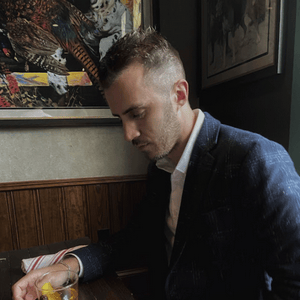
About Daniel T. Bourne
If you are interested in psychology and psychoanalysis, you might enjoy some of the content on this channel. This is a space where I post conversations with mental health professionals, review psychoanalytic material, encourage collaboration across psychodynamic camps, and more.
Podcast websiteListen to Daniel T. Bourne, The Wellness Scoop and many other podcasts from around the world with the radio.net app
Get the free radio.net app
- Stations and podcasts to bookmark
- Stream via Wi-Fi or Bluetooth
- Supports Carplay & Android Auto
- Many other app features
Get the free radio.net app
- Stations and podcasts to bookmark
- Stream via Wi-Fi or Bluetooth
- Supports Carplay & Android Auto
- Many other app features
Daniel T. Bourne
Scan code,
download the app,
start listening.
download the app,
start listening.
 South Africa