

Listen to this podcast for free in the app: Download for free in the App Store
radio.net
Sleep timer
Save favourites
112 episodes
Today is the day!
2026/08/11 | 1 mins.Dear friends,
The day I’ve been working toward for 3 years is finally here!
It takes an *army* of supporters to launch a book. The video above is to say HUGE THANKS to everyone who has purchased books and supported this process.
I wrote Beyond the Prescription to help you, your friends, and loved ones become empowered patients, armed with tools and actionable information to get what you need from our medical system.
If you haven’t yet purchased your copy of Beyond the Prescription, today is the day! 🥳 🙏 📣 🎁 🎉 🥰
You can purchase and gift a copy here:
With love and gratitude,
Lucy
P.S. If you purchased the book through my website, it will arrive within a week. And to anyone in DC, come celebrate with me at Politics & Prose (Conn Ave location) tomorrow night 8/12 at 7 pm ET. 🥳 🎉
Get full access to Are You Okay? at lucymcbride.substack.com/subscribeThe Box on the Front Stoop 📚
2026/08/04 | 1 mins.BEYOND THE PRESCRIPTION officially goes on sale next week.
Get your advance copy here:
Last week, I spotted a large box on my front stoop as I pulled in from work. It was either the dog food I‘d ordered from Amazon or fresh-printed copies of my debut book. When the return address read “Simon & Schuster, New York City,” I thought to myself: the dog is going to be hungry and THIS IS IT!
I called out to my husband and asked him to film this moment. He shot it in one take, no prep. As you can hear, I have lots of instructions for him 😆
Let me know what you think! (Besides needing a box-cutter ✂️)
Last, a huge THANK YOU to this readership. Without you, I wouldn’t have gotten the book deal, I wouldn’t be reaching people far and wide, and I wouldn’t have built a community of supportive, curious, thoughtful people who want to be more okay tomorrow than you are today.
See you next week!
🙏 Lucy
*BEYOND THE PRESCRIPTION* BOOK UPDATE: UPCOMING EVENTS 👉
* August 6 @ 6-7 pm PT | Zibby’s Bookshop | Santa Monica, CA | in conversation with Elise Loehnen | RSVP here!
* August 12 @ 7-8 pm | Politics & Prose | Washington, DC | in conversation with Franklin Foer
* August 15 @ 1-2 pm | Mitchell’s Book Corner | Nantucket, MA | book signing
My book, Beyond the Prescription, comes out on August 11. I wrote it with you in mind. The book is a roadmap for navigating your health in real life without perfectionism, pseudoscience, or shame.
You can order your copy at Amazon, Bookshop.org, or Barnes & Noble.
Get full access to Are You Okay? at lucymcbride.substack.com/subscribeWhat I Wish Every Woman Knew About Breast Cancer
2026/07/07 | 44 mins.My book, Beyond the Prescription, comes out on August 11! I wrote it with you in mind.
Episode Summary
Dr. Lucy McBride sits down with Dr. Amy Commander, breast oncologist at Mass General Brigham and author of Paving Your Path Through Breast Cancer and Beyond, to cut through the fear and misinformation around breast cancer. They cover who is actually at risk, what the screening guidelines mean in practice, what lifestyle factors move the needle, and how to make sense of the HRT and breast cancer conversation — including what the evidence actually says about hormone therapy for survivors.
Risk: Genetics, Bad Luck, and Everything In Between
* Only 5–10% of breast cancers in the U.S. are due to identifiable inherited gene mutations — BRCA1 and BRCA2 account for roughly half of those
* Another 10–15% involve familial patterns without a single identifiable gene; the remaining majority are sporadic, meaning they occur without an inherited cause we can currently explain
* Having breast cancer in your family doesn’t mean you have a genetic mutation — given that one in eight women will develop breast cancer in her lifetime, sometimes it just means you have women in your family
* A strong pattern — grandmother, mother, and sister all with breast cancer — is a signal worth discussing with a doctor; a single relative is not necessarily a reason for genetic testing
Screening: Mammograms, Dense Breasts, and MRI
* Mammograms do not cause breast cancer — annual screening starting at 40 is recommended for average-risk women, with the end point determined by a shared conversation with a doctor
* Dense breast tissue makes mammograms harder to read — finding a tumor in extremely dense tissue is like finding a snowman in a snowstorm; about 10% of women have extremely dense tissue and most should add an annual breast MRI staggered six months from their mammogram
* Heterogeneously dense tissue is common — up to 40% of women under 50 — but not everyone with it needs an MRI; the decision depends on other risk factors and should incorporate a validated risk model like the Tyrer-Cuzick calculator
* Breast MRI catches more, but also generates more false positives, particularly on the first scan; the downstream anxiety and biopsies are real costs that belong in the conversation
Lifestyle and Prevention
* Alcohol is the most consistent and modifiable lifestyle risk factor for breast cancer — even one drink per day carries a small but real increased risk, and the relationship is dose-dependent
* Maintaining a healthy weight and engaging in regular physical activity reduce risk — partly by reducing circulating estrogen in post-menopausal women and by improving metabolic health overall
* Soy is not a risk factor for breast cancer — this is a persistent myth; soy foods are a good source of plant-based protein and the evidence is clear that they are safe
* Risk factors divide into fixed (age, sex, genetics) and modifiable (alcohol, weight, exercise, metabolic health); the goal is to lean into what can be changed without catastrophizing what cannot
HRT and Breast Cancer: Separating Fear from Evidence
* The fear around HRT and breast cancer stems largely from the 2002 Women’s Health Initiative study, which used synthetic progestins — not the bioidentical hormones most commonly prescribed today
* In the WHI, women who took estrogen alone — those who had undergone hysterectomy — actually had a reduced risk of breast cancer, a finding that was not widely reported
* The overall increased risk from combined hormone therapy is small, and causation has not been established; a family history of breast cancer is not an automatic disqualification from HRT
* HRT is a tool in the toolkit, not a solution for everyone — the right answer depends on individual risk factors, symptom burden, and what a woman is willing to weigh
Vaginal Estrogen and Breast Cancer Survivors
* Vaginal estrogen is considered safe for virtually all women, including most breast cancer survivors, because systemic absorption is minimal
* It is distinct from systemic HRT and should not be lumped in with it — women who have had breast cancer and are suffering from genitourinary symptoms should know this option exists
* For women on systemic HRT who also use vaginal estrogen, the two can be used together; the patch is not a substitute for vaginal estrogen because the tissue itself needs local treatment
* Oncologists are increasingly getting educated on menopause management — the divide between oncology and women’s health is closing, and patients benefit when their cancer doctor and primary care doctor are working from the same playbook
Survivorship: Thriving Beyond a Diagnosis
* Too many women feel defined by their diagnosis, or guilty that they somehow caused it — neither is warranted, and neither serves the goal of getting better
* Breast cancer is not one disease; genomic tools like the Oncotype DX and ProSigna help determine whether chemotherapy is even necessary, sparing many women from treatment that won’t help them
* The pillars of thriving after breast cancer mirror the pillars of health generally — sleep, movement, stress management, social connection, and a sense of purpose
* Patients have more agency than they often believe: where genetics and diagnosis are fixed, how a woman shows up for her body, her relationships, and her care is not
Upshot
Breast cancer is common, but fear and misinformation make it harder to navigate than it needs to be. Most cases have nothing to do with inherited genes. Screening saves lives. HRT is not the villain it was made out to be. And a diagnosis, however frightening, is not the whole story — patients have more agency than they think, and thriving after breast cancer is a real and achievable goal.
And, if you liked this episode, check out my conversations on Hormone Therapy, Hot Flashes and Sexual with Dr. Laura Streicher and Menopause and More with Dr. Sharon Malone!
Get full access to Are You Okay? at lucymcbride.substack.com/subscribeThe Silent Killer: What Everyone Should Know About Blood Pressure
2026/05/26 | 43 mins.Dr. Lucy McBride sits down again with Dr. Greg Katz, cardiologist at NYU, to tackle the questions patients ask most about blood pressure: what the numbers actually mean, why a single reading in the doctor’s office can mislead, what drives hypertension in the first place, and how to think about treatment.
Tune in for practical, plainspoken advice, grounded in the reality of everyday patient care.
What Blood Pressure Actually Measures
* Blood pressure is the force your blood vessels experience as the heart contracts and relaxes
* Optimal depends on who you are — but is roughly 115 over 75
* Blood pressure is supposed to fluctuate — for example it goes up with exercise, stress, and other drivers of adrenaline; it goes down with deep breathing and rest
White Coat Hypertension and the Case for Home Monitoring
* Elevated readings in the doctor’s office don’t always reflect a diagnosis of hypertension
* Getting more data points by assessing home blood pressure readings is almost always the right call before making a treatment decision
* White coat hypertension is real, but so is the converse: people whose numbers are genuinely high regardless of setting, and who benefit from earlier intervention
What Drives High Blood Pressure
* High blood pressure is due to a combination of genetics, age, lifestyle, and underlying conditions
* Controllable contributors include weight, alcohol, sleep apnea, sodium intake, and chronic stress; uncontrollable ones include family history, age, and sex
* The blood pressure “serenity prayer” is a useful frame: accept what can’t be changed, lean hard into what can, and if blood pressure stays high after all of that, medication is not a defeat
The Consequences of Untreated Hypertension
* Stroke, heart attack, kidney failure, heart failure, and dementia are the major downstream consequences of untreated hypertension
* Dr. Katz calls it the “boring killer” — doctors see it so constantly it stops feeling urgent, but the cumulative damage of even mildly elevated pressure over years is not trivial
* The good news: blood pressure medications are cheap, well-tolerated, and effective; the hard part is implementing the right solution for each individual patient
How Blood Pressure Is Treated Pharmacologically
* ARBs like telmisartan or candesartan are often first-line, especially for patients with diabetes.
* Calcium channel blockers like amlodipine are a strong alternative and require no lab monitoring
* Beta blockers, once standard first-line treatment, have largely fallen out of favor for uncomplicated hypertension
* Importantly, medication is never a life sentence; it can be adjusted as circumstances change
Blood Pressure, Cholesterol, Blood Sugar aka the Cardiovascular Trifecta
* Blood pressure, cholesterol, and blood sugar are independent risk factors for vascular disease
* Metabolic syndrome (elevated blood pressure, large waist circumference, high triglycerides, low HDL) is a single condition that dysregulates all three simultaneously
* Getting all three under control is the most reliable way to reduce cardiovascular risk for the vast majority of patients
Upshot
High blood pressure doesn’t make headlines, but it drives some of the most serious and preventable health outcomes there are. The science and the tools to treat it exist. What requires more attention is the human context — who this patient is, what their life looks like, and which solution will actually work for them.
📣 Don’t miss out! You’ve got a few more days to join me this summer for the official Beyond the Prescription Book Club! It’s open exclusively to Substack readers and gives you early access to the book, pre-publication. 👀 We’ll get into the nitty gritty of health and wellness and what it all means for YOU.
Just a few days left! Sign-ups are open in May only.
Get full access to Are You Okay? at lucymcbride.substack.com/subscribeCan People Actually Change?
2026/05/13 | 49 mins.Dr. Lucy McBride sits down with Benoit Denizet-Lewis, longtime writer for the New York Times Magazine and bestselling author of You’ve Changed: The Promise and Price of Self-Transformation, for a wide-ranging conversation about how people actually transform.
What Transformation Actually Means—and How It Happens
* The self-help industry focuses on habit change and optimization; Denizet-Lewis was interested in something deeper: shifts in identity, perspective, and personality that make people feel genuinely different
* Change happens in multiple ways: sometimes it’s intentional and goal-directed, sometimes it arrives uninvited through illness, aging, or a moment of unexpected awe
* People are deeply conflicted about change: they want it for themselves and are simultaneously threatened by it in the people they love
* The narrative of transformation is almost always tidier in retrospect than it was in the living of it
Identifying What is Fixed vs. What Is Dynamic
* Core personality traits can be tweaked with real effort, but wholesale personality transformation is rare
* Genetics and childhood shape us in ways that are largely fixed, but how we relate to those things is not
* Trauma can be repaired; relationships fractured by the past can, with sustained work, become the closest ones we have
* The serenity prayer captures something clinically true: distinguishing between what is fixed and what is dynamic is the definition of wisdom
Self-Compassion as the Engine of Change
* The transformation Denizet-Lewis describes most personally wasn’t a dramatic identity shift: it was learning gentleness toward himself
* Ram Dass’s approach to jealousy—welcoming it in, naming it, refusing to let it run the show—illustrates what it looks like to observe a feeling without being consumed by it
* Honest self-observation is essential to change, but it has to be paired with compassion; without it, the mirror is too painful to look into
* An apology that ends with a period is one of the clearest expressions of self-awareness and change
Shame vs. Guilt—and Why the Difference Matters
* Guilt says “I did something bad”; shame says “I am bad”—and the distinction has real consequences for whether change is possible
* Research on young people who committed crimes found that guilt was a positive predictor of rehabilitation; shame, counterintuitively, increased the likelihood of reoffending
* The shame of failing to change—of breaking a resolution, relapsing, or falling short of a goal—is under-appreciated and causes many people to stop trying altogether
* Shining a light on shame, naming it, and normalizing it is often the first step toward dismantling it; living in it while organizing behaviors around it is one of the most reliable ways to stay stuck
Change as a Social Act
* We like to think of transformation as private and interior, but it happens in community—getting buy-in from others, having change witnessed and reflected back, is part of how it becomes real
* Social media has complicated this: performing transformation publicly creates skepticism, making it harder for genuine change to be legible to others
* Asking people close to you whether they’ve noticed a change—awkward as it is—can be one of the most grounding forms of accountability
Technology, Distractions, and Reclaiming Space
* The phone has become the first place most people go when anxiety surfaces — which means it’s both a cause of anxiety and the default coping mechanism for it
* Denizet-Lewis and McBride argue that the best thinking—in writing, in medicine, in life—tends to happen in stillness
Upshot
Transformation is messier, slower, and more social than many before-and-after stories suggest. The question isn’t whether change is possible—it is—but whether we’re willing to do the unglamorous work of honest self-observation, shame reduction, and showing up differently over time.
📣 HELLO READERS! Please join me this summer for the official Beyond the Prescription Book Club! It’s open exclusively to Substack readers and gives you early access to the book, pre-publication. 👀 We’ll get into the nitty gritty of health and wellness and what it all means for YOU.
Sign-ups are open in May only.
Get full access to Are You Okay? at lucymcbride.substack.com/subscribe
More Health & Wellness podcasts
 The Mindset MentorBusiness, Education, Health & Wellness
 Feel Better, Live More with Dr Rangan ChatterjeeAlternative Health, Health & Wellness
 On Purpose with Jay ShettyBusiness, Health & Wellness, Mental Health
 Mindful Mondays with ShuduHealth & Wellness, Mental Health
 Sleep Magic: Sleep Hypnosis & Meditation for Sleep PodcastAlternative Health, Education, Health & Wellness, Self-Improvement
 The Psychology of your 20sEducation, Health & Wellness, Mental Health, Relationships, Science, Self-Improvement, Social Sciences, Society & Culture
 Get Sleepy: stories for sleepAlternative Health, Drama, Fiction, Health & Wellness, Kids & Family, Stories for Kids
 The School of GreatnessBusiness, Education, Entrepreneurship, Health & Wellness, Mental Health, Self-Improvement
 Huberman LabHealth & Wellness, Life Sciences, Science
 Nothing much happens: bedtime stories to help you sleepFiction, Health & Wellness
Trending Health & Wellness podcasts
 What's Up Docs?Health & Wellness, Nature, Science
 Fasting For LifeAlternative Health, Health & Wellness
 Listen To Sleep - Quiet Bedtime Stories & MeditationsHealth & Wellness, Mental Health
 The Dr Vonda ShowFitness, Health & Wellness, Medicine
 Her Discussions by Dr FayeHealth & Wellness
 The Mandy Meyer PodcastHealth & Wellness
 Mindful In Minutes MeditationAlternative Health, Education, Health & Wellness, Self-Improvement
 Do You F*cking Mind?Education, Health & Wellness, Mental Health, Self-Improvement
 Anaesthesia on AirEducation, Health & Wellness, Medicine, Science
 Sleep Wave: Sleep Meditation & Sleepy StoriesHealth & Wellness, Mental Health
 Brown Noise for SleepAlternative Health, Health & Wellness
 The Dr. Lee Warren PodcastChristianity, Education, Health & Wellness, Life Sciences, Mental Health, Religion & Spirituality, Science, Self-Improvement
 Figuring It OutEducation, Health & Wellness, Mental Health, Personal Journals, Self-Improvement, Society & Culture
 Sounds for Deep Sleep: White Noise, Ambience, Nature SoundsHealth & Wellness
 Calm it DownHealth & Wellness, Mental Health
 Lesbian Sex Stories 🌈 Free Lesbian Erotic Audio 🔥Health & Wellness, Relationships, Sexuality, Society & Culture
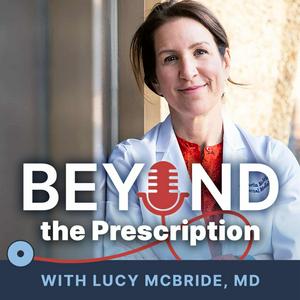
About Beyond the Prescription
Join Dr. Lucy McBride for honest conversations about what it really takes to be healthy. Each episode goes beyond quick fixes and conflicting health advice to explore the questions that matter: How do we navigate a healthcare system that's often too rushed to see us as whole people? Who can we trust when everyone seems to be selling something? And how do we reclaim agency over our own health?
Drawing from 25 years of clinical experience, Dr. McBride brings evidence-based clarity to complex health topics—from mental health and preventive care to the future of medicine itself. Whether interviewing leading healthcare innovators, answering listener questions, or sharing insights from her own practice, her mission is the same: helping you reclaim agency over your health.
For listeners who want more than a prescription—who want to understand their bodies, advocate for themselves, and cut through the noise of modern wellness culture—this is your guide to getting the care you actually need.
To sign up for her weekly newsletter, visit www.lucymcbride.substack.com/welcome lucymcbride.substack.com
Podcast websiteListen to Beyond the Prescription, The Mindset Mentor and many other podcasts from around the world with the radio.net app
Get the free radio.net app
- Stations and podcasts to bookmark
- Stream via Wi-Fi or Bluetooth
- Supports Carplay & Android Auto
- Many other app features
Get the free radio.net app
- Stations and podcasts to bookmark
- Stream via Wi-Fi or Bluetooth
- Supports Carplay & Android Auto
- Many other app features
Beyond the Prescription
Scan code,
download the app,
start listening.
download the app,
start listening.
 South Africa