
Listen to this podcast for free in the app: Download for free in the App Store
radio.net
Sleep timer
Save favourites
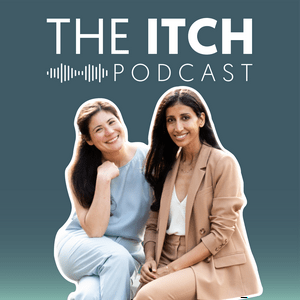
The Itch: Allergies, Asthma, Eczema & Immunology
The Itch: Allergies, Asthma & Immunology
Latest episode
181 episodes

#179 - What Pharmacists Around the World Recommend for Allergies
2026/10/15 | 39 mins.The pharmacist is often the first person you talk to about allergies. So what are they thinking about when they hand you that box of antihistamines?
Dr. Gupta and pharmacist Dr. Suzanne Soliman went to the World Congress of Pharmacy in Montreal. They asked pharmacists from the UK, Ghana, Portugal, Argentina, Uruguay, and Malaysia about three patients they might meet at the counter. Kortney joins Dr. G to talk through what the pharmacists shared: check that it’s really allergies, skip the older antihistamines, and look at the whole person.
What we cover in this episode about pharmacist recommendations for allergy medicine
Allergies or a cold? Pharmacists ask three questions: Is there a fever? Is it itchy? Does it keep coming back? Itch and symptoms that return every season point to allergies.
When to see a doctor. A fever, pain on one side of your face, or coughing and wheezing can mean an infection. You may need a medicine the pharmacist can't give you.
Old vs. new antihistamines. Older antihistamines can make you sleepy and slow your reaction time. Pharmacists around the world now choose the newer, non-drowsy ones, like fexofenadine and loratadine.
Anticholinergic side effects. Older antihistamines can also cause dry mouth, constipation, trouble peeing, blurry vision, and confusion. These side effects hit older adults harder.
Bring your medicine list. If you have kidney or liver disease or take other medicines, your pharmacist can still help. Bring a list of everything you take, including what you buy yourself.
Thank you to the pharmacists who shared their thoughts with us: Ahuti Lakhani (UK), Bernard Opoku Ware (Ghana), Adwoa Mensah (Ghana), David Pires (Portugal), Romina Takesyan (Argentina), Cecilia Maldonado (Uruguay), and Susan YH Pan (Malaysia).
More resources
Ep. 151: What Allergists Think About Antihistamines
Ep. 150: What Allergists Really Think About Your Allergy Nasal Spray
Ep. 116: Why Fexofenadine Is Considered a Truly Non-Sedating Antihistamine
Ep. 116 infographic: Which antihistamines cross into the brain
************
Made in partnership with The Allergy & Asthma Network.
Thanks to Opella for supporting today’s episode.
This podcast is for informational purposes only and does not substitute for professional medical advice. Always consult with your healthcare provider for any medical concerns.#178 - What Is Hereditary Angioedema (HAE)?
2026/10/08 | 42 mins.Hereditary angioedema (HAE) is a rare genetic condition that causes attacks of swelling in the skin, the belly, and sometimes the throat. Because it looks like an allergic reaction, it is often missed for years.
Kortney and Dr. Payel Gupta are joined by Dr. Marc Riedl, Professor of Medicine and Clinical Director of the US HAEA Angioedema Center at UC San Diego, to set the stage for our three-part series on HAE. We cover what HAE is, what is happening in the body, and symptoms that tell you it is HAE and not an allergy.
What we cover in this episode about hereditary angioedema
Why HAE is not an allergy. HAE swelling comes from a different system in the body. That's why antihistamines, steroids, and epinephrine don't stop it.
HAE is genetic. HAE comes from a change in one gene, and it can be passed from parent to child. Each child of a parent with HAE has a 50-50 chance of having it. About 1 in 4 people are the first in their family to have it, so family testing matters.
What happens in the body. People with HAE don't have enough working C1 inhibitor, the "brakes" on a chemical called bradykinin. Too much bradykinin makes tiny blood vessels leak fluid, and that fluid is the swelling.
HAE swelling and where it happens. It usually doesn't itch or come with hives, and it can last two to five days. It can show up in the hands, face, feet, belly, or throat. Belly attacks can be very painful, and throat swelling needs emergency care.
Triggers and warning signs. Injury, dental work, estrogen, and stress can set off attacks. Some people notice a red rash that doesn't itch, or tingling, before the swelling starts.
************
Made in partnership with The Allergy & Asthma Network.
Thanks to Phavaris for supporting today’s episode.
This podcast is for informational purposes only and does not substitute for professional medical advice. Always consult with your healthcare provider for any medical concerns.#177 - Treating Chronic Hives in Special Populations (Women, Pregnancy, Kids, Older Adults & Multiple Conditions
2026/10/01 | 28 mins.Chronic hives guidelines give doctors a roadmap for treatment, but not everyone fits the same path. Pregnancy, breastfeeding, menopause, childhood, getting older, and living with more than one chronic condition can all change how chronic spontaneous urticaria (CSU) is treated.
Kortney and Dr. Payel Gupta are joined by Dr. Allison Ramsey, an allergist and immunologist, to walk through the special populations section of the chronic urticaria guidelines.
What we cover in this episode about chronic hives in special populations
Why it's not your fault. Dr. Ramsey explains how she "absolves" patients of hunting for a trigger, because CSU starts with the immune system, not with anything outside the body.
Why women are more burdened by chronic hives. About 70% of people with CSU are women. Estrogen can push the immune system toward autoimmunity, and hives can shift with the menstrual cycle and become less common after menopause.
Pregnancy and breastfeeding. Non-drowsy antihistamines are considered safe, and pregnancy data from asthma suggest omalizumab (Xolair) and dupilumab (Dupixent) are too.
Adults 65 and older. Higher antihistamine doses can cause sleepiness and raise the risk of falls, so share every medication you take. Biologics don't interact with other medicines.
Living with more than one condition. People with CSU are more likely to have other autoimmune conditions. If you also have asthma, eczema, nasal polyps, or food allergy, one medication may treat more than one condition, so tell your doctor about everything.
Chronic hives in children. Most hives in kids come from viruses and go away quickly. When kids do have CSU, they often respond better to antihistamines than adults.
More resources
What is Chronic Urticaria?
Chronic Idiopathic Urticaria – CIU
Allergy & Asthma Network Chronic Urticaria Toolkit
More episodes about urticaria
Ep. 164: New Chronic Hives Guidelines: A Look at What's Changing
Ep. 128: Is Chronic Spontaneous Urticaria an Autoimmune Disease?
Ep. 122: Mortality in adult patients with chronic spontaneous urticaria - A real-world cohort study
Ep. 80: Chronic Spontaneous Urticaria Myths & Misconceptions
Ep. 78: Chronic Spontaneous Urticaria Treatments
Ep. 75: Understanding Chronic Spontaneous Urticaria: Hives Demystified
************
Made in partnership with The Allergy & Asthma Network.
Thanks to Genentech and Novartis for supporting today’s episode.
This podcast is for informational purposes only and does not substitute for professional medical advice. Always consult with your healthcare provider for any medical concerns.#176: SM Perspectives - The Doctor's Experience of Treating Systemic Mastocytosis
2026/09/25 | 37 mins.We hear a lot about the struggles patients face on their systemic mastocytosis journey, the years of normal labs, the feeling of not being believed. But have you ever wondered what that feels like from the doctor's side?
Kortney and Dr. Payel Gupta are joined by Dr. Alexander Kim, an allergist and immunologist who co-directs the Mast Cell Disorders Program at UC San Diego, for an honest look at what it's like to sit on the other side of the exam table and untangle a diagnosis of this complex condition.
What we cover in this episode about treating systemic mastocytosis
Why "your labs look fine" doesn't mean nothing's wrong. Dr. Kim explains why this journey can be challenging for doctors when labs are normal, but symptoms are severe.
Why systemic mastocytosis is still hard to diagnose, even with better tools. SM has a clearer testing path than mast cell activation syndrome (MCAS) does, but the overlap between the two still creates real diagnostic uncertainty in practice.
What “dismissiveness” looks like from a doctor's side. From time constraints and busy schedules to the gap between meaning to listen and actually making a patient feel heard.
Practical fixes for short appointments. Asking for a double appointment slot, bringing a written summary instead of hundreds of pages of records, and scheduling shorter, more frequent follow-ups instead of one long visit.
What each side wants the other to understand. What it takes to build a trusting, lasting relationship with a healthcare provider when you're living with systemic mastocytosis.
More resources about mast cell disease
About the PIONEER Trial for Avapritinib
Mast Cell Disease Toolkit
What is Mastocytosis?
What is Mast Cell Activation Syndrome (MCAS)?
************
Made in partnership with The Allergy & Asthma Network.
Thanks to Blueprint Medicines for sponsoring today’s episode.
This podcast is for informational purposes only and does not substitute for professional medical advice. Always consult with your healthcare provider for any medical concerns.# 175 - Your Mast Cell Disorder Questions, Answered
2026/09/17 | 26 mins.Mast cell disorders can feel confusing, especially with so much information floating around online and on social media. In this episode, we cut to the chase and tackle the most common mast cell disorder FAQs, straight from the community.
Dr. Dareen Siri joins us to work through community questions on mast cell disorders one by one, from what a mast cell actually is to testing, treatment, diet, and long-term outlook.
What we cover in this episode about mast cell disorders
What is a mast cell. Dr. Siri breaks down what mast cells do in the body and why an overactive one causes symptoms.
The different mast cell disorders. Allergies, autoimmune activation, and clonal disorders like indolent systemic mastocytosis each work differently.
Which tests actually matter. Blood tests, the KIT D816V mutation test, and when a bone marrow biopsy comes into play. Plus, should you consider a urine test?
Treatment and long-term outlook. What targeted treatment (avapritinib) looks like now, and whether a mast cell disorder shortens your lifespan.
Diet, supplements, and bone health. Whether a low-histamine diet helps, what the evidence says about supplements, and why bone density matters long term.
More resources about mast cell diseases
All of our mast cell disease episodes
About the PIONEER Trial for Avapritinib
Mast Cell Disease Toolkit
Mental Health and Mast Cell Disorders
Symptoms, Diagnosis & Treatment Options for Mast Cell Disorders (Recording)
************
Made in partnership with The Allergy & Asthma Network.
Thanks to Blueprint Medicines for sponsoring today’s episode.
This podcast is for informational purposes only and does not substitute for professional medical advice. Always consult with your healthcare provider for any medical concerns.
More Health & Wellness podcasts









Trending Health & Wellness podcasts























About The Itch: Allergies, Asthma, Eczema & Immunology
A podcast bringing you easily digestible information on all things allergies, asthma eczema, and immunology
Podcast websiteListen to The Itch: Allergies, Asthma, Eczema & Immunology, The School of Greatness and many other podcasts from around the world with the radio.net app
Get the free radio.net app
- Stations and podcasts to bookmark
- Stream via Wi-Fi or Bluetooth
- Supports Carplay & Android Auto
- Many other app features
Get the free radio.net app
- Stations and podcasts to bookmark
- Stream via Wi-Fi or Bluetooth
- Supports Carplay & Android Auto
- Many other app features

The Itch: Allergies, Asthma, Eczema & Immunology
Scan code,
download the app,
start listening.
download the app,
start listening.
The Itch: Allergies, Asthma, Eczema & Immunology: Podcasts in Family
 South Africa

