
Listen to this podcast for free in the app: Download for free in the App Store
radio.net
Sleep timer
Save favourites
99 episodes
EP 122: Run Faster Without Adding a Single Mile
2026/10/16 | 20 mins.What if you could run faster, feel more resilient, and build stronger bones without adding a single mile?
That's what plyometrics can do, and they're the most underrated tool most runners skip.
→ This video is a podcast version of a full YouTube video! Watch it here on Spotify (video edition) or YouTube: https://youtu.be/nLoBynaF-NM
Get $20 off your first month with code PODCAST:
→ https://www.thelyssmethod.com/
Running is basically a series of small springy motions, so it makes sense that plyometric training carries over directly to how fast and efficient you run. Studies show plyometrics can improve running speed and efficiency by up to 8%, and they do a lot more than that. They build resilience in the tendons and tissues you use to create force, and the impact loads your bones in a way that improves density over time. That makes them a big deal for runners, aging athletes, and women, especially anyone worried about bone stress injuries or thinking about training through menopause.
In this video I break down the science, then get practical. How often to program plyometrics (start with one day a week and build to two or three), where to put them in your session (before your lifts, when you're fresh), and roughly how many ground contacts make sense for your level. Then I demo real progressions from beginner to advanced: pogo hops, skips, double leg hops, jump squats, single leg work, skater hops, and depth jumps, using minimal equipment so most of you can do them wherever you train.
The key is quality over quantity. Plyometrics aren't about doing a million jumps until you're sweaty. They're about power, reaction, and recovering enough to repeat it. Build up gradually, stop a set when your power drops off, and back off if anything starts to hurt in your feet, shins, or knees.
Want plyometrics programmed for you, scaled to your level and paired with your running and strength goals? Take the quiz linked below to find your fit inside The Lyss Method, or email me and my coaches if you're not sure where to start. And tell me in the comments: have you been skipping plyos in your training?
🎯 FIND YOUR PROGRAM
Take the quiz to find your fit: https://quiz-thelyssmethod.com/
🤘🏻 TRAIN WITH ME HERE → https://www.thelyssmethod.com/programs
🤘🏻 FOLLOW ME ON IG → https://www.instagram.com/doclyssfitness/
🤘🏻 LEARN MORE + FREE RESOURCES → https://doclyssfitness.com/EP 121: Why beginner runners CAN'T run in Zone 2 (and why they shouldn't)
2026/10/01 | 8 mins.Take the Quiz to Find Your Perfect Training Program!
https://www.thelyssmethod.com/#quiz
Beginners Guide to Running!
https://youtu.be/twuSS9Uu2p0
Beginner runners are constantly told to “stay in Zone 2”… but if you’re new to running, that advice can actually make things harder, more frustrating, and way less sustainable.
→ This video is a podcast version of a full YouTube video! Watch it here on Spotify (video edition) or YouTube: https://youtu.be/-w-ASvfHxuw
Get $20 off your first month with code PODCAST:
→ https://www.thelyssmethod.com/
In this video, I’m breaking down why Zone 2 training is often a terrible strategy for beginners. When you’re just starting out, your Zone 2 is extremely small — which means even a slow jog can push your heart rate into higher zones. That doesn’t mean you’re unfit, broken, or doing something wrong. It simply means your body is adapting and your aerobic system isn’t fully developed yet. That’s normal.
Instead of stressing about staying in Zone 2, I’ll show you what beginners should actually focus on:
1. Learning the skill of running
2. Using RPE instead of obsessing over heart rate
3. Using the talk test to guide effort
4. Building fitness gradually without panic
5. Allowing your aerobic base to develop over time
Zone 2 absolutely has its place later in your running journey — but forcing yourself to live there too early can make running stressful, discouraging, and unnecessarily complicated. Let’s make this simpler, more beginner-friendly, and actually enjoyable.
If you want support getting started with running in a way that feels realistic, sustainable, and confidence-building, check out my beginner running programs below. You don’t need to be perfect — you just need a smarter approach.
🤘🏻 TRAIN WITH ME HERE → https://www.thelyssmethod.com/programs
🤘🏻 FOLLOW ME ON IG → https://www.instagram.com/doclyssfitness/
🤘🏻 LEARN MORE + FREE RESOURCES → https://doclyssfitness.com/EP 120: The Macro Tracking Approach You've Never Heard of Until Now
2026/09/17 | 33 mins.🔥 Get my free MACRO CALCULATOR here to help figure out how much to start eating to support your training. → https://bit.ly/4d8ZTMJ
In this video, Dr. Lyss introduces a simple, game-changing approach to macro tracking - focusing on flexibility and intuition over rigid numbers. Learn how setting macronutrient ranges and minimums (instead of strict targets) can make tracking feel more natural and sustainable!
Dr. Lyss also shares key tips on listening to your body’s hunger signals, adjusting tracking during holidays and travel, and how the MacroFactor app can help you stay on track without stressing about perfection.
→ This video is a podcast version of a full YouTube video! Watch it here on Spotify (video edition) or YouTube: https://youtu.be/Oe1m4N5wR0o
Get $20 off your first month with code PODCAST:
→ https://www.thelyssmethod.com/
🤘🏻 TRAIN WITH ME HERE → https://www.thelyssmethod.com/programs
🤘🏻 FOLLOW ME ON IG → https://www.instagram.com/doclyssfitness/
🤘🏻 LEARN MORE + FREE RESOURCES → https://doclyssfitness.com/
Time Stamps:
0:00 - Introduction
1:50 - My personal approach
6:00 - MacroFactor app
7:25 - Setting minimums/ranges
12:25 - Listening to hunger/body
17:25 - Tracking holidays/traveling/dining out
23:40 - Ebb and flows of lifestyle nutrition
26:00 - History of tracking and maintenance
29:00 - Benefit and intention of tracking
32:20 - Wrap up
#macrotracking #flexibledieting #IntuitiveEating #MacronutrientRanges #SustainableNutrition #HowToTrackMacros #MacroTrackingTips #DietFlexibilityEP 119: Beginner’s Guide to Running: The Tips I Wish I Knew Starting Out
2026/09/11 | 8 mins.Ready to start running but not sure where to begin? In this video, Alyssa shares essential beginner running tips to help you ease into running safely and sustainably. Whether you’re new to fitness or just getting back into it, these tips will set you up for success.
→ This video is a podcast version of a full YouTube video! Watch it here on Spotify (video edition) or YouTube: https://youtu.be/twuSS9Uu2p0
Get $20 off your first month with code PODCAST:
→ https://www.thelyssmethod.com/
What you’ll learn:
• Start with intervals: How to combine running and walking for a smooth start
• Slow pace running: Why running at a slower pace is key for beginners
• Gradual progress: How to safely increase your running frequency and volume
• Walking breaks: Incorporating walking breaks to prevent burnout
• Meet yourself where you are: The importance of honoring your fitness level for a more enjoyable experience
🔥 Get my free ZONES CALCULATOR & PhD-backed running tips here:
→ https://bit.ly/4lYPHKK
Alyssa’s beginner-friendly tips will help you build a solid foundation for long-term running success and enjoy the process of getting fitter without the risk of injury.
🤘🏻 TRAIN WITH ME HERE → https://www.thelyssmethod.com/programs
🤘🏻 FOLLOW LYSS ON IG → https://www.instagram.com/doclyssfitness/
🤘🏻 LEARN MORE + FREE RESOURCES → https://doclyssfitness.com/EP 118: Why Time on Feet Beats Mileage for Trail Running
2026/09/04 | 6 mins.Should you train for trail and ultra races by time on feet or by mileage? If you come from road running, this might change how you train completely.
→ This video is a podcast version of a full YouTube video! Watch it here on Spotify (video edition) or YouTube: https://youtu.be/Tip41I5R6KQ
Get $20 off your first month with code PODCAST:
→ https://www.thelyssmethod.com/
So many of us get obsessed with hitting specific mileage numbers, especially coming from the road running world. But trail running is slower, the terrain is wildly variable, and not all miles are created equal. You can train for the same distance race twice, spend the same time on feet, and log completely different mileage. That isn't a problem. A lot of the time it's the whole point.
In this video I break down why time on feet belongs in your toolbox when training for a trail race or ultramarathon, how I use time caps instead of forcing arbitrary mileage, and real examples from training for my first 100 miler versus my first road marathon. I also get into why your total weekly and full training cycle volume matters more than any single long run, and why this is as much a pep talk about giving yourself grace as it is a training principle.
This one is especially for my middle and back of the pack runners. I'm one of you. Adjusting for the fitness you're at doesn't mean you won't cross that finish line just like everyone else. Time on feet, time on feet, time on feet.
If you want a program that blends time and mileage and adjusts to your race distance and fitness, check out our trail and ultra programs at The Lyss Method, linked below. Not sure what fits? Take the program quiz or reach out to our coaching team. And tell me in the comments: did this change how you think about mileage?
🤘🏻 TRAIN WITH ME HERE → https://www.thelyssmethod.com/programs
🤘🏻 FOLLOW ME ON IG → https://www.instagram.com/doclyssfitness/
🤘🏻 LEARN MORE + FREE RESOURCES → https://doclyssfitness.com/
0:00 Time on Feet vs Mileage
0:19 Why Trail Miles Aren't Road Miles
1:22 How We Program Time + Mileage for Clients
2:59 My 100 Miler vs My Road Marathon
4:11 What "Use Time as a Tool" Really Means
4:37 It All Counts: Hiking, Vert, Trail, Road
5:16 A Pep Talk for Middle & Back of Packers
5:39 Give Yourself Grace and Time Cap
6:02 Questions + Find Your Program
More Health & Wellness podcasts


Trending Health & Wellness podcasts







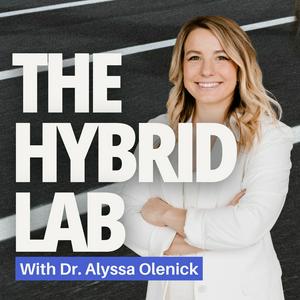
About The Hybrid Lab with Dr. Alyssa Olenick
Welcome to The Hybrid Lab with Dr. Alyssa Olenick, Ph.D. in Exercise Physiology, 17x Ultrarunner, and hybrid athlete. This podcast is for hybrid fitness lovers, hyrox crushers, road and trail runners who want to push their limits with science-backed training. Alyssa merges her expertise in exercise, metabolism, female physiology, and endurance sports to provide you with the tools to optimize strength, stamina, and recovery. If you’re ready to balance running and strength training to crush your goals, tune in for actionable strategies and expert advice to train smarter and live stronger.
Podcast websiteListen to The Hybrid Lab with Dr. Alyssa Olenick, ZOE Science & Nutrition and many other podcasts from around the world with the radio.net app
Get the free radio.net app
- Stations and podcasts to bookmark
- Stream via Wi-Fi or Bluetooth
- Supports Carplay & Android Auto
- Many other app features
Get the free radio.net app
- Stations and podcasts to bookmark
- Stream via Wi-Fi or Bluetooth
- Supports Carplay & Android Auto
- Many other app features
The Hybrid Lab with Dr. Alyssa Olenick
Scan code,
download the app,
start listening.
download the app,
start listening.
 South Africa

