

Listen to this podcast for free in the app: Download for free in the App Store
radio.net
Sleep timer
Save favourites
21 episodes
The Unseen Advantage 8: Influence
2026/06/03 | 32 mins.Why do intelligent people follow the crowd?
Why do we trust some people instinctively and distrust others?
How can a teenager with a smartphone influence millions of purchasing decisions?
And how did ordinary people become involved in one of the most disturbing tragedies of the twentieth century?
In this episode of The Unseen Advantage, Dr John McMahon explores the psychology of influence—the invisible force shaping our decisions, beliefs, relationships, leadership, and behaviour every day.
Drawing on some of the most famous studies in social psychology, including the work of Solomon Asch, Stanley Milgram, Philip Zimbardo, Robert Cialdini and Edward Bernays, we uncover how conformity, authority, social proof, identity, and belonging quietly shape human behaviour.
Through the story of Sarah, a successful CEO who begins to question how much of her decision-making is truly independent, we explore:
• Why most people underestimate how influenceable they are
• The psychology of conformity and groupthink
• Why authority can override judgement
• How roles and titles shape behaviour
• The hidden influence of advertising and public relations
• The rise of social media influencers and parasocial relationships
• How algorithms shape our perceptions of reality
• The psychology behind echo chambers and online tribes
• Why Jonestown remains one of the most important lessons in influence psychology
• The difference between ethical influence and manipulation
• How leaders, salespeople and negotiators can use influence responsibly
Whether you’re a leader, salesperson, entrepreneur, negotiator, parent, or simply curious about why people behave the way they do, this episode will change how you think about influence—and how often it shapes your own decisions without you noticing.
Because the most powerful forces shaping our lives are often the ones we cannot see.
References
Asch, S. E. (1951). Effects of Group Pressure Upon the Modification and Distortion of Judgments. In H. Guetzkow (Ed.), Groups, Leadership and Men. Carnegie Press.
Asch, S. E. (1956). Studies of Independence and Conformity: A Minority of One Against a Unanimous Majority. Psychological Monographs, 70(9), 1–70.
Bernays, E. (1928). Propaganda. Liveright Publishing.
Burger, J. M. (2009). Replicating Milgram: Would People Still Obey Today? American Psychologist, 64(1), 1–11.
Cialdini, R. B. (2021). Influence: The Psychology of Persuasion (Revised and Expanded Edition). Harper Business.
Festinger, L. (1957). A Theory of Cognitive Dissonance. Stanford University Press.
Haidt, J. (2024). The Anxious Generation. Penguin Press.
Horton, D., & Wohl, R. R. (1956). Mass Communication and Para-Social Interaction. Psychiatry, 19(3), 215–229.
Kahneman, D. (2011). Thinking, Fast and Slow. Farrar, Straus and Giroux.
Milgram, S. (1963). Behavioural Study of Obedience. Journal of Abnormal and Social Psychology, 67(4), 371–378.
Milgram, S. (1974). Obedience to Authority: An Experimental View. Harper & Row.
Zimbardo, P. G. (2007). The Lucifer Effect: Understanding How Good People Turn Evil. Random House.
Levine, R. (2003). The Power of Persuasion: How We’re Bought and Sold. Wiley.
Pratkanis, A., & Aronson, E. (2001). Age of Propaganda: The Everyday Use and Abuse of Persuasion. W. H. Freeman.
Singer, M. T. (2003). Cults in Our Midst. Jossey-Bass.
Lalich, J., & Tobias, M. (2006). Take Back Your Life: Recovering from Cults and Abusive Relationships. Bay Tree Publishing.
Twenge, J. M. (2023). Generations: The Real Differences Between Gen Z, Millennials, Gen X, Boomers and Silents. Atria Books.
Subscribe now and make sure you never miss an episode.
Support the show
Dr John McMahon is a Leadership Psychologist and Executive Coach. He holds a PhD in Management Psychology, and MBA. He has worked with senior leaders, boards, founders, and executive teams across industries and continents.
WhatsApp +44 7860 625551 for more information or to enquire about working with Dr JohnThe Interview: Haleh Fardi CVO ProCFO Partners
2026/05/21 | 28 mins.The Interview: Haleh Fardi, Co-Founder & Chief Visionary Officer, ProCFO Partners
What does a CFO actually do—and why do so many organisations wait too long to bring one into the business?
In this episode of the Power in Excellence Podcast, Dr John sits down with Haleh Fardi, Co-Founder and Chief Visionary Officer of ProCFO Partners, for a candid discussion about the evolving role of the CFO and the strategic value that financial leadership brings to organisations.
Together, they explore the power dynamics between CEOs and CFOs, the psychology of leadership and identity, French and Raven’s Five Bases of Power, how context affects communication, and the growing importance of fractional CFOs in helping organisations scale effectively without the need for a full-time finance executive.
Whether you’re a business owner, senior leader, finance professional, or simply interested in how influence, power, and decision-making shape organisational success, this conversation offers valuable insights into one of the most misunderstood roles in business.
In this episode:
• What fractional CFOs do and how they support organisations
• Why many businesses underestimate the importance of financial leadership
• The power dynamics between CEOs and CFOs
• French and Raven’s Five Bases of Power in practice
• Identity, influence, and executive decision-making
• Common misconceptions about the CFO role
A thoughtful and refreshingly honest conversation about leadership, finance, power, and organisational success.
Subscribe now and make sure you never miss an episode.
Support the show
Dr John McMahon is a Leadership Psychologist and Executive Coach. He holds a PhD in Management Psychology, and MBA. He has worked with senior leaders, boards, founders, and executive teams across industries and continents.
WhatsApp +44 7860 625551 for more information or to enquire about working with Dr JohnThe Interview: Shivana Laughlin, CEO International Shipping Limited
2026/05/05 | 31 mins.What does it really take to lead when the pressure isn’t just professional… but personal?
In this episode of the Power in Excellence Podcast, Dr John sits down with Shivana Laughlin, CEO of International Shipping Limited in Trinidad and Tobago, for a candid conversation about leadership in one of the most demanding environments imaginable.
This isn’t just a story about business.
It’s a story about legacy.
Shivana leads a company founded by her parents—stepping into a role shaped by history, expectation, and responsibility. But beyond that, she operates in a global industry where perception matters, and where assumptions about small Caribbean nations can quietly shape opportunity.
And layered on top of it all…
the often unspoken reality of being a young female CEO, navigating bias, credibility, and influence in rooms where judgement can form before a single word is spoken.
In this conversation, we explore:
What it really means to run a family business—and the pressures that come with it
How bias shows up in global business (and how to handle it without losing authority)
The psychology of credibility, perception, and power
How leaders maintain control when so much is outside of it
And how to carry legacy… while still building something that is distinctly your own
This is a conversation about leadership beyond the surface.
About the unseen dynamics shaping every interaction.
And about what it takes to lead with clarity, composure, and conviction—when the stakes are high.
Listen now and discover what power really looks like in practice.
Subscribe now and make sure you never miss an episode.
Support the show
Dr John McMahon is a Leadership Psychologist and Executive Coach. He holds a PhD in Management Psychology, and MBA. He has worked with senior leaders, boards, founders, and executive teams across industries and continents.
WhatsApp +44 7860 625551 for more information or to enquire about working with Dr JohnThe Unseen Advantage 7: Identity
2026/05/02 | 24 mins.We like to think we know who we are.
But what if that “identity” is less of a truth… and more of a story that our brain has rehearsed so often, it stopped asking whether it’s accurate?
In this episode of The Unseen Advantage, Dr John explores one of the most powerful—and limiting—psychological forces shaping our behaviour: identity.
Why do we stay stuck in patterns that no longer serve us?
Why do capable people underperform in environments where they should thrive?
And why does change feel so uncomfortable—even when we consciously want it?
The answer sits deeper than habits, deeper than motivation. It sits in the way our brains construct and protect identity.
Drawing on research from cognitive psychology, neuroscience, and behavioural science, we unpack how identity is formed, why it resists change, and how it quietly dictates performance, leadership, relationships—and even our perception of reality.
This isn’t about “reinventing yourself” with surface-level affirmations.
It’s about understanding the hidden architecture of who we believe we are… and how that belief shapes everything.
Because once you see identity clearly, you realise something uncomfortable:
You’re not just playing the game.
You’ve been playing a role.
References
Daryl Bem (1972). Self-Perception Theory. In L. Berkowitz (Ed.), Advances in Experimental Social Psychology.
Claude Steele (1988). The Psychology of Self-Affirmation: Sustaining the Integrity of the Self. In Advances in Experimental Social Psychology.
Hazel Markus (1977). Self-Schemata and Processing Information About the Self. Journal of Personality and Social Psychology.
Dan P McAdams (2001). The Psychology of Life Stories. Review of General Psychology.
Leon Festinger (1957). A Theory of Cognitive Dissonance. Stanford University Press.
Elliot Aronson (1999). Dissonance, Hypocrisy, and the Self-Concept. In Cognitive Dissonance: Progress on a Pivotal Theory in Social Psychology.
Karl Friston (2010). The Free-Energy Principle: A Unified Brain Theory? Nature Reviews Neuroscience.
Andy Clark (2013). Whatever Next? Predictive Brains, Situated Agents, and the Future of Cognitive Science. Behavioral and Brain Sciences.
Lisa Feldman Barrett (2017). How Emotions Are Made: The Secret Life of the Brain. Houghton Mifflin Harcourt.
James Clear (2018). Atomic Habits. Avery.
Charles Duhigg (2012). The Power of Habit. Random House.
Wendy Wood (2019). Good Habits, Bad Habits: The Science of Making Positive Changes That Stick. Farrar, Straus and Giroux.
Jerome Bruner (1991). The Narrative Construction of Reality. Critical Inquiry.
Erving Goffman (1959). The Presentation of Self in Everyday Life. Anchor Books.
Paul Ricoeur (1992). Oneself as Another. University of Chicago Press.
Albert Bandura (1997). Self-Efficacy: The Exercise of Control. Freeman.
Carol Dweck (2006). Mindset: The New Psychology of Success. Random House.
Roy Baumeister (1998). The Self. In The Handbook of Social Psychology.
Subscribe now and make sure you never miss an episode.
Support the show
Dr John McMahon is a Leadership Psychologist and Executive Coach. He holds a PhD in Management Psychology, and MBA. He has worked with senior leaders, boards, founders, and executive teams across industries and continents.
WhatsApp +44 7860 625551 for more information or to enquire about working with Dr JohnThe Unseen Advantage 6: The Illusion of Control
2026/04/17 | 24 mins.Why do smart, capable people keep pushing harder… and still not get the result?
In this episode of The Unseen Advantage, Dr John explores one of the most subtle and costly traps in leadership, performance, and decision-making: the illusion of control.
Drawing on the groundbreaking research of Ellen Langer, alongside behavioural science from gambling psychology and organisational performance, this episode unpacks why effort often feels like progress—even when nothing is actually changing.
Through the story of a CEO navigating a stalled deal, a disengaged team, and board-level pressure, you’ll see how control quietly replaces clarity… and why that’s where performance begins to break down.
This episode introduces key Power in Excellence concepts including:
The difference between control and influence
Why perception—not reality—drives behaviour
How the “Loop of Excellence” replaces reaction with precision
The hidden cost of over-ownership (the Victim Virus in disguise)
If you’ve ever found yourself pushing harder on something that should be working—but isn’t—this episode will change how you see it.
And once you see it… you can’t unsee it.
References
Ellen Langer (1975). The Illusion of Control. Journal of Personality and Social Psychology, 32(2), 311–328.
Langer, E. J. (1983). The Psychology of Control. Sage Publications.
Grupe, D. W., & Nitschke, J. B. (2013). Uncertainty and anticipation in anxiety: An integrated neurobiological and psychological perspective. Nature Reviews Neuroscience, 14(7), 488–501.
Friston, K. (2010). The free-energy principle: A unified brain theory? Nature Reviews Neuroscience, 11(2), 127–138.
Clark, A. (2013). Whatever next? Predictive brains, situated agents, and the future of cognitive science. Behavioral and Brain Sciences, 36(3), 181–204.
Dixon, M. J., Harrigan, K. A., Sandhu, R., Collins, K., & Fugelsang, J. A. (2010/2013). Losses disguised as wins and near-misses in modern slot machines. Journal of Gambling Studies.
Clark, L. (2010). Decision-making during gambling: An integration of cognitive and psychobiological approaches. Philosophical Transactions of the Royal Society B, 365(1538), 319–330.
Schüll, N. D. (2012). Addiction by Design: Machine Gambling in Las Vegas. Princeton University Press.
Deci, E. L., & Ryan, R. M. (2000). The “What” and “Why” of Goal Pursuits: Human Needs and the Self-Determination of Behavior. Psychological Inquiry, 11(4), 227–268.
Ryan, R. M., & Deci, E. L. (2017). Self-Determination Theory: Basic Psychological Needs in Motivation, Development, and Wellness. Guilford Press.
Lazarus, R. S., & Folkman, S. (1984). Stress, Appraisal, and Coping. Springer Publishing.
Gallup (2020). State of the Global Workplace Report.
Harter, J. K., Schmidt, F. L., & Hayes, T. L. (2002). Business-unit-level relationship between employee satisfaction, engagement, and business outcomes. Journal of Applied Psychology.
Subscribe now and make sure you never miss an episode.
Support the show
Dr John McMahon is a Leadership Psychologist and Executive Coach. He holds a PhD in Management Psychology, and MBA. He has worked with senior leaders, boards, founders, and executive teams across industries and continents.
WhatsApp +44 7860 625551 for more information or to enquire about working with Dr John
More Business podcasts







Trending Business podcasts








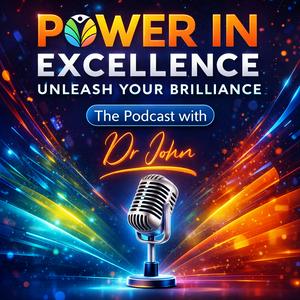
About Power In Excellence
Unleash your brilliance with The Power In Excellence Podcast, hosted by Dr. John! Dive into a transformative journey exploring the dynamic intersections of self development, management psychology, leadership, and personal power. Each episode is packed with expert insights and practical strategies to thrive in the competitive business landscape. Whether you're a seasoned professional or just starting your career, Dr. John's engaging discussions will equip you with the tools you need to excel and navigate the complexities of the business world with confidence. Take full advantage of the opportunity to elevate your skills and achieve excellence—tune in and subscribe now!
Podcast websiteListen to Power In Excellence, Money with Carla and many other podcasts from around the world with the radio.net app
Get the free radio.net app
- Stations and podcasts to bookmark
- Stream via Wi-Fi or Bluetooth
- Supports Carplay & Android Auto
- Many other app features
Get the free radio.net app
- Stations and podcasts to bookmark
- Stream via Wi-Fi or Bluetooth
- Supports Carplay & Android Auto
- Many other app features

Power In Excellence
Scan code,
download the app,
start listening.
download the app,
start listening.
Power In Excellence: Podcasts in Family
 South Africa