

Listen to this podcast for free in the app: Download for free in the App Store
radio.net
Sleep timer
Save favourites
217 episodes
Pregnancy and Infant Loss Remembrance Day: How to Build Real Support for Grieving Families | 207
2026/10/14 | 31 mins.Send us Fan Mail
Today, 15 October, is Pregnancy and Infant Loss Remembrance Day. In this episode I move beyond what to say and focus on how to build support around a grieving family, and how to keep it going over time.
For grieving parents, I share practical questions to help you find the right support for yourself, ways to support each other as a couple when you grieve differently, and how to include and protect your other children. For grandparents, aunts and uncles, I introduce the Circles of Support model and its simple rule: comfort in, dump out.
For supporters, I walk through how support needs to change from the first days to the first weeks, months and years. And for friends, I share the story of firefighters and builders, so you can ask yourself honestly which one you are, or whether you are neither. I close with an invitation to join the International Wave of Light tonight at 7 pm.
"Support is not a single act. It is a relationship that continues."
Who this is for: Parents who have experienced miscarriage, stillbirth or infant loss. Grandparents, aunts, uncles and siblings. Friends, colleagues and professionals who want to support a grieving family not only in the first days, but for the long term.
In this episode
Finding the right support for yourself after the death of your baby
Supporting each other as a couple when you grieve differently
Including and protecting siblings
Circles of Support for grandparents and the wider family: comfort in, dump out
How support needs to change: the first days, weeks, months and years
Firefighters and builders: which kind of friend are you?
The Wave of Light, 15 October at 7 pm
Chapters
00:00 Intro October 15 Wave of Light
01:32 Welcome & Overview
02:42 Support Does Not Arrive by Itself
04:05 For Grieving Families: Support for Yourself
07:31 Spread Your Support
08:30 Support for Each Other as a Couple
10:50 Your Other Children
12:54 Speak Up
14:13 The Wider Family: Grandparents, Aunts and Uncles
18:24 Supporters: Support Over Time
21:08 Friends: Are You a Firefighter or a Builder?
25:17 Continuous Support
26:21 The Wave of LightCircles
Mentioned in this episode
Circles of Support (blog): nathaliehimmelrich.com/circles-of-support/
Episode 106, When Loss Reshapes Our Circle
Episode 205, PAIL Awareness Month: Dos and Don'ts
Episode 201, Grief and Time
Book: Grieving Parents: Surviving Loss as a Couple
Book: Bridging the Grief Gap
Access free resources: nathaliehimmelrich.com/free-resources-hub
If this episode helped you, please rate the podcast with five stars and leave a short review on Apple Podcasts or Spotify. It takes less than a minute and helps other grieving families find these conversations.
Support the show
💡 If today’s episode touched you, please share it with someone who might need it.
🤝 Become a supporter of the show! Starting at $3/month & leave a review.
Stay Connected
🌐 Visit nathaliehimmelrich.com
💌 Subscribe to the newsletter for resources and updates
🎧 Never miss an episode—follow the podcast!
💛 Socials Instagram Facebook
Find Support Resources
💜 For Grievers – Resources
https://nathaliehimmelrich.com/grief-trauma-support/
💜 For Supporters – Supporting someone https://nathaliehimmelrich.com/supporters-resources/
💜 Books – Explore books on grief and healing https://nathaliehimmelrich.com/books/
💜 Support – Offers - free and paid
https://nathaliehimmelrich.com/free-resources-hub/Breast Cancer Awareness Month: The Hidden Grief and Trauma of Breast Cancer | 206
2026/10/09 | 32 mins.Send us Fan Mail
October is Breast Cancer Awareness Month, and most of what we see is about early detection and survival. Both matter. But there is a side of breast cancer that rarely makes it onto a poster: the grief and the trauma. The losses that happen long before, and very often without, any death. The fear that stays in the body after treatment ends. And the quiet exhaustion of the people standing beside someone who is ill.
In this episode, I map out how many people are affected worldwide, including men, and then look at breast cancer through two lenses. As grief: the losses of body, hair, trust, fertility, intimacy, identity and an assumed future. And as trauma: the "before and after" moment of diagnosis, medical trauma, fear of recurrence, and why your nervous system is protecting you, not failing you.
I speak to people who have been diagnosed, to partners, families and friends, to those living with metastatic breast cancer, and to those who have lost someone to breast cancer.
"You can be deeply grateful to be alive, and deeply sad about what you have lost. Both are true. Both are allowed."
Who this is for: Anyone who has been diagnosed with breast cancer, at any stage, women and men. Partners, children, parents and friends walking alongside them. People living with metastatic breast cancer. Anyone grieving someone who died of breast cancer. And professionals who support them.
In this episode:
How many people breast cancer affects worldwide, including men
The losses no one calls grief
When a diagnosis becomes trauma, and fear of recurrence
You don't have to be brave all the time
For partners, families and friends: what helps
Living with metastatic breast cancer
If you have lost someone to breast cancer
A short grounding practice
Chapters:
00:00 Intro Breast Cancer Awareness
01:19 Welcome
04:01 The Statistics
06:15 Grief and Trauma
07:37 The Losses No One Calls Grief
11:45 When a Breast Cancer Diagnosis Becomes Trauma
14:01 What Does Trauma After Breast Cancer Look Like
15:57 SSP Safe and Sound Protocol
16:25 You Don't Have to be Brave All The Time
17:51 If You Are Supporting Someone With Breast Cancer
20:57 Men Experiencing Breast Cancer
21:30 People With Metastatic Breast Cancer
23:26 If You Have Lost Someone Through Breast Cancer
1528.7208321528.72083225:29 Closing Exercise
27:30 Where To Go From Here
29:22 Where to Find Support
30:12 If You Are Affected
Episodes mentioned: 15 Amie Lands, 72 Hope Edelman, 74 Diana Richardson, 75 David Kessler, 106 Friendship After Grief and Trauma, 111 Anticipatory Grief, 114 Disenfranchised Grief, 117 Secondary Loss Grief, 134 Identity-Related Grief, 136 Non-death Loss, 163 When the Body Learns Danger, 170 Single-Incident Trauma, 171 Medical and Birth Trauma, 190 Mourning Someone Who Is Still Alive, 197 Deb Dana, 201 Grief and Time, 207 Pregnancy and Infant Loss Awareness (next Wednesday). Full archive: nathaliehimmelrich.com/episode-overview-latest-episode-first/
Support lines:
Switzerland, KrebsInfo 0800 11 88 11
Germany, Krebsinformationsdienst 0800 420 30 40
UK, Breast Cancer Now 0808 800 6000
USA, American Cancer Society 1-800-227-2345 (24/7)
Australia, Cancer Council 13 11 20
Access free resources: nathaliehimmelrich.com/free-resources-hub
If this episode helped you, please rate the podcast with five stars and leave a short review on Apple Podcasts or Spotify. It takes less than a minute and helps others find these conversations when they need them.
Support the show
💡 If today’s episode touched you, please share it with someone who might need it.
🤝 Become a supporter of the show! Starting at $3/month & leave a review.
Stay Connected
🌐 Visit nathaliehimmelrich.com
💌 Subscribe to the newsletter for resources and updates
🎧 Never miss an episode—follow the podcast!
💛 Socials Instagram Facebook
Find Support Resources
💜 For Grievers – Resources
https://nathaliehimmelrich.com/grief-trauma-support/
💜 For Supporters – Supporting someone https://nathaliehimmelrich.com/supporters-resources/
💜 Books – Explore books on grief and healing https://nathaliehimmelrich.com/books/
💜 Support – Offers - free and paid
https://nathaliehimmelrich.com/free-resources-hub/Pregnancy and Infant Loss Awareness Month: Dos and Don'ts for Bereaved Parents and Supporters | 205
2026/10/01 | 21 mins.Send us Fan Mail
31 Days PAIL Companion: Start here
October is Pregnancy and Infant Loss Awareness Month, and on 15 October, families worldwide light a candle at 7 pm for the International Wave of Light. In this episode, I look at where this month came from, why pregnancy and infant loss remains one of the most silenced losses, and what both grieving parents and their supporters can do differently.
I bring together the 2025 Pregnancy and Infant Loss Awareness mini-series (episodes 142 to 157), its guest conversations and paired episodes for parents and for supporters, and turn them into two clear lists of dos and don'ts. One for you if your baby has died. One for you if you are standing beside someone whose baby has died.
I also share a personal note fifteen years after the death of my daughter Amaya, offer simple ways to mark 15 October, and point you to the exact episodes in the archive to return to, depending on where you are right now.
"You do not need the perfect words. What hurts most is not the clumsy sentence. It is the silence."
Who this is for: Parents who have experienced miscarriage, stillbirth or infant loss, at any time. Partners, grandparents and siblings. Friends, colleagues and professionals who want to support bereaved parents without saying the wrong thing.
In this episode:
The history of Pregnancy and Infant Loss Awareness Month and the Wave of Light
A recap of the 2025 PAIL mini-series, episodes 142 to 157
Dos and don'ts for grieving parents
Dos and don'ts for supporters, including what to say and what not to say
Ways to mark 15 October
Where to start in the archive
Episodes mentioned: 142, 144 to 157 (PAIL Mini Series), 201 Grief and Time. Full list: nathaliehimmelrich.com/pregnancy-and-infant-loss-awareness-mini-series/
Access free resources: nathaliehimmelrich.com/free-resources-hub
If this episode helped you, please rate the podcast with five stars and leave a short review on Apple Podcasts or Spotify. It takes less than a minute and helps other grieving parents find these conversations.
Support the show
💡 If today’s episode touched you, please share it with someone who might need it.
🤝 Become a supporter of the show! Starting at $3/month & leave a review.
Stay Connected
🌐 Visit nathaliehimmelrich.com
💌 Subscribe to the newsletter for resources and updates
🎧 Never miss an episode—follow the podcast!
💛 Socials Instagram Facebook
Find Support Resources
💜 For Grievers – Resources
https://nathaliehimmelrich.com/grief-trauma-support/
💜 For Supporters – Supporting someone https://nathaliehimmelrich.com/supporters-resources/
💜 Books – Explore books on grief and healing https://nathaliehimmelrich.com/books/
💜 Support – Offers - free and paid
https://nathaliehimmelrich.com/free-resources-hub/The Questions We Ask About Memory After Grief and Trauma | 204
2026/09/23 | 26 mins.Send us Fan Mail
Grief and trauma both change how memory works, and almost everyone going through either one ends up asking the same handful of questions. In this episode, we go through eleven of the most common ones: five about what trauma does to memory of the event itself, and six about what grief does to memory of the person who died. For each one, we look at what the research and clinical literature say is happening, so the goal isn't to explain the pain away, but to show these are documented, well-understood responses, not signs something is wrong with you.
Chapters
00:49 Most Asked Questions on Grief and Trauma
02:10 Most Asked Questions Regarding Trauma
02:37 Most Asked Questions Regarding Grief
On trauma and what people remember:
03:50 Trauma: Why Can't I Remember Key Parts?
05:15 Why Are Some Details Razor-sharp and Others Just Gone?
06:54 Is My Memory Even Accurate, or Am I Making It Up?
09:30 Why Does It Feel like It's Happening Again, Right Now?
10:51 What Are These Images and Sensations That Keep Intruding on Me
On grief and the memory of the person they lost:
12:19 Grief: Will I Forget Their Voice, Their Face, Their Smell?
14:12 Why Can't I Stop Thinking about Them?
15:40 Why Do I Keep 'seeing' Them, or Dreaming They're Still Alive?
17:30 Am I the Only One Afraid That Other People Will Forget Them Too?
19:32 Why Do I Feel Guilty about My Memories of Them, Either Way?
22:00 Why Does the Longing Still Come in Waves, Even Years Later
Related Episodes
E87 Grief Dreams and What They Can Tell Us with Dr Joshua Black
E201 Grief and Time: What 15 Years Taught Me About Loss vs. Grieving
Sources and Citations
General memory science (Harvard Health):
Memory — Harvard Health
Memories: Learning, remembering, (not) forgetting — Harvard Health
Flaws of normal memory — Harvard Health
Trauma and stress (Harvard Health):
Protect your brain from stress — Harvard Health, featuring Dr Kerry Ressler, Harvard Medical School
Grief and bereavement (Harvard Health):
How to deal with grief — Harvard Health, featuring David H. Rosmarin, McLean Hospital
How to overcome grief's health-damaging effects — Harvard Health, featuring Dr Eric Bui
Getting stuck in long-term grief — Harvard Health, featuring Sue Morris, Dana-Farber Cancer Institute
Beyond bereavement — Harvard Health
On the specific trauma-memory questions:
Top questions about trauma, PTSD, and therapy — Dr Valentina Stoycheva, STEPS (Stress & Trauma Evaluation and Psychological Services)
Fragmented memories: how trauma can cause memory loss — domesticshelters.org, featuring Dr Edie Zusman
Common myths about memory for trauma — Rachel Goldsmith and M. Rose Barlow, University of Oregon
On the specific grief-memory questions:
The fear of forgetting — Maria Kubitz, Alive in Memory
Adults' reactions to bereavement — NCBI Bookshelf, citing Lindemann (1944) and Beverly Raphael
Support the show
💡 If today’s episode touched you, please share it with someone who might need it.
🤝 Become a supporter of the show! Starting at $3/month & leave a review.
Stay Connected
🌐 Visit nathaliehimmelrich.com
💌 Subscribe to the newsletter for resources and updates
🎧 Never miss an episode—follow the podcast!
💛 Socials Instagram Facebook
Find Support Resources
💜 For Grievers – Resources
https://nathaliehimmelrich.com/grief-trauma-support/
💜 For Supporters – Supporting someone https://nathaliehimmelrich.com/supporters-resources/
💜 Books – Explore books on grief and healing https://nathaliehimmelrich.com/books/
💜 Support – Offers - free and paid
https://nathaliehimmelrich.com/free-resources-hub/Grief, Shame, and the Soul's Work: A Conversation with Francis Weller Part 2 | 203
2026/09/17 | 30 mins.Send us Fan Mail
This is Part 2 of the Conversation with Francis Weller. If you haven't listened to Part 1 yet, start here.
There are voices in the grief world that stop you in your tracks — not because they are loud, but because they carry something true. Francis Weller is one of those voices. I have followed his work for some time, moved by the depth of his writing and the rare quality of his presence, and I have long wanted to bring him into this conversation. Today, that moment has arrived, and I am genuinely looking forward to what we will explore together.
Francis brings to this work something that is not easy to name but impossible to miss — a willingness to sit inside the hardest human experiences without rushing toward resolution, and a gift for language that meets grief where it actually lives.
In this episode, we cover
02:37 Trauma and Grief
04:09 Titrating the Trauma to Work With Grief
12:00 Where Did the Interest in Soul, Ritual, etc. Start?
13:44 What Has Claimed Me?
18:03 The Gift
22:22 First Steps to Care For Your Soul
About today's guest
Francis Weller is a psychotherapist, writer, and soul activist. Author of the bestselling The Wild Edge of Sorrow: Rituals of Renewal and the Sacred Work of Grief and In the Absence of the Ordinary: Soul Work for Times of Uncertainty, he has introduced the healing work of ritual to thousands of people. His writing and voice have appeared in anthologies, journals, and media such as Anderson Cooper's All There Is podcast, The Sun, Utne Reader, Kosmos Journal, and Ruminate. He is currently completing his fourth book, Facing the World with Soul and Why It Matters.
Support the show
💡 If today’s episode touched you, please share it with someone who might need it.
🤝 Become a supporter of the show! Starting at $3/month & leave a review.
Stay Connected
🌐 Visit nathaliehimmelrich.com
💌 Subscribe to the newsletter for resources and updates
🎧 Never miss an episode—follow the podcast!
💛 Socials Instagram Facebook
Find Support Resources
💜 For Grievers – Resources
https://nathaliehimmelrich.com/grief-trauma-support/
💜 For Supporters – Supporting someone https://nathaliehimmelrich.com/supporters-resources/
💜 Books – Explore books on grief and healing https://nathaliehimmelrich.com/books/
💜 Support – Offers - free and paid
https://nathaliehimmelrich.com/free-resources-hub/
More Health & Wellness podcasts









Trending Health & Wellness podcasts














About How To Deal With Grief and Trauma
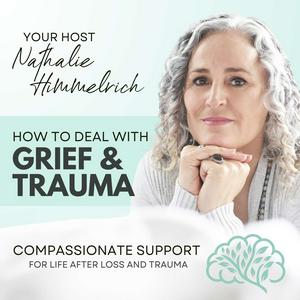
You can't go through life without experiencing loss and trauma the question is how do we deal and live with the grief and pain? Join Nathalie Himmelrich, grief expert and author, talking to people who have experienced grief and trauma first-hand. If you want to be inspired by others who traveled through their grief and trauma, found that healing is possible, and came out the other end knowing they can survive and thrive in life after loss. For more info: www.nathaliehimmelrich.com
Podcast websiteListen to How To Deal With Grief and Trauma, The Mindset Mentor and many other podcasts from around the world with the radio.net app
Get the free radio.net app
- Stations and podcasts to bookmark
- Stream via Wi-Fi or Bluetooth
- Supports Carplay & Android Auto
- Many other app features
Get the free radio.net app
- Stations and podcasts to bookmark
- Stream via Wi-Fi or Bluetooth
- Supports Carplay & Android Auto
- Many other app features

How To Deal With Grief and Trauma
Scan code,
download the app,
start listening.
download the app,
start listening.
How To Deal With Grief and Trauma: Podcasts in Family
 South Africa
