

Listen to this podcast for free in the app: Download for free in the App Store
radio.net
Sleep timer
Save favourites
802 episodes
Ep. 807 - Master the Social 6 with Injection Composite
2026/09/28 | 32 mins.What if you could deliver stunning anterior composite restorations in half the time it takes to freehand sculpt them — without relying on advanced artistic ability? This episode breaks down exactly how to do it.
Dr. Mackenzie Kelly is a cosmetic dentist, educator, and adjunct faculty member at Indiana University School of Dentistry, where she graduated with highest distinction and received the American College of Prosthodontists award for excellence in crowns, bridges, restorative, and cosmetic procedures. She is currently pursuing accreditation through the American Academy of Cosmetic Dentistry — one of the most prestigious and rarely achieved designations in the field. With hundreds of hours of continuing education in minimal prep veneers, cosmetic bonding, clear aligners, and digital dentistry, Dr. Kelly brings both technical mastery and genuine artistic talent to every case.
In this episode, Dr. Kelly provides a thorough clinical walkthrough of the injection composite technique — a digital workflow that uses a clear custom matrix fabricated from a diagnostic wax-up to guide composite placement and eliminate the need for freehand sculpting. She explains why this approach is applicable across nearly all anterior composite scenarios, how it compares to indirect porcelain restorations, and how proper case planning on the front end is the single most important factor in achieving consistent, beautiful outcomes. The conversation covers the full process from digital scan and CAD design through matrix fabrication, tooth preparation, isolation, injection protocol, and final finishing — with specific clinical tips at every step.
Episode Highlights:
The injection composite technique uses a clear matrix fabricated from a digital or analog diagnostic wax-up, with small injection ports pierced into the matrix through which composite is injected once the matrix is fully seated. Creating two separate matrix variants — one for every other tooth and one for all teeth — dramatically reduces interproximal cleanup and improves contour control, especially in multi-tooth cases like the social six.
Tooth preparation for injection composite is performed entirely within enamel when possible, using air abrasion rather than a handpiece to achieve micro-surface preparation without structural reduction. After isolation with Teflon tape on alternating teeth, unprepped enamel is phosphoric acid etched for 30 to 60 seconds, followed by application of a universal self-etching bonding agent to ensure reliable adhesion even if small areas of dentin are inadvertently exposed.
A high-filler-content composite — specifically one with approximately 91% filler loading in the packable formulation and approximately 81% in the flowable formulation — provides significantly greater strength and stain resistance compared to conventional composites, which typically contain filler content in the 60 to 70 percent range for flowables. Higher filler content reduces the resin component responsible for polymerization shrinkage and staining, supporting long-term durability of direct anterior restorations.
A partial cure of approximately 10 seconds before removing the clear matrix allows the composite to reach sufficient rigidity for matrix removal while remaining manageable for flash cleanup. A sharp scalpel blade is used immediately after matrix removal to trim excess composite at the gingival and interproximal margins before completing the final cure — this technique minimizes finishing time and reduces the risk of over-contouring.
Executing a provisional mock-up using a putty matrix and a bisacryl provisional material before any etching or preparation allows the clinician to verify tooth length, proportion, and shade masking in the patient's face under natural conditions. This critical step also helps identify whether darker underlying tooth structure will require a more opaque composite selection, and provides a reversible checkpoint for patient approval before any irreversible clinical steps are taken.
Perfect for: General dentists looking to expand their direct aesthetic composite capabilities, cosmetic dentistry enthusiasts at any career stage, dental residents building confidence with anterior restorations, and any clinician interested in integrating digital workflows into their cosmetic dentistry practice.
If anterior composite cases have been a source of stress or hesitation in your practice, this episode gives you a concrete, step-by-step protocol to change that starting with your very next case.Ep. 806 - It Starts With Leadership: Creating the Exceptional Patient Experience
2026/09/24 | 25 mins.What does it actually take to make a patient say, "I'm really glad you didn't try to sell me anything today"? The answer has very little to do with your handpiece or your composite, and everything to do with how your practice makes people feel.
Dr. Lori Trost is a full-time clinician whose Columbia, Illinois practice centers on esthetic dentistry with a wellness-focused approach to patient care. A sought-after lecturer across North America, clinical evaluator for numerous dental manufacturers, and prolific author of professional dental articles, Dr. Trost is a member of the ADA, ASDA, and AGD, serves as a board member of the AACO, and is a recipient of the prestigious Shils Foundation Award from the ADA for Entrepreneurial Spirit and Leadership. She was also named one of the "Top 25 Women in Dentistry" by Dental Products Report. Her decades of clinical experience and her nationally acclaimed course on patient experience make her one of the most credible voices on this topic in dentistry today.
In this episode, Dr. Trost breaks down what it truly means to create an exceptional patient experience — and why so many practices, even those with veteran clinicians, are falling short. Drawing on the response to a standing-room-only lecture she delivered to over 1,000 attendees, she reveals the three pain points that resonated most deeply and explains how practices can address them systematically. This conversation is a candid, practical look at the cultural and operational gaps that quietly erode patient trust, retention, and referrals.
Episode Highlights:
Research shows patients who wait more than 10 minutes in a reception area become disengaged, turn to their phones, and are significantly more likely to leave negative reviews. Software that tracks patient check-in time can help front desk teams intervene before frustration builds, and moving patients promptly is one of the simplest and most overlooked retention strategies in practice management.
Only 35% of dental offices conduct a morning huddle, despite it being one of the most powerful tools for aligning a team before the clinical day begins. Practices that skip this daily communication ritual are more prone to in-office chaos, miscommunication between clinical and administrative staff, and patients who leave without understanding what happens next in their care.
Patients who are not oriented to the value of their visit before they reach the front desk are more likely to question fees, dispute charges, and disengage from treatment planning. Building clear verbal handoffs between the operatory and the front desk — including scripted language to describe clinical findings like cracked teeth — is a trainable, systems-based solution that directly impacts case acceptance and perceived practice value.
Phone distraction in the operatory is not just a behavioral nuisance — studies from major universities confirm that the mere presence of a phone reduces a patient's ability to retain health information. Practices that implement a phone-off policy during appointments report stronger patient engagement, fewer safety concerns during active procedures, and more meaningful clinical conversations.
Leadership gaps are among the most commonly reported pain points in dental teams, yet many practice owners either avoid the leadership role or conflate being liked with being effective. Defining a clear leadership style early — including during the hiring process — and investing in leadership development through courses and reading reduces team dysfunction, lowers staff turnover, and creates a practice culture where doing excellent work is the norm rather than the exception.
Perfect for: General dentists, practice owners, dental office managers, treatment coordinators, and any clinical team member who wants to understand how practice culture and patient communication directly impact retention, referrals, and long-term practice success.
If you've ever lost a patient not because of your clinical work but because of how they felt walking out the door, this episode will show you exactly what to change.Ep. 805 - Risk Is the New Diagnosis: Rethinking How We Practice Dentistry
2026/09/21 | 33 mins.What if the true measure of clinical success in dentistry was not how well we treat disease, but how effectively we prevent it from ever developing in the first place?
Penny Hatzimanolakis is a periodontist and prosthodontist who has been practicing evidence-informed, prevention-focused oral health care since 1994. A faculty member at the University of British Columbia's dental faculty since 2002, she is currently pursuing a doctorate in Educational Leadership. A published author, national speaker, and industry board advisor, she operates the Elevate Oral Health and Learning Centre, where she provides advanced training and individualized, patient-centred care with a strong commitment to serving underserved communities.
This episode applies the P4 medicine framework — predictive, preventive, personalized, and participatory — to oral health care, challenging dentistry's long-standing habit of measuring success by treatment volume rather than disease prevention. Penny introduces a compelling fifth P, preservation, as the overarching clinical goal that should unify all dental disciplines. The conversation spans periodontal risk management, individualized recall protocols, peri-implantitis prevention, and the role of emerging AI technologies in moving dentistry from reactive repair toward precision prevention.
Episode Highlights:
Current dentistry measures success almost exclusively through treatment outcomes — restorations placed, pocket depths reduced, implants placed — while rarely quantifying how much disease was actually prevented. Reframing success to include avoided restorations, preserved attachment, and maintained healthy dentition would likely reveal that proactive prevention rates in most practices sit at only 10–15%, a standard no other medical discipline would accept.
The standard twice-yearly dental recall interval has no scientific basis and originated largely from consumer advertising campaigns dating back to the 1920s and 1940s. Risk-based recall intervals — which may range from one to six months or beyond depending on the individual patient's disease activity, systemic health, and compliance — represent a more evidence-informed approach to maintenance scheduling.
Guided biofilm therapy is an evidence-based, minimally invasive clinical protocol structured around a sequential eight-step framework that aligns directly with P4 medicine principles. The protocol incorporates disclosing agents to visualize biofilm, motivational interviewing, salivary diagnostics, nutritional counseling, and powered biofilm disruption using fine erythritol powder, allowing targeted management of biofilm as the primary etiological driver of both periodontal disease and peri-implantitis before a hand instrument is ever introduced.
Patients with type 2 diabetes carry approximately a 50% elevated risk of developing peri-implantitis, and implant deterioration when it occurs progresses significantly faster than comparable breakdown around natural teeth due to the absence of a periodontal ligament and its associated host defense mechanisms. Thorough pre-implant risk stratification — including full medical history review, systemic disease assessment, and identification of compounding risk factors — is essential before implant placement is undertaken.
Preservation of tooth structure is emerging as a unifying philosophy across dental specialties, exemplified in endodontics by the growing evidence base for vital pulp therapy including partial pulpotomy on mature teeth with carious pulp exposures. Using a calcium silicate-based hydraulic cement following incremental pulp tissue removal to achieve hemostasis can allow clinicians to avoid full pulpectomy and obturation, eliminating the associated costs of root canal treatment and the indirect restoration that typically follows.
Perfect for: general dentists, dental hygienists, periodontists, prosthodontists, and dental residents seeking to integrate evidence-informed prevention protocols, risk-based recall strategies, and minimally invasive principles into daily clinical practice.
If you have ever questioned whether dentistry's definition of success is truly serving your patients' long-term health, this conversation will change how you think about every patient you see.Ep. 804 - What You Believe Is What You Build: Breaking Free from Corporate Dentistry
2026/09/17 | 37 mins.Is corporate dentistry holding you back from the practice you actually want to build — or is the real obstacle something happening in your own head?
Dr. Mark Kogut is a pediatric dentist, orthodontist, author, and educator with over 42 years of private practice experience. He built a thriving fee-for-service pediatric and orthodontic practice with more than 5,000 square feet, seven consultation rooms, and a team of 30, all while teaching orthodontics to pediatric dental residents for 22 years at what is now Texas A&M College of Dentistry. He is also the author of the Amazon bestseller Breaking Free: How to Escape Corporate Dentistry and Build Your Dream Practice. Dr. Kogut's depth of experience in both clinical care and practice leadership makes him one of the most compelling voices in independent dental practice today.
In this conversation, Dr. Kogut unpacks the mindset framework at the core of his book — including the Mobius Method, a model for understanding how beliefs, behaviors, and results are cyclically linked and not simply linear. He and Dr. Klein explore why fear is the single greatest barrier preventing dentists from making the leap to ownership, how a fee-for-service model can be built from scratch even in today's insurance-heavy environment, and what it actually takes to develop the leadership skills and team culture that sustain a thriving independent practice. The discussion draws directly from Dr. Kogut's four decades of real-world experience and his years mentoring residents toward thinking beyond clinical training.
Episode Highlights:
The Mobius Method reframes the relationship between beliefs, behavior, and results as cyclical and multidirectional rather than linear. Recognizing that the results you get reinforce what you believe — and that your beliefs shape the results you pursue — is a foundational shift for any dentist considering the transition from associate to owner.
Fear is identified as the single most significant obstacle preventing dentists from transitioning into ownership. Just as clinical skills like administering injections are learned through practice and repetition, business skills are also learnable — and many can be outsourced, reducing the threshold of knowledge required before making the leap.
A gap analysis framework is presented as a practical tool for major practice decisions, including large equipment investments. The approach involves defining a clear target, honestly assessing the current state, identifying the gap between the two, and building a step-by-step plan to close it — applicable to financial planning, staffing, and practice growth.
Structuring a practice as fee-for-service from the start is presented as both viable and preferable for dentists who want to deliver care on their own terms. In orthodontics specifically, full-fee collection before treatment begins was a consistent model in Dr. Kogut's practice, enabled by building trust with patients and families before financial conversations took place — and by equipping team members to have those conversations more effectively than the dentist alone.
The wheelbarrow-versus-tractor metaphor captures the difference between a practice driven by poor systems that requires constant manual effort and one powered by well-trained, values-aligned team members who pull the practice forward. Hiring for growth mindset and cultural fit — rather than years of experience — and investing in team development through coaching, continuing education, and book clubs were central to sustaining that tractor model over four decades.
Perfect for: General dentists and specialists considering transitioning out of corporate or DSO environments, dental residents approaching the end of their training, and any practice owner looking to strengthen team culture, leadership skills, and the mindset foundations of independent practice.
If you have ever talked yourself out of ownership before you even started, this episode will show you exactly where that thinking comes from — and how to change it.Ep. 803 - Universal Composites with Dr. Marc Geissberger: What Dentists Need to Know
2026/09/14 | 31 mins.Are you still selecting composites based on shade count and marketing claims — or are you evaluating what actually matters clinically? This episode cuts through the noise and gets into the real science behind modern composite selection.
Dr. Mark Geissberger brings over 30 years of clinical and academic experience to this conversation. He is Professor and Immediate Past Chair of the Department of Integrated Reconstructive Dental Sciences at the University of the Pacific, School of Dentistry, where he directed the Aesthetic and Complex Care Clinic and has taught for 25 years. Dr. Geissberger earned his dental degree from University of the Pacific in 1991, was elected to Omicron Kappa Upsilon, and later earned a Master of Arts in Educational Psychology. He has served as President of the National Chapter of Omicron Kappa Upsilon, serves as University Representative to the AACD University Council, and has authored a textbook on esthetic dentistry published by Wiley-Blackwell. With over 350 continuing education programs presented nationally and internationally, Dr. Geissberger is one of the most experienced restorative dental educators in the country.
This episode explores how composite materials have genuinely evolved beyond marketing buzzwords, what dentists should actually evaluate when selecting a new restorative material, and how a new generation of universal composites is simplifying anterior and posterior workflows without sacrificing aesthetics. Dr. Geissberger provides a frank, science-based framework for evaluating handling, radiopacity, shrinkage, and shade matching that applies to any composite on the market. The conversation also covers composite warming, adhesive protocol selection, and isolation strategies for everyday clinical use.
Episode Highlights:
Single-shade composites made a bold promise that the science never fully supported. True shade matching requires cluster-engineered shade systems — a process that one leading manufacturer spent a decade developing to legitimately cover 16 Vita shades with just five carefully engineered shades, rather than simply repackaging existing best-selling SKUs.
Radiopacity is one of the most underappreciated criteria in composite selection. Measured in aluminum equivalent, conventional composites typically range from 300 to 500 percent, while dentin measures approximately 100 percent and enamel 200 to 250 percent. A highly filled universal composite can reach 900 percent aluminum equivalent, making restoration margins, recurrent decay, voids, and overhangs far easier to identify diagnostically on radiographs.
A composite filled at 91 percent by weight dramatically reduces polymerization shrinkage — down to approximately 1.4 percent compared to 2.2 percent or higher in conventional composites and 3 to 5 percent in flowables. Higher filler content also correlates with improved flexural strength, better wear characteristics, and a more sustained polish over time.
Composite warming — heating material to approximately 155 degrees Fahrenheit — serves two distinct clinical purposes: it improves handling by reducing viscosity for better adaptation, and basic chemistry supports that the added heat drives greater monomer conversion, depth of cure, and final hardness when the composite is cured within approximately two minutes of placement. This technique allows clinicians to adjust the same material's behavior differently for class five restorations versus anterior cases.
A universal adhesive used as a smart, substrate-driven etching strategy offers the most clinical flexibility. Total etch is appropriate for enamel-only preparations such as incisal edge repairs, selective etch suits combination restorations like class fives, and self-etch is preferable for root caries restorations. Over-etching dentin with total etch removes the mineralized substrate needed for effective bonding to the inorganic component of dentin and should be avoided in those situations.
Perfect for: General dentists looking to optimize their direct restorative workflow, dental residents building composite technique foundations, and restorative specialists evaluating new universal composite systems for anterior and posterior use.
If you place composite restorations in your practice, the clinical framework in this episode will change how you evaluate every new material that crosses your desk.
More Health & Wellness podcasts
 Sleep Magic: Sleep Hypnosis & Meditation for Sleep PodcastAlternative Health, Education, Health & Wellness, Self-Improvement
 The Mindset MentorBusiness, Education, Health & Wellness
 10% Happier with Dan HarrisHealth & Wellness, Mental Health
 ZOE Science & NutritionEducation, Health & Wellness, Nutrition, Science
 Get Sleepy: stories for sleepAlternative Health, Drama, Fiction, Health & Wellness, Kids & Family, Stories for Kids
 Feel Better, Live More with Dr Rangan ChatterjeeAlternative Health, Health & Wellness
 On Purpose with Jay ShettyBusiness, Health & Wellness, Mental Health
 The School of GreatnessBusiness, Education, Entrepreneurship, Health & Wellness, Mental Health, Self-Improvement
 Mindful Mondays with ShuduHealth & Wellness, Mental Health
 The Psychology of your 20sEducation, Health & Wellness, Mental Health, Relationships, Science, Self-Improvement, Social Sciences, Society & Culture
Trending Health & Wellness podcasts
 Do You F*cking Mind?Education, Health & Wellness, Mental Health, Self-Improvement
 The ImperfectsEducation, Health & Wellness, Mental Health, Self-Improvement
 The Dr. Tyna ShowAlternative Health, Health & Wellness
 All in the MindHealth & Wellness, Science
 The Ben Azadi ShowAlternative Health, Health & Wellness
 Anaesthesia on AirEducation, Health & Wellness, Medicine, Science
 The Dr. Lee Warren PodcastChristianity, Education, Health & Wellness, Life Sciences, Mental Health, Religion & Spirituality, Science, Self-Improvement
 More Good DaysAlternative Health, Health & Wellness
 Therapy and TheologyChristianity, Health & Wellness, Mental Health, Religion & Spirituality
 8 Hour Sleep MusicAlternative Health, Health & Wellness
 Catholic Sleep MeditationsHealth & Wellness, Mental Health
 The Radiology Review PodcastCourses, Education, Health & Wellness, Life Sciences, Medicine, Science
 Perform with Dr. Andy GalpinFitness, Health & Wellness, Science
 Behind The Knife: The Surgery PodcastEducation, Health & Wellness, Medicine, Science
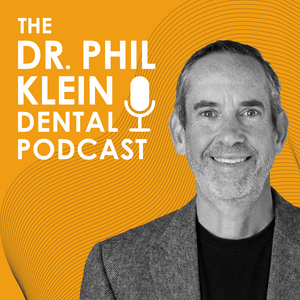
About The Dr. Phil Klein Dental Podcast
The Dr. Phil Klein Dental Podcast is the #1 clinical dental podcast for evidence-based dentistry. Hosted by endodontist Dr. Phil Klein, DMD - trusted by 250,000+ dental professionals with 750+ episodes since 2018.
The fastest-growing dental podcast worldwide, The Dr. Phil Klein Dental Podcast delivers cutting-edge clinical dentistry, state-of-the-art dental education, and actionable practice management strategies to more than 250,000 dental professionals globally. Two new episodes every Monday and Thursday featuring world-renowned clinicians, dental school faculty, academic researchers, specialty leaders, and practice management experts discussing the latest advances in evidence-based dentistry and modern practice growth you can apply immediately in practice.
Episodes span every major dental specialty - from implant dentistry, endodontics, and restorative dentistry to cosmetic dentistry, digital workflows, sleep dentistry, oral surgery, periodontics, infection control, and pediatric dentistry - giving dental professionals a single trusted source for cutting-edge clinical education across the full scope of modern dentistry.
Guests include leading clinicians from Harvard School of Dental Medicine, University of Pennsylvania School of Dental Medicine, University of Florida College of Dentistry, the American Academy of Cosmetic Dentistry, the American Academy of Endodontists, and top dental institutions across the United States and internationally. Every episode is focused on clinical excellence and state-of-the-art dental techniques — evidence-based dentistry at its highest level.
Perfect for:
General dentists seeking cutting-edge clinical techniques and evidence-based protocols
Dental specialists staying current across adjacent specialties
Dental hygienists and assistants accessing clinical education beyond typical CE options
Dental students and new graduates building a strong clinical foundation
Practice owners integrating state-of-the-art digital workflows, modern dental materials, and proven practice management strategies
Full episode library and clinical show notes: philkleindentalpodcast.com
Podcast websiteListen to The Dr. Phil Klein Dental Podcast, Sleep Magic: Sleep Hypnosis & Meditation for Sleep Podcast and many other podcasts from around the world with the radio.net app
Get the free radio.net app
- Stations and podcasts to bookmark
- Stream via Wi-Fi or Bluetooth
- Supports Carplay & Android Auto
- Many other app features
Get the free radio.net app
- Stations and podcasts to bookmark
- Stream via Wi-Fi or Bluetooth
- Supports Carplay & Android Auto
- Many other app features
The Dr. Phil Klein Dental Podcast
Scan code,
download the app,
start listening.
download the app,
start listening.
 South Africa