
Listen to this podcast for free in the app: Download for free in the App Store
radio.net
Sleep timer
Save favourites
234 episodes
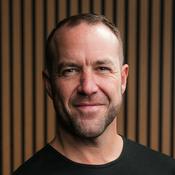
You've Been Living in Survival Mode So Long It Feels Normal
2026/10/19 | 1h 13 mins.Happy Mindset Monday!
What if you have more capacity, agency and possibility than you’ve allowed yourself to believe?
Dr. Stephanie Rimka joins me for a conversation about the nervous system, identity, belonging, anxiety, human connection and what it means to feel fully alive.
I also share part of my own experience with anxiety and what changed when I stopped trying to hide what I was feeling.
But the bigger question in this episode is simple:
Are you living from who you really are, or from who you learned you were supposed to be?
This is one of those conversations that may make you see part of your own life differently.
Listen with an open mind.
Then ask yourself:
Where could I take back a little more agency in my life?Most Arguments Aren't Really About What You Think
2026/10/12 | 1h 19 mins.Happy Mindset Monday!
You can have the best intentions in the world and still create an impact you never meant to have.
That is not an indictment of your character.
It is part of being human.
The question is whether we are willing to become aware of it.
Charlotte Brenner and I went deep into that on this episode of Living The Sweet Life.
Charlotte is the co-founder and Head of Growth and Strategic Partnerships at InnerVue, where she is helping people better understand how they see themselves and how the people around them experience them. Her work sits right at the intersection of self-awareness, relationships, growth, and human connection. Pasted text
Charlotte explained something I think most of us need to hear:
Self-awareness is not only an internal exercise.
You can journal.
You can meditate.
You can go to therapy.
All of that can be incredibly valuable.
But you are still seeing yourself through one set of eyes.
Sometimes the people who love you, work with you, live with you, and experience you regularly can show you something about yourself that you cannot see alone.
The goal is not to let other people define you.
The goal is to become curious enough to ask whether your impact matches your intention.
That becomes especially important during conflict.
Charlotte shared a concept she calls the undertruth.
The thing we are fighting about is often not what we are actually fighting about.
The dishwasher is not the problem.
The late arrival is not the problem.
The couch is not the problem.
Underneath the argument, somebody may be saying:
“I don’t feel seen.”
“I don’t feel appreciated.”
“I don’t feel safe.”
“I feel like I’m doing this alone.”
Getting to the undertruth does not eliminate hard conversations.
It makes them more honest.
And honest conversations give us a much better chance at connection. Pasted text
We also talked about trust, feedback, self-belief, and why the people closest to you often have the most useful perspective because they are not commenting on a highlight reel.
They have actually experienced you.
Charlotte said something else that I loved: awareness gives you the ability to choose.
You do not have to change everything somebody says about you.
You do not have to become a different person.
You just get more information.
Then you decide.
That is power.
And toward the end, we got into something that means a lot to me personally: consideration.
I described consideration as the desire to give effort before the effort is required.
I do not want the people in my life to have to fall apart before I notice them.
I want to pay attention.
I want to ask.
I want to know what is happening in their week.
I want to see them.
That is not only romantic love.
That is friendship.
Leadership.
Family.
Community.
Human connection.
Listen to the full episode and ask yourself:
Where might there be a gap between the person I intend to be and the person other people are actually experiencing?
That is not a question for shame.
It is a question for curiosity.The Hardest Thing to Let Go of Is Who You Used to Be
2026/10/05 | 58 mins.Sometimes the things we believe are protecting us are actually the things keeping us stuck.
That is one of the ideas that stayed with me after my conversation with Corey Schonhorst.
Corey and I met about a year ago in St. Louis, and from the beginning there was one of those connections that did not really make logical sense. We just knew there was something worth staying connected to.
That became part of this conversation too.
Corey talked about how he used to think about relationships and connections through the question, “What does this person bring into my life?”
Now he asks something different:
Why were we brought into each other’s lives?
Because sometimes you are receiving something from another person, and sometimes you may be the person they needed without even realizing it.
That shift alone changes connection from something transactional into something meaningful. Pasted text
From there, we went into a much deeper conversation about peace, insecurity, imposter syndrome, painful relationships, self-awareness, gratitude, and responsibility.
Corey shared how he eventually realized that constantly trying to understand why someone else hurt him was keeping his attention on something he could not control.
The bigger question became:
What does this teach me about me?
What do I want to do differently?
How do I respond differently next time?
That does not excuse anybody else’s behavior.
It gives you your life back.
One of the most powerful images from our conversation was Corey describing his past as armor that he had been carrying.
Armor made out of insecurity.
The belief that he was not enough.
The fear of not being loved.
The need for approval.
And what he discovered was that peace did not come from making the armor stronger.
It came from putting it down.
Corey said his peace came from humility and his confidence came when he began letting go of arrogance, because arrogance had often been a shield for insecurity. Pasted text
That led us into one of my favorite parts of the conversation: what do you actually do every day if you want to become more peaceful?
Corey does not claim to have a perfect formula.
He talked about replacing motivation with consistency.
Writing down worries instead of carrying them through the entire day.
Practicing gratitude.
Praying.
Moving his body.
Learning something.
Giving himself grace when he does not do everything perfectly.
I think there is a lesson in that for all of us.
You do not need to redesign your entire life tomorrow morning.
Choose one thing.
Five quiet minutes.
One walk.
One journal entry.
One gratitude practice.
One intentional conversation.
Then see what happens.
Because peace usually is not one huge decision.
It is a series of small choices about how you are going to live.
Listen to the full conversation with Corey Schondhorst on Living The Sweet Life.
And ask yourself:
What am I still carrying that I am finally ready to put down?Before You Set Another Goal, Ask Yourself This...
2026/09/28 | 58 mins.Happy Mindset Monday!
Jobert Abueva says January 1st might be the worst time to become a new person. We've stripped the reflection out of the new year and replaced it with resolutions that fail by February.
Jobert is a global marketing executive, TEDx speaker, and author of The Janus Plan, named after the two-faced Roman god who looks to the past and the future at once. His message is about the threshold, that in-between moment where one chapter ends and the next begins, and what happens when you pause there on purpose.
His own threshold hit in a Hong Kong hotel room in 1997, burned out and unable to get out of bed after three years of a jet-set career.
In this one:
Why reflection is the missing step in the new year
The good, the bad, and the ugly
Thresholds and why every ending deserves a pause
Why achievement kept leaving him empty
Contribution over accumulation
The "threshold brief" for corporate planning
📍 Jobert E. Abueva: joeabueva.com | The Janus Plan
New episodes every Mindset Monday.Keynotes: TJSweet.com
#LivingTheSweetLife #JobertAbueva #TheJanusPlan #TJSweetThe Best Salespeople Don't Try to Sell You
2026/09/21 | 1h 8 mins.Happy Mindset Monday!
Have you ever had somebody try so hard to sell you something that you stopped listening before they were even finished?
Most of us have.
That is part of what Cam Tolman and I talk about in this episode of Living The Sweet Life.
Cam is the founder of PitchDown and calls himself the non-sales sales coach. His belief is simple: everyone is in sales, but you do not have to act like a salesperson. His work focuses on helping people create movement through better conversations instead of pressure, persuasion, or manipulation.
What I loved about this conversation is how quickly it moved beyond sales.
We talked about curiosity.
Trust.
Listening.
Leadership.
Parenting.
Purpose.
Time.
Connection.
And what happens when you care more about understanding another person than getting the outcome you originally wanted.
Cam shared a simple word he uses early in conversations:
If.
Let’s see if there is a reason for us to work together.
Let’s see if what I have can actually help you.
And if it cannot, I will tell you.
That immediately gives the other person some space.
They are no longer something to close.
They are a person to understand.
That is a very different energy.
We also talked about how trust is built when people feel genuinely heard, why asking better questions often creates more movement than giving better answers, and how these same skills show up at home.
One of the more vulnerable parts of the episode came when Cam talked about how he wishes he had translated some of these skills into his personal life sooner.
That is something I think a lot of people can relate to.
We spend years becoming better at communicating professionally and sometimes forget that the people we love deserve the most patient, curious, present version of us too.
Later in the conversation, we talked about purpose inside organizations and why leaders cannot assume employees automatically understand the impact of their work.
Sometimes people are one conversation away from remembering why what they do matters.
That is leadership.
And maybe the biggest idea beneath this entire episode is this:
People do not need to be convinced nearly as often as they need to be understood.
Listen to the full episode and then think about the conversations you are having this week.
Are you listening to respond?
Or are you listening to understand?
Website:
https://www.pitchdown.com/
LinkedIn:
https://www.linkedin.com/in/camerontolman/
Website:
https://tjsweet.com
Instagram:
@thetjsweet
LinkedIn:
https://www.linkedin.com/in/thetjsweet/
YouTube:
https://www.youtube.com/@thetjsweet
Connect with CamConnect with TJ
More Education podcasts








Trending Education podcasts






















About Living The Sweet Life with TJ Sweet
I used to think winning at work meant losing something at home. I was wrong. Living The Sweet Life is the show for people who refuse to make that trade.
Each week I sit down with leaders, coaches, and everyday people who are rebuilding what matters most: connection, gratitude, and purpose. Real conversations about what it actually takes to lead well and live well at the same time.
You will hear practical frameworks you can use the next day. You will hear stories that make you rethink what you have been chasing. And you will walk away with one thing you can do differently immediately.
Podcast websiteListen to Living The Sweet Life with TJ Sweet, Motivation Daily by Motiversity and many other podcasts from around the world with the radio.net app
Get the free radio.net app
- Stations and podcasts to bookmark
- Stream via Wi-Fi or Bluetooth
- Supports Carplay & Android Auto
- Many other app features
Get the free radio.net app
- Stations and podcasts to bookmark
- Stream via Wi-Fi or Bluetooth
- Supports Carplay & Android Auto
- Many other app features

Living The Sweet Life with TJ Sweet
Scan code,
download the app,
start listening.
download the app,
start listening.
Living The Sweet Life with TJ Sweet: Podcasts in Family
 South Africa

