
Listen to this podcast for free in the app: Download for free in the App Store
radio.net
Sleep timer
Save favourites
178 episodes
#178: What good support from senior leadership actually looks like when a teacher says I'm drowning, with Aaron Johnston
2026/07/27 | 41 mins.This is the final one. My last episode live here at EduTech 2026, and I cannot think of a better way to wrap it up.
Joining me is my teachergram turned real life friend Aaron Johnston, who popped his head into the booth yesterday and got roped into coming back for an interview. If you don't already know Aaron, you should. He is a deputy principal at Talara Public School, now in his 18th year of teaching, and he is well known across the teacher podcast space for leading the way on Aboriginal education, so much so that in 2024 he was recognised as Primary Educator of the Year at the Koori Curriculum Awards. Many of you will also know Aaron through Mr J's Learning Space and the Teacher Takeaway podcast, where he interviews leading educational experts, including me, not that long ago.
We get into classroom management from a leadership lens, including the biggest mistakes schools make when supporting teachers through behaviour challenges, why rescuing a struggling teacher too quickly can actually disempower them, and why "what's your approach to behaviour" needs to start long before the first warning is ever given.
Aaron also opens up about the loneliness of school leadership, the unseen burden leaders carry every single day, and why he genuinely loves it when a teacher cries in his office, because it means they feel safe enough to be honest with him. We close out with a brilliant rapid fire win or bin round covering open door policies, whole school behaviour systems, reward systems, observations, unscheduled learning walks, staff meetings, and yes, the dreaded staff morning tea as a wellbeing strategy.
What you'll learn:
Why time, not more resources, is the thing teachers need most from school leaders right now
The "pruning principle" and why letting go of something is often more powerful than adding something new
Why rescuing a struggling teacher too quickly can actually disempower them and damage student relationships
What good quality support from senior leadership actually looks like when a teacher says "I am drowning"
Why compliance built on fear isn't the same as respect, and why it makes long-term classroom management harder
The loneliness of school leadership, and why Aaron genuinely wants teachers to feel safe enough to cry in his office
What teachers often misunderstand about the pressures and competing demands placed on school leaders
Aaron's honest win or bin verdicts on open door policies, whole school behaviour systems, reward systems, observations, learning walks, staff meetings, and staff morning teas
The most underrated leadership quality, and the one thing every teacher wishes their leader understood
Have a question, comment, or just want to say hello? Drop us a text!
RESOURCES AND MORE SUPPORT:
Shop all resources
Join The Behaviour Club
My book! It’s Never Just About the Behaviour: A holistic approach to classroom behaviour management
The Low-Level Behaviour Bootcamp
Free guide: 'Chats that Create Change'
Connect with me:
Follow on Instagram @the.unteachables
Check out my website#177: Educating the 'whole child' beyond the academic buzzword. Andrea Vandenbohl on building a school culture where every child feels seen
2026/07/20 | 40 mins.I am still here at EduTech 2026, and today's conversation has completely lit me up.
I'm sitting across from the wonderful Andrea Vandenbohl, deputy principal at Northam Grammar School, where she has spent the last five years leading initiatives that weave wellbeing science and character education into every part of school life. Andrea's work is built on the belief that educating young people is about so much more than academic achievement. Through her leadership of student leadership programs, character education, and curriculum innovation, she has helped shape a school culture where wellbeing, character, and growth aren't side programs, they're essential. Outside of school, Andrea shares honest reflections on leadership through her blog, The Heeled Deputy.
We start with Andrea's own journey into teaching as a second career after years as a professional musical theatre performer, and why that experience gave her a kind of grounded, lived-in teaching presence you can't get from a textbook. From there we dig straight into a phrase we hear constantly but rarely unpack properly, educating the whole child, and what it actually means to stop teaching "from the neck up."
Andrea opens up about being one of those unseen kids at school herself, and how that experience shapes everything she now believes about belonging, safety, and character in education. We talk about why culture, not curriculum, is what really shapes who a child becomes, and Andrea shares the five character traits she believes are non-negotiable for every student.
Then we get into something I think every school is quietly struggling with, how do you actually measure character, leadership, and wellbeing the way we measure academic data? Andrea shares the exact system her school uses, plus her honest take on why student voice is so often confused with student expression, and why handing kids a microphone without ever teaching them what to say into it is setting them up to fail.
We finish with one of my favourite lines from the entire conversation, the idea of asking "who is the student becoming" instead of "how is the student performing," and Andrea closes things out with a beautiful explanation of her blog, born out of a six-day solo walk through Italy, several wild horses, and a whole lot of thinking about leadership.
What you'll learn:
What educating the whole child actually means, beyond the buzzword, and why teaching can't stop "from the neck up"
Why culture, not curriculum, is what truly shapes who a child becomes, and why staff have to live their values rather than just speak them
The five character traits Andrea believes are non-negotiable in schools: courage, perseverance, empathy, humility, and responsibility
How Andrea's school actually tracks and measures character and wellbeing using a simple, visible system
Why student voice is so often confused with student expression, and what genuine, non-tokenistic student agency actually looks like
Practical ways to co-construct success criteria and classroom norms with students instead of just for them
Why compliance in the classroom can actually be corrosive to character development
The one mindset shift Andrea wants every teacher to make tomorrow: stop asking "how is this student performing" and start asking "who is this student becoming"
The story behind Andrea's leadership blog, The Heeled Deputy, and the wild horses that helped inspire it
Resources mentioned:
The Heeled Deputy (Andrea's leadership blog)
Have a question, comment, or just want to say hello? Drop us a text!
RESOURCES AND MORE SUPPORT:
Shop all resources
Join The Behaviour Club
My book! It’s Never Just About the Behaviour: A holistic approach to classroom behaviour management
The Low-Level Behaviour Bootcamp
Free guide: 'Chats that Create Change'
Connect with me:
Follow on Instagram @the.unteachables
Check out my website#176: Kate Stockman on student voice, empathy, and why so many students stay silent.
2026/07/13 | 27 mins.This one almost didn't happen, and I am so glad it did.
Today's guest literally walked past my booth at EduTech 2026 to introduce herself, and within about two minutes I knew I needed her energy on this podcast. Her name is Kate Stockman, and she is deeply passionate about helping young people find their voice and helping schools build cultures where communication actually thrives. Kate is a secondary educator, communication specialist, and founder of Communicators. Having taught drama, English, and performing arts across both the UK and Australia, Kate has spent her career helping students build confidence, develop communication skills, and engage more meaningfully in learning, drawing on dialogic teaching, oracy, and inclusive education.
So let's roll the tape. We start with what oracy actually is, why it's a much bigger conversation in the UK already, and why it's starting to gain real traction here in Australia too. Kate breaks down the difference between top-down, teacher-led talk and genuine dialogic, co-constructed discussion, and why so many classrooms are still stuck firmly in the first category.
We dig into the real barriers stopping students from speaking up, including a gap in empathy and self-expression that Kate is seeing more and more, and how technology is quietly reshaping the way young people connect face to face. Kate shares one of her favourite classroom strategies, the discussion chain, a deceptively simple, fully student-led technique that gets a whole class genuinely contributing without the teacher having to facilitate a thing. I make her walk me through exactly how to run it, live, so you can take it straight into your own classroom tomorrow.
Then, because I couldn't resist, we run a full bin or win round covering talking sticks, drama games, rote learning, homework, cold calling, and copying off the board, and Kate doesn't hold back on any of them. We finish with her best piece of teaching advice, the one mindset shift that completely changed how she shows up in the classroom, and the single thing every teacher can do tomorrow to immediately improve the quality of classroom conversation.
What you'll learn:
What oracy actually means, and why dialogic teaching is becoming a much bigger conversation in education
The real barriers stopping students from speaking up in class, including a growing gap in empathy and self-expression
How to run a discussion chain, a fully student-led strategy that gets a whole class contributing without teacher facilitation
Why practising discussion strategies early in the year matters more than just introducing them once
How smartphones and digital communication may be reshaping students' confidence to connect face to face
Kate's honest bin or win verdicts on talking sticks, drama games, rote learning, homework, cold calling, and copying off the board
Why cold calling can work well as a revision tool, but becomes harmful when used as a "gotcha" moment
The best piece of teaching advice Kate ever received, and why "being consistently good is outstanding"
The one shift every teacher can make tomorrow to immediately improve classroom conversation
Have a question, comment, or just want to say hello? Drop us a text!
RESOURCES AND MORE SUPPORT:
Shop all resources
Join The Behaviour Club
My book! It’s Never Just About the Behaviour: A holistic approach to classroom behaviour management
The Low-Level Behaviour Bootcamp
Free guide: 'Chats that Create Change'
Connect with me:
Follow on Instagram @the.unteachables
Check out my website#175: From fostering an unhoused teen at just 22, to leading trauma-informed practice in schools. A conversation with Avril Waite.
2026/07/06 | 28 mins.Joining me is Avril Waite, a secondary science teacher from regional New South Wales who is leading the integration of artificial intelligence across her school, while also being a strong advocate for trauma-informed practice and student wellbeing. Avril also coordinates the New Marine Pathways program, helping create university access opportunities for students pursuing marine studies across New South Wales. She does so much, and at the heart of it all is a commitment to equity, opportunity, and helping young people see what's actually possible for their futures.
We start with something I had honestly never heard before, using AI as a reflective practice tool for teachers. Not for lesson planning or worksheets, but as a non-judgmental sounding board after a lesson that completely fell apart. Avril walks through the exact prompts she uses, why it's lowering cortisol levels and cognitive load for her staff, and why it's never a replacement for professional judgement, just a faster way to find your own solution.
Then we go somewhere much deeper. Avril shares the story of becoming a guardian to a 14-year-old girl she met at a party, who was sleeping on benches at McDonald's, and how that experience completely shaped the way she shows up for students today. We talk about what trauma-informed practice actually looks like day to day, beyond the buzzword, including the small, consistent things her whole school does together that genuinely change outcomes for kids doing it tough.
We also get into Avril's experience teaching in a fully open learning environment, the real challenges of that model, what it took to get it working well, and why she's actually come around to loving it. And we close out with something every teacher, leader, and school exec needs to hear about regional education, opportunity, and why a free conference ticket doesn't mean access when the flights alone cost thousands.
What you'll learn:
How teachers can use AI as a non-judgmental reflective practice tool after a tough lesson, including the actual prompts Avril uses
Why reflecting with AI can lower cognitive load and cortisol levels for teachers, without replacing professional judgement
The personal story behind why Avril is so passionate about student wellbeing and trauma-informed practice
What trauma-informed practice really looks like in the day-to-day, beyond the buzzword, including the Berry Street model
Why greeting students by name is one of the most powerful, low-cost relationship-building tools a teacher has
What it's really like teaching in a fully open learning environment, including the early chaos and what fixed it
Why "you can't be what you can't see" matters so much for students in regional and disadvantaged communities
The hidden cost barriers that mean a "free" opportunity for low socioeconomic or regional schools often isn't free at all
Have a question, comment, or just want to say hello? Drop us a text!
RESOURCES AND MORE SUPPORT:
Shop all resources
Join The Behaviour Club
My book! It’s Never Just About the Behaviour: A holistic approach to classroom behaviour management
The Low-Level Behaviour Bootcamp
Free guide: 'Chats that Create Change'
Connect with me:
Follow on Instagram @the.unteachables
Check out my website#174: Is your school quietly killing curiosity? Carmel McGee on what it looks like for curiosity to thrive (and why this matters).
2026/06/29 | 28 mins.Joining me is Carmel McGee, a Tasmanian educator and certified lead teacher who has spent much of her career chasing one question: how do we actually create the conditions for curiosity to thrive? Carmel works at Riverside Primary School in Launceston, where she helps build classroom cultures where kids are curious, capable, and courageous. Her thinking has been shaped by some seriously impressive influences, including Project Zero at Harvard, UC Berkeley, and inquiry learning legends Kath Murdoch and Susan Engel. If you've ever wondered how we move students beyond just complying and into genuinely wanting to learn, this episode is for you.
We get into why curiosity isn't some lucky personality trait some kids are just born with, and why it's something we can either deliberately nurture or accidentally shut down without even realising it. Carmel doesn't hold back when I ask her what's quietly killing curiosity in schools right now, and her answer about systems measuring answers instead of valuing thinking is going to make you rethink a few things about your own classroom.
We also get really practical. What does a curious classroom actually look like? What is the teacher doing, and what are the students doing? Carmel breaks down why curious teachers create curious kids, why modelling "I don't know, let's find out together" matters more than we think, and why something as simple as not rushing to fill silence can completely change how your students engage.
And because I couldn't let her go without asking the big stuff, we dig into Carmel's brilliant question: are we measuring what we value, or valuing what we measure? If you've ever felt like the things that matter most in your classroom don't fit neatly into a spreadsheet, you are going to feel so seen by this conversation.
What you'll learn:
Why curiosity isn't an inherent trait, and how it can be deliberately nurtured or accidentally shut down in the classroom
What's quietly killing curiosity in schools right now, according to Carmel
Why curious teachers create curious kids, and how modelling "I don't know, let's find out together" shifts classroom culture
The danger of measuring what's easy to count instead of valuing what actually matters, like curiosity, belonging, and engagement
Why wait time is one of the most underused, free tools available to every teacher
Practical, explicit strategies to get more students contributing, including the "sticky note slam" and extended think-pair-share
Why less than 5% of questions in most classrooms come from students themselves, and how to change that
How Carmel approaches modelling a curious relationship with AI in the classroom, rather than ignoring it or banning it outright
The one tiny shift Carmel would want every teacher to make tomorrow to bring curiosity front and centre
Have a question, comment, or just want to say hello? Drop us a text!
RESOURCES AND MORE SUPPORT:
Shop all resources
Join The Behaviour Club
My book! It’s Never Just About the Behaviour: A holistic approach to classroom behaviour management
The Low-Level Behaviour Bootcamp
Free guide: 'Chats that Create Change'
Connect with me:
Follow on Instagram @the.unteachables
Check out my website
More Courses podcasts




Trending Courses podcasts
About The Unteachables Podcast
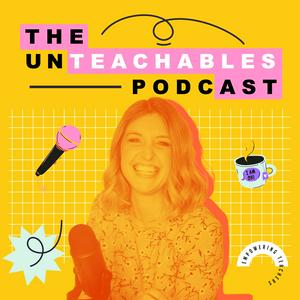
Welcome to 'The Unteachables Podcast', your go-to resource for practical classroom management strategies and teacher support. I’m your host, Claire English, a passionate secondary teacher and leader turned teacher mentor and author of 'It's Never Just About the Behaviour: A Holistic Approach to Classroom Behaviour Management.' I'm on a mission to help educators like you transform your classrooms, build confidence, and feel empowered.Why am I here? Not too long ago, I was overwhelmed by low-level classroom disruptions and challenging behaviors. After thousands of hours honing my skills in real classrooms and navigating ups and downs, I’ve become a confident, capable teacher ready to reach every student—even those with the most challenging behaviors. My journey inspired me to support teachers like you in mastering effective classroom strategies that promote compassion, confidence, and calm.On The Unteachables Podcast, we’ll dive into simple, actionable strategies that you can use to handle classroom disruptions, boost student engagement, and create a positive learning environment. You'll hear from renowned experts such as:Bobby Morgan of the Liberation LabMarie Gentles, behavior expert behind BBC's 'Don't Exclude Me' and author of 'Gentles Guidance'Robyn Gobbel, author of 'Raising Kids with Big Baffling Behaviours'Dr. Lori Desautels, assistant professor and published authorAnd many more behaviour experts and mentors.Angela Watson from the Truth for Teachers Podcast.Whether you’re an early career teacher, a seasoned educator, or a teaching assistant navigating classroom challenges, this podcast is here to help you feel happier, empowered, and ready to make an impact with every student.Be sure to subscribe so you don’t miss an episode packed with classroom tips and inspiring conversations that make a real difference!
Podcast websiteListen to The Unteachables Podcast, Platypus Economics with Justin Wolfers and many other podcasts from around the world with the radio.net app
Get the free radio.net app
- Stations and podcasts to bookmark
- Stream via Wi-Fi or Bluetooth
- Supports Carplay & Android Auto
- Many other app features
Get the free radio.net app
- Stations and podcasts to bookmark
- Stream via Wi-Fi or Bluetooth
- Supports Carplay & Android Auto
- Many other app features
The Unteachables Podcast
Scan code,
download the app,
start listening.
download the app,
start listening.
 South Africa