

Listen to this podcast for free in the app: Download for free in the App Store
radio.net
Sleep timer
Save favourites
189 episodes

My Silence Was My Sin: How Legalism Kept Me Loyal to an Abusive Marriage for 36 Years with Jennifer Brantley
2026/10/05 | 42 mins.Show Notes
Have you ever wondered whether your faith was actually keeping you trapped in something God never intended for you? For Jennifer Brantley, that question took 36 years and a shattering moment of clarity to finally answer.
In this powerful episode, Leslie sits down with Jennifer — a speaker, author, and board-certified biblical counselor — who spent more than three decades in a marriage she never recognized as abusive, largely because legalistic theology had convinced her that silence was faithfulness and suffering was obedience. Together, Leslie and Jennifer unpack how distorted church teaching, spiritual manipulation, and deeply ingrained beliefs about submission kept Jennifer loyal, silent, and stuck — and how God's persistent grace, honest counseling, and the courage to get curious finally led her into genuine freedom. If you have ever been told that your pain does not count because there are no visible bruises, or that a good Christian woman simply tries harder and prays more, this episode is for you.
Key Takeaways
Legalism Can Make Abuse Invisible
Jennifer spent 36 years in a destructive marriage without naming it as abuse — not because the signs were not there, but because every church message she received redirected the problem back to her. She was told she was not submissive enough, not prayerful enough, not attending the right women's conference. When she finally completed a diagnostic questionnaire from Leslie's book and scored 35 out of a possible range that flagged serious destruction at even a score of five, the word "abusive" became undeniable. The painful truth is that when theology is used to silence a woman rather than protect her, it becomes a weapon — and recognizing that distinction is often the first step toward freedom.
Allowing Someone to Sin Against You Is Not Godly Submission
One of the most transformative moments in Jennifer's journey came when her counselor said something that stopped her cold: if you are not setting any boundaries and allowing your husband to face no consequences, you are allowing him to sin against you and against God. That reframe — from helpless victim to someone who actually held a measure of agency — changed everything for Jennifer. She had believed that enduring mistreatment was faithfulness. She began to understand that voluntarily removing herself from the path of ongoing harm was an act of stewardship, not rebellion. As Leslie reminds us, there is suffering you cannot control, and then there is suffering you are choosing not to resist. God does not ask us to be complicit in our own destruction.
Knowing Who You Are in Christ Is the Foundation of Every Boundary
When Jennifer began to face pushback — being called a liberal feminist, watching friends disappear, losing the approval of her pastor and church community — the one anchor that held her was a simple handout she had long given to other women: a list of who you are in Christ, drawn straight from Scripture. She started reading it for herself. Understanding that she was the apple of God's eye, fearfully and wonderfully made, pursued by a Shepherd who left the 99 to find her — that knowledge slowly became more authoritative than anyone else's opinion of her choices. Leslie echoes this with a stunning quote she recently encountered in her own study: "Help me to believe the truth about myself, Lord, no matter how beautiful it is." When you let another person determine your worth, you are standing on quicksand. Your identity in Christ is the only ground solid enough to build a new life on.
Curiosity Is What Moves You From Certainty Into Freedom
Jennifer's awakening did not come from a dramatic confrontation — it came from getting curious. She started attending a Bible study outside her church. She began reading Scripture in fresh translations and looking at the original Greek and Hebrew. She started asking questions that her church had always treated as dangerous. Leslie names this beautifully: the church Jennifer was in was built on certainty — a closed system that punished questions. But curiosity is how we grow, how we learn, and how the Word of God comes alive. If you have been told for years that you already know everything you need to know, and that asking questions means you are weak in faith, this episode is a gentle invitation to start asking anyway.
Freedom Is Bigger Than You Think It Is
Jennifer describes the other side of her journey not just as relief, but as expansion. She compares the women she counsels to acorns that were designed to become oak trees — crammed into tiny pots and criticized for failing to look like tulips. For years, Jennifer did religion. She attended every service, taught Sunday school, led women's groups — and stayed small, silent, and shrinking. Freedom, she has discovered, is not simply the absence of an abusive spouse. It is the space to finally become the person God designed her to be: a speaker, a counselor, a truth-teller who helps other women find their way out. Jennifer's closing words carry the weight of hard-won wisdom: "My silence was my sin." And walking away from that silence — even when it cost her friendships, her church, and nearly everything familiar — was the most faithful thing she ever did.
Personal Invitation
If Jennifer's story stirred something in you — if some part of you is quietly wondering whether what you are living is really what God intends for your life — you do not have to figure out your next step alone. Leslie has created a free resource designed to help you get clear on where you are and what is actually possible for you. It is called the Quickstart Guide, and it is a gentle, honest starting point for women who are ready to stop surviving and begin moving toward the life God has for them. You can access it right here: https://leslievernick.com/guide You deserve support that tells you the truth in love — and this is a place to begin.
Closing Encouragement
God is not honored by your silence, your suffering, or your self-erasure. He is not asking you to shrink yourself into nothing so that someone else can feel comfortable. He pursued you before you were born, knowing everything you would face, and He has never stopped running toward you. Jennifer walked through 36 years of confusion, shame, and spiritual bondage — and she came out the other side not broken, but free and unbound. If she can find her way to that freedom, so can you. You are not alone in this. The God who knit you together in your mother's womb sees every tear, every sleepless night, and every prayer you have prayed that felt like it went unanswered. He is working. Keep going. The oak tree you were made to be is still in there — and with God's grace and a little more courage, she is ready to grow.You Don't Have to Heal Alone: Why Community Is Essential in a Destructive Relationship
2026/09/21 | 34 mins.You Don't Have to Heal Alone: Why Community Is Essential in a Destructive Relationship
Have you ever sat in a church pew, heard a message about forgiveness or submission, and walked away feeling more trapped than before — wondering if something was deeply wrong with you for still feeling unsafe? You are not alone, and this episode is for you.
Leslie sits down with Kelly Yazzie, our community manager in Conquer, for a raw and deeply honest conversation about why belonging to a safe, faith-based community is not a luxury for women in destructive relationships — it is a lifeline. Together they explore the scriptures that have been misused to keep women silent and stuck, how to hold onto a good God when the system fails you, and why real transformation only happens when information is met with courageous, supported practice. If you have been burned by community before, if you are questioning God's goodness in the middle of an unjust situation, or if you are simply exhausted from trying to figure this out alone, this conversation will meet you exactly where you are.
Key Takeaways
Misapplied Scripture Has Kept Too Many Women Stuck — and That Is Not God's Heart
Verses about forgiveness, mercy, and love covering sin have been pulled out of context in ways that pressure women to protect their abusive husbands from consequences and silence their own experience. Kelly unpacks Ephesians 5:11 — "Take no part in the worthless deeds of evil and darkness; instead, expose them" — alongside Matthew 3:8 and Proverbs 28 to show that God does not call us to prop up unrepentant sin. Untangling forgiveness from reconciliation, and learning to watch for fruit of genuine repentance rather than words alone, is one of the most liberating shifts a woman in a destructive relationship can make. As Kelly states plainly: an apology without change is only manipulation.
You Are the Steward of You — And That Is Not Selfishness, It Is Faithfulness
One of the most important truths in this episode is that no pastor, elder, counselor, or husband holds authority over your own welfare. Drawing from the sobering story in First Kings 13 — where a man of God is sidetracked by the counsel of another who claimed to speak for God — Kelly and Leslie remind women that others do not live in your home, and they do not live with the results of their counsel. You are the expert of your own situation. Learning to hear God's voice directly, trusting your God-given intuition, and reclaiming ownership of your own life is not rebellion; it is spiritual maturity and faithfulness to the person God created you to be.
When God Doesn't Fix It: Separating the Facts from the Story
When a protection order is denied despite evidence of abuse, when a custody battle is lost by a mother who did everything right, the anguish is real — and so is the temptation to write a story about what that means about God. Leslie and Kelly walk through the critical practice of distinguishing the facts of a situation from the story we tell ourselves about why it happened. Asking "why did God do this?" often leads us into the same trap as Job's friends — assigning blame and shame where neither belongs. The more life-giving question is: what do I need from this? Where can I grow? How is God meeting me here? God is light; there is no darkness in Him at all, even when circumstances are painfully dark.
Community Is Where Transformation Actually Happens
Information alone — no matter how biblical, how wise, or how perfectly taught — does not produce transformation. It is the practice, the support, the application inside a safe relational space that changes a woman from the inside out. Kelly describes how women in Conquer learn to use their voice, try new boundaries, share their failures without shame, celebrate their wins without apology, and eventually turn around to support someone just a few steps behind them. Relational trauma is healed in relationship, and a community where your humanity is held with both truth and grace is not a nice addition to healing — it is central to it.
You Are Not Too Broken, Too Much, or Too Late
For the woman who has been burned by a Christian community before — excluded, silenced, or judged — Kelly offers a direct and tender word: your voice is powerful, your boundaries are courageous, and your healing is worth fighting for. You are not simply a helpmate or a role to fill. You are, as Kelly grounds it in Scripture, an ezer kenegdo — a warrior partner made in the image of God. The Conquer community exists to be the kind of space where that truth becomes lived experience, not just information on a page.
If today's conversation stirred something in you — a longing to be truly known, a hunger for a community that holds both biblical truth and your real, hard story with equal care — we want to invite you into exactly that. Conquer is a Christ-centered membership community designed for women just like you: women who love God and are done trying to navigate destructive relationships alone. Inside, you will find a rich library of biblical, trauma-informed teaching, trained mentors who have walked this road themselves, and a community of women who genuinely get it.
Join us at: https://leslievernick.com/membership
Doors open twice a year, and you can join monthly to try it out. Come and see what is possible when information meets community and real transformation begins.
Closing Encouragement
Friend, if you have made it to the end of this episode, something in you is still reaching toward healing — and that matters. The road out of a destructive relationship, through grief, through spiritual confusion, through a broken system that does not always get it right, is one that no woman should have to walk alone. God has not looked away from your situation. Isaiah 59 promises He rises when justice is denied. He comes as both avenger and redeemer. And in the meantime, He has placed women around you — women who have been in the rubble and who know that beauty can grow there.
You are deeply loved. You are fully known. And the next step forward, however small it feels, is worth taking. We are here to walk it with you.Not Aware Enough or Doesn't Care Enough? Dr. George Simon on Character Disturbance and What You Can Control
2026/09/07 | 54 mins.Not Aware Enough or Doesn't Care Enough? Dr. George Simon on Character Disturbance and What You Can Control
Have you ever walked away from a conversation with your husband feeling like you are the one who is losing your mind — even though you know something is deeply wrong? That disorientation is not a personal failing. According to today's guest, it is often the most reliable signal that something far more serious than a communication problem or personality clash is at work.
In this powerful conversation, Leslie sits down with Dr. George Simon — internationally recognized authority on manipulation and character disturbance, and the man whose groundbreaking work first gave the world a name for gaslighting — to bring you the clarity so many women have been searching for. You will walk away understanding why character matters more than diagnosis, why confusion is a warning sign rather than a flaw, and what it actually looks like to love yourself and others well when you are living with someone whose character is deeply misaligned with love.
Key Takeaways
Character Disturbance Is Not the Same as a Mental Health Diagnosis — and the Difference Changes Everything
A person dealing with a genuine mental health condition, such as bipolar disorder, will typically respond to consequences with remorse, seek accountability, and cooperate with help. A character-disturbed person, by contrast, does not want to change — they like how they operate. Dr. Simon explains that the tactics most therapists and pastors were trained to use were designed for a completely different kind of struggle, and applying them to character disturbance is not only ineffective but can cause real harm. Understanding this distinction frees you from the exhausting and impossible task of trying to fix what only the other person has the power and responsibility to address.
Confusion in the Relationship Is a Warning Sign, Not Your Weakness
Dr. Simon introduced the concept now widely known as gaslighting long before it entered everyday language, and he explains here exactly how it works on the mind. When a manipulative person acts with apparent conviction — minimizing what they have done, blaming you for provoking it, and reframing reality with intensity and certainty — they create genuine doubt in someone who is already unsure of their own worth. The key insight is this: you are not confused because something is wrong with you. You are confused because a skilled manipulator is working very hard to make you feel that way. Judging behavior on its own merits, independent of any excuse offered, is the first and most grounding step toward reclaiming your clarity.
They See — But in Their Hearts, They Still Disagree
One of the most liberating truths in this entire conversation is Dr. Simon's clear-eyed statement: it is not that character-disturbed people do not see what they are doing. They see it. The problem is not awareness — it is that they do not yet care enough to change. You cannot think your way, plead your way, or love your way into producing that change in another person. Real change, if it comes at all, happens in the present moment through consistent, concrete behavior — not apologies, not tears, and not promises. Leslie reflects on how this understanding protects women from being misled by performances of remorse that have no roots in genuine character transformation.
Loving Yourself Is Not Selfishness — It Is the Starting Point of All Real Love
Both Leslie and Dr. Simon return to this truth throughout the conversation: you cannot love another person well if you do not first know your own worth and act to protect it. Dr. Simon connects this directly to the command of Jesus — love as I have loved you — and challenges the misreading of Christian submission that leaves women spiritually equipped to endure harm but not to refuse it. Enabling someone else's destructive behavior is not love; it is fear dressed in the language of faithfulness. Withdrawing from demeaning treatment, setting a firm limit on what you will participate in, and stewarding your own dignity are not uncharitable acts. They are the foundation of any love that is rooted in truth rather than self-erasure.
The Church Has Work to Do — and So Do You
Dr. Simon and Leslie speak honestly about why churches have been so slow to recognize and respond well to character disturbance and abuse. An over-emphasis on preserving the institution of marriage, patriarchal structures that diminish the voice and agency of women, and a focus on correct theology over Christlike character have all contributed to environments where harm goes unaddressed and victims are pressured to stay silent. The answer, as Dr. Simon puts it plainly, is more Jesus — not more rules, not more labels, but a serious and sustained attention to the character and manner of the One we say we follow. For the woman listening, this is both an invitation and a permission: the God who washed dirty feet and welcomed women into his circle of students sees you, and he does not ask you to disappear into someone else's dysfunction.
Personal Invitation
If this conversation is stirring something in you — if you are trying to discern whether what you are seeing in your husband is real change or a familiar pattern you have been through before — Leslie wants to meet you where you are. She is hosting a free workshop designed specifically for Christian women in difficult marriages called Is He Changing or Just Pretending? In this powerful time of teaching, community, and honest question-and-answer, you will learn how to distinguish genuine transformation from empty promises, and you will hear what God actually has to say about your choices and your worth. You do not have to keep sorting through this alone.
Save your spot here: https://leslievernick.com/masterclass
Closing Encouragement
If you have spent years feeling confused, dismissed, or quietly ashamed of what is happening behind closed doors, please hear this: your confusion was never evidence of weakness. It was evidence that something was genuinely wrong. God has not called you to disappear. He has called you to be loved, to love well, and to walk in the dignity he placed in you before you ever entered this relationship. The path forward may be hard, but you do not walk it alone. With the right understanding, the right support, and the God who sees every hidden thing, clarity is possible — and so is a life that is safe, whole, and free.
Resources
Please share more about the resources or programs you will be sharing about during the episode.:
My books In Sheep's Clothing, Character Disturbance, How Did We End Up Here?, and especially, Essentials for the Journey, The Judas Syndrome.
Find George:
https://www.drgeorgesimon.com/
www.youtube.com/@georgeksimon
Books:
In Sheep's Clothing
Character Disturbance
How Did We End Up Here?
Essentials for the Journey
The Judas Syndrome.Why Rejection Hits So Hard and How to Stop Letting It Define You with Ginger Stache
2026/08/24 | 42 mins.Why Rejection Hits So Hard and How to Stop Letting It Define You
Have you ever been blindsided by a betrayal so complete that it did not just shatter your marriage — it shattered the story you believed about yourself? One moment you thought you knew who you were, who he was, and who God was to you. And then the truth came out, and suddenly nothing felt certain anymore.
In this episode, Leslie sits down with Emmy Award-winning television producer, author, and Chief Creative Officer of Joyce Meyer Ministries, Ginger Stache, co-author of the new book Healing the Wounds of Rejection. Ginger shares with remarkable honesty how the discovery of her husband's long-hidden pornography addiction brought her to her knees — not only in her marriage, but in her identity and her faith. Together, Leslie and Ginger unpack the specific lies rejection plants in a woman's heart, why feeling the pain of rejection is not weakness but proof you were made for love, and how God meets women in the darkness with healing they never saw coming.
Key Takeaways
Rejection Attacks Your Identity, Not Just Your Relationship
When Ginger discovered her husband's pornography addiction, she was not only stunned by the betrayal — she was stunned by how quickly it rewrote her story about herself. The questions came fast: What did I do wrong? Why am I not enough? Am I even lovable? Leslie points out that this is exactly what rejection does in a destructive relationship — it does not stay in the marriage, it moves into the marrow of who you believe you are. The critical first step is recognizing that what he chose is not a verdict on your worth. It is not a statement about you.
The Lies Rejection Tells Are Predictable — and They Can Be Named and Refused
Ginger identifies the most common lies rejection whispers: I will never be accepted. There is something fundamentally wrong with me. I cannot become who God made me to be because I am too broken. The key distinction she draws is between being rejected — which happens to every human being, including Jesus himself — and living rejected, which means allowing those lies to become part of your identity. Naming the lie is the first act of resistance. Replacing it with the truth of God's word is how the healing begins, one lie at a time.
Feeling the Pain of Rejection Is Not Weakness — It Is What It Means to Be Human
One of the most powerful moments in this conversation is Ginger's confession that she was ashamed of how hard rejection knocked her down — because she thought her faith made her stronger than that. Research confirms that the brain processes social rejection through the same pain pathways as a broken bone. God created you for love and connection, which means the ache of rejection is not a character flaw. It is the cost of being someone who loves. Leslie adds her own story of unexpectedly sobbing in a parking lot after being turned away at a pickleball court — and recognizing it as an old childhood wound asking to be seen and healed. Self-compassion, not self-criticism, is what opens the door.
The Story of Leah Tells Us What Healing Actually Looks Like
Ginger and Leslie turn to the story of Leah in Genesis 29 as one of the most honest and hope-filled pictures of what it looks like to move from rejection to rest. Married to a man who openly preferred her sister, Leah spent years trying to earn love through her children. But by her fourth son, something shifted. She stopped saying, Surely he will love me now, and said instead, This time I will praise the Lord. Healing did not look like Jacob finally choosing her. It looked like Leah choosing God as her source — finding that his love was not conditional on what her husband did or did not give her. That same shift is available to you.
You Have a Choice — and Reclaiming It Is Where Healing Starts
One of the most empowering threads running through this conversation is the call to reclaim your ability to choose in the middle of circumstances you did not choose. You did not choose his addiction. You did not choose his betrayal. But you can choose whether to believe the lie or the truth. You can choose faith over feelings that feel more real right now. You can choose to risk loving again because, as Ginger says, not loving anyone is a far worse fate than being hurt while loving. Leslie draws on the story of Joseph — thrown into slavery and into prison by rejection at every turn — as a biblical witness to the truth that rejection does not have to define you. The path forward begins with that one small, courageous choice.
Personal Invitation
If this conversation is stirring something deep in you — if you recognize the lies Ginger described, if you have been carrying the weight of rejection in your body, your identity, and your faith for longer than you want to admit — you do not have to keep doing this alone. Leslie's Walking in Core Strength community is a group coaching experience designed to help you stay rooted in truth, respond with wisdom and compassion, and stop losing yourself to patterns that are costing you everything. This is your invitation to take a step toward the woman God made you to be.
https://leslievernick.com/strong
Closing Encouragement
You were created by a God who does not reject. He pursues. He sees. He binds up wounds. And on the days when rejection has knocked you so far down that you can barely whisper the words — God, do you even love me? — he is already answering. You never have to beg for my love. It is always here for you.
Whatever has been done to you, whatever lies have taken root, whatever chapter of your story feels irredeemable right now — God is not finished. He is working layer by layer, step by step, in ways you cannot yet see. And one day, you will look back and know that he had his hand on you the entire time. You are not alone. You are not unloved. And rejection does not get the last word. God does.Addicted to Hopium: How Trauma Bonds Keep You Waiting for Change That Isn't Coming
2026/08/10 | 29 mins.Have you ever caught yourself thinking, "Maybe this time he really means it" — and then hated yourself for thinking it again? You are not weak. You are not foolish. You are caught in something far more powerful than willpower alone.
In this deeply honest and compassionate episode, Leslie Vernick names two forces that work together to keep women stuck in destructive relationships: Hopium — the counterfeit hope dressed in spiritual language — and the trauma bond that keeps feeding it. You will walk away understanding what is actually happening in your mind, your body, and your faith, and you will leave with a clear framework, real questions to ask yourself, and the courage to trade a false hope for a genuine one.
Key Takeaways
Hopium Is Not Biblical Hope.
Hopium sounds like faith. It uses words like trust, submission, forgiveness, and patience — but it places all the weight of your husband's choices onto your faith. True biblical hope, the kind found in Psalm 33, is rooted in God's character alone, not in a husband's potential or his latest promise. Leslie draws a clear and important line: God can change a heart, but God never forces a heart to change. Confusing those two things will crush you. Biblical hope gives you the courage to face reality; Hopium asks you to deny it.
Trauma Bonds Are Real, and They Are Not Your Fault
A trauma bond is a specific kind of toxic attachment created by three conditions working together: an imbalance of power, intermittent reinforcement (the cycle of warmth and cruelty that hijacks your nervous system), and coercive control, which in Christian settings often includes the weaponizing of Scripture. Leslie explains that trauma bonds are frequently mislabeled as godly virtues — long-suffering, loyalty, unconditional love — which is precisely what makes them so hard to name and so hard to leave. Even the Israelites, after escaping slavery, idealized Egypt and wanted to go back. That is not weakness; that is a predictable, understandable response to long-term trauma.
Hopium and Trauma Bonds Feed Each Other
These are not two separate problems. The trauma bond creates the neurological and emotional pull toward him regardless of what he does; Hopium gives that pull a spiritual costume. Instead of "I cannot stop wanting him even though he hurts me," it becomes "I believe God will restore this marriage." Instead of "my nervous system is hijacked," it becomes "I just need more faith." Leslie uses the disciples on the road to Emmaus as a powerful anchor: the hope they expected died, but Jesus was still walking right beside them. Your marriage may not become what you prayed for, and that grief is real — but God has not abandoned you. He offers his presence, his truth, and a different kind of hope than the one you expected.
How to Tell Whether Change Is Real
Leslie answers six listener questions with remarkable clarity, including the one so many women are afraid to ask: how do I know if his change is genuine? She introduces the framework of old history versus new history — what patterns defined the past, and what consistent new patterns are you seeing now, not just during the honeymoon phase and not just when he fears consequences? Genuine change looks like humility without minimizing, ownership without blaming, patience with your healing, and changed behavior that persists even when no one is watching. Using the language of change without the fruit of change is not change — it is manipulation.
The HOPE Framework: A Practical Path Forward
Leslie closes with a simple, memorable framework to help you take your next step.
Honesty: what is actually true right now, what is the real pattern, what is the real impact on you and your children?
Ownership: what is his work to do, and what is yours, and what have you been carrying that does not belong to you?
Protection: what needs protecting right now: your body, your mind, your children, your finances, your faith?
Empowered next step: what is one wise decision you can make today, whether he changes or not? You do not need his transformation to begin your own.
Personal Invitation
If this episode stirred something in you — if you have been trying harder and praying harder and still feeling crazy, powerless, or trapped — I want you to know there is a next step waiting for you. I am hosting a free webinar called the Four Lies that Make Christian Women Feel Crazy and Powerless in Their Destructive Relationships. We are going to unpack exactly why these beliefs sound so biblical, how they are shaping the way you respond, and what Scripture actually offers instead. This is for the woman who loves God and loves her marriage but is starting to wonder if something has gone deeply wrong. Come and find out what is really true.
Register here: https://leslievernick.com/lies
Closing Encouragement
Wherever you are today — still in the relationship, newly separated, grieving a marriage you never wanted to lose — God sees you. He sees what you have tried. He sees what it has cost you. He sees every time you forgave, waited, hoped, and tried again. He is not asking you to live in denial. He is not asking you to endure destruction and call it faithfulness.
Hopium waits for him to change so that you can finally live. Biblical hope helps you live faithfully and wisely whether he changes or not. A trauma bond whispers that you cannot survive without him. The truth is you were made to survive, to heal, and to flourish in the freedom God intended for you from the beginning.
That freedom begins with honesty. It grows with wisdom. And it is sustained by a God who is still walking right beside you — even on the road to Emmaus, even when the hope you once carried is gone. You are not alone, and you are not without genuine hope. Take one step this week, and trust that He will meet you there.
More Christianity podcasts








Trending Christianity podcasts










About Relationship Truth: Unfiltered
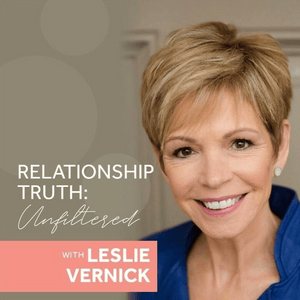
Relationship Truth: Unfiltered is a place for people of faith to find real answers when it comes to destructive relationships.
Leslie Vernick is the author of seven books, including the best-selling, ”The Emotionally Destructive Marriage.” She has dedicated her life to cutting through the religious confusion and teaching women to grow in their relationships: with God, with themselves, and with others.
Podcast websiteListen to Relationship Truth: Unfiltered, 2819 Church and many other podcasts from around the world with the radio.net app
Get the free radio.net app
- Stations and podcasts to bookmark
- Stream via Wi-Fi or Bluetooth
- Supports Carplay & Android Auto
- Many other app features
Get the free radio.net app
- Stations and podcasts to bookmark
- Stream via Wi-Fi or Bluetooth
- Supports Carplay & Android Auto
- Many other app features

Relationship Truth: Unfiltered
Scan code,
download the app,
start listening.
download the app,
start listening.
 South Africa