

Listen to this podcast for free in the app: Download for free in the App Store
radio.net
Sleep timer
Save favourites
193 episodes
Could Ozempic Help Prevent Dementia?
2026/07/23 | 10 mins.You've probably seen the headlines about Ozempic and other GLP-1 drugs and Alzheimer's disease. One week it sounds like a breakthrough. The next, not so much.
A large study found a much lower rate of Alzheimer's diagnoses in people taking these medications. Then a major clinical trial published this year found something very different.
Neither one is wrong. And understanding why matters, especially if you're the one trying to make sense of it for your family.
In this video I walk you through what the research on Ozempic and other GLP-1 drugs actually found, the meaningful difference between preventing this disease and treating it once it's already there, and what this means whether your loved one already has Alzheimer's or you're a caregiver thinking about your own brain health.
If you'd like to see this episode on video, you can hop on over to my YouTube channel here.
→ Join the Care Collective: https://tinyurl.com/podcast-cc
→ Get free weekly tools and tips in my newsletter, The Dementia Dose: https://tinyurl.com/dementiadose-podcast
⏱ CHAPTERS
0:00 - The Ozempic and Alzheimer's headlines everyone's seen
0:51 - The study that found a 40 to 70% lower Alzheimer's risk
2:09 - Why a diabetes drug could protect the brain
4:16 - The 2026 clinical trial that changed the picture
5:26 - Prevention vs. treatment: what the research actually means
#dementia #dementiacaregiver #ozempic #alzheimers #dementiaresearch
---
Hi, I'm Dr. Natali Edmonds, a board-certified geropsychologist specializing in dementia care. Whether your loved one has Alzheimer's, frontotemporal, Lewy body, vascular, or mixed dementia, we believe that to create a dementia-friendly world, we must first create a caregiver-friendly world.
This content is for educational purposes only and is not a substitute for professional medical advice. Always consult with a healthcare provider for medical guidance.Why Dementia Caregivers Stop Feeling Like Themselves
2026/07/16 | 11 mins.If you're a dementia caregiver who barely recognizes yourself anymore, I want you to hear this before anything else: you are not broken, and you have not become a different person. Years of pouring everything into someone else can quietly erase the parts of you that existed before caregiving ever started. This isn't a personality change. It's what sustained, nonstop caregiving does to a nervous system. There is an actual name for what's happening to you, and once you understand it, it becomes something you can work with instead of something to fear.
In this episode I explain what's really going on in your brain after years of dementia caregiving, and I share four specific ways to start feeling like yourself again.
If you'd like to see this episode on video, you can hop on over to my YouTube channel here.
→ Join the Care Collective: https://tinyurl.com/podcast-cc
→ Get free weekly tools and tips in my newsletter, The Dementia Dose: https://tinyurl.com/dementiadose-podcast
⏱ CHAPTERS
0:00 - Why dementia caregivers stop feeling like themselves
1:44 - The psychological term for losing your sense of self
2:47 - How suppressing your emotions changes your brain
4:40 - Four ways to start feeling like yourself again
#dementia #dementiacaregiver #dementiacaregiving #caregiverburnout #selfcare
---
Hi, I'm Dr. Natali Edmonds, a board-certified geropsychologist specializing in dementia care. Whether your loved one has Alzheimer's, frontotemporal, Lewy body, vascular, or mixed dementia, we believe that to create a dementia-friendly world, we must first create a caregiver-friendly world.
This content is for educational purposes only and is not a substitute for professional medical advice. Always consult with a healthcare provider for medical guidance.5 Dementia Caregiving Truths I Wish Every Caregiver Knew
2026/07/09 | 11 mins.Dementia caregiving asks you to carry things nobody prepares you for, and some of the hardest parts are never said out loud. This video isn't based on research. It's based on what I've learned from working with thousands of caregivers over the past 17 years as a geropsychologist. If caregiving still hurts even though you're doing everything right, if people question your decisions, if you can't stop replaying every hard moment in your head, I want you to hear this first: none of that means you're failing.
In this episode I walk you through five truths about dementia caregiving I wish every caregiver knew, the ones that can make this whole journey feel a little more possible to live.
If you'd like to see this episode on video, you can hop on over to my YouTube channel here.
→ Join the Care Collective: https://tinyurl.com/podcast-cc
→ Get free weekly tools and tips in my newsletter, The Dementia Dose: https://tinyurl.com/dementiadose-podcast
⏱ CHAPTERS
0:00 - Why this caregiving journey always involves pain
2:40 - Why you can't control how others feel about your caregiving decisions
5:00 - Why you can't take away your loved one's emotional pain
6:50 - Catching the harsh things you say to yourself
7:49 - Why no caregiver has all the answers, and why that's okay
#dementia #dementiacaregiver #dementiacaregiving #caregiversupport #alzheimers
---
Hi, I'm Dr. Natali Edmonds, a board-certified geropsychologist specializing in dementia care. Whether your loved one has Alzheimer's, frontotemporal, Lewy body, vascular, or mixed dementia, we believe that to create a dementia-friendly world, we must first create a caregiver-friendly world.
This content is for educational purposes only and is not a substitute for professional medical advice. Always consult with a healthcare provider for medical guidance.Why Someone With Dementia Keeps Asking the Same Question
2026/07/02 | 17 mins.If your loved one with dementia has asked you the same question five, ten, or forty times in the last hour, you know the kind of patience it takes to keep answering. And you probably know the guilt that follows when you finally run out of it.
What most caregivers don't realize is that something very specific is happening inside the brain to drive this. Understanding it changes both how you respond and how hard you are on yourself afterward.
In this episode I walk you through why someone with dementia repeats the same questions and stories, what's actually going on neurologically, and five strategies that can help, including one proactive approach that rarely gets talked about.
⏱ CHAPTERS
0:00 - When the same question comes up again and again
1:40 - Why the brain stops storing your answers
3:00 - Why feelings outlast the facts
4:50 - When repetition is really anxiety
9:12 - Five strategies that actually help
#dementia #dementiacaregiver #dementiacare #alzheimerscaregiving
Get free weekly tools and tips in my newsletter, The Dementia Dose: https://tinyurl.com/dementiadose-podcast
Join the Care Collective: https://tinyurl.com/podcast-cc
#dementia #dementiacaregiver #shadowing #alzheimers #caregiversupport
---
Hi, I'm Dr. Natali Edmonds, a board-certified geropsychologist specializing in dementia care. Whether your loved one has Alzheimer's, frontotemporal, Lewy body, vascular, or mixed dementia, we believe that to create a dementia-friendly world, we must first create a caregiver-friendly world.
This content is for educational purposes only and is not a substitute for professional medical advice. Always consult with a healthcare provider for medical guidance.Shadowing In Dementia: Why They Follow You Everywhere
2026/06/25 | 12 mins.Shadowing in dementia is one of the most exhausting behaviors caregivers face, and almost no one warns you about it. You can't walk to the bathroom alone anymore. The moment you stand up, they stand up. You step into the kitchen for five minutes and there they are in the doorway, watching you. The private phone calls are gone, the personal space is gone, and then comes the guilt for even wanting a moment to yourself.
In this episode I explain what is actually happening in the brain that drives shadowing, why your presence has become the only thing that makes them feel safe, and four things that genuinely help.
Get free weekly tools and tips in my newsletter, The Dementia Dose: https://tinyurl.com/dementiadose-podcast
Join the Care Collective: https://tinyurl.com/podcast-cc
⏱ CHAPTERS
0:00 - What shadowing looks like
1:54 - The many forms shadowing can take
2:55 - Reason one: the brain can't self-regulate fear
5:01 - Reason two: losing object permanence
5:51 - Reason three: the gap between now and later
7:08 - Four things that actually help
9:16 - The guilt of wanting space, and what it really means
#dementia #dementiacaregiver #shadowing #alzheimers #caregiversupport
---
Hi, I'm Dr. Natali Edmonds, a board-certified geropsychologist specializing in dementia care. Whether your loved one has Alzheimer's, frontotemporal, Lewy body, vascular, or mixed dementia, we believe that to create a dementia-friendly world, we must first create a caregiver-friendly world.
This content is for educational purposes only and is not a substitute for professional medical advice. Always consult with a healthcare provider for medical guidance.
More Education podcasts
 anything goes with emma chamberlainEducation, Personal Journals, Self-Improvement, Society & Culture
 Motivation Daily by MotiversityEducation, Health & Wellness, Self-Improvement
 How to Be a Better HumanEducation, Self-Improvement
 Coffee Break FrenchCourses, Education, Language Learning
 The Jefferson Fisher PodcastEducation, Relationships, Self-Improvement, Society & Culture
 The Sabrina Zohar ShowEducation, Health & Wellness, Mental Health, Relationships, Self-Improvement, Society & Culture
 After School Is After School With Sis G.UEducation, Self-Improvement
 The Mel Robbins PodcastEducation, Health & Wellness, Mental Health, Relationships, Self-Improvement, Society & Culture
 Slay Girl SlayEducation, Self-Improvement
Trending Education podcasts
 The Infidelity Recovery PodcastAlternative Health, Education, Health & Wellness, Relationships, Self-Improvement, Society & Culture
 Cultivating H.E.R. Space: Uplifting Conversations for the Black WomanEducation, Self-Improvement
 The Art of Public SpeakingEducation, Self-Improvement, Tutorials
 Enneagram 2.0 with Beatrice Chestnut and Uranio PaesEducation, Self-Improvement
 Learn European Portuguese | A1 → B1Education, Language Learning
 Maxwell Leadership PodcastBusiness, Education
 Party Of 1 PodcastEducation, Health & Wellness, Mental Health, Relationships, Self-Improvement, Society & Culture
 Life KitBusiness, Education, Health & Wellness, Kids & Family, Self-Improvement
 Navigating Narcissism with Dr. RamaniEducation, Relationships, Self-Improvement, Society & Culture, True Crime
 The Clever Girls Know Podcast With Bola SokunbiBusiness, Education, Entrepreneurship, Self-Improvement, Tutorials
 Bedros Keuilian Podcast ShowEducation, Self-Improvement
 How to Touch GrassEducation, Science, Self-Improvement, Social Sciences, Society & Culture
 Easy French: Learn French through authentic conversations | Conversations authentiques pour apprendre le françaisCourses, Education, Language Learning, Places & Travel, Society & Culture
 MODERN STOICISMEducation, Self-Improvement
 The BossticksBusiness, Education
 Ask AndrewEducation, Philosophy, Society & Culture
About Dementia Careblazers
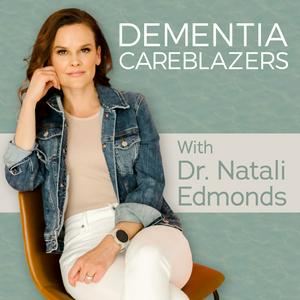
We prepare dementia caregivers for success. Say goodbye to the overwhelm & struggle and learn the real tips, strategies, and solutions that help make dementia caregiving easier. With board certified geropsychologist, Dr. Natali Edmonds
Sign up for a free training on How To Care For A Loved One With Dementia- Without the Overwhelm, Dread, and Confusion
Podcast websiteListen to Dementia Careblazers, anything goes with emma chamberlain and many other podcasts from around the world with the radio.net app
Get the free radio.net app
- Stations and podcasts to bookmark
- Stream via Wi-Fi or Bluetooth
- Supports Carplay & Android Auto
- Many other app features
Get the free radio.net app
- Stations and podcasts to bookmark
- Stream via Wi-Fi or Bluetooth
- Supports Carplay & Android Auto
- Many other app features

Dementia Careblazers
Scan code,
download the app,
start listening.
download the app,
start listening.
 South Africa