

Listen to this podcast for free in the app: Download for free in the App Store
radio.net
Sleep timer
Save favourites
28 episodes
Na estação de comboio / At the Train Station
2026/07/18 | 4 mins.✈️ Survive in Portugal ➡️ immersive audio experience ➡️to help you know what to say when real life happens. Take a look 👉 https://saraduraes.com/"I have no idea!" in European Portuguese
2026/07/15 | 1 mins.Do you have any idea how to say I have no idea in Portuguese?Both the formal and informal ways? Here's how Portuguese people actually say it.If you're planning your move to Portugal, I'm building something deeper on this — Survive in Portugal, an audio experience for exactly these real-life moments. https://saraduraes.com/survive-in-por...Expressão "Pode Ser!" / Expression "It can be!" - A2/B1
2026/07/09 | 6 mins.✈️ Survive in Portugal - The Audiobook, for real-life situations, real-life Portuguese. Take a look at https://saraduraes.com/ If you're moving to Portugal or planning to, I'm building something just for you — be the first to know when it's ready!
🇵🇹 Descrição
Neste episódio de Learn Portuguese, exploramos a expressão "Pode ser?", uma das expressões mais comuns e versáteis do português europeu. Aprendemos os seus diferentes significados e como usá-la em situações do dia a dia — para fazer sugestões, aceitar propostas, responder a perguntas e mostrar flexibilidade.
🇬🇧 Description
In this episode of Learn Portuguese, we explore the expression "Pode ser?", one of the most common and versatile phrases in European Portuguese. We learn its different meanings and how to use it in everyday situations — to make suggestions, accept proposals, answer questions, and express flexibility.Pedir ajuda / Ask for help - A1/A2
2026/06/25 | 6 mins.✈️ Survive in Portugal - The Audiobook, for real-life situations, real-life Portuguese. Take a look at https://saraduraes.com/ If you're moving to Portugal or planning to, I'm building something just for you — be the first to know when it's ready!5 Essential Phrases at the Café - A1/A2
2026/06/24 | 12 mins.✈️If you're moving to Portugal or planning to, I'm building something for you — Survive in Portugal - The Audiobook, for real-life situations, real Portuguese. Learn more or join the waitlist at https://saraduraes.com/survive-in-portugal/ and be the first to know when it's ready!
Planning a coffee break in Portugal? ☕ In this lesson, you'll learn 5 essential European Portuguese phrases that you can use at a café, whether you're ordering coffee, asking for the bill, or speaking with the waiter confidently.Perfect for beginners, travelers, expats, and anyone who wants to speak real Portuguese in everyday situations. These practical expressions will help you sound more natural and enjoy your café experience in Portugal.
More Education podcasts
 The Mel Robbins PodcastEducation, Health & Wellness, Mental Health, Relationships, Self-Improvement, Society & Culture
 The Jordan B. Peterson PodcastEducation, Science, Society & Culture
 The Jefferson Fisher PodcastEducation, Relationships, Self-Improvement, Society & Culture
 Good Life ProjectBusiness, Education, Health & Wellness, Self-Improvement, Tutorials
 anything goes with emma chamberlainEducation, Personal Journals, Self-Improvement, Society & Culture
 Motivation Daily by MotiversityEducation, Health & Wellness, Self-Improvement
 A Changed Mind | Mindset That MattersEducation, Philosophy, Religion & Spirituality, Self-Improvement, Society & Culture, Spirituality
 How to Be a Better HumanEducation, Self-Improvement
 The BossticksBusiness, Education
Trending Education podcasts
 The Infidelity Recovery PodcastAlternative Health, Education, Health & Wellness, Relationships, Self-Improvement, Society & Culture
 Habits of A GoddessEducation, Self-Improvement
 Kwik Brain with Jim KwikBusiness, Education
 Enneagram 2.0 with Beatrice Chestnut and Uranio PaesEducation, Self-Improvement
- Learn European Portuguese | A1 → B1Education, Language Learning
 Study Motivation by Motivation2StudyEducation, Health & Wellness, Mental Health, Self-Improvement
 Bedros Keuilian Podcast ShowEducation, Self-Improvement
 Party Of 1 PodcastEducation, Health & Wellness, Mental Health, Relationships, Self-Improvement, Society & Culture
 The Resilient MindBusiness, Education, Entrepreneurship, Health & Wellness, Mental Health, Self-Improvement
 The Wellness CafeEducation, Self-Improvement
 Stoic LessonsBusiness, Education, Entrepreneurship
 Weekly Motivation by Ben Lionel ScottEducation, Self-Improvement
 SuccessfulEducation, Self-Improvement
 Jim Rohn MotivationEducation
 Pepp Talk PodcastEducation, Self-Improvement
 Dear GabbyEducation, Health & Wellness, Mental Health, Religion & Spirituality, Self-Improvement, Spirituality
 The Clever Girls Know Podcast With Bola SokunbiBusiness, Education, Entrepreneurship, Self-Improvement, Tutorials
 Morning RaeEducation, Health & Wellness, Mental Health, Personal Journals, Relationships, Self-Improvement, Society & Culture, Tutorials
 Motivational Speeches by Coach Pain and MotiversityEducation, Health & Wellness, Mental Health, Self-Improvement
 InnerFrenchEducation, Language Learning
 What In The 20’s?Education, Self-Improvement
 Coffee Break ItalianCourses, Education, Language Learning
About Learn European Portuguese | A1 → B1
✈️ Survive in Portugal ➡️ immersive audio experience ➡️to help you know what to say when real life happens. Take a look 👉 https://saraduraes.com/
Get the Free Episode Transcripts Booklet here 👉 https://saraduraes.com/podcast/
Podcast websiteListen to Learn European Portuguese | A1 → B1, The Mel Robbins Podcast and many other podcasts from around the world with the radio.net app
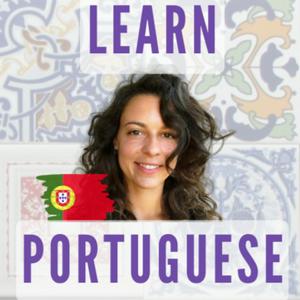
Get the free radio.net app
- Stations and podcasts to bookmark
- Stream via Wi-Fi or Bluetooth
- Supports Carplay & Android Auto
- Many other app features
Get the free radio.net app
- Stations and podcasts to bookmark
- Stream via Wi-Fi or Bluetooth
- Supports Carplay & Android Auto
- Many other app features
Learn European Portuguese | A1 → B1
Scan code,
download the app,
start listening.
download the app,
start listening.
 South Africa