

Listen to this podcast for free in the app: Download for free in the App Store
radio.net
Sleep timer
Save favourites
29 episodes
28. Are Big Meltdowns Causing Trauma for Kids with Autism? What we know…
2026/08/17 | 22 mins.A few months ago, I went through one of the hardest nervous system experiences of my life.
As I worked through the weeks that followed, I couldn't stop thinking about the kids with autism I've worked with for over 20 years... and one question kept coming back to me.
Could big meltdowns actually leave a child's nervous system stuck in a cycle that's much harder to escape than we realize?
In this episode, I share my own experience, the emerging research that's starting to explore this idea, and why I think looking beyond behavior may completely change how we support autistic kids with frequent meltdowns. If your child seems to get caught in the same cycle over and over again, I hope this conversation gives you a new way to think about what's happening underneath the surface.
Resources Mentioned
Get a seat in the new Beyond Behavior—Thriving with Autism Workshop: on Aug 19 (replay provided): https://yourkidstable.com/autism/
Studies mentioned:
https://discovery.ucl.ac.uk/id/eprint/10209395/
https://pubmed.ncbi.nlm.nih.gov/41868251/
Key Timestamps:
2:10 my first panic attach
7:15 The connection to autism?
12:00 A new way to think about meltdowns
18:00 What the research is saying
24:15 Where do we go from here?
MORE RESOURCES FOR YOU
Ready for a simple plan to overcome the attention, sleep, sensory, and big emotion challenges? I'll show you how for uniquely wired kids 1-18 years old in just 2-5 minutes a day. Join me in The Connection Hive-- https://YourKidsTable.com/TCH
LET'S CONNECT:
Instagram: https://Instagram.com/Yourkidstable
Facebook: https://Facebook.com/Yourkidstable
Pinterest: https://Pinterest.com/Yourkidstable
If you enjoyed this episode, we'd be so grateful if you left us a review! It's a huge help in encouraging us and letting us know what parents with uniquely wired kids need the most.27. How to decide if you should accept or treat autistic challenges?
2026/08/10 | 20 mins.When should we embrace a child's differences... and when is it a sign they need more support?
It's one of the hardest questions parents of autistic and neurodivergent kids face.
In this episode, I'm sharing a simple 3-step framework I use as an occupational therapist to help sort through that question. We'll talk about stimming, aggression, sensory challenges, participation, and how to tell the difference between something that's simply different and something that's truly impacting your child's quality of life.
If you've ever worried, "Am I pushing too much... or not enough?" This episode will give you clarity and confidence moving forward.
Resources Mentioned:
Get a seat in the new Beyond Behavior—Thriving with Autism Workshop: on Aug 19 (replay provided): https://yourkidstable.com/autism/
Key Timestamps:
2:48 Every child is different
7:15 Starting with acceptance
12:40 One important question
17:35 A lesson from camp
22:10 Moving forward with confidence
MORE RESOURCES FOR YOU
Ready for a simple plan to overcome the attention, sleep, sensory, and big emotion challenges? I'll show you how for uniquely wired kids 1-18 years old in just 2-5 minutes a day. Join me in The Connection Hive-- https://YourKidsTable.com/TCH
LET'S CONNECT:
Instagram: https://Instagram.com/Yourkidstable
Facebook: https://Facebook.com/Yourkidstable
Pinterest: https://Pinterest.com/Yourkidstable
If you enjoyed this episode, we'd be so grateful if you left us a review! It's a huge help in encouraging us and letting us know what parents with uniquely wired kids need the most.26. What I learned about Autism + Behavior (at Sensory Summer Camp)
2026/08/03 | 32 mins.This week at sensory summer camp, one moment completely changed the direction of my day... and reinforced something I think every parent of a neurodivergent child needs to hear.
When a child melts down, refuses, runs away, or seems completely "noncompliant," what if we're asking the wrong question?
In this episode, I'm sharing two real stories from camp that highlight what was happening underneath the behavior, the surprising sensory tool we reached for in the middle of a meltdown, and why shifting from "How do I stop this behavior?" to "What does my child need right now?" can change everything.
If you've ever felt stuck in power struggles, wondered whether you're helping or making things worse, or just wished someone could explain what's really going on... this episode is for you.
RESOURCES MENTIONED:
Save your seat in the new Beyond Behavior–Thriving with Autism Workshop on Aug 19 (replay provided): https://yourkidstable.com/autism/
Fun and Function - Sign up for their newsletter and receive a coupon 10% here!
KEY TIMESTAMPS:
3:45 What was really under this meltdown
11:15 A sensory tool that surprised me
18:05 Looking beyond "bad behavior"
23:40 What demand avoidance looked like at camp
29:20 The question every parent should ask
33:15 What's coming next in this series
MORE RESOURCES FOR YOU
Ready for a simple plan to overcome the attention, sleep, sensory, and big emotion challenges? I'll show you how for uniquely wired kids 1-18 years old in just 2-5 minutes a day. Join me in The Connection Hive-- https://YourKidsTable.com/TCH
LET'S CONNECT:
Instagram: https://Instagram.com/Yourkidstable
Facebook: https://Facebook.com/Yourkidstable
Pinterest: https://Pinterest.com/Yourkidstable
If you enjoyed this episode, we'd be so grateful if you left us a review! It's a huge help in encouraging us and letting us know what parents with uniquely wired kids need the most.25. The Picky Eater Approved Chicken Recipe You Need to Know!
2026/06/22 | 27 mins.What if one food could help your child feel safe enough to start expanding beyond the handful of foods they currently eat?
In this final episode of our picky eating series, I'm sharing what I call a gateway food, specifically a recipe that helped my own son move from eating one specific brand of chicken nuggets to eventually eating grilled chicken, different proteins, and a much wider variety of foods.
But this episode isn't really about chicken nuggets, although you'll learn exactly how to make them, because they are amazing effective and super tasty. The big takeaway is about understanding why certain foods feel safer to picky eaters, the simple characteristics that make kids more likely to try something new, and how to build bridges from foods your child already eats to foods they've never touched before.
I'll also share why progress often looks very different than parents expect and how to spot the small wins that are actually moving your child forward.
RESOURCES MENTIONED
Get a seat in the free picky eating workshop
Picky Eater Approved Chicken Nugget Recipe
KEY TIMESTAMPS
2:55 What progress really looks like
4:49 The gateway food
6:38 Three things picky eaters need
9:22 Building a bridge to new foods
17:21 Giving kids the right choices
24:47 When it doesn't work right away
MORE RESOURCES FOR YOU
Ready for a simple plan to overcome the attention, sleep, sensory, and big emotion challenges? I'll show you how for uniquely wired kids 1-18 years old in just 2-5 minutes a day. Join me in The Connection Hive-- https://YourKidsTable.com/TCH
LET'S CONNECT:
Instagram: https://Instagram.com/Yourkidstable
Facebook: https://Facebook.com/Yourkidstable
Pinterest: https://Pinterest.com/Yourkidstable
If you enjoyed this episode, we'd be so grateful if you left us a review! It's a huge help in encouraging us and letting us know what parents with uniquely wired kids need the most.24. Five Reasons Kids Refuse to Eat
2026/06/15 | 28 mins.In this episode, we're digging into one of the most important factors for helping extreme picky eaters: they're struggling because something deeper is getting in the way.
There's 5 big reasons kids refuse to eat and it's not because of you're parenting or that they're just difficult.
Learn how to identify these signs yourself and how to start looking at your child's eating through a different lens and why identifying the "why" behind picky eating can completely change your next steps.
If you've ever felt frustrated, confused, or wondered why nothing seems to be working, this episode will help you connect some important dots and give you a clearer path forward.
RESOURCES MENTIONED
Get a seat in the free picky eating workshop
Constipation strategies article
KEY TIMESTAMPS:
00:00 Welcome and picky eating mission
02:03 Previous episode and workshop recap
09:57 Oral motor skill struggles
11:53 The snowball picky eating
15:50 Physical causes to check
20:35 Anxiety behind food refusal
24:53 Next steps for families
27:34 Gateway food next episode teaser
MORE RESOURCES FOR YOU
Ready for a simple plan to overcome the attention, sleep, sensory, and big emotion challenges? I'll show you how for uniquely wired kids 1-18 years old in just 2-5 minutes a day. Join me in The Connection Hive-- https://YourKidsTable.com/TCH
LET'S CONNECT:
Instagram: https://Instagram.com/Yourkidstable
Facebook: https://Facebook.com/Yourkidstable
Pinterest: https://Pinterest.com/Yourkidstable
If you enjoyed this episode, we'd be so grateful if you left us a review! It's a huge help in encouraging us and letting us know what parents with uniquely wired kids need the most.
More Kids & Family podcasts
 Greeking Out from National Geographic KidsKids & Family, Stories for Kids
 Sleep Tight Stories - Bedtime Stories for KidsKids & Family, Stories for Kids
 Brains On! Science podcast for kidsEducation for Kids, Kids & Family
 Snoop and Sniffy: Dog Detective Stories for KidsKids & Family, Stories for Kids
 Deep Sleep SoundsAlternative Health, Health & Wellness, Kids & Family, Mental Health
 Grimm, Grimmer, GrimmestKids & Family, Stories for Kids
 Focus on the Family with Jim DalyKids & Family, Parenting, Relationships, Society & Culture
 Storiebeer StoriesKids & Family
 Wow in the WorldEducation for Kids, Kids & Family
 PAW Patrol: Eye-Spy a RescueKids & Family, Stories for Kids, TV & Film
Trending Kids & Family podcasts
 The Cat In The Hat PodcastKids & Family
 Rainbow SurfersKids & Family
 Flip and MoziEducation for Kids, Kids & Family
 Big Life Kids PodcastEducation for Kids, Kids & Family, Stories for Kids
 The Big Fib - Small TalesArts, Comedy Fiction, Fiction, Kids & Family, Performing Arts, Stories for Kids
 MierspoortjiesKids & Family, Stories for Kids
 Adventure Koala: Stories for KidsKids & Family, Stories for Kids
 Mr. Bedtime StoriesKids & Family, Stories for Kids
 But Why: A Podcast for Curious KidsKids & Family, Nature, Science
 WeWowEducation for Kids, Kids & Family
 Baby Brunch | The Parenting SeriesKids & Family
 Sleep Tight Relax - Calming Bedtime Stories and MeditationsKids & Family, Stories for Kids
 Figarinos Fahrradladen - Der MDR Tweens Hörspiel-Podcast für KinderKids & Family, Stories for Kids
 Raising Good HumansEducation, Kids & Family, Parenting
 Parenting Teens with Dr. CamEducation, Health & Wellness, Kids & Family, Mental Health, Parenting, Self-Improvement
 Molly of DenaliKids & Family, Stories for Kids
 Bedtime Stories with Netflix Jr.Fiction, Kids & Family, Stories for Kids, TV & Film
 Snuggle: Kids bedtime storiesKids & Family, Stories for Kids
 Bedtime ExplorersEducation, Education for Kids, Health & Wellness, Kids & Family, Mental Health, Self-Improvement
 Ask Lisa: The Psychology of Raising Tweens & TeensHealth & Wellness, Kids & Family, Mental Health, Parenting
 M Is for Mama PodcastKids & Family, Parenting
 Hey-O Stories Of The Bible - Saddleback KidsChristianity, Kids & Family, Religion & Spirituality, Stories for Kids
About Connected and Capable
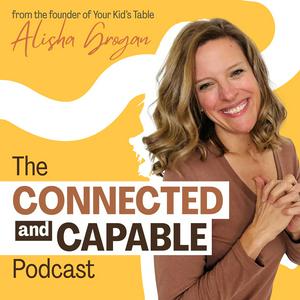
A podcast for parents of uniquely wired kids—kids with sensory needs, ADHD, big emotions, anxiety, or executive functioning challenges.Hosted by pediatric occupational therapist and mom Alisha Grogan, this podcast goes beyond behavior and quick fixes to uncover what’s really pulling the strings beneath the surface. You’ll learn how sensory processing, emotional regulation, executive functioning, and retained primitive reflexes are deeply connected—and how understanding these connections changes the way you support your child.Because your child is capable. And so are you.
Podcast websiteListen to Connected and Capable, Greeking Out from National Geographic Kids and many other podcasts from around the world with the radio.net app
Get the free radio.net app
- Stations and podcasts to bookmark
- Stream via Wi-Fi or Bluetooth
- Supports Carplay & Android Auto
- Many other app features
Get the free radio.net app
- Stations and podcasts to bookmark
- Stream via Wi-Fi or Bluetooth
- Supports Carplay & Android Auto
- Many other app features

Connected and Capable
Scan code,
download the app,
start listening.
download the app,
start listening.
 South Africa