

Listen to this podcast for free in the app: Download for free in the App Store
radio.net
Sleep timer
Save favourites
56 episodes
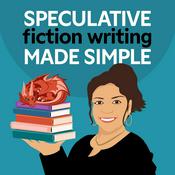
Writing Your Breakthrough Novel with Charlotte B. Plumb | Episode 55
2026/10/06 | 1h 7 mins.In this episode, I sit down with fantasy author Charlotte B. Plumb to talk about writing Reap & Sow, her Gothic romantasy debut, and the craft lessons that helped her go from querying a novel that didn’t sell to landing nine offers of representation. Charlotte shares how she changed her writing process, strengthened her craft, and learned to build stories with compelling characters, immersive interiority, and the kind of structure that keeps readers turning pages.
You’ll learn:
✨ How experimenting with your writing process can help you find what actually works for you
✨ Why strong character development starts with making things harder for your protagonist, not easier
✨ How to use plotting and story structure without sacrificing creativity or spontaneity
✨ How interiority transforms a scene from something readers simply watch into something they actually feel
✨ What Charlotte learned from writing and querying a novel that didn’t sell, and how those lessons helped her approach her next book differently
✨ Why persistence, timing, craft, and marketability all play a role in the path to publication
If you’re working toward publication, struggling with a draft that isn’t quite clicking, or wondering whether all the writing and rewriting is actually making you better, this episode is a wonderful reminder that no book is wasted. Every story you write teaches you something, and sometimes the novel that doesn’t work out is exactly what prepares you to write the one that does.
Pre-order Reap & Sow by Charlotte B. Plumb:
https://www.penguinrandomhouse.com/books/824804/reap-and-sow-by-charlotte-b-plumb/
🌻🌻Find out more about the Many Worlds Drafting Club HERE!🌻🌻
🌻🌻Schedule a quick chat with Heather to sign up to be a founding member of the MW Drafting Club HERE!🌻🌻Writing Emotional Scenes That Feel Real, Not Melodramatic
2026/08/03 | 17 mins.Most writers think writing an emotional scene means telling readers what the protagonist is feeling. But if readers only recognize the emotion instead of experiencing it themselves, the scene falls flat. In this episode, I'm sharing one of the biggest mindset shifts that transformed the way I write emotional scenes and three practical techniques you can use to create moments that truly move your readers. If you've ever wondered why your emotional scenes aren't landing the way you hoped, this episode will show you exactly what's missing.
In this episode, I break down the difference between describing emotion and creating emotionality, explain why readers are actually co-creators of your story, and walk through three simple techniques that invite readers to experience your protagonist's emotions instead of merely observing them.
You'll learn:
✨ Why naming emotions and describing body language often isn't enough to create an emotional reading experience
✨ The surprising reason readers are actually co-creators of every story they read—and how that changes the way you write
✨ Three practical techniques for writing scenes that make readers feel alongside your protagonist
✨ Why interiority is one of the most powerful tools for creating emotional connection
✨ How concrete, specific details transform vague emotional moments into unforgettable scenes
✨ A side-by-side example showing how to revise an emotional scene so it has far greater impact
If your emotional scenes feel flat, distant, or like readers understand what your characters are feeling without actually feeling it themselves, this episode will give you a practical framework for changing that. By the end, you'll know how to write emotional scenes that invite readers into the experience, deepen their connection to your characters, and make your story far more memorable.
🌻🌻Find out more about the Many Worlds Drafting Club HERE!🌻🌻
🌻🌻Schedule a quick chat with Heather to sign up to be a founding member of the MW Drafting Club HERE!🌻🌻The Hidden Psychology Behind Great World-Building with Gabriela Pereira | Episode 53
2026/07/01 | 20 mins.Writers often think world-building starts with maps, magic systems, political structures, or pages of lore.
But what if it actually starts with your protagonist?
In this excerpt from my conversation with Gabriela Pereira for WorldShift 2026, we explore one of the biggest mindset shifts writers can make about world-building.
Gabriela explains why every story—not just fantasy or science fiction—involves world-building, and introduces her fascinating psychology-inspired framework that puts the protagonist at the center of the world instead of treating the world like a static backdrop.
We talk about:
✨ Why world-building exists in every genre, not just speculative fiction
✨ The biggest mistake writers make (and why info-dumps rarely work)
✨ How your protagonist acts as the "filter" through which readers experience the world
✨ Why the exact same setting feels completely different depending on your character's emotional state
✨ A simple exercise you can use to make your settings feel more immersive and emotionally powerful
If you've ever struggled to make your world feel alive—or wondered why your descriptions sometimes feel flat—this conversation will completely change how you think about world-building.
If you'd like to watch the full interview (along with more than 30+ other presentations from experts), join the waitlist for the FREE WorldShift 2026 Writers' Conference this August.
👉https://worldshift2026.manyworldswriting.com/?ac=YF5ufUWq
🌻🌻Find out more about the Many Worlds Drafting Club HERE!🌻🌻
🌻🌻Schedule a quick chat with Heather to sign up to be a founding member of the MW Drafting Club HERE!🌻🌻Writing Age Category: Fix This Before You Query (with Ben Grange) | Episode 52
2026/04/01 | 1hAge category feels straightforward… until it really, really isn’t.
In this episode, I sit down with Ben Grange to unpack one of the most confusing (and important) decisions a writer can make: how to position your book in the market—and what “age category” actually means behind the scenes.
We break down the real differences between middle grade, YA, new adult, and adult fiction… and why those lines are far blurrier (and more business-driven) than most writers realize.
We talk candidly about market realities, reader expectations, stakes, voice, theme, and what actually determines where your book ends up on the shelf.
If you’ve ever wondered:
“Does my protagonist’s age define my book?”
“What actually makes something YA vs adult?”
“Can I write a younger protagonist and still have an adult novel?”
“What if I categorize my book wrong when querying?”
“Do publishers decide everything anyway?”
…this episode is for you.
We cover:
✨ What “age category” really means (and why it’s about marketing)
✨ How protagonist age, stakes, and theme actually work together
✨ What makes a story feel YA vs adult (beyond surface-level rules)
✨ How to position your book correctly when querying agents
✨ Why writing the book you love still matters most
We also dive into something every writer needs to hear: rejection.
Because understanding age category is important—but it’s only one piece of a much bigger picture.
And Ben shares a powerful reminder that the only thing you truly control in this industry… is the writing itself.
At the end of the day, the question isn’t just:
“Where does my book fit?”
It’s:
“Am I writing the story I actually want to tell—and am I willing to keep going no matter what happens next?”
You can find Ben Grange here:
https://thirty30k.com
https://www.booksonthegrange.com/
🌻🌻Find out more about the Many Worlds Drafting Club HERE!🌻🌻
🌻🌻Schedule a quick chat with Heather to sign up to be a founding member of the MW Drafting Club HERE!🌻🌻Writing Scenes: How to Build Mini Stories That Work | Episode 51
2026/03/25 | 21 mins.Struggling to write scenes that actually work—the kind that keep readers turning pages instead of skimming or putting your book down? You’re not alone. In this episode, I’m breaking down what a scene really is (and what it’s not), why so many novels fall flat at the scene level, and the essential elements that make a scene engaging, cohesive, and impossible to ignore. Whether you’re drafting or revising, this writing episode will help you build scenes that truly drive your story forward.
In this episode, I break down exactly how to write powerful, working scenes—the kind that create tension, reveal character, and lead to meaningful story change.
We’ll talk about what scenes are actually for (hint: it’s not just “stuff happening”), what not to do, and the simple but essential elements that turn a flat scene into a compelling mini-story.
You’ll learn:
✨ What a scene actually is (and how it’s different from a chapter)
✨ Why so many scenes fall flat—even in otherwise strong novels
✨ The core elements every working scene needs: character, setting, disturbance, tension, and change
✨ How to think of scenes as mini stories that build momentum across your novel
If your scenes feel a little vague, low-stakes, or like they’re just… there—and you’ve been hoping they’ll come together in revision—this episode will show you what’s missing and how to fix it.
By the end, you’ll understand how to build scenes that create tension, deepen character, and move your story forward—and why mastering this one unit of story can transform your entire novel.
🌻🌻Find out more about the Many Worlds Drafting Club HERE!🌻🌻
🌻🌻Schedule a quick chat with Heather to sign up to be a founding member of the MW Drafting Club HERE!🌻🌻
More Arts podcasts








Trending Arts podcasts











About Speculative Fiction Writing Made Simple: How to Write, Edit, and Publish Your Debut Fantasy, Science Fiction, or Dystopian Novel
Have you ever had a story idea you love—a vivid world, compelling characters, big themes—but every time you sit down to write, something just… isn’t working?If that sounds familiar, you’re in the right place.Welcome to Speculative Fiction Writing Made Simple.In each episode, I tackle one specific problem standing between you and a cohesive, compelling book—whether that’s character arc, plot structure, backstory, worldbuilding, magic systems, genre clarity, revision, or the publishing path. Some episodes are focused teaching sessions where I break down craft and process step by step, and others feature in-depth conversations with industry experts—authors, editors, agents, and publishing professionals—who share real-world insight into what actually works.No vague advice. No craft mysticism. Just concrete, actionable strategies you can apply immediately (often with free companion workbooks linked right in the show notes).This podcast is here to help you stop spinning your wheels and start making confident, intentional story choices—so your novel feels grounded, emotionally powerful, and readable all the way through.I’m your host, Heather Davis—Author Accelerator Certified Book Coach, developmental editor, host of the WorldShift Writing Summit, podcaster, and fellow speculative fiction writer. I’ve spent over a decade helping writers untangle messy drafts, fix stories that almost work, and build novels from the ground up in a way that’s sustainable and actually makes sense.And let’s be honest: writing a good novel—the kind readers want to finish, recommend, and come back to—is hard. This podcast doesn’t promise shortcuts or overnight success. Instead, it embraces the real, messy, challenging work of storytelling—and gives you the tools to do it well.If you’ve ever found yourself typing questions like these into Google, this show is for you:What is show don't tell?What's the difference between scenes and chapters?How do I use Save the Cat to structure my novel without it feeling formulaic?How do I include backstory without info-dumping?Why isn’t my magic system working in my story?How do I revise a novel without getting overwhelmed?How do I write character driven stories? How do I develop my author Voice?How do I write fantasy, romantasy, dystopian, science fiction, magical realism, paranormal, horror, or other speculative genres?How do I develop my protagonist?What is interiority?How do I determine the these and Point of my novel? How do I create a character arc for my protagonist? etc. So if you’re ready to write a novel you’re proud of—one that holds together, makes readers think, and earns their trust—go ahead and follow or subscribe. It’s the easiest way to support the show and make sure you don’t miss what’s coming next.Next steps: If you want to go deeper, get on my email list so you don’t miss my free and paid classes, workshops, and free writing sprints: 👉 https://resources.manyworldswriting.com/U2F1zOHave a question or want to reach out directly? You can email me anytime at heather@manyworldswriting.comUntil next time, keep writing, keep dreaming, and remember: the world needs your stories right now. Don’t give up on your novel—or yourself.
Podcast websiteListen to Speculative Fiction Writing Made Simple: How to Write, Edit, and Publish Your Debut Fantasy, Science Fiction, or Dystopian Novel, Middagvervolgverhaal and many other podcasts from around the world with the radio.net app
Get the free radio.net app
- Stations and podcasts to bookmark
- Stream via Wi-Fi or Bluetooth
- Supports Carplay & Android Auto
- Many other app features
Get the free radio.net app
- Stations and podcasts to bookmark
- Stream via Wi-Fi or Bluetooth
- Supports Carplay & Android Auto
- Many other app features

Speculative Fiction Writing Made Simple: How to Write, Edit, and Publish Your Debut Fantasy, Science Fiction, or Dystopian Novel
Scan code,
download the app,
start listening.
download the app,
start listening.
 South Africa