
Listen to this podcast for free in the app: Download for free in the App Store
radio.net
Sleep timer
Save favourites
183 episodes
#183: What’s Next for U.S. Agriculture? A Former USDA Official Explains
2026/10/20 | 33 mins.In this episode of Earthlings 2.0, we speak with former USDA economist and agricultural economics professor James MacDonald about how American agriculture has evolved and what lies ahead for the nation's farmers. Drawing on decades of research, James explains how farm consolidation has reshaped the industry, why larger farms aren't necessarily corporate-owned, and how the economics of food production influence what consumers pay at the grocery store. The conversation also explores the challenges facing smaller farms, the potential of autonomous farming equipment and regenerative agriculture and how climate change, technology and agricultural research could shape the future of farming.
Key Points:
Farm consolidation is changing the economics of family farming – James explains how larger, more efficient operations have transformed American agriculture, particularly in livestock and commodity crop production. While many farms remain family-owned, the financial investment, equipment costs, and management requirements needed to compete have made it more challenging for smaller farms to survive.
Farmers receive only a fraction of what consumers pay for food – Although farm consolidation has helped reduce production costs, James explains that farm commodities typically account for just 5 to 20% of retail food prices, depending on the product. Processing, transportation, and retail costs make up much of the remaining price, complicating the relationship between farm economics and grocery bills.
New technologies could reshape the future of American agriculture – James discusses how smaller autonomous tractors, robotic milking systems, and biological innovations could change farming operations. He also examines the economic limits of regenerative agriculture and why advances in irrigation, agricultural technology and research will matter as farmers adapt to climate change.
James MacDonald, former USDA economist, Professor of Agricultural and Resource Economics at the University of Maryland and Senior Fellow at the National Center for Food and Agricultural Policy, LinkedIn
Luis de Leon, Earthlings 2.0 Guest Host
🚀 Calling all Earthlings…
Visit our website for more episodes!
Sign up to our newsletter for the latest news on the most exciting technology and research shaping our futures!
We want to learn more about you! It’ll take just a few moments to complete our survey. Thank you for helping us make your listening experience the best it can be!
Are you new to Earthlings 2.0 and don’t know where to get started? Check out our Life at 3C episode on our website
Thanks for tuning in! If you like what we’re doing over at Earthlings 2.0, you can support us by heading over to our Patreon Page.
Let’s stay connected! Follow Earthlings 2.0 Socials for the latest updates and news:
Follow us on LinkedIn
Follow us on Instagram
Follow us on our Facebook Page
Follow us on X
Thanks to Resource Labs for having us on the network!#182: Unlocking the Hidden Value of Filtering Data Center Emissions with Hollingsworth & Vose
2026/10/12 | 30 mins.In this episode of Earthlings 2.0, we speak with Mike Clark, President of Global Innovation and New Business Development at Hollingsworth & Vose, about why air filtration is becoming an important part of energy efficiency and sustainable building design. As commercial buildings, hospitals, factories, and AI data centers consume growing amounts of electricity, even small improvements to HVAC systems can have a meaningful impact on operating costs and carbon emissions. Mike explains how advanced filtration materials reduce the energy required to move air while improving indoor air quality and protecting critical equipment. The conversation explores the connection between air filtration, healthy buildings, AI infrastructure, and why choosing the right filter can reduce both energy consumption and environmental impact.
Key Points:
Advanced air filtration can lower HVAC energy consumption – Modern filter materials reduce airflow resistance, helping commercial buildings and data centers improve indoor air quality while lowering electricity use.
Indoor air quality affects both human health and AI infrastructure – Effective filtration protects occupants in schools, hospitals, offices, and public buildings while also preventing contamination that can damage sensitive equipment in data centers and manufacturing facilities.
Smarter filtration is an overlooked climate solution – Advances in nanofiber materials and filter design are helping buildings operate more efficiently, reducing operating costs and supporting broader carbon reduction goals.
Mike Clark, President of Global Innovation and New Business Development at Hollingsworth & Vose, LinkedIn
Luis de Leon, Earthlings 2.0 Guest Host#181: Stress Testing the Future of Solar with RETC
2026/10/06 | 35 mins.In this episode of Earthlings 2.0, we speak with Cherif Kedir, President and CEO of the Renewable Energy Test Center (RETC), about what it takes to ensure solar panels can perform reliably for decades in the field. Cherif discusses RETC's PV Module Index (PVMI) and Thresher Test, how solar testing has evolved as technologies and operating environments have changed, and the role third-party validation plays in building confidence across the industry. The conversation also explores advances in solar module efficiency, the potential of perovskite solar cells, and how testing must continue to evolve as manufacturers introduce new materials and designs.
Key Points:
Solar certification is the starting point, not the finish line – Cherif explains that basic certification historically focused primarily on whether solar modules could operate safely. RETC's Thresher program was developed to go further, evaluating the durability and reliability characteristics that determine how modules could perform over decades of deployment.
Solar panels need to be tested for the conditions they will actually encounter – RETC continually adapts its testing to reflect real-world stresses, including heat, humidity, thermal cycling, wind loading, UV exposure, corrosion and hail. Testing also evolves as module sizes, materials and technologies change.
Independent testing helps reduce risk for long-term solar investments – With significant capital invested in projects expected to operate for decades, developers and financial institutions need confidence in the products they select. Cherif explains how independent testing, sample verification and chain-of-custody controls provide technical due diligence that helps stakeholders evaluate solar technologies before deployment.
Cherif Kedir, President and CEO of RETC, President and CEO of VDE Americas, LinkedIn
Sarah Malpeli, Earthlings 2.0 Guest Host, Vice President of Client Services and Growth at Technica Communications, LinkedIn
🚀 Calling all Earthlings…
Visit our website for more episodes!
Sign up to our newsletter for the latest news on the most exciting technology and research shaping our futures!
We want to learn more about you! It’ll take just a few moments to complete our survey. Thank you for helping us make your listening experience the best it can be!
Are you new to Earthlings 2.0 and don’t know where to get started? Check out our Life at 3C episode on our website
Thanks for tuning in! If you like what we’re doing over at Earthlings 2.0, you can support us by heading over to our Patreon Page.
Let’s stay connected! Follow Earthlings 2.0 Socials for the latest updates and news:
Follow us on LinkedIn
Follow us on Instagram
Follow us on our Facebook Page
Follow us on X
Thanks to Resource Labs for having us on the network!#180: From Food Waste to Renewable Energy with Divert
2026/09/29 | 35 mins.In this episode of Earthlings 2.0, we speak with Ben Kuethe Oaks, Senior Vice President, Commercial at Divert, about building a more circular approach to food waste. Divert works with grocery retailers and other food businesses to track unsold food, prevent waste, increase food donations, and process food that can no longer be eaten through anaerobic digestion.
Check out our previous episodes on food waste and agriculture:
#98 – Beyond Organic: Understanding Regenerative Agriculture with UnderstandingAg
#65 – A Fresh Outlook on Fruit Logistics with RYP Labs
#22 – The Land of the Lost Food with Lisa Johnson
Key Points:
Preventing food waste starts with understanding where it happens – Divert collects data on unsold food from individual stores and shares those insights with retailers, helping them identify trends, improve ordering and merchandising, increase donations, and ultimately prevent more food from becoming waste.
Food that can't be donated can still become a valuable resource – Divert uses proprietary de-packaging technology and anaerobic digestion to process unsold food that can no longer be eaten, capturing methane to generate renewable energy and recovering nutrients for use as fertilizer or soil amendments.
Building alternatives to landfills can help create a more circular food system – Ben explains that limited infrastructure has historically made it difficult to manage commercial food waste at scale. Divert is expanding integrated diversion and energy facilities that give food businesses another option while generating data to help prevent future waste.
Ben Kuethe Oaks, Senior Vice President, Commercial at Divert, LinkedIn
Lisa Ann Pinkerton, Earthlings 2.0 Host, CEO of Technica Communications, CEO of PRVIEW, Founder of Women in Cleantech and Sustainability, LinkedIn
🚀 Calling all Earthlings…
Visit our website for more episodes!
Sign up to our newsletter for the latest news on the most exciting technology and research shaping our futures!
We want to learn more about you! It’ll take just a few moments to complete our survey. Thank you for helping us make your listening experience the best it can be!
Are you new to Earthlings 2.0 and don’t know where to get started? Check out our Life at 3C episode on our website
Thanks for tuning in! If you like what we’re doing over at Earthlings 2.0, you can support us by heading over to our Patreon Page.
Let’s stay connected! Follow Earthlings 2.0 Socials for the latest updates and news:
Follow us on LinkedIn
Follow us on Instagram
Follow us on our Facebook Page
Follow us on X
Thanks to Resource Labs for having us on the network!#179: Reinventing the Grid for the AI Age With Grid Forward
2026/09/22 | 41 mins.In this episode of Earthlings 2.0, we speak with Bryce Yonker, Executive Director and CEO of Grid Forward, about one of the biggest challenges facing the electric grid today: meeting surging electricity demand while keeping power reliable and affordable. As AI data centers, electrification, manufacturing, and extreme weather place new pressure on utilities, Bryce explains why affordability has become a central issue for grid operators and policymakers. The conversation covers data center rate structures, transformer and equipment shortages, grid-enhancing technologies, energy storage, demand flexibility, utility business models, and the need for smarter long-term infrastructure investments.
Check out the episodes in our data center series:
#175 – Investing in the Energy Behind the AI Boom with NosTerra Venture Capital
#170 – Turning Grid Transformers into Intelligent Infrastructure with Ionate Energy
#164 – How the Grid Could Survive the AI Boom with Solid State Transformers With DG Matrix
Key Points:
Rising electricity demand is making affordability a bigger grid challenge – Bryce discusses how load growth from AI data centers, electrification, manufacturing, and other sources is arriving as utilities already face higher infrastructure and equipment costs, putting greater attention on who pays for grid expansion and how those costs are allocated.
Large data centers are changing how utilities think about rates and infrastructure costs – Bryce explains that utilities and regulators are developing new approaches to serve very large electricity users, including rate structures designed to account for the infrastructure needed to connect them and reduce the risk of shifting those costs to other customers.
A diverse mix of energy resources will be essential as electricity demand grows – Bryce emphasizes that no single generation source can meet the grid’s growing needs. Solar, energy storage, natural gas, nuclear, geothermal, demand flexibility, and other resources can each help create a more reliable and resilient power system.
Bryce Yonker, Executive Director and CEO of Grid Forward, LinkedIn
Lisa Ann Pinkerton, Earthlings 2.0 Host, CEO of Technica Communications, CEO of PRVIEW, Founder of Women in Cleantech and Sustainability, LinkedIn
More Business podcasts







Trending Business podcasts














About Earthlings 2.0 Podcast
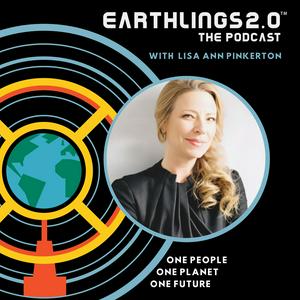
The Earthlings Podcast takes a look at the big issues facing humanity in the early 21st century and our relationship to our environment, technology, and each other. Each episode, award-winning journalist, and former NPR reporter Lisa Ann Pinkerton hosts experts, scientists, and leaders working to solve the world’s biggest challenges. Together, they cover wide-ranging topics including environmental solutions, emerging technologies, what the future might look like, and more.
Support us on Patreon and receive exclusive content and benefits.
Podcast websiteListen to Earthlings 2.0 Podcast, RSG Geldsake met Moneyweb and many other podcasts from around the world with the radio.net app
Get the free radio.net app
- Stations and podcasts to bookmark
- Stream via Wi-Fi or Bluetooth
- Supports Carplay & Android Auto
- Many other app features
Get the free radio.net app
- Stations and podcasts to bookmark
- Stream via Wi-Fi or Bluetooth
- Supports Carplay & Android Auto
- Many other app features

Earthlings 2.0 Podcast
Scan code,
download the app,
start listening.
download the app,
start listening.
Earthlings 2.0 Podcast: Podcasts in Family
 South Africa