
Listen to this podcast for free in the app: Download for free in the App Store
radio.net
Sleep timer
Save favourites
592 episodes
Efficiency Is Costing You Your Peace: 5 Ways to Stop Over-Optimizing Your Life
2026/10/13 | 46 mins.Are you so focused on productivity, personal growth, and optimizing every area of your life that you’ve forgotten how to enjoy it?
As Christian women, entrepreneurs, and high-achievers, we often pride ourselves on being the ones who figure things out. We anticipate needs, make the best decisions, solve problems, and find ways to do more with less. But what happens when that drive for efficiency starts costing us our peace?
In this episode of Blessed + Bossed Up, Tatum explores the hidden cost of over-optimizing your life and why being productive, intentional, and ambitious doesn't mean every moment needs to be managed or improved. Through personal stories about motherhood, marriage, entrepreneurship, and law school, she shares how the pressure to do everything right can keep us in survival mode instead of allowing us to savor the lives God has blessed us with.
You'll learn how to discern when optimization serves you and when it becomes a hindrance to your peace, relationships, rest, and ability to be present. Because true efficiency isn't about doing the most in the least amount of time. It's about the quality of what you're doing, including how you care for your inner life.
If you've been struggling to turn your brain off, feeling overwhelmed by everyday decisions, or treating every area of your life like another opportunity for self-improvement, this episode is your reminder that you can be ambitious without being in a constant state of optimization.
IN THIS EPISODE, YOU'LL LEARN:
Why constantly optimizing your life can leave you surviving instead of savoring it.
How perfectionism and the pressure to be a good parent can rob you of the joy of motherhood.
Why high-achieving women can find simple decisions mentally exhausting.
How to distinguish between decisions that require careful consideration and those that don't deserve your mental energy.
How to use automation and AI to simplify repetitive tasks without turning your entire life into a productivity project.
Why choosing the less efficient option can create room for joy, connection, and unexpected opportunities from God.
How transition time between work, business, school, and family can help you rest and reset.
Why being present sometimes means listening without problem-solving or trying to improve the experience.
How reading fiction, painting by numbers, puzzles, and other hobbies can help you enjoy leisure without needing a measurable result.
5 PRACTICAL WAYS TO STOP OVER-OPTIMIZING YOUR LIFE
Decide which decisions don't need optimization. Save your mental energy for the decisions that genuinely matter. If an option meets your needs, give yourself permission to choose it and move on.
Practice choosing the less efficient option. Once a day, choose enjoyment over efficiency. Let your coffee be something you savor, allow a conversation to unfold, or accept that something can take longer than necessary and still be worthwhile.
Create transition time. Give yourself space between roles and responsibilities. Write down unfinished tasks, identify when you'll return to them, and intentionally transition into your next part of the day.
Practice being present without improving the experience. Listen without immediately offering solutions. Allow other people to do things differently. Prioritize connection over control.
Make room for leisure that produces no measurable result. Read fiction, paint, work on a puzzle, or explore a hobby simply because you enjoy it. Not everything you do needs to improve you, grow your business, or produce something tangible.
MENTIONED IN THIS EPISODE
Before I Let Go by Kennedy Ryan
This Could Be Us by Kennedy Ryan
Can't Get Enough by Kennedy Ryan
Paint-by-numbers as a restorative, hands-on hobby
AI and ChatGPT for simplifying weekly meal planning and grocery lists
YOUR HOMEWORK
This week, pay attention to what you're trying to optimize throughout your day. Ask yourself: Does this decision actually require this much thought, or am I making it more complicated than it needs to be?
Then choose one thing each day where you prioritize enjoyment over efficiency. Practice creating transition time, being present with the people around you, and making room for leisure without an agenda.
You don't have to become less ambitious, less intentional, or less effective. You simply have to protect the parts of your life that don't need to be optimized.
LISTEN, SUBSCRIBE, AND CONNECT
If this episode encouraged you to rethink your relationship with productivity, share it with another high-achieving woman who needs permission to slow down and enjoy her life.
Subscribe to Blessed + Bossed Up for faith-based entrepreneurship, Christian business advice, and practical encouragement to build a business and life God's way.
Remember: You can be driven and intentional while still making room for rest, joy, and the beauty of the life God has given you.
Our Sponsors:
* Check out BetterHelp: https://www.betterhelp.com
* Check out BreezeMeds and use my code BLESSED for a great deal: https://www.breezemeds.com
* Check out IXL and use my code ixl.com/TODAY for a great deal: https://www.ixl.com
* Check out NetSuite and use my code netsuite.ai/blessed for a great deal: https://www.netsuite.com
Advertising Inquiries: https://redcircle.com/brands
Privacy & Opt-Out: https://redcircle.com/privacyWhy You Feel Far From God Even Though You Know the Bible
2026/09/30 | 47 mins.What if you know the Bible, understand theology, pray, and genuinely love God, but still feel distant from Him?
In this episode of Blessed and Bossed Up, Tatum continues her conversation with Dr. Sharla about the high-achieving Christian woman who may know a lot about God intellectually but struggles with vulnerability, prayer, and trusting God relationally.
As part of the Search Bar Sessions, they unpack:
Why knowing Bible theology doesn't always make you feel close to God
How perfectionism and self-correction can interfere with vulnerability
How to quiet an overactive mind during prayer
Why your relationship with God can look different in different seasons
How to integrate faith into your everyday life
How social media and what you consume can affect your spiritual life
How to move from intellectual faith to experiential faith
How to trust God when you don't know the outcome
The ABI framework for trust: Ability, Benevolence, and Integrity
If you've ever wondered, "Why do I know so much about God but still feel far from Him?", this conversation will challenge you to move beyond simply knowing about God and toward experiencing, trusting, and being vulnerable with Him.
In this episode: Christian faith, trusting God, relationship with God, prayer, Bible study, spiritual growth, Christian women, high-achieving women, vulnerability with God, and overcoming overthinking.
Our Sponsors:
* Check out BetterHelp: https://www.betterhelp.com
* Check out BreezeMeds and use my code BLESSED for a great deal: https://www.breezemeds.com
* Check out IXL and use my code ixl.com/TODAY for a great deal: https://www.ixl.com
* Check out NetSuite and use my code netsuite.ai/blessed for a great deal: https://www.netsuite.com
Advertising Inquiries: https://redcircle.com/brands
Privacy & Opt-Out: https://redcircle.com/privacyWhen High Achievement Meets Faith: Perfectionism, Intellect, and Surrendering Your Gifts to God
2026/09/28 | 1h 13 mins.What happens when the same qualities that helped you become successful start shaping the way you approach your relationship with God?
In this episode of Blessed and Bossed Up, Tatum sits down with Dr. Sharla Walker for a deeply candid conversation about high-achieving Christian women, intellectualism, perfectionism, spiritual growth, and learning to live from a place of salvation rather than survival.
This conversation is especially for the woman who loves God, reads her Bible, serves in church, leads well, and knows the language of faith, but may still be wondering: Why do I know so much about God but still struggle to let His truth transform the way I live?
Tatum and Sharla explore what it means to move beyond simply knowing Scripture and into genuine spiritual transformation. They discuss why intellectually gifted and high-achieving women may need a different level of discipleship, how to steward your intellect without allowing it to become self-sufficiency, and why being smart is not the problem. The question is whether your intellect is surrendered to God.
They also unpack the difference between healing and recovery. Understanding where your perfectionism, people-pleasing, hypervigilance, or intellectualization came from is important, but what happens after you understand it? How do you learn to function, build relationships, experience joy, and live fully again?
This episode also challenges the pressure Christian women often feel to organize their lives around individual roles and desires, whether that's becoming a wife, preparing for motherhood, building a business, or achieving a particular level of success. Instead, Tatum and Sharla discuss the importance of becoming whole, remaining curious, exercising restraint, and allowing God to determine where your gifts belong in each season.
In This Episode
Why high-achieving Christian women can become highly skilled at the behaviors of faith without experiencing deep transformation
The difference between knowing Scripture and allowing Scripture to transform your life
Why gifted and intellectually inclined Christians may need a different level of discipleship
How Daniel demonstrates that intellect, wisdom, and faith can coexist
How to surrender your intellect to God without diminishing your intelligence
Why church preferences can sometimes become a barrier to spiritual growth
How to remain teachable when a sermon or teaching feels too basic
The difference between church culture and biblical standards
Christian perfectionism and the difference between excellence and perfection
How people-pleasing and perfectionism can develop as survival mechanisms
What it means to stop living in survival mode after experiencing salvation
The difference between healing and recovery
Why understanding your trauma is not the same as learning how to live after it
How boundaries can become barriers when we don't learn vulnerability and discretion
Why Christian women don't need to define entire seasons of life by marriage or motherhood
The danger of attaching the weight of our desires to individual decisions
Why restraint is an important discipline for high achievers
Learning the difference between what you can do and what God is actually calling you to do
How to recognize when overwhelm may be an invitation to pause and recalibrate
The difference between participating with God and intellectualizing your way around difficult experiences
Why sensitivity and vulnerability are part of experiencing the fullness of life with God
How to use your gifts for God's glory without allowing your gifts to become your identity
A Question to Consider
Are you using the same strategies that helped you survive to navigate a life God has already rescued you to live?
You don't have to become less intelligent, less ambitious, less excellent, or less gifted. The invitation may be to learn how to surrender those gifts, receive God's boundaries, exercise restraint, and allow Him to determine where your greatness belongs.
This is Part 1 of the conversation with Dr. Sharla Walker. Part 2 continues the conversation through questions that high-achieving Christian women are actively asking and searching for answers to.
Our Sponsors:
* Check out BetterHelp: https://www.betterhelp.com
* Check out BreezeMeds and use my code BLESSED for a great deal: https://www.breezemeds.com
* Check out IXL and use my code ixl.com/TODAY for a great deal: https://www.ixl.com
* Check out NetSuite and use my code netsuite.ai/blessed for a great deal: https://www.netsuite.com
Advertising Inquiries: https://redcircle.com/brands
Privacy & Opt-Out: https://redcircle.com/privacyHow to Pray Over Your Business, Build Online Authority & Stay Close to God When You’re Busy
2026/09/14 | 43 mins.In this Search Bar Session, Tatum answers three questions about building a business and life with God at the center:
How should you pray over your business? Learn why specific, Spirit-led prayer is more powerful than simply asking God for the outcome you want.
How do you build authority online without chasing vanity metrics? Tatum breaks down how to identify your strongest communication style, understand how your audience engages, and strategically choose the platforms that actually matter.
How do you maintain quiet time with God when life is full? Discover why quiet time is more than a physical location and how cultivating an internal posture of submission and sensitivity can keep you connected to God throughout a busy day.
This episode is a reminder that building with God isn't about doing more. It's about being sensitive enough to hear Him, strategic enough to act on what He's saying, and surrendered enough to let His will shape the outcome.
Our Sponsors:
* Check out BetterHelp: https://www.betterhelp.com
* Check out BreezeMeds and use my code BLESSED for a great deal: https://www.breezemeds.com
* Check out IXL and use my code ixl.com/TODAY for a great deal: https://www.ixl.com
* Check out NetSuite and use my code netsuite.ai/blessed for a great deal: https://www.netsuite.com
Advertising Inquiries: https://redcircle.com/brands
Privacy & Opt-Out: https://redcircle.com/privacyShould Christians Use AI in Business? Personal Branding, Pricing & Selling Without Manipulation | Search Bar Sessions
2026/09/06 | 52 mins.Should Christian business owners use AI? Is personal branding self-centered? And how do you sell high-ticket offers without feeling manipulative?
In this episode of Blessed and Bossed Up, Tatum answers the questions Christian entrepreneurs are actively searching for online—from using AI and automation with discernment to building a personal brand, charging premium prices, and closing sales with integrity.
Tatum breaks down how to:
Use AI and automation without abandoning discernment
Build a personal brand without making your life the product
Position yourself as a thought leader
Justify premium pricing with real value and results
Validate your offers before selling them at full price
Create a sales process that feels genuine—not manipulative
Use technology to increase efficiency while keeping the human connection
This episode kicks off Search Bar Sessions, a new series where Tatum answers the questions her audience—and the internet—are actively searching for answers to at the intersection of faith, business, technology, and entrepreneurship.
If you're a Christian entrepreneur trying to grow your business while keeping God at the center, this conversation is for you.
Our Sponsors:
* Check out BetterHelp: https://www.betterhelp.com
* Check out BreezeMeds and use my code BLESSED for a great deal: https://www.breezemeds.com
* Check out IXL and use my code ixl.com/TODAY for a great deal: https://www.ixl.com
* Check out NetSuite and use my code netsuite.ai/blessed for a great deal: https://www.netsuite.com
Advertising Inquiries: https://redcircle.com/brands
Privacy & Opt-Out: https://redcircle.com/privacy
More Business podcasts







Trending Business podcasts














About Blessed + Bossed Up
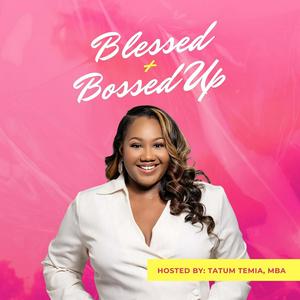
The BBU Podcast is a weekly podcast that teaches purposeful women how to be uncompromising in their faith, business, and total life success with God as the CEO. Get ready to be empowered, emboldened, and receive divine strategy to fulfill God’s plan for your life and business. Your host + sister in Christ and success, Tatum Temia Ayomike, is an award-winning entrepreneur, executive producer, author and devoted Christian who has committed her life to help women bridge the gap between faith and business. Her impact as the CEO of Anchored Media includes a global reach of millions of listeners across 75+ produced podcast shows in just 2 years. Through her personal brand, Tatum has cultivated a community of businesswomen who give God full authority to use their business as a vessel for the Kingdom. Using the word of God as her platform, Tatum's prayer journal and published books offer instrumental guidance to ‘boss up’ in any entrepreneurial venture. Tatum has been featured in several magazines and publications and has been named as a Top 30 under 30 in the Washington, DC area.
Podcast websiteListen to Blessed + Bossed Up, RSG Geldsake met Moneyweb and many other podcasts from around the world with the radio.net app
Get the free radio.net app
- Stations and podcasts to bookmark
- Stream via Wi-Fi or Bluetooth
- Supports Carplay & Android Auto
- Many other app features
Get the free radio.net app
- Stations and podcasts to bookmark
- Stream via Wi-Fi or Bluetooth
- Supports Carplay & Android Auto
- Many other app features

Blessed + Bossed Up
Scan code,
download the app,
start listening.
download the app,
start listening.
 South Africa
