

Listen to this podcast for free in the app: Download for free in the App Store
radio.net
Sleep timer
Save favourites
32 episodes
Toxic Chemical Exposure - Changing Complex Systems
2026/08/28 | 55 mins.How do you bring together a global network of stakeholders in electronics production to make an impact on worker safety?
In this re-release of an episode from Season 1, we interview Russ Gaskin of CoCreative Consulting about the Clean Electronics Production Network, an initiative that unites diverse stakeholders to understand, address, and eliminate workers' exposure to toxic chemicals in the electronics supply chain. We talk about leveraging feelings of overwhelm, how bringing diverse perspectives together to solve huge problems is an imperative rather than a luxury, the power of throwing a better party and letting people experience it, and getting in the right relationship with fear.
Check out the Green America Center for Sustainability Solutions to learn more about other projects focused on multi-stakeholder collaboration such as the Soil Climate Alliance.
Have a question, comment, or a recommendation for a perfect guest? Please email us at TransformationHorizon@gmail.com.
#ODHorizonStoriesLeveling Up When You Can't Offer Certainty
2026/07/06 | 30 mins.You need to level up as a leader, focus on more strategic work, and you need your managers to step up with you. But the future is uncertain. You can't provide total clarity about what's coming or what this change will really mean day-to-day. So how do you navigate this transition without triggering resistance or panic?
Sasha introduces the SCARF model to explain why our brains crave certainty so intensely, and why uncertainty triggers literal survival responses (fight, flight, freeze, or fawning). Judy connects this to her work on retention and organizational transitions, exploring how leaders can create clarity about what is changing, and what isn't, even when they genuinely don't know everything about the future. The key distinction: you don't need actual certainty to help people feel more certain.
The insight: Creating perceived certainty through transparent communication and consistent practices can trigger reward pathways instead of threat responses, making transitions actually work.
Have a question, comment, or a recommendation for a perfect guest? Please email us at transformationhorizon@gmail.com.
Please subscribe on YouTube, Spotify, or Apple Podcasts, give us a 5-star rating, and leave us a review! We love hearing from listeners!
#ODHorizonStoriesRedefining 'Good' When Your Work Never Stops
2026/05/28 | 27 mins.When you're processing hundreds of cases or tasks with no end in sight, how do you find meaning and feel like what you're doing actually matters?
This question came from a lawyer, but it could apply to anyone facing repetitive, never-ending work that is meaningful but feels like a slog. Judy introduces the core reframe: you have to redefine what "good" is, because if good means "getting to the end of the pile," you'll never have a good day. Sasha builds on this with the neuroscience of why repetitive work feels busy but unfulfilling, and how to turn the slog into deliberate practice that activates your brain's reward centers.
The conversation expands to organizational leaders managing teams doing this kind of work—how do you set realistic performance metrics when the work truly never stops? The answer involves progress, autonomy, and learning, not completion.
Have questions or want to share your thoughts? Email us at transformationhorizon@gmail.com.
Please subscribe on YouTube, Spotify, or Apple Podcasts, give us a 5-star rating, and leave us a review! We love hearing from listeners!
#ODHorizonStoriesHuman-Centered AI: Building Brains, Not Replacing Them
2026/04/29 | 32 mins.As AI becomes more embedded in our everyday work, what does responsible, human-centered use actually look like? How can organizations ensure AI supports employees rather than making work feel more surveilled or dehumanizing?
Sasha breaks down the neuroscience of cognitive offloading and why AI use can de-skill us faster than we realize, while Judy brings the organizational perspective on why AI adoption requires experimentation, which requires trust. We explore why leaders need to ask "what makes our people uniquely valuable?" before automating everything, and how to design AI implementation that actually benefits employees rather than just increasing surveillance.
The key insight: AI is a massive opportunity to advance human flourishing, but only if we center people over profit. As Judy frames it, get clear on what you want to do in relationship and community with other people versus what you're genuinely ready to let go of.
Have a question similar to this one that you'd like us to answer in an upcoming episode? Send it to transformationhorizon@gmail.com.
Please subscribe on YouTube, Spotify, or Apple Podcasts, give us a 5-star rating, and leave us a review! We love hearing from listeners!
#ODHorizonStoriesWhy Your Workplace Well-Being Survey Isn't Working
2026/03/23 | 30 mins.Many organizations say they care about well-being and growth, but often measure what's easiest rather than what matters. So how can companies actually understand what truly affects employees' ability to do good work?
Judy explains why most workplace well-being assessments are inadequate—they measure productivity and engagement but miss the deeper stuff. She introduces better frameworks like the Surgeon General's 5 Essentials for Workplace Mental Health and Well-being, which centers worker voice and equity. Sasha adds the neuroscience perspective on why qualitative and quantitative measures both matter for understanding well-being.
The conversation tackles a critical point: if your team doesn't feel safe enough to be truthful on a survey, that IS data. Start there. Judy shares how she brings staff into the sense-making process of data, creating spaces where people can talk about what the numbers mean in their lived experience. The key question: are you gathering data to benefit the employee first and the company second?
Have questions or want to share your thoughts? Email us at transformationhorizon@gmail.com.
Please subscribe on YouTube, Spotify, or Apple Podcasts, give us a 5-star rating, and leave us a review! We love hearing from listeners!
#ODHorizonStories
More Science podcasts
 Hidden BrainArts, Performing Arts, Science, Social Sciences
 Boring History for SleepScience, Social Sciences
 The Rest Is SciencePhilosophy, Physics, Science, Society & Culture, Technology
 StarTalk with Neil deGrasse TysonEducation, Science
 Science VsEducation, Health & Wellness, Science
 The Naked Scientists PodcastHealth & Wellness, Life Sciences, Medicine, Natural Sciences, Science
 More or LessMathematics, News, News Commentary, Science, Society & Culture
 UnexplainableLife Sciences, Science
 Suspicious Minds: AI and the ApocalypseDocumentary, Health & Wellness, Mental Health, Science, Social Sciences, Society & Culture, Technology
 RadiolabDocumentary, History, Natural Sciences, Science, Society & Culture
Trending Science podcasts
 Nature PodcastNews, Science, Technology
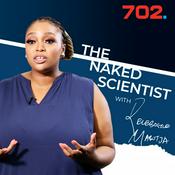 Relebogile Mabotja hosts The Naked ScientistScience
 Clinician's Brief: The PodcastEducation, Science
 Real Ghost Stories OnlineNatural Sciences, Religion & Spirituality, Science, Spirituality
 Terrible LizardsNatural Sciences, Nature, Science
 The Science of BirdsLife Sciences, Nature, Science
 Science & Futurism with Isaac ArthurScience
 Inner Cosmos with David EaglemanEducation, Health & Wellness, Mental Health, Science, Self-Improvement
 Regenerative Agriculture PodcastEarth Sciences, Natural Sciences, Science
 Fresh Thinking by Snowden OptiroEarth Sciences, Natural Sciences, Science, Technology
 Robinson's PodcastNatural Sciences, Science
 The Life ScientificPersonal Journals, Science, Society & Culture
 6 Ranch PodcastNatural Sciences, Science
 The Quanta PodcastLife Sciences, Science
 Learn Traditional Chinese Medicine, Functional Medicine and any kinds of Alternative MedicineNatural Sciences, Science
 Deep Insights with Mining Review AfricaEarth Sciences, Science
 Sean Carroll's Mindscape: Science, Society, Philosophy, Culture, Arts, and IdeasPhilosophy, Physics, Science, Society & Culture
 Students of SurgeryEducation, Natural Sciences, Science
 DrilledEarth Sciences, Science, Social Sciences, True Crime
 Synapsen – ein WissenschaftspodcastNatural Sciences, Science
About Transformation Horizon
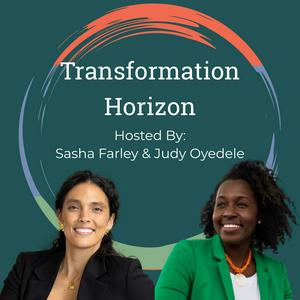
Exploring how Organization Development principles help leaders build workplaces where both people and organizations thrive. From in-depth practitioner interviews to real-time leadership Q&A, we tackle the challenges of creating human-centered organizations.
Podcast websiteListen to Transformation Horizon, Hidden Brain and many other podcasts from around the world with the radio.net app
Get the free radio.net app
- Stations and podcasts to bookmark
- Stream via Wi-Fi or Bluetooth
- Supports Carplay & Android Auto
- Many other app features
Get the free radio.net app
- Stations and podcasts to bookmark
- Stream via Wi-Fi or Bluetooth
- Supports Carplay & Android Auto
- Many other app features
Transformation Horizon
Scan code,
download the app,
start listening.
download the app,
start listening.
 South Africa