
Listen to this podcast for free in the app: Download for free in the App Store
radio.net
Sleep timer
Save favourites
268 episodes
Three Climate Journalists Take on Digger | The Spill
2026/10/23 | 1h 4 mins.Climate journalists Amy Westervelt, Nina Lakhani and Alleen Brown share whether they loved or hated the polarizing, big budget, box office flop, Digger. Plus a discussion on the role of pop culture in confronting the climate crisis and some of the team's favorite socially conscious music and movies. In the second half of the episode, Ugandan environmental journalist Diana Taremwa-Karakire talks about what it's like covering the controversial East African Crude Oil Pipeline or EACOP.
Watch list from today's show:
1. Digger (2026), director Alejandro Iñárritu's big huge climate movie: https://www.youtube.com/watch?v=bbW1DmEECiM
2. History of Concrete (2026), John Wilson's quirky infrastructure documentary with environmental undertones: https://www.youtube.com/watch?v=O05arcJjOd0
3. The Great Experiment (2026), a portrait of a polarized United States during Trump's first term, by directors Stephen Maing and Eric Daniel Metzgar: https://www.thegreatexperimentfilm.com/trailer
4. Armageddon (1998) doesn't get remembered as fossil fuel industry propaganda but has a strong pro-oil message. https://www.youtube.com/watch?v=8-8eEniEfgU
5. No Other Land (2024) documents a Palestinian family's fight to defend their land against Israeli settlers and soldiers in the occupied West Bank, by Yuval Abraham, Basel Adra, Hamdan Ballal and Rachel Szor: https://releasing.dogwoof.com/no-other-land
6. In The Voice of Hind Rajab (2025), director Kaouther Ben Hania dramatizes the real-life killing of a 5-year-old Palestinian child by Israeli soldiers as she begs paramedics on the telephone to come save her: https://www.youtube.com/watch?v=hrssPpqv6vc
7. Families Like Ours (2024), Thomas Vinterberg's Danish TV drama with climate displacement as the backdrop: https://www.youtube.com/watch?v=-AAPM6y7yCA
Listen list from today’s show:
1. Neil Young is as angry as he ever was, and we're here for it. Let's Roll Again was the stand out song (by some distance) from his 2025 album Talkin’ To the Trees, a plea to American carmakers to catch up with China and make better, cheaper electric vehicles. It includes an iconic dig at Elon Musk: “If your a fascist, then get a Tesla. If it’s electric, it doesn’t matter.” https://www.rollingstone.com/music/music-news/neil-young-tesla-lets-roll-again-1235330354/
2. Is Bruce Springsteen's song Streets of Minneapolis corny? Perhaps. But it's still cathartic to sing along to for those of us from the city. https://www.youtube.com/watch?v=GDaPdpwA4Iw&list=RDGDaPdpwA4Iw&start_radio=1
3. The late Irish musician Sinead O'Connor was often inspired to write about injustices around her, like the beautiful song Black Boys on Mopeds (1990) which is a scathing critique of institutional racism in the UK. https://medium.com/@angel.lloyd/england-is-not-the-mythical-land-of-madam-george-and-roses-6cdb103ec6a
Reading List:
1. Don't Look Up (2021) by Adam McKay was the last big climate satire to hit our screens. It was also a flop with critics, but unlike Digger, was a hit with audiences: https://www.theguardian.com/film/2022/jan/08/dont-look-up-four-climate-experts-on-the-polarising-disaster-film
2. "Indigenous Communities, Activists in Africa Gird for Legal Battles with Governments over Climate Harms," by Diana Diana Taremwa-Karakire: https://drilled.media/litigation-and-law/indigenous-communities-activists-in-africa-gird-for-legal-battles-with-governments-over-climate-harms/
3. "Africa’s Longest Crude Oil Export Pipeline Isn’t Just Taking Indigenous Land, It Is Disturbing the Dead," by by Diana Diana Taremwa-Karakire: https://drilled.media/news/eacop-graves/
4. Indigenous Times (magazine): https://indigenoustime.com/about-us
See omnystudio.com/listener for privacy information.The Paradox of Mining Lithium to Save the Planet | The Spill
2026/10/16 | 1h 3 mins.Most proposals to keep fossil fuels in the ground rely on taking new minerals out of the ground — especially lithium, a major component in the batteries powering electric vehicles. In Thea Riofrancos' book, Extraction, she visits the communities most impacted by lithium mining, explores the mineral's politics and history, and proposes a pathway toward harm reduction.
Reading list from today’s show:
1. Thea Riofrancos' book, Extraction: The Frontiers of Green Capitalism
2. Amy Westervelt's new book, Brought to You By: How Corporations Warped the Truth, Conned the Public, and Broke Democracy
See omnystudio.com/listener for privacy information.How Tech Billionaires Broke Democracy | The Spill
2026/10/09 | 37 mins.Tech billionaires have increasing influence over all aspects of our lives, and it's not by accident. Amy Westervelt and Gil Durán both recently published books examining the ideas and individuals driving the phenomenon. They discuss what it has to do with the climate crisis and the deterioration of democracy.
Reading list from today’s show:
1. Gil Durán's new book, The Nerd Reich: Silicon Valley Fascism and the War on Democracy
2. Amy Westervelt's new book, Brought to You By: How Corporations Warped the Truth, Conned the Public, and Broke Democracy
3. Lithub interview between Gil and Amy
See omnystudio.com/listener for privacy information.Garifuna land defenders vs. Survivor (as in the TV show) | The Spill
2026/10/02 | 47 mins.Amy Westervelt, Nina Lakhani and Alleen Brown chat about Standing Rock 10 years later, Global Witness's latest report on assassinations of land defenders, and why Palestinians in Gaza are land defenders, too. Meanwhile, Afro-Indigenous Garífuna leaders in Honduras have set up an occupation in front of the country's Supreme Court, in defense of their land rights. Nina interviews Karen Spring, coordinator of the the Honduras Solidarity Network, about what this has to do with Trump and the TV show Survivor.
Reading list from today’s show:
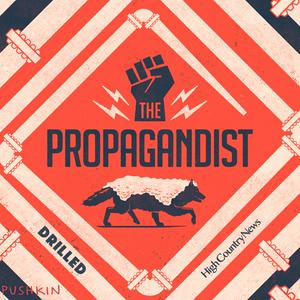
1. The Propagandist, Drilled's narrative podcast series on propaganda aimed against the Standing Rock movement
2. Global Witness's annual report on assassinations of land defenders
3. Nina Lakhani's chapter on ecocide in Gaza is featured in the book Gaza: The Story of a Genocide
4. Nina's other book, Who Killed Berta Cáceres?: Dams, Death Squads, and an Indigenous Defender’s Battle for the Planet
5. El libro de Nina, traducción al español, ¿Quién mató a Berta Cáceres?
6. Reportage desde el campamento de resistencia Garífuna por la periodista Mexicana Blanche Petrich
7. Amy Westervelt's new book, Brought to You By: How Corporations Warped the Truth, Conned the Public, and Broke Democracy
See omnystudio.com/listener for privacy information.Carbon Credit Markets Have a Human Rights Problem | The Spill
2026/09/25 | 39 mins.Drilled global climate justice reporter Nina Lakhani interviews Elisa Morgera, the UN Special Rapporteur on Climate Change about Morgera’s latest report on the fundamental shortcomings of credit markets. Posed as a solution to the climate crisis, carbon credit markets have for years failed to deliver, while violating the human rights of the people most impacted by the climate crisis. Meanwhile, states have developed carbon tunnel-vision, fixating on schemes to reduce carbon emissions, while avoiding the root cause of the issue: fossil fuels. Lakhani and Morgera discuss all that and more.
Reading list from today’s show:
1. Elisa Morgera's latest report on rethinking carbon markets.
2. Elisa's report on transforming food systems
3. Diana Taremwa-Karakire's recent piece for Drilled on a Kenyan carbon credit project
4. Nina Lakhani’s analysis on the Santa Marta climate conference on transitioning away from fossil fuels
5. More reporting on the failures of carbon markets
6. Amy Westervelt's book: https://geni.us/broughttoyouby
See omnystudio.com/listener for privacy information.
More Earth Sciences podcasts



Trending Earth Sciences podcasts

About Drilled
Drilled is a true-crime climate change podcast exposing how corporate corruption and political operatives built decades of climate denial and delay. Hosted and reported by award-winning investigative climate journalists and led by Amy Westervelt, each season unravels new evidence of deception, disinformation, and the power structures keeping real climate solutions out of reach.
Podcast websiteListen to Drilled, The Wildlife Podcast with Laurel Neme and Jeffrey Barbee and many other podcasts from around the world with the radio.net app
Get the free radio.net app
- Stations and podcasts to bookmark
- Stream via Wi-Fi or Bluetooth
- Supports Carplay & Android Auto
- Many other app features
Get the free radio.net app
- Stations and podcasts to bookmark
- Stream via Wi-Fi or Bluetooth
- Supports Carplay & Android Auto
- Many other app features

Drilled
Scan code,
download the app,
start listening.
download the app,
start listening.
Drilled: Podcasts in Family

 South Africa