

Listen to this podcast for free in the app: Download for free in the App Store
radio.net
Sleep timer
Save favourites
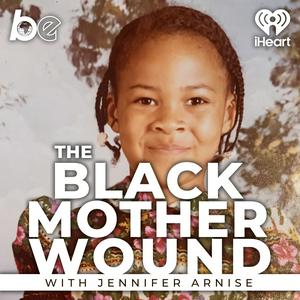
The Black Mother Wound Podcast
The Black Effect Podcast Network and iHeartPodcasts
Latest episode
116 episodes
Go After Your Dreams DAMNIT!
2026/10/06 | 40 mins.What happens after you’ve spent years healing your mother wound?
At some point, you have to start living.
In this episode, I’m talking about having the audacity to go after the life you actually want, especially when you didn’t grow up with someone encouraging your dreams, believing in you or teaching you how to believe in yourself.
I share what this looks like in my own life as I return to the parts of myself that have always been there, including writing my first novel, working on a documentary and fully embracing myself as an artist.
We talk about:
Becoming someone different from who your mother expected you to be
• Why healing requires more than understanding your pain
• Building a community that supports who you’re becoming
• Learning to trust your dreams without needing everyone else to understand them
• Starting before you know exactly how everything will work
• Doing the thing because you love it, not because it has to immediately make money
• Giving yourself permission to change, pivot and want more
If you’ve been doing this work for a while, the question becomes: What are you healing for if you’re not going to change your life?
You don’t need the entire roadmap. You need to trust yourself enough to start and keep going.
Keep the conversation going on Instagram @JenniferArnise or @BlackMotherWound.
Here’s the link to ask your questions. And here’s the information about the Mental Wealth Alliance Expo
See omnystudio.com/listener for privacy information.LIVE PODCAST RECORDING
2026/09/29 | 39 mins.This episode is a little different. You’re listening to audio from the live episode of the Black Mother Wound Podcast I recorded in June 2026 in front of a live audience.
And y’all came with the questions.
We talked about what healing actually looks like when your mother is still in your life, how the mother wound follows us into friendships and romantic relationships, rebuilding trust with our children and learning how to create safety within ourselves.
Because healing your mother wound is not about having a better relationship with your mother. It’s about having a better relationship with yourself.
We talk about:
• Setting boundaries when you’re still in contact with your mother
• Creating safety for your inner little girl
• Why healing can feel lonely when old relationships begin to fall away
• People pleasing, overgiving and learning when enough is enough
• Protecting your story when people judge your relationship with your mother
• Repairing relationships with your children after recognizing your own patterns
• Building confidence through evidence and experience
• Learning how to connect without overinvesting in relationships
Healing changes how you relate to your mother, but it also changes how you relate to yourself and everybody around you.
Keep the conversation going on Instagram @JenniferArnise or @BlackMotherWound.
See omnystudio.com/listener for privacy information.The Grief of What Was Lost and the Promise of What’s to Come
2026/09/22 | 30 mins.Do I ever regret the time you lost because of your mother wound?
I do.
When you start healing, you can look back and see just how much your relationship with your mother shaped your choices, relationships, confidence and the life you built. And there can be real grief in realizing what might have been different.
In this episode, I’m talking about what we do with that regret without getting stuck in resentment. Because grieving what you didn’t get doesn’t mean your life is over. Sometimes allowing yourself to finally feel that loss is exactly what makes room for joy, possibility and the parts of yourself you thought you lost.
I also share what healing has looked like for me lately, including returning to my creativity and finally writing the novel I’ve wanted to write since I was a teenager.
We talk about:
Regretting choices you made from an unhealed place
Grieving the life you thought you could have had
Why resentment can keep an emotional debt open that no one is going to repay
Learning to give yourself what your mother couldn’t give you
Returning to dreams and desires you abandoned years ago
How healing can give you a second chance at your own life
Your joy did not die because of your relationship with your mother. Your possibilities didn’t either.
So ask yourself: What is something you wanted earlier in your life that you can reach back for now?
Keep the conversation going on Instagram @JenniferArnise or @BlackMotherWound.
See omnystudio.com/listener for privacy information.Choosing Your Inner Little Girl
2026/09/15 | 26 mins.In this episode of the Black Mother Wound Podcast, Jennifer answers a listener question about what happens when you ignore healing your mother wound and how to become more consistent in healing your inner little girl.
Jennifer breaks down a truth that sits at the center of this work: the mother wound is not just about the relationship you have with your mother. It is about the relationship you have with yourself. More specifically, it is about the relationship you have with your inner little girl.
This episode is a firm and loving call back to self. Jennifer explains how ignoring your healing causes you to repeat the same abandonment, rejection, dismissal, and lack of care that hurt you in the first place. When you ignore your needs, silence your body, chase approval, over give, people please, or abandon yourself to be seen as good, your inner little girl experiences that as another betrayal.
Jennifer challenges listeners to stop making healing conditional. You cannot only care for your inner little girl because you want a better relationship, a marriage, more money, peace, or a different outcome. She deserves care because she is yours. Period.
This conversation is for the Black woman who keeps showing up for everybody else but still struggles to show up for herself. It is for the woman who says she is tired of healing, but has not realized that taking a break from healing can sometimes mean leaving her inner little girl alone again. Jennifer reminds us that this work is not a trend, not a 30 day challenge, and not something you pick up only when life falls apart. It is a lifelong commitment.
Key Takeaways
The mother wound is not only about what your mother did. It is about what you now do to yourself because of what happened.
If you are abandoning, rejecting, dismissing, or withholding care from yourself, your inner little girl is still living inside the wound.
Approval addiction will have you sacrificing your inner little girl just so other people can see you as good.
Healing cannot be conditional. Your inner little girl does not need to perform, improve, or help you get something before she deserves care.
Your body is always giving you information. The tightness, fear, anxiety, anger, resentment, and numbness are not random. They are messages.
You may have been waiting for your mother to apologize, but you also owe your inner little girl an apology.
Consistency does not mean you never mess up. It means you keep coming back, repairing, listening, and choosing her again.
See omnystudio.com/listener for privacy information.How to Recognize and Receive Love After a Lifetime of Not Having It
2026/09/08 | 38 mins.How do you recognize danger when danger was normal growing up? How do you receive love when the love you knew was conditional? And how do you know when you're making a decision from healing versus guilt and people pleasing?
These questions all come back to the same place: your relationship with yourself.
In this episode, I’m talking about what it really takes to rebuild trust with yourself after the mother wound taught you to ignore your feelings, abandon your needs and trade pieces of yourself for love, connection and approval.
Because healing your mother wound isn't really about your mother. At some point, we have to deal with how we've learned to treat ourselves.
We’re also getting into something I’m realizing in my own healing right now: real healing requires infrastructure. It’s not enough to understand your trauma. You have to build a life that can actually support the woman you're becoming.
In this episode:
Why safety and love can be difficult to recognize after growing up with conditional love
• Learning what different emotions actually feel like in your body
• Why you have to become safe and trustworthy to yourself first
• How people pleasing can become another form of self-abandonment
• The difference between knowing about healing and actually building your life around it
• Why new experiences, community, support and self-soothing matter
• Taking accountability for the ways you continue to abandon yourself
• Building an internal structure strong enough to support who you're becoming
You can't keep asking other people to give you the safety, love and validation that you refuse to give yourself.
At some point, you have to decide: I'm going to take care of me before I sacrifice me to keep everybody else comfortable.
See omnystudio.com/listener for privacy information.
More Education podcasts
 IMO with Michelle Obama and Craig RobinsonEducation, Self-Improvement, Society & Culture
 The Jordan B. Peterson PodcastEducation, Science, Society & Culture
 The Mel Robbins PodcastEducation, Health & Wellness, Mental Health, Relationships, Self-Improvement, Society & Culture
 Motivation Daily by MotiversityEducation, Health & Wellness, Self-Improvement
 She's GutsyEducation, Fitness, Health & Wellness, Self-Improvement
 SOLVED with Mark MansonEducation, Self-Improvement
 Trying Not to CareEducation, Health & Wellness, Mental Health, Personal Journals, Relationships, Self-Improvement, Society & Culture
 Uncomfortable On PurposeEducation, Self-Improvement
 Coffee Break FrenchCourses, Education, Language Learning
Trending Education podcasts
 The Fat Wallet Show from Just One LapBusiness, Education, Investing
 The Tamsen ShowEducation, Health & Wellness, Self-Improvement, Society & Culture
 Kevin TrudeauEducation, Self-Improvement
 Dr. Roy Casagranda PodcastEducation, Government, History
 Dry Creek Wrangler PodcastEducation, Self-Improvement, Society & Culture
 Exam Study Expert: ace your exams with the science of learningCourses, Education, Education for Kids, Kids & Family
 Achieve Your Goals with Hal ElrodBusiness, Education, Self-Improvement
 Busy Glowing UpEducation, Tutorials
 BEING HER with Margarita NazarenkoEducation, Health & Wellness, Relationships, Sexuality, Society & Culture
 Certified: The ISACA CISA Audio CourseCourses, Education, Technology
 Hot Girl Energy PodcastEducation, Self-Improvement
 CLOSER with Rachel LimBusiness, Education, Entrepreneurship, Personal Journals, Self-Improvement, Society & Culture
 it's cringe, but it's trueEducation, Self-Improvement
 Coffee Break ItalianCourses, Education, Language Learning
 No Dumb QuestionsEducation, Society & Culture
About The Black Mother Wound Podcast
Welcome to The Black Mother Wound, a podcast where we dig deep into the unique challenges faced by Black women in their relationships with their mothers. Join us every week as we embark on an honest, vulnerable, and nurturing journey toward embracing, understanding and healing, and embracing our inner little girl.
In a world that often tries to silence our voices, this podcast is a safe space where we unpack the complexities of our relationships with the women who raised us. We confront the reality of toxic dynamics and the profound impact they have had on our lives. But we don't stop there; we're committed to unraveling the threads of generational trauma and weaving new narratives of strength, resilience, and self-love.Visit JenniferArnise.com to start your healing journey.
Podcast websiteListen to The Black Mother Wound Podcast, IMO with Michelle Obama and Craig Robinson and many other podcasts from around the world with the radio.net app
Get the free radio.net app
- Stations and podcasts to bookmark
- Stream via Wi-Fi or Bluetooth
- Supports Carplay & Android Auto
- Many other app features
Get the free radio.net app
- Stations and podcasts to bookmark
- Stream via Wi-Fi or Bluetooth
- Supports Carplay & Android Auto
- Many other app features
The Black Mother Wound Podcast
Scan code,
download the app,
start listening.
download the app,
start listening.
The Black Mother Wound Podcast: Podcasts in Family
 South Africa