

Listen to this podcast for free in the app: Download for free in the App Store
radio.net
Sleep timer
Save favourites
10 episodes
Exposing the Cyber Slavery Economy: Deep-Dive with Ling Li
2025/12/10 | 1h 9 mins.Guest: Ling Li
Summary
In this conversation, Helen Avadiar-Nimbalker speaks with investigative journalist Ling Li and advocate Michelle B.J. Moore about the complexities of the scam industry in Southeast Asia, which intertwines with human trafficking, organized crime, and exploitation. They discuss the brutal realities faced by victims, the challenges of rescue operations, and the urgent need for collaboration among NGOs, law enforcement, and the private sector. The conversation highlights the evolving tactics of scammers, the economic implications of scam compounds, and the critical need for funding and reforms to support victims and combat this growing crisis.
Takeaways
The scam industry is a complex web of exploitation.
Victims often face dual identities as both victims and perpetrators.
Rescue operations are hindered by corruption and lack of resources.
The geographic expansion of scam compounds is alarming.
Funding cuts severely impact NGOs and their ability to help victims.
Collaboration between NGOs and law enforcement is essential.
New recruitment tactics are emerging in the scam industry.
The intersection of cybercrime and organized crime complicates enforcement efforts.
Victim identification processes need urgent reform.
The economic impact of scam compounds on local communities is significant.
Chapters
00:00 Introduction to Cybercrime and Human Trafficking
02:39 Ling Li's Journey and the EOS Collective
05:32 The Brutality of Scam Compounds
08:26 Rescue Operations and the Role of NGOs
11:37 Victim-Perpetrator Duality in Scam Centers
14:45 Changing Profiles of Victims
17:22 Geographic Expansion of Scam Operations
20:31 The Impact of Funding Cuts on NGOs
23:37 The Role of Foreign Investors in Scam Compounds
31:44 Exploitation and Collaboration Challenges
35:37 Recruitment Tactics in Scamming
39:45 The Need for Real-Time Reporting
42:56 Data Sharing and Intelligence Collaboration
54:22 Victim Identification and Legal Reforms
01:00:25 Overlooked Sectors in Human Trafficking
01:04:03 Economic Impact of Scamming Compounds
01:11:44 The Global Expansion of Scamming and Its Victims
01:15:42 The Need for Collaboration and Reform
01:24:50 Funding Challenges and Solutions for Victims
Support the show
Published by Asia Freedom Network.
The Human Trace is produced to spark real conversations, amplify unheard stories, and trace the human impact behind global issues.
Helen Avadiar-Nimbalker is a trauma specialist, anti-trafficking strategist, and Director of the Asia Freedom Network. She is the founder of The Whispering Willow and CEO of Rise Foundation Asia — two organisations providing trauma-informed, community-based support for survivors of exploitation across Southeast Asia. With over two decades of experience, Helen has supported displaced communities, led survivor care initiatives, advised governments and civil society on systems reform, and shaped regional conversations on human rights, trauma, and justice.
Connect: linkedin.com/in/helenavadiarnimbalker
Learn more at asiafreedomnetwork.org and follow us on Instagram & LinkedIn @asiafreedomnetwork.The Rohingya Crisis: A Historical Perspective
2025/12/03 | 58 mins.Guest: Yasmin Ullah (https://www.instagram.com/rohingyawomencollaborative/)
This conversation delves into the plight of the Rohingya people, exploring their identity crisis, personal journeys of displacement and the human element of refugee experiences. Yasmin Ullah, a Rohingya human rights activist, shares her insights on the historical context of the Rohingya's struggles, the importance of women empowerment in activism, and the challenges of intergenerational fight for her people. The discussion emphasizes the need for understanding, compassion, and collective action to address the ongoing crisis and support the Rohingya community.
Takeaways
The Rohingya have faced systematic erasure from history.
Displacement has deeply affected the Rohingya identity.
Women play a crucial role in Rohingya activism.
The journey of refugees is filled with human stories.
Intergenerational trauma impacts the Rohingya community.
Advocacy requires understanding international structures.
Cultural erasure is a significant issue for the Rohingya.
Healing is a non-linear process for survivors.
Collective action is essential for change.
The Rohingya community seeks to return home safely.
Chapters
00:00 The Rohingya Identity Crisis
16:18 The Journey of Displacement
28:32 Empowerment Through Activism
31:06 Empowering Rohingya Women for Change
36:35 The Quest for Effective Advocacy
40:51 Hope and the Delusional Human Spirit
45:02 Addressing Regional Responses to the Rohingya Crisis
50:40 Navigating Intergenerational Trauma and Healing
56:01 Call to Action: Supporting the Rohingya Movement
Support the show
Published by Asia Freedom Network.
The Human Trace is produced to spark real conversations, amplify unheard stories, and trace the human impact behind global issues.
Helen Avadiar-Nimbalker is a trauma specialist, anti-trafficking strategist, and Director of the Asia Freedom Network. She is the founder of The Whispering Willow and CEO of Rise Foundation Asia — two organisations providing trauma-informed, community-based support for survivors of exploitation across Southeast Asia. With over two decades of experience, Helen has supported displaced communities, led survivor care initiatives, advised governments and civil society on systems reform, and shaped regional conversations on human rights, trauma, and justice.
Connect: linkedin.com/in/helenavadiarnimbalker
Learn more at asiafreedomnetwork.org and follow us on Instagram & LinkedIn @asiafreedomnetwork.Breaking the Pattern: Gender-Based Violence in Public and Private Spaces
2025/06/24 | 47 mins.With guest Tehmina Kaoosji. https://www.linkedin.com/in/tehmina-kaoosji/
Independent Broadcast Journalist, Partner & Comms Director, TBP Communications & Gender Equity Activist
In this episode of The Human Trace, journalist and gender equity advocate Tehmina Kaoosji joins us for a grounded conversation on gender-based violence, social inequality, and the critical role of media in shaping public perception. With a strong focus on Malaysia, Tehmina unpacks how systemic issues persist but also how younger generations are challenging harmful norms and creating cultural shifts from the inside out. This is a candid, hopeful and informed look at what it takes to move the needle in deeply rooted systems.
Support the show
Published by Asia Freedom Network.
The Human Trace is produced to spark real conversations, amplify unheard stories, and trace the human impact behind global issues.
Helen Avadiar-Nimbalker is a trauma specialist, anti-trafficking strategist, and Director of the Asia Freedom Network. She is the founder of The Whispering Willow and CEO of Rise Foundation Asia — two organisations providing trauma-informed, community-based support for survivors of exploitation across Southeast Asia. With over two decades of experience, Helen has supported displaced communities, led survivor care initiatives, advised governments and civil society on systems reform, and shaped regional conversations on human rights, trauma, and justice.
Connect: linkedin.com/in/helenavadiarnimbalker
Learn more at asiafreedomnetwork.org and follow us on Instagram & LinkedIn @asiafreedomnetwork.Layered Injustice: How Caste Sustains Exploitation
2025/06/04 | 51 mins.With Kamal Raj of Cross Global Asia Foundation
This week on The Human Trace, we sit down with Kamal Raj — justice advocate and founder of Cross Global Asia Foundation — to uncover how the caste system, one of the oldest forms of systemic oppression, continues to shape modern-day exploitation.
From manual scavenging to bonded labour, Kamal breaks down how caste hierarchies intersect with class, poverty and trafficking vulnerabilities, often hiding in plain sight. This episode explores the silence around caste, the cultural complicity that enables it and the leadership needed to dismantle inherited injustice.
If you’ve ever wondered how deeply entrenched social systems drive exploitation and what it takes to challenge them, this conversation is not to be missed.
Books referenced by Kamal on the episode:
Bonded Labour by Siddarth Kara (https://www.amazon.com/Bonded-Labor-Tackling-System-Slavery/dp/0231158491 )
Annihilation of Caste by Dr B.R. Ambedkar https://www.amazon.com/Annihilation-Caste-B-R-Ambedkar/dp/9390492734
These Seats Are Reserved by Abhinav Chandrachud https://www.penguin.co.in/book/this-seat-is-reserved/
SLAVERY IN ANCIENT INDIA Author: DEV RAJ CHANANA https://pphbooks.net/product_info.php/products_id/186
Slavery in the Tamil Country By Sundararaj Manickam https://www.google.co.in/books/edition/Slavery_in_the_Tamil_Country/09-7lAEACAAJ?hl=en&kptab=overview
Caste and Religion by A Sivasubramanian (https://www.amazon.in/Caste-Religion-Sivasubramanian/dp/819601712X)
Support the show
Published by Asia Freedom Network.
The Human Trace is produced to spark real conversations, amplify unheard stories, and trace the human impact behind global issues.
Helen Avadiar-Nimbalker is a trauma specialist, anti-trafficking strategist, and Director of the Asia Freedom Network. She is the founder of The Whispering Willow and CEO of Rise Foundation Asia — two organisations providing trauma-informed, community-based support for survivors of exploitation across Southeast Asia. With over two decades of experience, Helen has supported displaced communities, led survivor care initiatives, advised governments and civil society on systems reform, and shaped regional conversations on human rights, trauma, and justice.
Connect: linkedin.com/in/helenavadiarnimbalker
Learn more at asiafreedomnetwork.org and follow us on Instagram & LinkedIn @asiafreedomnetwork.Migration isn’t the Crisis, Our Systems Are
2025/05/16 | 39 mins.with Heidy Quah (@heidyquah | Refuge for the Refugees)
In this episode of The Human Trace, we speak with a dedicated human rights activist Heidy Quah about the hidden war on refugees and undocumented communities in Malaysia and beyond.
We go beyond headlines — into detention centres, into hospitals where legal status dictates access and into the systems that criminalise survival. Heidy breaks down the structural neglect that leaves stateless children without protection, trafficked individuals without justice, and entire families trapped in legal limbo.
The crisis isn’t displacement — it’s how we’ve chosen to respond to it.
If you've ever wondered what it means to be invisible to a state, or what justice looks like for those excluded from it — this episode asks the hard questions.
Support the show
Published by Asia Freedom Network.
The Human Trace is produced to spark real conversations, amplify unheard stories, and trace the human impact behind global issues.
Helen Avadiar-Nimbalker is a trauma specialist, anti-trafficking strategist, and Director of the Asia Freedom Network. She is the founder of The Whispering Willow and CEO of Rise Foundation Asia — two organisations providing trauma-informed, community-based support for survivors of exploitation across Southeast Asia. With over two decades of experience, Helen has supported displaced communities, led survivor care initiatives, advised governments and civil society on systems reform, and shaped regional conversations on human rights, trauma, and justice.
Connect: linkedin.com/in/helenavadiarnimbalker
Learn more at asiafreedomnetwork.org and follow us on Instagram & LinkedIn @asiafreedomnetwork.
More Society & Culture podcasts
 Because We Said SoRelationships, Society & Culture
 What Now? with Trevor NoahComedy, News, Society & Culture
 The Documentary PodcastDocumentary, Society & Culture
 CriminalDocumentary, Society & Culture, True Crime
 The Gareth Cliff ShowNews, Society & Culture
 Where Should We Begin? with Esther PerelEducation, Health & Wellness, Mental Health, Self-Improvement, Society & Culture
 Modern WisdomHealth & Wellness, Society & Culture
 The Oprah PodcastSociety & Culture
 TED Talks DailySociety & Culture
 The Shawn Ryan ShowPhilosophy, Society & Culture
Trending Society & Culture podcasts
 Desert Island Discs: Archive 2000-2005Personal Journals, Society & Culture
 On with Kara SwisherNews, News Commentary, Society & Culture
 The Nerve with Maureen CallahanNews, Society & Culture
 On AttachmentEducation, Relationships, Self-Improvement, Society & Culture
 HeavyweightComedy, Personal Journals, Society & Culture
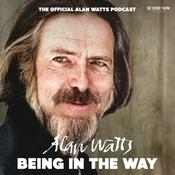 Alan Watts Being in the WayEducation, Philosophy, Religion & Spirituality, Self-Improvement, Society & Culture, Spirituality
 Dear Future WifeyChristianity, Education, Relationships, Religion & Spirituality, Society & Culture
 Great Company with Jamie LaingBusiness, Comedy, Comedy Interviews, Entrepreneurship, Personal Journals, Society & Culture
 The Affair…with Anna WilliamsonRelationships, Society & Culture
 Abroad in JapanArts, Documentary, Food, History, Personal Journals, Places & Travel, Society & Culture
 No FilterSociety & Culture
 The Relebogile Mabotja PodcastPersonal Journals, Society & Culture
 The Unplanned Podcast with Matt & AbbySociety & Culture
 Danny Jones PodcastComedy, Documentary, Society & Culture
 True Scary StoryArts, Personal Journals, Society & Culture
About The Human Trace
What happens when we stop scrolling past the headlines and start listening to the lives behind them?Hosted by Helen Avadiar-Nimbalker, this podcast steps into the stories that don’t always get told; the ones shaping our world from the margins, the frontlines, and the shadows.Each episode is a deep, human conversation about what’s really happening and why it matters more than we think.Because some stories aren’t just news.They’re personal.And they’re not going away.Because, these are conversations that can't wait.Published by Asia Freedom Network.The Human Trace is produced to spark real conversations, amplify unheard stories, and trace the human impact behind global issues.Helen Avadiar-Nimbalker is a trauma specialist, anti-trafficking strategist, and Director of the Asia Freedom Network. She is the founder of The Whispering Willow and CEO of Rise Foundation Asia - two organisations providing trauma-informed, community-based support for survivors of exploitation across Southeast Asia. With over two decades of experience, Helen has supported displaced communities, led survivor care initiatives, advised governments and civil society on systems reform, and shaped regional conversations on human rights, trauma, and justice.Connect: linkedin.com/in/helenavadiarnimbalkerLearn more at asiafreedomnetwork.org and follow us on Instagram & LinkedIn @asiafreedomnetwork.
Podcast websiteListen to The Human Trace, Because We Said So and many other podcasts from around the world with the radio.net app
Get the free radio.net app
- Stations and podcasts to bookmark
- Stream via Wi-Fi or Bluetooth
- Supports Carplay & Android Auto
- Many other app features
Get the free radio.net app
- Stations and podcasts to bookmark
- Stream via Wi-Fi or Bluetooth
- Supports Carplay & Android Auto
- Many other app features

The Human Trace
Scan code,
download the app,
start listening.
download the app,
start listening.
The Human Trace: Podcasts in Family
 South Africa