

Listen to this podcast for free in the app: Download for free in the App Store
radio.net
Sleep timer
Save favourites
165 episodes
Ports and Fresh Produce Logistics | Ep. 157
2026/09/14 | 1h 5 mins.South Africa produces world-class fresh fruit, but getting that fruit to international markets requires a complex logistics network operating under immense pressure.
In Episode 157 of the Lucentlands Podcast, hosts Dewald Kirsten and Louise Brodie speak with Delena Engelbrecht, CEO at GoReefers, about the evolution of South Africa’s fresh-produce logistics sector and the challenges facing exporters today.
Delena shares how GoReefers began with three people in 2001, shortly after deregulation transformed the fruit industry. The company has since developed into an international logistics business handling more than 700,000 pallets annually.
The conversation explores:
•The logistical disruption that followed deregulation
•How GoReefers grew by finding solutions during periods of change
•Why fresh-produce logistics still depends heavily on people
•The effect of port delays on growers, exporters and international customers
•Why South Africa must improve the performance of its ports
•The importance of protecting fruit throughout the supply chain
•Leadership, workplace culture and empowering employees
•Preparing employees for artificial intelligence and new technology
•Opportunities for South Africa to become a larger contributor to the global food supply
Delena explains that GoReefers approaches difficult decisions by asking one central question: What is best for the fruit?
Her message to exporters is equally clear: “You pick, you pack and you sell — we will do the rest.”
Connect with us:
Website: https://lucentlands.co.za/Instagram: https://www.instagram.com/lucentlandsmedia/
Facebook: https://www.facebook.com/lucentlandsmedia
LinkedIn: https://www.linkedin.com/company/lucentlandsmedia/
Podcast LinkedIn: https://www.linkedin.com/showcase/lucentlandspodcast
Support this podcast by buying us a coffee: https://buymeacoffee.com/lucentlands?new=1This podcast is proudly sponsored by Agrarius. Find out more: https://www.agrarius.co.za/?ref=recR9vP8u5CYfEOek&utm_source=lucentlands&utm_medium=referral&utm_campaign=LucentLandsPromoVisit our agricultural stock site: https://lucentlands.smugmug.com/Can Farmers Use Fewer Chemicals Without Risking Their Crops? | Ep. 156
2026/09/07 | 44 mins.Can farmers reduce their reliance on conventional chemicals without placing their crops at risk?
Jean Kuiper, Director at RealIPM, joins Lucentlands Podcast hosts Dewald Kirsten and Louise Brodie to explain how integrated pest management combines biological crop-protection products, carefully selected chemicals, beneficial organisms and effective monitoring.
Jean shares how problems with chemical resistance in her commercial rose operation led her to explore biological alternatives. After seeing the results firsthand, she began helping farmers introduce fungi, bacteria and other biological solutions into practical commercial production systems.
The conversation explores:
•Why integrated pest management does not mean abandoning chemicals
•How biological products can complement conventional crop-protection programmes
•The importance of scouting and spraying only when necessary
•How beneficial insects help control agricultural pests
•Why biological crop protection is not necessarily more expensive
•The role of cover crops, soil health and companion planting
•How consumer demand for reduced residues is changing agriculture
•Why growers must measure results and remain open to new approachesJean also shares a simple message for commercial growers: use these products, measure the benefits and allow the results to guide your decisions.
Connect with us:
Website: https://lucentlands.co.za/
Instagram: https://www.instagram.com/lucentlandsmedia/
Facebook: https://www.facebook.com/lucentlandsmedia
LinkedIn: https://www.linkedin.com/company/lucentlandsmedia/
Podcast LinkedIn: https://www.linkedin.com/showcase/lucentlandspodcast
Support this podcast by buying us a coffee: https://buymeacoffee.com/lucentlands?new=1This podcast is proudly sponsored by Agrarius. Find out more: https://www.agrarius.co.za/?ref=recR9vP8u5CYfEOek&utm_source=lucentlands&utm_medium=referral&utm_campaign=LucentLandsPromo
Visit our agricultural stock site: https://lucentlands.smugmug.com/Why Entomology Matters | Ep. 155
2026/08/31 | 57 mins.Episode 155 of the Lucentlands Podcast explores why entomological knowledge remains essential to the future of agriculture.Hosts Dewald Kirsten and Louise Brodie speak with Dr Elleunorah Allsopp, an entomologist who spent more than four decades conducting agricultural research, primarily within South Africa’s grape and wine industries.
Dr Allsopp reflects on entering agricultural research when women were first being admitted into research positions, earning the trust of growers and helping to advance equal opportunities within a traditionally male-dominated field.
The conversation examines the commercial and phytosanitary risks posed by insect pests, including how a pest can destroy a crop shortly before harvest or threaten access to an entire export market. Dr Allsopp also explains why sustainable farming and integrated pest management require far more knowledge and decision-making than conventional spray programmes.Building TIQI, a New Global Grape Brand | Ep. 154
2026/08/26 | 45 mins.Dewald Kirsten and Louise Brodie speak to Jacobus van der Merwe, Business Development Manager of Fruitips, about the development and global launch of TIQI—a new premium table grape brand built around exceptional flavour, long shelf life and carefully controlled production.
Developed through the partnership between Grapa Global and TopFruit International, TIQI brings two distinctive pink grape varieties together under one consumer brand. After a successful trial in 2025, the branded grapes are set to launch exclusively in Marks & Spencer stores in the United Kingdom on 26 August 2026.
Jacobus explains why Fruitips aims to build a brand rather than simply sell grapevine material. This includes selecting growers, controlling the number of hectares planted, developing production and packing protocols, protecting consistent quality and coordinating supply between countries.
The discussion also explores:
•Why more than 20,000 UK consumers participated in the grape tasting
•TIQI’s distinctive flavour, aroma and unusually long shelf life
•The strategy of keeping supply controlled to protect value
•Current plantings in California, Mexico, Brazil, China and Namibia
•When commercial plantings could begin in South Africa
•Why production protocols must be adapted for each country
•The challenge of delivering consistent quality throughout the year
•How the model could support premium returns for selected growers
•Why agriculture needs to communicate its wider impact to young professionals
Subscribe to the Lucentlands Podcast for conversations with the people shaping agriculture, horticulture and the international fresh-produce industry.Tiny Worms, Big Impact: Soil Health & a South African Biopesticide | Ep. 153
2026/08/24 | 49 mins.Lucentlands Podcast Episode 153 explores the largely unseen world beneath agricultural crops and why soil testing is becoming increasingly important for modern farming.
Dewald Kirsten and Louise Brodie speak to Sheila Storey, Consultant to Nemlab & Soil Health Support Centre and Director at NemaBio.Sheila explains how microscopic nematodes can damage plant roots, restrict nutrient uptake and contribute to costly production losses. However, not all nematodes are harmful. Beneficial, free-living nematodes can serve as valuable biological indicators of soil health and help identify whether soil is degraded, enriched or biologically balanced.
The conversation also explores Sheila’s journey from starting Nemlab in her home in 1987 to building a highly specialised agricultural laboratory serving producers, researchers and agricultural companies across Southern Africa.
A major focus is the development of a South African entomopathogenic nematode-based biopesticide. The locally sourced biological product is intended to control the soil stages of certain insect pests. Sheila discusses its potential advantages, the lengthy research and registration process, and why South Africa should invest in developing biological solutions from its own biodiversity.
More Business podcasts
 The Diary Of A CEO with Steven BartlettBusiness, Education, Society & Culture
 Ideas That Matter Podcast by Vusi ThembekwayoBusiness, Careers, Entrepreneurship, Management
 Bruce Whitfield’s Business WeekBusiness
 BizNews RadioBusiness, Business News, Investing, News
 FoundersBusiness, Entrepreneurship, History, Technology
 Aspire with Emma GredeBusiness, Entrepreneurship, Society & Culture
 The Game with Alex HormoziBusiness, Education, Entrepreneurship, Tutorials
 Money with CarlaBusiness, Investing
 Honest MoneyBusiness, Investing, Management
 The Money ShowBusiness, Business News, Investing, News
Trending Business podcasts
 HBR On LeadershipBusiness, Education, Entrepreneurship, Management, Self-Improvement
 Marketing Your Business - Marketing Strategies for Business OwnersBusiness, Marketing
 Seth Godin's Startup SchoolBusiness
 Big Take AsiaBusiness, Investing, News
 The CMO PodcastBusiness, Careers, Marketing
 Business &... with Natalie DawsonBusiness, Entrepreneurship
 Behavioral Science For Brands: Leveraging behavioral science in brand marketing.Business, Marketing
About Lucentlands Podcast | Harvesting Agriculture Knowledge
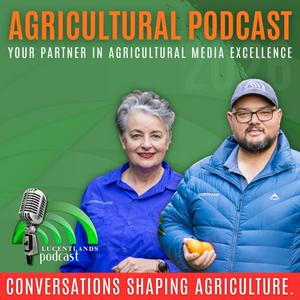
Welcome to the Lucentlands Podcast, your go-to source for all things related to agriculture. Our Agriculture podcast is dedicated to bringing you the latest news, trends, and insights on the agriculture industry from around the world.
Hosted by Dewald Kirsten and Louise Brodie, two passionate professionals with years of experience in the media production industry, the Lucentlands Agriculture Podcast is the perfect platform for anyone interested in learning about the latest developments in agriculture.
Podcast websiteListen to Lucentlands Podcast | Harvesting Agriculture Knowledge, The Diary Of A CEO with Steven Bartlett and many other podcasts from around the world with the radio.net app
Get the free radio.net app
- Stations and podcasts to bookmark
- Stream via Wi-Fi or Bluetooth
- Supports Carplay & Android Auto
- Many other app features
Get the free radio.net app
- Stations and podcasts to bookmark
- Stream via Wi-Fi or Bluetooth
- Supports Carplay & Android Auto
- Many other app features

Lucentlands Podcast | Harvesting Agriculture Knowledge
Scan code,
download the app,
start listening.
download the app,
start listening.
 South Africa