
Listen to this podcast for free in the app: Download for free in the App Store
radio.net
Sleep timer
Save favourites
81 episodes
#81 - Is Warming Up Worth It?
2026/10/30 | 1h 26 mins.What if your warmup could be more targeted to your individual nervous system? In this episode, I speak with my trusty podcast producer, Tony, all about the neurology of warming up. I discuss common warmup techniques and analyze them from a neurological perspective to better understand their effectiveness. I also make the case for tools that may not be typically associated with warming up that we can use for a more targeted effect. I discuss warmups for combat sports, strength training, ball-sport athletes, and more. I also talk about how to choose high payoff warmups, the importance of specificity for sport vs targeting higher order neurological systems, how to build buy-in with athletes, instances where warmups can be counterproductive, order of operations for warmups and training in general, sympathetic vs parasympathetic stimuli, autonomic function and performance, training with less tension, breathing exercises, and more.
Thank you to my podcast idea man and coach, Tony Fowler (Instagram: @tone_reverie) for helping me put together this episode!
Free Resources:
Join our mailing list HERE to stay up to date on the latest updates from Kruse Elite
Join our free Cranial Nerve Masterclass here to get a taste of how neurology impacts your movement and pain issues
Subscribe to our YouTube HERE for in-depth educational videos and tutorials
Whenever you're ready here's how we can help you:
Become an expert in problem solving movement and pain issues with our beginner neuro course, Neuro Foundations
Master applied neurology so you can feel confident you can help anyone who walks through your door by joining our advanced neuro course, The Neuro Dojo#80 - Q&A - Applied Neurology for ADHD, One-Sided Chronic Pain, Vision Deficits, Challenges with Strokes and Brain Trauma, Sore Feet and More...
2026/10/16 | 59 mins.In this episode, I speak with my producer, Tony, to answer questions from the listeners and we discuss:
One-sided chronic pain
Vision deficits
PMRF vs cerebellar patterns
Testing theories with assessments
Applied neurology for ADHD
Peripheral vision drills, anti-saccades, and inhibition drills
Movement and childhood education
Challenges with strokes and brain trauma
Balance issues and gait mechanics
Sore feet and metabolism
And more...
Thank you to my podcast idea man and coach, Tony Fowler (Instagram: @tone_reverie) for helping me put together this episode!
Free Resources:
Join our mailing list HERE to stay up to date on the latest updates from Kruse Elite
Join our free Cranial Nerve Masterclass here to get a taste of how neurology impacts your movement and pain issues
Subscribe to our YouTube HERE for in-depth educational videos and tutorials
Whenever you're ready here's how we can help you:
Become an expert in problem solving movement and pain issues with our beginner neuro course, Neuro Foundations
Master applied neurology so you can feel confident you can help anyone who walks through your door by joining our advanced neuro course, The Neuro Dojo#79 - Beyond the Massage Table: Integrating Applied Neurology Into Manual Therapy with Adam Goodrich
2026/10/09 | 55 mins.What happens when a manual therapist with more than 20 years of hands-on experience starts looking at pain and movement through a neurological lens?
In this episode, Taylor talks with KRUSE ELITE student Adam Goodrich, a licensed massage therapist and physical therapist assistant, about the challenges and wins he’s experienced integrating applied neurology into an established manual therapy practice.
In this episode:
Moving beyond the “table dilemma” — introducing neurological assessments and drills to clients who expect hands-on treatment.
Why adding applied neurology doesn’t mean abandoning the manual skills you’re already good at.
How Adam started small with trusted clients and gradually built confidence applying neuro concepts.
Real client examples where vision, sensory input, opposing-joint work and neuro stacking created surprising changes in pain, mobility and muscle tone.
Why assessment and reassessment can help determine whether both your neuro drills and your manual techniques are creating the desired response.
How a client’s history can provide clues about which neurological systems and inputs may be worth exploring.
Why manual therapists may have a unique advantage—their hands-on skills already provide powerful sensory input that can be viewed through a neurological lens.
Why applied neurology is less about learning another protocol and more about developing a thinking model that can enhance the skills you already have.
The big takeaway
You don’t have to know everything about the nervous system before you start applying what you’re learning.
Start small. Test an input. Reassess. Learn from the response.
Over time, applied neurology can give you a new way to understand the manual work you’re already doing—and a much larger toolbox when hands-on treatment alone isn’t creating the change you want.
Thank you to neuro ninja student, Adam Goodrich for sharing your personal and professional journey in learning applied neurology. To work with Adam, check out his practice:
Business: NKS Solutions - Findlay, OH
Website: nkssolutions.net
Email: adam@nkssolutions.net
Facebook: @nkssolutions1
Insta: @nkssolutions1
T: @nkssolutions1
Free Resources:
Join our mailing list HERE to stay up to date on the latest updates from Kruse Elite
Join our free Cranial Nerve Masterclass here to get a taste of how neurology impacts your movement and pain issues
Subscribe to our YouTube HERE for in-depth educational videos and tutorials
Whenever you're ready here's how we can help you:
Become an expert in problem solving movement and pain issues with our beginner neuro course, Neuro Foundations
Master applied neurology so you can feel confident you can help anyone who walks through your door by joining our advanced neuro course, The Neuro Dojo#78 - Our High Payoff Drills and Exercises
2026/10/02 | 1h 41 mins.What if a quick drill could reduce your pain, increase your mobility, and let you perform at your highest potential? In this episode, Alisha returns to the podcast and joins me as we speak with our producer, Tony, to talk about our high payoff drills and exercises and analyze the underlying neurology and strategies behind them.
We discuss:
What we mean by a drill that is "high payoff"
How to find your high payoff drills and exercises
Range of motion, pain, performance and coordination as assessments
Vestibular system deficiencies and their effect on certain movement drills
The table dilemma
Opposing joint theory
Localized drills vs targeting patterns and higher order systems
PMRF and cerebellar patterns
Order of operations when applying drills
The unexpected connection between smell and hearing
The power of positive association and neural chunking
Neurological patterns born from trauma
Diet and downstream effects on pain and mobility
Outgrowing and moving on from high payoff drills
High payoff drills for performance in strength and sport
Cranial nerve activations
One-sided joint mobilizations
Anti-saccades and other vision exercises
Band-assisted knee circles, tractioning, and tapping
Humming and vagus nerve activation
Stacking for more targeted results
Pinhole glasses and inhibition techniques
The most surprising high-payoff drills we've seen
And more...
Thank you to my podcast idea man and coach, Tony Fowler (Instagram: @tone_reverie) for helping me put together this episode!
Free Resources:
Join our mailing list HERE to stay up to date on the latest updates from Kruse Elite
Join our free Cranial Nerve Masterclass here to get a taste of how neurology impacts your movement and pain issues
Subscribe to our YouTube HERE for in-depth educational videos and tutorials
Whenever you're ready here's how we can help you:
Become an expert in problem solving movement and pain issues with our beginner neuro course, Neuro Foundations
Master applied neurology so you can feel confident you can help anyone who walks through your door by joining our advanced neuro course, The Neuro Dojo#77 - Q&A - How to Find a Neuro Professional, External Cues for Strength and Mobility, SI Joint and Pelvic Floor Issues, Improving Foot Health, and More...
2026/09/25 | 1h 9 mins.In this episode, I speak with my producer, Tony, to answer questions from the listeners and we discuss:
External cues for strength and mobility gains
Where to start with SI joint issues
Hypertonicity in the pelvic floor
C-section scars, midline stability, and the SMA
Signs there might be an underlying medical issue
Approaches to stacking drills
Flat feet, bunions, orthotics, and minimalist shoes
Overcoming movement deficits
How to find a neuro professional
Red flags to watch out for
And more...
Thank you to my podcast idea man and coach, Tony Fowler (Instagram: @tone_reverie) for helping me put together this episode!
Free Resources:
Join our mailing list HERE to stay up to date on the latest updates from Kruse Elite
Join our free Cranial Nerve Masterclass here to get a taste of how neurology impacts your movement and pain issues
Subscribe to our YouTube HERE for in-depth educational videos and tutorials
Whenever you're ready here's how we can help you:
Become an expert in problem solving movement and pain issues with our beginner neuro course, Neuro Foundations
Master applied neurology so you can feel confident you can help anyone who walks through your door by joining our advanced neuro course, The Neuro Dojo
More Alternative Health podcasts




Trending Alternative Health podcasts




About The KRUSE ELITE Podcast
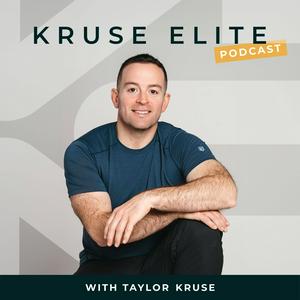
We combine the science of strength and conditioning with the tools of applied neuroscience so you can squash your pains and make gains.
Podcast websiteListen to The KRUSE ELITE Podcast, Feel Better, Live More with Dr Rangan Chatterjee and many other podcasts from around the world with the radio.net app
Get the free radio.net app
- Stations and podcasts to bookmark
- Stream via Wi-Fi or Bluetooth
- Supports Carplay & Android Auto
- Many other app features
Get the free radio.net app
- Stations and podcasts to bookmark
- Stream via Wi-Fi or Bluetooth
- Supports Carplay & Android Auto
- Many other app features
The KRUSE ELITE Podcast
Scan code,
download the app,
start listening.
download the app,
start listening.
 South Africa

