

Listen to this podcast for free in the app: Download for free in the App Store
radio.net
Sleep timer
Save favourites
18 episodes
How do we know what dinosaurs looked like?
2026/07/28 | 17 mins.When all we have left of dinosaurs is their fossilised bones, how do we know what they looked like on the outside? That’s what nine-year-old Kara from London wanted to know.
She joined our host Eloise to get some answers from paleobiologist Neil Gostling at the University of Southampton in the UK and find out all the ways scientists work out what dinosaurs looked like – from the way they walked, to their muscles and even what colour they were.
A podcast from The Conversation, the independent not-for-profit news organisation that brings you news and analysis straight from academic experts. Full credits available here.
This season is supported by the University of Southampton in the UK, a world-leading research-intensive university with a global network of international students and campuses in Malaysia and Delhi.
Are you a curious kid with a question? Pop it in an email, or record it and send us the audio to curiouskids@theconversation.com.
Curious Kids: what was the biggest dinosaur that ever lived?
If an asteroid hit Earth and all the humans died, would the dinosaurs come back? The Conversation’s Curious Kids podcast
Curious Kids: could dinosaurs evolve back into existence?How was the first language formed?
2026/07/21 | 18 mins.Nine-year-old Eva was watching an episode of the children’s show Horrible Histories about the stone age recently when a question popped into her head. The cave men were speaking a broken form of English, but Eva thought that didn’t sound right and she wondered: how was the first language formed?
She joined our host Eloise to get some answers from anthropologist April Nowell from the University of Victoria in Canada.
A podcast from The Conversation, the independent not-for-profit news organisation that brings you news and analysis straight from academic experts. Full credits available here.
This season is supported by the University of Southampton in the UK, a world-leading research-intensive university with a global network of international students and campuses in Malaysia and Delhi.
Are you a curious kid with a question? Pop it in an email, or record it and send us the audio to curiouskids@theconversation.com.
Curious Kids: who was the first person to speak English?
Curious Kids: how did humans think about things, before they had language to think with?
Curious Kids: are some languages more difficult than others?Can scientists make a new element for the periodic table?
2026/07/14 | 17 mins.There are currently 118 chemical elements on the periodic table. The last one added was oganesson, which was first created by scientists in 2002.
Seven-year-old Robyn wants to know whether scientists will be able to make any more new elements to add to the periodic table, and how they'll do it! He joined our host Eloise to ask biochemist Mark Lorch from the University of Hull in England.
A podcast from The Conversation, the independent not-for-profit news organisation that brings you news and analysis straight from academic experts. Full credits available here.
This season is supported by the University of Southampton in the UK, a world-leading research-intensive university with a global network of international students and campuses in Malaysia and Delhi.
Are you a curious kid with a question? Pop it in an email, or record it and send us the audio to curiouskids@theconversation.com.Why do some foods taste good and others taste horrible?
2026/07/07 | 16 mins.Have you noticed that something you find absolutely delicious might taste disgusting to someone else? Well nine-year-old Leo from Wigan in the UK wanted to know why that is – and why our taste for certain foods changes?
Leo joined our host Eloise to put his question to taste researcher Linda Bartoshuk from George Washington University. If you'd like to join in with the experiment in this episode, make sure you have packet of jelly beans or jelly babies to hand!
A podcast from The Conversation, the independent not-for-profit news organisation that brings you news and analysis straight from academic experts. Full credits available here.
This season is supported by the University of Southampton in the UK, a world-leading research-intensive university with a global network of international students and campuses in Malaysia and Delhi.
Are you a curious kid with a question? Pop it in an email, or record it and send us the audio to curiouskids@theconversation.com.
Curious Kids: how do tongues taste food?
Why does orange juice taste bad after you brush your teeth?Do whales fart?
2026/06/30 | 14 mins.itA few years ago, 10-year-old Guy was driving along the Australian coast when he saw whales, spouting water up into the air. He was amazed. “Then my brother farted, and then I wondered if whales fart,” says Guy.
Guy joined our host Eloise to put his question to Vanessa Pirotta, a wildlife scientist at Macquarie University in Australia on this episode.
A podcast from The Conversation, the independent not-for-profit news organisation that brings you news and analysis straight from academic experts. Full credits available here.
This season is supported by the University of Southampton in the UK, a world-leading research-intensive university with a global network of international students and campuses in Malaysia and Delhi.
Are you a curious kid with a question? Pop it in an email, or record it and send us the audio to curiouskids@theconversation.com.
Curious Kids: why do elephants have tusks?
Curious Kids: which is smarter – a blue whale or an orca?
Curious Kids: How did some animals evolve wings to fly?
Curious kids: do whales fart and sneeze?
More Kids & Family podcasts
 PAW Patrol: Eye-Spy a RescueKids & Family, Stories for Kids, TV & Film
 Greeking Out from National Geographic KidsKids & Family, Stories for Kids
 Brains On! Science podcast for kidsEducation for Kids, Kids & Family
 Snoop and Sniffy: Dog Detective Stories for KidsKids & Family, Stories for Kids
 Circle RoundKids & Family, Stories for Kids
 Sleep Tight Stories - Bedtime Stories for KidsKids & Family, Stories for Kids
 Deep Sleep SoundsAlternative Health, Health & Wellness, Kids & Family, Mental Health
 Storiebeer StoriesKids & Family
 Wow in the WorldEducation for Kids, Kids & Family
 Focus on the Family with Jim DalyKids & Family, Parenting, Relationships, Society & Culture
Trending Kids & Family podcasts
 The Cat In The Hat PodcastKids & Family
 Rainbow SurfersKids & Family
 Flip and MoziEducation for Kids, Kids & Family
 Big Life Kids PodcastEducation for Kids, Kids & Family, Stories for Kids
 The Big Fib - Small TalesArts, Comedy Fiction, Fiction, Kids & Family, Performing Arts, Stories for Kids
 MierspoortjiesKids & Family, Stories for Kids
 Adventure Koala: Stories for KidsKids & Family, Stories for Kids
 Mr. Bedtime StoriesKids & Family, Stories for Kids
 But Why: A Podcast for Curious KidsKids & Family, Nature, Science
 WeWowEducation for Kids, Kids & Family
 Baby Brunch | The Parenting SeriesKids & Family
 Sleep Tight Relax - Calming Bedtime Stories and MeditationsKids & Family, Stories for Kids
 Figarinos Fahrradladen - Der MDR Tweens Hörspiel-Podcast für KinderKids & Family, Stories for Kids
 Raising Good HumansEducation, Kids & Family, Parenting
 Parenting Teens with Dr. CamEducation, Health & Wellness, Kids & Family, Mental Health, Parenting, Self-Improvement
 Molly of DenaliKids & Family, Stories for Kids
 Bedtime Stories with Netflix Jr.Fiction, Kids & Family, Stories for Kids, TV & Film
 Snuggle: Kids bedtime storiesKids & Family, Stories for Kids
 Bedtime ExplorersEducation, Education for Kids, Health & Wellness, Kids & Family, Mental Health, Self-Improvement
 Ask Lisa: The Psychology of Raising Tweens & TeensHealth & Wellness, Kids & Family, Mental Health, Parenting
 M Is for Mama PodcastKids & Family, Parenting
 Hey-O Stories Of The Bible - Saddleback KidsChristianity, Kids & Family, Religion & Spirituality, Stories for Kids
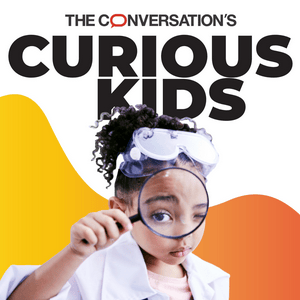
About The Conversation's Curious Kids
Kids ask the coolest questions! And on The Conversation’s Curious Kids, we get the brainiest people we can to answer them!
Every week, a curious kid joins host Eloise to ask the world’s top researchers their burning question – whether it’s about space, dinosaurs, trees or even why their dog is just sooooo cute.
A podcast from The Conversation, the independent website that brings you news straight from scientists and scholars.
Email your questions to curiouskids@theconversation.com or record it on your phone and send it to us directly.
Podcast websiteListen to The Conversation's Curious Kids, PAW Patrol: Eye-Spy a Rescue and many other podcasts from around the world with the radio.net app
Get the free radio.net app
- Stations and podcasts to bookmark
- Stream via Wi-Fi or Bluetooth
- Supports Carplay & Android Auto
- Many other app features
Get the free radio.net app
- Stations and podcasts to bookmark
- Stream via Wi-Fi or Bluetooth
- Supports Carplay & Android Auto
- Many other app features

The Conversation's Curious Kids
Scan code,
download the app,
start listening.
download the app,
start listening.
The Conversation's Curious Kids: Podcasts in Family

 South Africa