
Listen to this podcast for free in the app: Download for free in the App Store
radio.net
Sleep timer
Save favourites
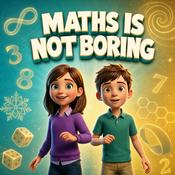
Science for Kids / Science's Not Boring: The Kids Science Podcast
Kidopoly
Latest episode
125 episodes
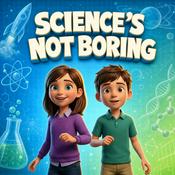
How was Earth formed?
2026/10/19 | 11 mins.Have you ever wondered where our home planet came from? Buckle up, space explorers, because we are traveling back four and a half billion years to witness the fiery, explosive birth of planet Earth! Before there were oceans, mountains, or even dinosaurs, Earth started as a giant, freezing cold cloud of space dust. But when an exploding star sent a shockwave through space, things got crazy! Tiny specks of dust crashed together like the ultimate bumper-car ride to form massive space rocks in a mind-blowing process called accretion. Soon, early Earth became a glowing, red, liquid lava planet floating in space! But the craziest part hasn't even happened yet. Imagine a Mars-sized planet named Theia slamming straight into Earth at twenty-two thousand miles per hour! This unbelievable cosmic collision blasted fiery debris into space, which quickly clumped together to create our very own Moon! Discover how a bubbling magma ocean finally cooled down, how steam created our first oceans, and where scientists found the oldest crystals on Earth. Join Mira and Finn on this spectacular adventure into the history of our solar system!How did the first plant grow?
2026/10/18 | 12 mins.Have you ever imagined what Earth looked like 500 million years ago? Picture this: absolutely zero green! No trees, no grass, no flowers—just endless, bare, jagged rock. If you wanted to find a plant, you had to dive underwater to find floating green algae! But how did those plants finally crawl onto the dry, scary land?
Join Mira and Finn on a prehistoric adventure to discover the greatest survival story in Earth's history! You'll learn how brave little green blobs survived scorching sunburns to become the very first land plants. Find out why they had no roots, leaves, or seeds, and how they stuck to rocks using tiny velcro-like hairs! Plus, meet Cooksonia, the two-inch-tall skyscraper plant that grew microscopic plumbing tubes to stand up straight. You won't believe how these tiny heroes literally created the first dirt, paved the way for all land animals, and even caused a global ice age! Get ready to explore the wild and wonderful world of pioneer plants. It’s an episode packed with giant surprises from the tiniest ancient heroes!What is a seashell?
2026/10/17 | 12 mins.Have you ever picked up a beautiful, swirly seashell on the beach and wondered where it came from? It wasn't just a rock shaped by the ocean waves—it was built by a squishy sea creature! Join Mira and Finn as they dive underwater to discover the amazing world of molluscs. Learn how snails, clams, and oysters use a magical organ called a mantle to literally 3D-print their very own rock-hard armor out of ocean water! Did you know a baby snail is born already wearing its tiny shell and never sheds it? Or that the giant clam can weigh up to 550 pounds, making it as heavy as a full-grown grizzly bear?! Plus, we will uncover the hilarious secret of hermit crabs, the rule-breakers of the beach who can't grow their own shells. Find out what a "vacancy chain" is and how these tiny crabs line up to trade houses in the ultimate underwater swap meet! Get ready for mind-blowing facts, cool science, and an awesome quiz. You'll never look at a seashell the same way again!What is a tear?
2026/10/16 | 11 mins.Did you know your body makes enough tears every year to fill half a bathtub? It’s true! In this episode, Mira and Finn dive into the wild, slightly slimy, and totally amazing science of tears! You might think crying is just salty water leaking from your eyeballs, but tears are actually a super-advanced biological shield. Discover the microscopic bacteria-chopping ninja enzymes hiding in your everyday basal tears, and find out why chopping onions unleashes a massive flood of reflex tears to wash away stingy gases. Plus, did you know humans are the only animals on Earth that cry emotional tears? We’ll explore how crying is actually a biological superpower that flushes out stress hormones like cortisol and helps your brain calm down after a big, messy cry. From tiny hidden drain holes in your eyelids to the real truth behind crocodile tears, you will never look at crying the same way again. Join us to find out exactly what happens when the waterworks start!What is an octopus?
2026/10/15 | 11 mins.Have you ever wondered what it would be like to have three beating hearts, bright blue blood, and a brain that spreads into your arms? Meet the octopus, one of the wildest and smartest creatures in the entire ocean! In this episode of Science's Not Boring, Mira and Finn dive deep underwater to uncover the incredible secrets of these squishy, ancient animals. Did you know octopuses have been swimming in our oceans since the time of the Jurassic dinosaurs? It is absolutely true! Discover how they use copper-rich blue blood to survive in freezing deep waters, and how their eight arms have minds of their own—literally! Each arm can taste, touch, and think independently using millions of brain cells. We will also reveal how these deep-sea geniuses can change color in milliseconds like a real-life invisibility cloak, unscrew glass jars from the inside, and even use coconut shells as underwater armor! Join the adventure, learn some mind-blowing marine biology facts, and take our fun trivia quiz at the end to see if your brain is as sharp as a giant Pacific octopus!
More Education podcasts








Trending Education podcasts



















About Science for Kids / Science's Not Boring: The Kids Science Podcast
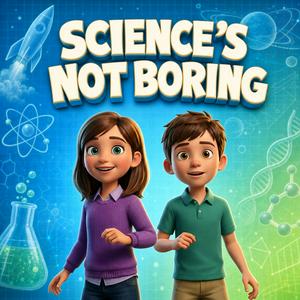
A groundbreaking podcast for curious kids aged 4-12 that proves science is anything but dull. Join our fictional AI hosts Mira, a brilliant 9-year-old, and her younger brother Finn, age 7, as they explore the incredible world of science. From exploding volcanoes and black holes to deadly venom and the tiny machines inside your own body, each episode uncovers the most astonishing, surprising, and sometimes mind-bending wonders of science - explained in a way that actually makes sense to kids.Whether you're discovering how rockets blast into space, why dinosaurs ruled the Earth, what really happens inside a thunderstorm, how your brain pulls off impossible tricks, or why the ocean's deepest creatures glow in the dark - Science Is Not Boring transforms big scientific ideas into unforgettable stories that ignite curiosity and wonder.Because science isn't a pile of facts to memorize. It's the story of how everything works - and how we figure it out.A note on why we use AI. For us, AI allows us to deliver learning at a scale and quality that previously would have been too expensive. If we make the odd technical error, or the sound goes a bit funny, bear with us, we're trying our best. We hope you enjoy the show!
Podcast websiteListen to Science for Kids / Science's Not Boring: The Kids Science Podcast, The Anglo-Boer War and many other podcasts from around the world with the radio.net app
Get the free radio.net app
- Stations and podcasts to bookmark
- Stream via Wi-Fi or Bluetooth
- Supports Carplay & Android Auto
- Many other app features
Get the free radio.net app
- Stations and podcasts to bookmark
- Stream via Wi-Fi or Bluetooth
- Supports Carplay & Android Auto
- Many other app features

Science for Kids / Science's Not Boring: The Kids Science Podcast
Scan code,
download the app,
start listening.
download the app,
start listening.
Science for Kids / Science's Not Boring: The Kids Science Podcast: Podcasts in Family
 South Africa

