PodcastsIslamQuran Conversations

Quran Conversations

Quran Conversations
Quran Conversations
Latest episode

57 episodes

  • Quran Conversations

    S4 E7: Disagreeing with Compassion (TaHa 89-93) | Quran Conversations

    2026/04/10 | 1h 2 mins.
    What happens when devotion is misplaced—and correction is met with resistance?

    In this episode of Qur’an Conversations, we reflect on Surah TaHa (20:89–93) and the painful moment when Bani Israel refuse to abandon the golden calf—even after being reminded of Allah’s mercy. Through the dialogue between Prophet Musa and Prophet Harun (peace be upon them both), the Qur’an gives us a powerful lens into misplaced devotion, spiritual blindness, leadership under pressure, and how to repair relationships even after rupture 

    You will learn:
    📖 How the Qur’an’s questions expose modern idols like money, ego, and relationships
    📖 Why anything we worship besides Allah can’t truly help, heal, or protect us
    📖 How spiritual slavery can continue even after physical freedom
    📖 Why Harun corrected with mercy—not fear—and what that means for parenting and guidance
    📖 How Shayṭān downplays sin before it happens and magnifies shame after it does
    📖 What it looks like to disagree with compassion while sharing the same goal
    📖 How relationships can be repaired, even when the situation itself hasn’t been fixed

    We hope this episode encourages your own reflective journey with the Qur’an. This week’s reflection prompt is: 

    If a relationship around you has ruptured, what would compassionate repair look like?

    =========
    If you’re enjoying this podcast, please leave a review on your podcast platform. It helps more than you know.

    @Quran.Conversations is proudly produced by @muslimi and sponsored by @Fawakih.arabic, an online learning platform for Qur’anic Arabic that I personally use. Start your journey at Fawakih.org.

    For more spiritual reflections, follow me on Instagram at @daliamogahed.

    Listen wherever you get your podcasts, including Apple Podcasts, Spotify, and YouTube
  • Quran Conversations

    S4 E6: The Test After Liberation (TaHa 86-88) | Quran Conversations

    2026/04/03 | 1h 10 mins.
    What happens after liberation? Why do people who witness miracles still fall into misguidance?

    In this episode of Qur’an Conversations, we reflect on Surah TaHa (20:86–88), when Prophet Musa (peace be upon him) returns to find his people worshipping the golden calf. These verses uncover something deeper than idolatry—they reveal the psychology of post-liberation vulnerability, moral outrage rooted in love, and how deception spreads when accountability collapses 

    We explore the tension between physical freedom and spiritual slavery, the danger of weaponizing religion, and the subtle ways blame-shifting protects the ego from repentance.

    You will learn:
    📖 Why witnessing miracles does not guarantee spiritual strength
    📖 The difference between righteous anger and ego-driven anger
    📖 How oppression can shape a mindset that seeks to “ascend” unjust systems rather than dismantle them
    📖 Why freedom without tarbiyah (spiritual development) leaves a community vulnerable
    📖 How blame-shifting blocks repentance and personal accountability
    📖 How religious language can be weaponized to mislead
    📖 Why discernment is critical in an age of illusion, spin, and manipulation

    In this episode, we’re joined by Hadia Mubarak. Hadia is an Associate Professor of Religion at Queens University of Charlotte, where she teaches courses on Islam, comparative scriptures, women and gender in the Muslim world, the history of Islam in America, and religious representation in popular culture, among other courses. Mubarak completed her Ph.D. in Islamic Studies from Georgetown University, where she specialized in modern and classical Qurʾanic exegesis (tafseer).

    =========
    We hope this episode encourages your own reflective journey with the Qur’an. This week’s reflection prompt is: 

    After experiencing relief, success, or blessing in your life, where might you still be spiritually vulnerable, and what “golden calf” could quietly be competing for your trust?

    If you’re enjoying this podcast, please leave a review on your podcast platform. It helps more than you know.

    @Quran.Conversations is proudly produced by @muslimi and sponsored by @Fawakih.arabic, an online learning platform for Qur’anic Arabic that I personally use. Start your journey at Fawakih.org.

    For more spiritual reflections, follow me on Instagram at @daliamogahed.

    Listen wherever you get your podcasts, including Apple Podcasts, Spotify, and YouTube
  • Quran Conversations

    S4 E5: Wait for the People (TaHa 83–84) | Quran Conversations

    2026/03/27 | 43 mins.
    What happens when love for Allah pulls us forward—but the people we’re responsible for are still behind?In this episode of Qur’an Conversations, Imam Magid and I reflect on a pivotal moment in the life of Prophet Musa ﷺ, when he hastens to Mount Sinai out of deep longing for Allah, leaving his people in the care of his brother Harun. Through this moment, the Qur’an teaches us something essential about spiritual leadership: closeness to Allah must never come at the cost of abandoning people.This conversation explores how true leadership balances devotion with empathy—and how the prophetic path is not just about how fast you move, but whether you are willing to walk with others.You will learn:📖 Why Musa’s haste was rooted in love—and what Allah wanted to teach him through it📖 The responsibility of leaders to consider those they lead, not just their own spiritual drive📖 Why meeting people where they are is a prophetic skill, not a compromise of truth📖 How encouragement and gentleness move hearts more than pressure and judgment📖 The divine promise: when you walk toward Allah, He comes toward youWe hope this episode encourages your own reflective journey with the Qur’an. This week’s reflection prompt is: In your pursuit of closeness to Allah, are there people in your care or influence whom you may be unintentionally leaving behind, and what would it look like to slow down and walk with them instead of ahead of them?=========If you’re enjoying this podcast, please leave a review on your podcast platform. It helps more than you [email protected] is proudly produced by @muslimi and sponsored by @Fawakih.arabic, an online learning platform for Qur’anic Arabic that I personally use. Start your journey at Fawakih.org.For more spiritual reflections, follow me on Instagram at @daliamogahed.Listen wherever you get your podcasts, including Apple Podcasts, Spotify, and YouTube.
  • Quran Conversations

    S4 E4: The Way Back to Allah is Never Closed (TaHa 81–82) | Quran Conversations

    2026/03/13 | 50 mins.
    What does it mean to be truly free?

    In this episode of Qur’an Conversations, Imam Magid and I reflect on the journey of Bani Israel after liberation, because freedom in the Qur’an is not only physical. It’s the beginning of something deeper: learning how to live with a purified heart, how to receive Allah’s blessings without crossing His limits, and how to return when we fall.

    These verses carry both a warning and a promise: don’t overstep the bounds after being given goodness, but if you do, the door back is never closed. Allah introduces Himself here as Al-Ghafoor—the One who repeatedly forgives—reminding us that repentance isn’t a one-time event, but an ongoing return to mercy.

    You will learn:

    📖 What “spiritual liberation” looks like after Allah grants outward freedom
    📖 How to enjoy the tayyibāt (good and pure provisions) without falling into excess
    📖 Why transgressing boundaries isn’t just “a mistake”—it can become a spiritual collapse
    📖 What tawbah really is: not a ritual, but a sincere return that reshapes the heart
    📖 How shame can trap us—and how Allah’s repeated forgiveness breaks that trap

    We hope this episode encourages your own reflective journey with the Qur’an. This week’s reflection prompt is:

    After Allah has granted you a blessing or a moment of relief, where might you be at risk of overstepping His limits, and what would it look like to practice a sincere return before that slip becomes a spiritual fall?

    ======

    If you’re enjoying this podcast, please leave a review on your podcast platform. It helps more than you know.

    @Quran.Conversations is proudly produced by @muslimi and sponsored by @Fawakih.arabic, an online learning platform for Qur’anic Arabic that I personally use. Start your journey at Fawakih.org.

    For more spiritual reflections, follow me on Instagram at @daliamogahed.

    Listen wherever you get your podcasts, including Apple Podcasts, Spotify, and YouTube.
  • Quran Conversations

    S4:E3 No Little People (TaHa 79-81) | Quran Conversations

    2026/03/06 | 1h
    What happens when someone claims they’re guiding people, but they’re actually leading them straight into ruin?

    In this episode of Quran Conversations, Imam Magid and I reflect on the Qur’an’s final summary of Pharaoh’s story: “Pharaoh truly led his people astray and did not guide them.” From there, we widen the lens. Because Pharaoh isn’t only a figure of history, Pharaoh can be a leader with a platform– a system of oppression, a tyrant at home, and even the inner Pharaoh within our own nafs.

    We also move into Allah’s address to Bani Israel: a reminder to recognize liberation as a divine gift, not a personal victory—then a warning not to overstep the bounds after being given blessings, because falling after receiving goodness is a fall from a great height.

    You will learn:
    📖 Why the Qur’an describes Pharaoh “misguiding” and “not guiding”, and what that double phrasing reveals
    📖 How “pharaonic behavior” can show up in everyday life: ego, entitlement, control, and spiritual blindness
    📖 Practical ways to check the Pharaoh of the nafs: humility, accepting truth, remembering origins, and practicing compassion
    📖 Why gratitude after rescue is a spiritual crossroads, and how Shayṭān tries to erase our sense of Allah’s gift
    📖 What it means to enjoy Allah’s blessings without transgressing, and how overstepping leads to collapse (faqad hawā)

    We hope this episode encourages your own reflective journey with the Qur’an. This week’s reflection prompt is: 
    Where in your life might “pharaonic” tendencies be quietly present — whether in how you lead, respond to truth, or handle blessings — and what would it look like to replace them with humility and gratitude before a fall ever happens?

    =========
    If you’re enjoying this podcast, please leave a review on your podcast platform. It helps more than you know.

    @Quran.Conversations is proudly produced by @muslimi and sponsored by @Fawakih.arabic, an online learning platform for Qur’anic Arabic that I personally use. Start your journey at Fawakih.org.

    For more spiritual reflections, follow me on Instagram at @daliamogahed.

    Listen wherever you get your podcasts, including Apple Podcasts, Spotify, and YouTube.
More Islam podcasts

About Quran Conversations

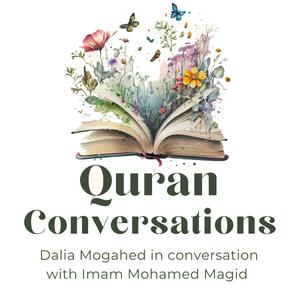
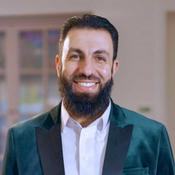
Quran Conversations is the podcast for anyone who wants to unlock the meaning and healing powers of the Quran. I’m your host Dalia Mogahed, an author, researcher, and a student of the Quran. I will be in conversation with one of my dearest teachers, Imam Mohamed Magid, a scholar of the Quran and long time family counselor and congregational leader. Join us as we explore the linguistic miracles and life lessons of the Book of God through a conversation between a scholar and his student.
Podcast website

Listen to Quran Conversations, Saud Al-Shuraim and many other podcasts from around the world with the radio.net app

Get the free radio.net app

  • Stations and podcasts to bookmark
  • Stream via Wi-Fi or Bluetooth
  • Supports Carplay & Android Auto
  • Many other app features