

Listen to this podcast for free in the app: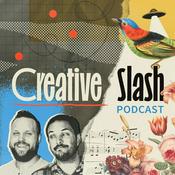 Download for free in the App Store
radio.net
Sleep timer
Save favourites
54 episodes
Ep. 054 – Van Berkemeyer – Design, Music, and the Empty Chase for the Next High
2026/09/17 | 1h 59 mins.Van Berkemeyer has built two separate creative careers: one as an illustrator and designer, one as a musician who's had real viral hits and industry attention.
He says neither one ever actually felt like arriving.
In this episode, Brad and Dustin talk with Van about growing up on a small farm in rural Texas, working as a cowboy on an Oklahoma ranch as a teenager, and building BerkMade, his illustration and design studio, alongside a music career as Van Andrew. The surface topic is juggling two creative disciplines. The real conversation is about something every working artist runs into eventually: chasing a peak, hitting it, and finding out it doesn't fix anything.
It's part career retrospective, part cigar-lounge philosophy session, and part reminder that the goalpost never stops moving, no matter which craft you're chasing it in.
In this episode, we talk about:
Why success in one creative discipline doesn't transfer the lesson to the next, and how Van's found the same empty feeling chasing wins in both illustration and music.
The shoe-shopping analogy for chasing achievement, and why finally getting the thing you wanted for years lasts about as long as a new pair of shoes.
What's actually real about a creative's social media persona, and why the people who look most confident online are often the most different in person.
Why "jack of all trades" doesn't have to mean master of none, and how Van thinks about splitting real creative capacity across two disciplines without feeling like he's failing at both.
Aliens, ice walls, and why Van isn't (technically) a flat earther — a tangent Brad and Dustin promise is "a safe space."
Whatever discipline you work in, this episode keeps circling back to the same question every working creative eventually asks: once you get the thing you thought you wanted, then what? Van's answer, four and a half years sober and building two careers instead of chasing one high, might be the most useful part of the whole conversation.
ABOUT THE CREATIVE
Van Berkemeyer is an illustrator and designer based in Nashville, Tennessee, working under the name BerkMade. He grew up on a small farm in rural Texas and spent his teenage years working as a cowboy on an Oklahoma ranch before building two separate creative careers: illustration and design as BerkMade, and music as Van Andrew.
Alongside his design work, Van has had real success in music, including a song that went viral and hit number two on iTunes, and a stint as a contestant on The Voice. He's four and a half years sober and spends most of his downtime on his Harley, at the cigar lounge, or playing volleyball.
BerkMade (Illustration & Design)
Instagram
https://www.instagram.com/berkmade/
Van Andrew (Music)
Website
https://www.vanandrewmusic.com/
Instagram
https://www.instagram.com/vanandrewofficial/
Join the Creative Slash Newsletter and Get the 5-Part “Off the Record” email series FREE
Click here to get the five-part “Off the Record” email series
Note: If you're looking for hard-earned advice, resources from top creatives, and the products they can't live without, you're going to love this.
Brad Woodard
Brad is an illustrator and designer behind Brave the Woods, a full-service studio working with clients like PBS Kids, Ford, Target, and USPS. His bold, playful style and heart-led storytelling shine through everything from brand campaigns to children’s books.
View Brave the Woods
Dustin Lee
Dustin is the founder of RetroSupply, a shop for retro-inspired brushes, textures, and digital tools used by tens of thousands of creatives from indie artists to major studios. He shares what it’s really like to run a creative business while keeping it small, weird, and intentional.
View RetroSupply
Credits
Audio/video editing: Clara Wright
Cover art: Brad Woodard
Intro animation: Seth Austin
Intro music: “Snakes and Fire” (Instrumental) by Pär HagströmEp. 053 – Christian Helms – The 99-Pack, a McDonald's Broom, and Taking the Joke Seriously
2026/09/10 | 1h 34 mins.A 99-pack of beer sounds like a joke. It's about as tall as Shaq and weighs eighty pounds. When Christian Helms described it to his mom, she said she didn't get it.
A few months later, she called to ask if he'd seen what Austin Beerworks did.
In this episode, we talk with Christian Helms, founder and creative director of Helms Workshop in Austin, about the 99-pack, Howler Brothers, a week living with Modest Mouse's Isaac Brock, and a career built mostly on naive optimism. Underneath the stories is a bigger conversation. Why is the funniest idea in the room so often the most human one? Why do you have to understand something better than anyone before you can make it surprising? And why would he rather hire a great person than a great portfolio?
It is part design history, part Southern storytelling, and part confession from a man with two giant wind chimes and a painted bunting at his feeder.
In this episode, we talk about:
Getting chased out of a McDonald's with a broom as a Pentagram intern, and why just being in the room while Michael Bierut presents is a master class.
How the 99-pack actually happened including the rule he still works by: take the joke you make at the bar with the client and make it real the next day.
Why creativity is a skill, not a gift and the Edward de Bono exercise that can turn a hospital logo into a vehicle.
Why AI and focus groups pull you toward the same place especially when the whole point of a brand is to not look like everything else in the category.
How years of Lyme disease finally broke his micromanaging habit and why he's hired the third-best portfolio in the stack more times than he can count.
Whether you run a studio, work in one, or just want your ideas to stop looking like everyone else's, this one's worth your time. The weird idea is usually the right one. Someone just has to be brave enough to make it real.
ABOUT THE CREATIVE
Christian Helms is the founder and creative director of Helms Workshop, a branding agency in Austin, Texas, focused on consumer goods and hospitality. The studio has built brands for Austin Beerworks, Howler Brothers, Tecovas, and plenty of the places that make Austin feel like Austin.
He grew up in small-town North Carolina, studied journalism and creative writing at UNC, went on to Portfolio Center in Atlanta, and interned at Pentagram under Michael Bierut. In Austin he fell in with the Decoder Ring crew, making music posters for the bands he was already seeing four or five nights a week.
These days he reads a lot of Southern noir, keeps boiled peanuts in the freezer, and is writing a book on branding.
Website
https://helmsworkshop.com
Instagram
https://www.instagram.com/tchristianhelms
Studio Instagram
https://www.instagram.com/helms_workshop
Join the Creative Slash Newsletter and Get the 5-Part “Off the Record” email series FREE
Click here to get the five-part “Off the Record” email series
Note: If you're looking for hard-earned advice, resources from top creatives, and the products they can't live without, you're going to love this.
Brad Woodard
Brad is an illustrator and designer behind Brave the Woods, a full-service studio working with clients like PBS Kids, Ford, Target, and USPS. His bold, playful style and heart-led storytelling shine through everything from brand campaigns to children’s books.
View Brave the Woods
Dustin Lee
Dustin is the founder of RetroSupply, a shop for retro-inspired brushes, textures, and digital tools used by tens of thousands of creatives from indie artists to major studios. He shares what it’s really like to run a creative business while keeping it small, weird, and intentional.
View RetroSupply
Credits
Audio/video editing: Clara Wright
Cover art: Brad Woodard
Intro animation: Seth Austin
Intro music: “Snakes and Fire” (Instrumental) by Pär HagströmEp. 052 – Bill Gardner – Stolen Magic Secrets, a $20 Rock, and Branding for Machines
2026/09/03 | 1h 6 mins.There are thousands of magicians who can handle a deck of cards better than David Copperfield. There is one David Copperfield.
Bill Gardner has a one-word answer for why, and it turns out to be the same word that explains why one designer’s work gets remembered and another’s gets filed.
In this episode, we talk with Bill Gardner — founder of LogoLounge, owner of Gardner Design, and a man who put himself through college as a working magician — about story as the actual engine underneath branding. It opens with how he got into magic in the first place, and ends on whether we are about to start designing brands for AI agents instead of for people.
It is part magic-shop origin story, part masterclass in selling design to a CFO, and part quiet argument that the thing you are selling has never really been the picture.
In this episode, we talk about:
How Bill actually got into magic and why he could only tell the story once the magician whose props he broke into had died.
The $20 rock that named an investment firm and why he set it on the table in front of the client before saying anything about design.
How to answer a CFO who wants you to prove ROI including why “no, I can’t guarantee that” is the right way to open.
Meeting Saul Bass at twenty years old including the thing he discovered walking down that hallway that nobody had ever written down.
What happens when AI agents become the audience for branding and whether we will have to design for human consumption and machine consumption at the same time.
Whether you are trying to justify your rates, name a company, or work out what is left for human designers once the machines are the ones doing the looking, this is the same question coming at you from five directions. What are people actually buying when they buy design — and what makes any of it worth remembering?
ABOUT THE CREATIVE
Bill Gardner is the owner and creative director of Gardner Design in Wichita, Kansas, which he has been running since 1983. The studio does nothing but branding — roughly 80% of it rebranding — for clients including Cessna, Thermos, Pizza Hut, Coleman, Hallmark, and Wichita State University.
He is also the founder of LogoLounge.com, the largest searchable logo archive in the world, now approaching half a million logos submitted by more than 20,000 designers. He has authored fifteen LogoLounge books and has written the annual Logo Trend Report for more than twenty years, which has carried him around the world as a speaker. His newest book is The LogoLounge Guide to Iconic Branding: Trendcasting for Logos that Last.
He holds degrees in both business and fine art, collects antique bagatelles, and paid his way through college performing magic.
Website
https://gardnerdesign.com
LogoLounge
https://www.logolounge.com
Instagram
https://www.instagram.com/logolounge
The LogoLounge Guide to Iconic Branding
https://www.quarto.com/books/9780760398104/the-logolounge-guide-to-iconic-branding
Join the Creative Slash Newsletter and Get the 5-Part “Off the Record” email series FREE
Click here to get the five-part “Off the Record” email series
Note: If you're looking for hard-earned advice, resources from top creatives, and the products they can't live without, you're going to love this.
Brad Woodard
Brad is an illustrator and designer behind Brave the Woods, a full-service studio working with clients like PBS Kids, Ford, Target, and USPS. His bold, playful style and heart-led storytelling shine through everything from brand campaigns to children’s books.
View Brave the Woods
Dustin Lee
Dustin is the founder of RetroSupply, a shop for retro-inspired brushes, textures, and digital tools used by tens of thousands of creatives from indie artists to major studios. He shares what it’s really like to run a creative business while keeping it small, weird, and intentional.
View RetroSupply
Credits
Audio/video editing: Clara Wright
Cover art: Brad Woodard
Intro animation: Seth Austin
Intro music: “Snakes and Fire” (Instrumental) by Pär HagströmEp. 051 – Paul Lukes – Graffiti, Getting Clean, and Why Ugly Design Converts
2026/08/28 | 1h 30 mins.Designers spend their careers trying to make things beautiful.
So what do you do when your boss tears up the polished sign you made for the tip jar, tells you to redo it in crayon, and the ugly one makes more money?
In this episode, we talk with designer, artist, and reformed graffiti writer Paul Lukes about the road from painting the streets of San Francisco to a career built on craft, community, and a published ethics page. It is a conversation about addiction and recovery, about what graffiti and client work actually have in common, and about why the job is not to make something pretty but to make something that moves people.
It is part recovery story, part street history, and part very practical argument for designing things that work.
In this episode, we talk about:
The frozen yogurt tip jar and why the ugliest sign in the shop was the one that made the most money.
Getting clean after years of trying and relapsing including the ordinary moment in a meeting that finally stuck when nothing else had.
How he pulled off his biggest street piece with a little help from the crack dealers working the same corner.
Why he put an ethics page on his website and what it did to the kind of clients who reach out.
The design influencer pile-ons and why he thinks recreational outrage has become America's new favorite pastime.
Whether you came up in a scene you had to leave, or you are just tired of making pretty things that do not work, this one goes somewhere. It is about what you keep from the person you used to be, and what a creative career looks like once you stop trying to impress other designers.
ABOUT THE CREATIVE
Paul Lukes is a designer, artist, and retired graffiti writer based in Fort Collins, Colorado. He is a senior designer at Bonfire Effect and runs smART minds, the studio he shares with his wife, music journalist Kyle Eustice. His fine art pulls from found materials and street ephemera the way hip hop pulls from records, layering pieces of the past into something new.
He also started CoLab, a free Colorado design community with close to two hundred members, a Slack channel, and periodic in-person events, built on the idea that everyone grows faster when nobody is gatekeeping.
Website
https://smartmindsthinkalike.com
Instagram
https://www.instagram.com/culture_conservationist
LinkedIn
https://www.linkedin.com/in/paul-lukes-906608134
Join the Creative Slash Newsletter and Get the 5-Part “Off the Record” email series FREE
Click here to get the five-part “Off the Record” email series
Note: If you're looking for hard-earned advice, resources from top creatives, and the products they can't live without, you're going to love this.
Brad Woodard
Brad is an illustrator and designer behind Brave the Woods, a full-service studio working with clients like PBS Kids, Ford, Target, and USPS. His bold, playful style and heart-led storytelling shine through everything from brand campaigns to children’s books.
View Brave the Woods
Dustin Lee
Dustin is the founder of RetroSupply, a shop for retro-inspired brushes, textures, and digital tools used by tens of thousands of creatives from indie artists to major studios. He shares what it’s really like to run a creative business while keeping it small, weird, and intentional.
View RetroSupply
Credits
Audio/video editing: Clara Wright
Cover art: Brad Woodard
Intro animation: Seth Austin
Intro music: “Snakes and Fire” (Instrumental) by Pär HagströmEp. 050 – 50 Episodes, Over 40 Creatives, and the Equation We Never Meant to Find
2026/08/21 | 1h 6 mins.Fifty episodes and over forty interviews in, Brad and Dustin have heard just about every piece of advice a working creative can give. About half of it directly contradicts the other half.
So they went back through a year of their own transcripts to find out what was actually true underneath all of it.
In this episode, Brad and Dustin mark Creative Slash’s 50th episode by digging through their own interview archive for the patterns that kept repeating: the formula almost every guest fits without meaning to, the uncomfortable realization that most of the people they admire most are not secretly geniuses, and why sitting across from forty different creatives finally talked them down from their AI anxiety.
It’s part victory lap, part debrief, and part two hosts realizing they’ve accidentally been running a longitudinal study on what actually makes a creative career work.
In this episode, we talk about:
The “unique value + consistency + adaptability” equation they didn’t set out to find, and why every guest fits it whether they know it or not.
Why the show’s best advice always contradicts itself and why hearing two very successful people say the opposite thing is the most reassuring part of the whole show.
The design influencer debate that split their own comment section and what it taught them about growth requiring you to give up the thing that made you successful.
Why nobody they’ve interviewed is secretly a genius, and the “surface area” theory of staying in the game long enough for opportunity to find you.
How their AI anxiety quietly changed over 50 episodes, and the “provenance” idea, with an assist from a stop-motion movie studio, that explains why.
Whether you’ve listened since episode one or you’re just now hitting play, this one is less a highlight reel than an audit: the patterns that held up after a year of asking the same questions, and the ones neither of them expected to admit out loud.
Join the Creative Slash Newsletter and Get the 5-Part “Off the Record” email series FREE
Click here to get the five-part “Off the Record” email series
Note: If you're looking for hard-earned advice, resources from top creatives, and the products they can't live without, you're going to love this.
Brad Woodard
Brad is an illustrator and designer behind Brave the Woods, a full-service studio working with clients like PBS Kids, Ford, Target, and USPS. His bold, playful style and heart-led storytelling shine through everything from brand campaigns to children’s books.
View Brave the Woods
Dustin Lee
Dustin is the founder of RetroSupply, a shop for retro-inspired brushes, textures, and digital tools used by tens of thousands of creatives from indie artists to major studios. He shares what it’s really like to run a creative business while keeping it small, weird, and intentional.
View RetroSupply
Credits
Audio/video editing: Clara Wright
Cover art: Brad Woodard
Intro animation: Seth Austin
Intro music: “Snakes and Fire” (Instrumental) by Pär Hagström
More Arts podcasts




Trending Arts podcasts
 PAGECASTArts, Books, Society & Culture
 Sherlock Holmes Short StoriesArts, Fiction, Performing Arts
 Lord of the Rings Lorecast - J.R.R. Tolkien's World & Writings ExplainedArts, Books, Fiction, TV & Film
 Camp Half-Pod: A Percy Jackson PodcastArts, Books
 The New Yorker: The Writer's Voice - New Fiction from The New YorkerArts
 The New Yorker: FictionArts, Books
 The Art AngleArts, News, Visual Arts
 岩中花述Arts
 Jane Austen Bedtime StoriesArts, Books
 Rich Dad Poor Dad In EnglishArts, Books
 Sherlock Holmes Bedtime StoriesArts, Books
 3 Step Afro House MixArts, Performing Arts
 Gloss AngelesArts, Entertainment News, Fashion & Beauty, News
 The Food ProgrammeArts, Food
About Creative Slash
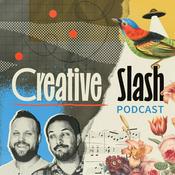
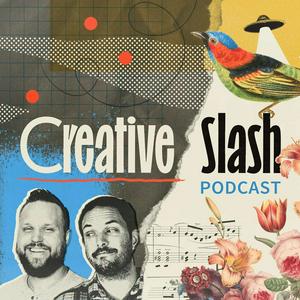
Have you ever wondered what secrets drive the most profound, successful, famous, and unique creatives?Then the Creative Slash podcast is for you. We dig deep to discover the high-leverage concepts, philosophies, tools, weird obsessions, and quiet daily routines that fuel their success—the stuff that rarely gets talked about publicly. You'll get an inside look at what really drives the world's greatest graphic designers, illustrators, and artists through in-depth interviews with creatives who've achieved both creative and financial success.Hosted by Brad Woodard (bravethewoods.com) and Dustin Lee (retrosupply.co), each episode feels like you're hanging out with us after hours, having the kind of conversations that happen when the work day is done. You'll walk away with fresh inspiration, new ideas, and practical advice you can actually use in both your creative work and personal life.
Podcast websiteListen to Creative Slash, Lekompo Mix and many other podcasts from around the world with the radio.net app
Get the free radio.net app
- Stations and podcasts to bookmark
- Stream via Wi-Fi or Bluetooth
- Supports Carplay & Android Auto
- Many other app features
Get the free radio.net app
- Stations and podcasts to bookmark
- Stream via Wi-Fi or Bluetooth
- Supports Carplay & Android Auto
- Many other app features
Creative Slash
Scan code,
download the app,
start listening.
download the app,
start listening.
 South Africa