

Listen to this podcast for free in the app: Download for free in the App Store
radio.net
Sleep timer
Save favourites
172 episodes
Lessons from the Birthing Center: Calving, Education, and Inspiring Future Agricultural Leaders
2026/10/02 | 26 mins.Recorded live at the Kansas State Fair Birthing Center, this episode highlights the educational value of giving the public a firsthand look at animal agriculture and the birthing process. The hosts discuss how the birthing center has served as a popular attraction for decades, allowing visitors to observe calves, piglets, and lambs being born while learning more about animal health and livestock production.
The conversation explores the signs of impending calving, including behavioral changes, relaxation of structures around the tailhead, and the progression of labor. The veterinarians explain how they determine when a cow may need assistance and discuss common causes of calving difficulty, such as abnormal calf positioning. Throughout the episode, listeners receive practical insights into gestation lengths, fetal development, and the biological similarities between livestock and human births.
A major focus of the discussion is agricultural education and youth involvement. FFA advisor Mrs. Chase from Wellington shares how projects at the state fair help students develop agricultural skills, showcase their work, and gain exposure to industries they might not otherwise experience. The hosts also discuss strategies for encouraging students to consider careers in veterinary medicine and agriculture, emphasizing mentorship, hands-on experience, and a willingness to start with basic tasks and learn over time.
The episode concludes with a successful live birth at the birthing center, giving listeners a real-time example of normal calving behavior. As the newborn calf arrives and the cow immediately begins grooming it, the hosts explain how those maternal behaviors help stimulate the calf, encourage standing and nursing, and strengthen the bond between cow and calf. Overall, the discussion celebrates the value of agricultural outreach, hands-on learning, and helping the public better understand where livestock and food production begin.Antibiotics, Antimicrobials & Recovery: New Insights in Beef Cattle Health
2026/09/25 | 25 mins.In this episode of Cattle Chat, the team discusses post-treatment intervals for cattle treated for respiratory disease, featuring graduate research from our guest Katherine Shirley comparing three- and six-day intervals. The results suggest that allowing cattle more time to recover before retreatment may reduce treatment failures and the likelihood of chronic issues.
The conversation also explores the distinction between antibiotics and antimicrobials, antimicrobial resistance, and emerging alternatives such as probiotics, prebiotics, essential oils, plant extracts, and other natural compounds. The group discusses research into alternatives for rumen health and liver abscess prevention, including promising work with sorghum extracts. Throughout, the experts emphasize that successful cattle recovery involves more than drug selection—it also depends on nutrition, environment, comfort, and proper nursing care.
This episode is sponsored by Virbac. Learn more at virbac.comSetting Calves Up for Success: Early-Life Health, Vaccination, and Management
2026/09/18 | 25 mins.This episode is sponsored by Boehringer Ingelheim and focuses on the importance of early calf health and how management decisions made before and shortly after birth can influence lifetime performance. The discussion emphasizes that calf success begins long before calving, with proper nutrition, body condition, and vaccination programs for cows playing critical roles in producing healthy, vigorous calves. Dr. D.L. Step highlights the importance of preparing cows to provide quality colostrum and a strong immune foundation for newborn calves.
The group discusses how pre-weaning disease can have long-term impacts on growth and productivity, making prevention a key management goal. Beyond vaccination itself, the speakers stress the importance of proper vaccine handling, including correct storage temperatures, avoiding disinfectant residues in syringes, and using modified-live vaccines within the recommended time after mixing. Mishandling vaccines can reduce their effectiveness even when the correct products are selected.
The conversation also explores the role of stress management in successful vaccination programs. Calves respond better when they are handled quietly, maintained on an adequate nutritional plane, and processed in low-stress environments. The speakers note that vaccine response is influenced not only by the product itself but also by calf age, maternal nutrition, colostrum intake, and overall herd management.
A recurring theme is the value of recordkeeping, which allows producers to evaluate outcomes, identify trends, and continuously improve their health programs over time. Ultimately, the episode concludes that successful calf health programs rely on combining sound nutrition, effective vaccination practices, careful handling, and long-term management planning rather than relying on any single intervention.Estrus Intensity Matters: Using Heat Activity to Improve Reproductive Success
2026/09/11 | 25 mins.This episode is sponsored by Estrotect and features Dr. George Perry from Texas A&M AgriLife, who discusses how estrus intensity influences reproductive performance in beef cattle and how producers can use that information to improve breeding decisions. While many producers think of estrus as a simple yes-or-no event, the discussion highlights that the intensity of estrus, measured by mounting activity or other indicators, can provide valuable insight into fertility. Calves and cows that exhibit stronger estrus prior to fixed-time artificial insemination consistently achieve higher conception rates than those showing weak or no signs of estrus.
The conversation explains that estrus remains important even in synchronization and fixed-time AI programs, where breeding occurs on a set schedule. Research has shown that cattle displaying estrus before insemination can have conception rates more than 20 percentage points higher than those that do not. This information can help producers make more strategic decisions about which animals receive sexed semen or higher-value genetics.
The group also emphasizes that management factors such as nutrition, body condition score, postpartum interval in cows, and puberty status in heifers often have a greater influence on estrus expression than genetics alone. Advances in estrus detection technology, including activity monitors and improved heat-detection aids, now provide producers with more detailed information than traditional visual observation methods.
Ultimately, the discussion concludes that estrus intensity is not merely a biological curiosity but a valuable management tool. By combining sound nutrition, synchronization protocols, and improved estrus detection, producers can make better breeding decisions that improve conception rates, calf performance, and the long-term productivity of the herd.High Cattle Prices, Smart Investments, and Getting Started in the Cattle Business
2026/09/04 | 24 mins.This episode focuses on how producers can take advantage of strong cattle prices, both by improving existing operations and by helping the next generation enter the industry. The discussion begins with ideas for reinvesting profits into long-term improvements such as water systems, fencing, grazing infrastructure, land enhancement projects, and other investments that may take years to fully pay off but can improve productivity and quality of life on the ranch.
The hosts also explore diversification strategies, including alternative livestock enterprises, hunting-related income, and other complementary businesses that can provide revenue streams not directly tied to cattle markets. A key theme is balancing short-term opportunities with long-term sustainability through careful planning and strategic investments.
The conversation then shifts to the challenges facing young people who want to enter the cattle industry during a period of historically high cattle values. The group emphasizes that aspiring producers do not need to start large and should instead look for ways to leverage labor, management skills, and relationships to gain access to cattle, land, or grazing opportunities. Examples include leasing cattle, custom grazing stocker cattle, entering partnerships, or gradually building an operation through small-scale opportunities.
The hosts stress the importance of developing a written business plan, understanding costs and potential revenue, and seeking advice from experienced professionals such as lenders, extension agents, veterinarians, nutritionists, and other producers. Building strong personal networks and identifying mentors can be just as valuable as obtaining financial capital. Ultimately, the episode encourages producers to think strategically, invest wisely during profitable times, and recognize that successful cattle operations are often built gradually through planning, patience, and strong relationships.
More Education podcasts
 The Jordan B. Peterson PodcastEducation, Science, Society & Culture
 How to Be a Better HumanEducation, Self-Improvement
 Motivation Daily by MotiversityEducation, Health & Wellness, Self-Improvement
 The Jefferson Fisher PodcastEducation, Relationships, Self-Improvement, Society & Culture
 Self ObsessedEducation, Self-Improvement
 anything goes with emma chamberlainEducation, Personal Journals, Self-Improvement, Society & Culture
 The Mel Robbins PodcastEducation, Health & Wellness, Mental Health, Relationships, Self-Improvement, Society & Culture
 IMO with Michelle Obama and Craig RobinsonEducation, Self-Improvement, Society & Culture
 SOLVED with Mark MansonEducation, Self-Improvement
Trending Education podcasts
 NXT Chapter with T.D. JakesEducation, Self-Improvement, Society & Culture
 Frequent Traveller Circle - Essentials - DEUTSCHBusiness, Education, Tutorials
 Dry Creek Wrangler PodcastEducation, Self-Improvement, Society & Culture
 A Changed Mind | Mindset That MattersEducation, Philosophy, Religion & Spirituality, Self-Improvement, Society & Culture, Spirituality
 Coffee Break ItalianCourses, Education, Language Learning
 What In The 20’s?Education, Self-Improvement
 MODERN STOICISMEducation, Self-Improvement
 The Fat Wallet Show from Just One LapBusiness, Education, Investing
 The Slumflower HourEducation, Self-Improvement
 Achieve Your Goals with Hal ElrodBusiness, Education, Self-Improvement
 JIM ROHNEducation, Self-Improvement
 it's cringe, but it's trueEducation, Self-Improvement
 Finding Freedom with Peter CroneEducation, Health & Wellness, Mental Health, Religion & Spirituality, Self-Improvement, Spirituality
 The Other Side NDE (Near Death Experiences)Education, Religion & Spirituality
 Stoic LessonsBusiness, Education, Entrepreneurship
 Exam Study Expert: ace your exams with the science of learningCourses, Education, Education for Kids, Kids & Family
 Motivational Speeches by Coach Pain and MotiversityEducation, Health & Wellness, Mental Health, Self-Improvement
 Certified: The ISACA CISA Audio CourseCourses, Education, Technology
 Zero to Finals Medical Revision PodcastEducation, Health & Wellness, Life Sciences, Medicine, Science
 Side Hustle IdeasEducation, Tutorials
 Easy German: Learn German with native speakers | Deutsch lernen mit MuttersprachlernCourses, Education, Language Learning
About Cattle Chat
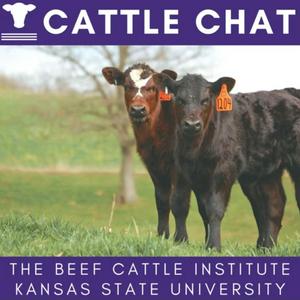
Listen to veterinary professionals from the Beef Cattle Institute at Kansas State University talk about a variety of topics within the beef industry.
Podcast websiteListen to Cattle Chat, The Jordan B. Peterson Podcast and many other podcasts from around the world with the radio.net app
Get the free radio.net app
- Stations and podcasts to bookmark
- Stream via Wi-Fi or Bluetooth
- Supports Carplay & Android Auto
- Many other app features
Get the free radio.net app
- Stations and podcasts to bookmark
- Stream via Wi-Fi or Bluetooth
- Supports Carplay & Android Auto
- Many other app features

Cattle Chat
Scan code,
download the app,
start listening.
download the app,
start listening.
Cattle Chat: Podcasts in Family
 South Africa