
Listen to this podcast for free in the app: Download for free in the App Store
radio.net
Sleep timer
Save favourites
200 episodes

How to Make Friends When You Don’t Drink
2026/10/21 | 25 mins.Okay, real question. Have you ever wanted someone to grab breakfast with, or take a class with, and then realized… you honestly don’t know who you’d ask?
Yeah. Why is making friends as an adult so damn awkward—and where are you supposed to meet people?
It gets even weirder when you quit drinking.
You might still love your friends, but you don’t want to spend every Saturday night watching them get drunk.
You want people you can laugh with, and conversations you’ll actually remember the next morning.
You just have no clue where those people are hiding.
And if you’re an introvert like me, someone telling you to “just put yourself out there” probably makes you want to throw your coffee at them.
I get it. I love being home. I need a lot of alone time.
I will never be the girl who walks into a room with her hand out, ready to chat everybody up.
But I’ve also learned that when I’ve gone days without talking to a real human, I need connection too.
And I had to learn how to do that without alcohol.
In this episode, I take you back to my early days in AA, when my anxiety was so bad I’d grab the corner seat and slip out early so nobody could talk to me.
I wanted so badly to stay sober and be comfortable, but I was doing everything I could to be invisible.
So I made a deal with myself to start changing my patterns, and my first step was a lot smaller than starting a conversation.
I also had to admit something kind of embarrassing: people weren’t approaching me in life because I wasn’t approachable.
Head down, sunglasses on, earbuds in, nose in my phone. Apparently that doesn’t say “come say hi.” Who knew? 😂
I’ll tell you how I made two friends, one from my gym and one from a tarot class (yes, really).
We’ll also talk about where to meet people, what to actually say, how you go from “hey, good to see you” to “want to grab breakfast?”, and what to do when someone says no.
You don’t have to turn into an extrovert.
You just have to let people get to know you.
And then you can go home and put your sweatpants on. 💛
Links mentioned in this episode:
Sober Society Membership: addictionunlimited.com/membership
Book A Call Here: addictionunlimited.com/call
Related Episode: Guaranteed Results When Your Social Life Is Stalled
Follow me on Instagram: @addictionunlimited
Facebook Group: https://www.facebook.com/groups/addictionunlimited
Prefer to read instead of listen? Here’s the full transcript of this episode.
Hello, my friend. Welcome back to another episode of the Addiction Unlimited podcast. I’m your coach, Angela Pugh. Today we’re talking about something that can feel surprisingly difficult when you quit drinking: making friends. Because where the hell are adults supposed to meet people? You’re a grown-up. You have responsibilities and routines in a life that’s already pretty full. You’re not sitting next to somebody in school every day or
Living down the hall from a hundred other people who are also looking for something to do on Friday night. And when you take alcohol out of the picture, you may realize you don’t know what your social life looks like anymore. Maybe you still love your friends, but you don’t want to spend every weekend doing the things you used to do together. Maybe you want someone to have breakfast with or go for a walk, take a class, or have a conversation you’ll actually remember the next day.
You want connection. You just don’t know where to start.
Angela (01:23.47)
And if you’re an introvert or you’ve relied on alcohol to feel comfortable around people, the advice to just put yourself out there probably makes you want to throw something. So today we’re going to get more specific than that. Where do you go? How do you get past the anxiety? What do you say? And how do you build friendships without the liquid courage of alcohol, turning you into an outgoing person who wants to talk to everybody?
And I promise you, this is all possible because I am an extreme introvert. And if I can figure this out, you definitely can. Alone time is a requirement for me. And I require a little more of it than most people do. I also have anxiety. It’s gotten better as I’ve gotten older, but it’ll never be completely gone. So I will never be the person.
Angela (02:24.792)
So I will never be the person who walks into a room with my hand out, like ready to shake hands and introduce myself and make small talk. I would literally rather die. Now, if somebody starts a conversation with me and we connect, I can talk all day long. I think sometimes people confuse introversion with being shy or insecure, uncomfortable with yourself. Those aren’t interchangeable things. I’m very confident.
I just don’t enjoy large groups and small talk.
Angela (03:10.304)
If I’m surrounded by conversations that don’t interest me, I’m probably gonna be quiet because I’m bored to tears. And eventually I’ll fake a headache and get the hell out of there. But when I feel safe with somebody, when I can open up and laugh and have a meaningful conversation, I’m happy to let that person in my bubble.
And I know a lot of you understand that because a lot of my clients are introverts too.
Angela (03:42.124)
You enjoy being home, you like your space, you don’t want plans every night of the week, and a canceled invitation sometimes feels like a little gift from the universe. You can enjoy all of that and still need friends. For me, I can usually tell when I need connection because I start getting irritable, right? I’m working too much, I’m getting overtired, I’m spending too much time in my own little world.
And it doesn’t always announce itself like Angela, you’re lonely. Sometimes it shows up as me needing to get away from my work and connect and laugh with somebody who knows me.
Angela (04:34.062)
Mm mm.
Angela (04:42.552)
For me, I can usually tell when I need connection because I start getting irritable, right? I’m working too much, I’m overtired, and I’m just spending way too much time in my own little world. And it doesn’t announce itself. It’s not like all of a sudden my head goes, Angela, you’re lonely. No, it’s usually that.
Angela (05:07.318)
No, it’s usually that I find myself being bitchy, like every little thing is irritating the shit out of me. And then I have to go through my checklist, right? Halt, hungry, angry, lonely, tired. That’s always where I start. And I’ll realize, like, holy shit, you know, it’s been three days and I haven’t had human contact. So
Angela (05:32.992)
I need soul food. Connection is soul food. Time with friends I can open up with and be myself. I also know my limits. There’s only so much being out of the house and being around people I can comfortably do in a week. I will hit my limit of being in public and I need to go home and recharge in peace and sweatpants. But that’s the kind of social life I want you thinking about building, one that gives you connection and
fits who you actually are.
Angela (06:07.924)
And there’s a part of this conversation where we have to get honest about our own behavior, right? Because when someone tells me like, I don’t have any sober friends, my first response is, well, you have to go where the sober people are and say hi, right? A bus full of sober people isn’t gonna show up at your house and ask to be your friend. They’re not coming down your street with a breakfast reservation and a seat saved for you. You have to participate. And I say that with love because we can’t stay home all the time.
Bitch about how much we hate people and then whine when we don’t have friends and fun things to do. Pick a fucking lane. It’s one or the other. You either hate the people or you want things to do and have friends. You are perfectly allowed to be a homebody. You can prefer quiet evenings in a small circle. There’s nothing wrong with that. But if you’re unhappy with how disconnected you feel, you have to look at your decisions and figure out if you’re really trying to make connections at all.
If you decline every invitation, never go anywhere new, and leave every activity before anyone has a chance to talk to you, those choices affect your opportunities to make friends. Own that.
Mm.
Angela (07:39.914)
You don’t control whether a particular person becomes your friend. You do have control over whether you make room to meet people and get to know them. And this matters when we talk about social activities and drinking and anxiety. A lot of people tell me that feeling anxious around others was one of the main reasons they drank. Social situations. Everybody thinks they’re unique that they have social anxiety. You’re not unique.
Almost all of us have it, right? It’s one of the ways alcohol traps us. Alcohol was how you walked into the party, started the conversation, or stopped worrying about what everyone else thinks of you. It allows you to feel like you belong and you’re connected. When you quit drinking, those situations feel unfamiliar and uncomfortable. I understand why you’d want to avoid them.
But if you keep waiting until you feel completely comfortable before you do anything, you could be waiting a very long time.
Angela (08:44.684)
You really need a manageable place to start. And I mean manageable for you. When I first started going to AA, my anxiety was so bad, I could barely function. I mean, obviously I was brand new sober. I just quit drinking. I’m still in withdrawal and post-acute withdrawal. But I couldn’t not go just because my anxiety was an asshole. I needed to be there. And I knew it would never get easier if I didn’t challenge myself.
Right, because if you left it up to me and my introverted anxious self, I would find the most corner y corner seat in the room, preferably where somebody could not sit next to me.
Angela (09:29.398)
I wouldn’t talk to anyone, and I might leave a little early to make absolutely sure I escaped before the small talk started.
Not because I didn’t want connection. I wanted to feel comfortable with those people, but my anxiety was unbearable. And avoiding everybody was how I got through it.
The problem was I wanted to feel like I belonged.
Angela (10:00.396)
The problem was I wanted to feel like I belonged while doing everything I could to remain invisible. So I had to give myself something small enough that I would actually do it, but challenging enough to start changing my pattern. That’s the crux of recovery, changing your patterns. So I made a deal with myself: make eye contact with one person every day. That was my entire assignment.
I didn’t have to introduce myself or start a conversation. I just had to look at one person instead of looking at the floor and making my way to my little corner.
And it had to be a different person every day. That’s part of it too. I couldn’t just pick one person and eye contact with the same person every day. It had to be a different person. And when that became comfortable, I added the next step: make eye contact and say hi. That’s it. Just hi. I didn’t need to stop and exchange astrological signs and the ages of our children and our entire family fucking histories. Nobody was asking me to become the welcoming committee. I just had to say one word.
And when that got easier, I bumped it up to a few words. How are you? Good to see you. Glad you’re here. And by the time I got to that third step, going to meetings felt so much easier. I wasn’t freaking out every day about to cry. I was looking forward to going in. People knew my name and I felt like I belonged.
Angela (11:29.954)
That connection I wanted finally had some room to happen because I was letting people see me and get to know me a little bit at a time.
I didn’t wait until I felt comfortable to participate. I participated in small ways until I started feeling more comfortable. And that’s what I want you to take from this. Your first step can just be eye contact. It can be one word. You can choose something that stretches you without expecting yourself to handle everything at once. But you have to choose something. Again, you can do nothing or you can do something.
I knew what doing nothing was getting me: a corner seat, an early exit, and probably drunk again. If I wanted connection and sobriety, I had to start making different choices. Something else I had to learn about myself is that people don’t often approach me because I’m not very approachable. And that was a weird little discovery for me.
Angela (12:37.024)
I can want connection all day long, but if my head is down and I’m avoiding eye contact and I look like I don’t want to be bothered, what invitation am I giving somebody to talk to me? And now we have our phones, makes it even worse, right? You can walk into a room full of people and immediately disappear into your screen. You’re physically there, but nobody has any reason to think you’re interested in interacting. And then you go home and say, Nobody talked to me. Well, did you look up? I mean
I had to recognize that in myself. And once I did, I started correcting it. Now I make a point to walk in with my head up, my phone in my pocket, I smile at people, I make eye contact, I pay attention to what’s happening around me instead of staying buried in my phone or lost in my own thoughts. I’m still the same introvert, but I’m giving people a chance to see that I’m open to them.
Because someone across the room can’t know you’re sitting there wishing you had a friend. They can only see what you’re showing them. And if everything about your behavior says leave me alone, they’re gonna leave you alone.
Angela (13:50.368)
I used to always be head down in my phone, sunglasses always on, earbuds in. Of course, connection was challenging. I looked like a weirdo, right? But before you decide nobody ever approaches you, take an honest look at how you show up. Are you making yourself available for conversation? Are you looking at anyone? When someone smiles at you, do you smile back? Those are small things you can start changing right now, today.
And sometimes that’s where you need to begin, creating an opening instead of wondering why no one’s coming in.
Angela (14:46.988)
And that same willingness to take one small step at a time is how you give yourself a chance to make friends outside recovery too. Once you have a manageable way to interact with people, the next question is where do you want to keep showing up? For me, it helps to have something to do, right? I don’t want to walk in a room where my entire assignment is to mingle. That is not fun for me. I need a
purpose, an activity, something to do with my hands, give me a class, something to learn, something I’m interested in. Then I have a reason to be there. And I already have something in common with everyone else in the room. We already have something to talk about.
Angela (15:35.19)
I have a gym friend and we’ve taken the same class together every week for years. We started saying hi, then having short conversations. Eventually, she invited me to breakfast with some of the other women. Then we went to the pool at our gym after class a few times over the summer. We aren’t lifelong besties, but we connect and we really enjoy each other.
And look how that happened. We’re both doing something we enjoyed, seeing each other regularly. We start chatting about our workouts and getting comfortable with each other.
And look how that happened. We’re both doing something we enjoyed, seeing each other regularly. We started chatting about our workouts and getting comfortable with each other. Then someone extended an invitation. That’s something you can create opportunities for in your own life. Pick a class that meets every week, volunteer somewhere regularly, find a walking group or a recovery meeting you can return to. So you have a chance to recognize people and be recognized.
Because if you go somewhere once, don’t talk to anybody and leave saying, well, that didn’t work, what exactly did you give a chance to happen? You walked into a room full of strangers. It may take a few visits before you have someone to say hi to, and a few more before you have a conversation you want to continue. Give yourself and the people around you some time. Another girlfriend of mine I met in a tarot class.
I love all things, spirituality, the universe, the stars, the signs. And I had a growing curiosity about tarot. And I thought it’d be fun to learn more about it. And I am a person who literally wants to know everything. Like there’s almost nothing on the planet I don’t want to learn more about. So I found a class and I signed up.
Angela (17:29.238)
We sat next to each other every Sunday for six weeks. By the second or third week, we decided to get something to eat after class. Then we started doing that after every class. And now we’re fantastic friends. That friendship started because I followed my curiosity and actually signed up for something. So think about what interests you. What would you enjoy learning? What have you wanted to try? What’s something you used to love that you haven’t made time for?
And choose an activity that you will enjoy even if you don’t make a friend immediately, right? You’ll have a reason to go back. And while you’re there, you’ll be around people who share at least one of your interests.
Angela (18:16.346)
And if what you specifically need is sober friends, go where sober people gather. Recovery meetings, sober communities, alcohol-free activities. These give you an opportunity to meet people who understand that part of your life. There’s a lot of comfort being around people who get it, where you don’t have to explain why you aren’t drinking or wonder if you’re going to spend the whole night watching everyone else get drunk.
You can also make friends through your work, through gym, the classes.
You can also make friends through work or the gym, classes, other interests, other parents you meet through your kids’ events and sports and school things. Your social life can include people who don’t share your recovery experience, but still respect your sobriety completely.
Angela (19:11.97)
Think about what you want to spend time doing and who you enjoy doing it with. You’re building a life and there’s room for different people in it. Now, once you meet somebody you like, there’s another little step you have to take too. You know how I went from eye contact to hi and then a few words. Well, this is another version of that. You’ve had some conversations, you enjoy each other. Now you can give that connection somewhere to go.
With my gym friend, she invited me to breakfast. With my friend from Tarot, we decided to get food after class. You can do that too. Say to your person, hey, do you want to grab something to eat after class? Or when you’ve been talking for a few minutes and having some laughs, this has been really fun. We should grab coffee sometime. You’re suggesting a little more time together. You don’t have to figure out whether you’re gonna be friends for the next 30 years before you have breakfast.
And I know there’s some vulnerability there. You’re letting somebody know you like them without knowing exactly how they’ll respond. But the other person may be just as hesitant to ask you. And if you both are waiting for the other person to make a move, you could spend the next six months smiling at each other across the parking lot.
Angela (20:36.438)
And if both of you are waiting for the other person to make a move, you could spend the next six months smiling at each other across the fucking parking lot. Somebody has to offer the invitation. And if they can’t make it, give yourself a minute before you turn that into a story about how they don’t like you. People have schedules, kids, jobs, and things you don’t know about.
One declined invitation doesn’t tell you everything about how they feel. Listen, I’ve gone through a couple of years of life struggles that no one could see on the surface, and I declined a ton of invitations. Not because I didn’t want to go or I didn’t want to spend time with someone, but because I had health stuff going on and I had no energy, and my stress level was astronomical. Give people room to have their own stuff.
Without making it all about you. You can suggest another time or see if they offer one. If there’s consistently no interest or effort coming back, put your energy elsewhere. Friendship needs participation from both people.
I also want you to leave room for friendships that look different from one another. I’ve told you how much I value deep connection. I need people I can open up to and laugh with and people I feel safe letting into my bubble. I also value my gym friend. We enjoy each other. We have fun together. That friendship adds something good to my life. You may have someone you love walking with, someone you have breakfast with, someone you call when you’re having a hard day.
Some of those friendships may deepen over time. Others may stay centered on something you both enjoy. They all have value. If you expect every person you meet to immediately feel like your life
Angela (22:49.632)
If you expect every person you meet to immediately feel like your long-lost soul sister, you could overlook some really good connections. This was huge for me in early sobriety. I went to coffee and lunch and dinners after meetings with all kinds of people, most of them probably 20 or 30 years older than me. We don’t have to have every single lifestyle thing in common to enjoy a coffee and great conversation.
People are amazing and smart and funny, especially alcoholics. We are the most amazing and smart and funny. And I learned a lot from those coffees and lunches. We didn’t need to pledge our lifelong love for each other and exchange friendship bracelets.
Angela (23:41.08)
We didn’t need to pledge our lifelong love for each other and exchange friendship bracelets. We could still enjoy one another, spend a little time together, and learn from each other. Let yourself enjoy someone without deciding right away you need them to be your new BFF. And when you do find people you enjoy, make some room for them. Answer the message, follow up when you said you would, suggest a plan occasionally.
Let the other person know you want to spend time with them too. You can do that while respecting your limits. I’m still an introvert. I still need plenty of time at home. I hit a point where I am done being in public. Knowing that about myself helps me make plans I actually want to keep.
Angela (24:37.004)
Know yourself, right? You can meet one person instead of joining a large group. You can have breakfast after a class you’re already attending. You can spend an hour together and then go home. You don’t need to fill every empty space on your calendar. You do need to give friendship some space if you want it to grow. So let’s come back to the question how do you make friends when you don’t drink? Go where you have a chance to meet people.
Include sober spaces when you need that shared understanding and follow interests that put you around like-minded people. Keep going back. Give yourself time to become familiar with people instead of deciding after one anxiety-ridden visit that it didn’t work.
And if talking feels overwhelming, remember where I started. Eye contact. Then hi. Then good to see you. Choose something you’re willing to practice and build from there. When you meet someone you like, help the connection move forward. Offer an invitation, accept an invitation, and follow through. Let those friendships develop without expecting every person to become your closest friend.
That’s how you start creating a social life that fits you, one where you have people to laugh with, things to look forward to, or somewhere you feel like you belong. You can be an introvert and have that. You can love your alone time and have that, but you have to participate in building it. This week, choose one step and follow through. If you’ve been avoiding every opportunity to meet people, choose somewhere to go. If you’re already going but hiding in your corner,
Practice letting someone see you. If you found someone you enjoy, ask them to grab coffee. Make your next step specific enough that you know whether you’ve done it. And if you’re looking for a place to start connecting with other people in sobriety, that’s part of why I created Sober Society. It gives you a place to show up regularly and get to know people who are also building their lives without alcohol. And when you join, give us a chance to get to know you.
Angela (26:58.51)
Come to a meeting, say hi, respond to someone in the community and keep coming back. And you’ll also have the member hub where we work on the everyday challenges of building a life you enjoy without alcohol. You can learn more about sober society membership at addictionunlimited.com forward slash membership. That link is always in the show notes. Addictionunlimited.com forward slash membership.
I know how much easier it can feel to stay in your own little world, but I also know what it meant to walk into a room I used to be terrified of and hear somebody say my name. Give yourself a chance to have that feeling. And then afterward, you can go home and put on your sweatpants.
Angela (27:50.806)
And remember too, if you want help with all of these things, all of these changes, if you’re feeling overwhelmed, if you’re done screwing around with trying and you’re ready to actually make some progress and have some support and have people to laugh with.
Book a call to talk about us working together. You know, we’ll see if we’re a good fit. And if we are, we can get started immediately. I actually have, I think I have two openings for private coaching right now. And you can book a call with me at addictionunlimited.com forward slash call. That link is always in the show notes and always in your weekly podcast emails if you’re on my email list. Addictionunlimited.com forward slash call.
I love you guys. I want you to have so many friends you don’t know what to do with all of them. And to do that, we have to be a little braver and step up and step into our lives and do what we have to do to create those friendships and those spaces.
Angela (28:58.508)
I hope you’re having a fantastic day, and I will see you next week.Why They Tell You Not to Date in Your First Year Sober
2026/10/14 | 25 mins.Why do recovery communities tell you not to date or make major life changes during your first year sober?
Because getting sober isn't just about learning how to live without alcohol. It's about learning how to handle your feelings without it.
And when you're newly sober, those feelings can be ALL OVER THE PLACE.
You're dealing with boredom, loneliness, insecurity, and a whole lot of emotions you may not even know how to identify yet. Then someone comes along, and suddenly life feels exciting again!
But dating brings its own emotional roller coaster. Rejection, jealousy, uncertainty, disappointment, and heartbreak can be overwhelming when you're still learning how to manage everyday life without drinking.
In this episode, we're talking about why dating in early sobriety can be especially challenging, why major life changes can threaten your stability, and how giving yourself time to build confidence and coping skills can make all the difference.
Because the goal isn't to avoid big feelings. It's to learn how to handle them without alcohol.How to Stop Giving Up on Yourself in Sobriety
2026/10/07 | 24 mins.About to give up, reach for a drink, or follow the same old pattern? Angela shares how a split-second choice can change your direction—and why the victory starts before you know the outcome.How Do I Know If I Actually Have a Drinking Problem?
2026/09/30 | 32 mins.How do you know if you actually have a drinking problem?
You make rules about when you’ll drink. You negotiate how many you’re going to have. You promise yourself tonight will be different. You replay last night trying to figure out exactly what happened. You take breaks, make new rules, Google questions, take quizzes, compare yourself to other people—and somehow alcohol keeps requiring more and more of your attention.
At some point, that’s worth looking at.
In this episode of Addiction Unlimited, we’re getting away from arbitrary drinking counts and labels and looking at something far more revealing: your actual relationship with alcohol.
In this episode, we’re getting away from labels and arbitrary drinking counts and looking at something far more useful: your actual relationship with alcohol.
Is it really a drinking problem?
The surprisingly revealing question that has nothing to do with how much or how often you drink
Why taking 30 days off alcohol may not prove what you think it proves
The difference between having a plan for the night and actually being in control of what happens
When researching your drinking stops giving you answers—and starts becoming part of the answer
And after all the research, analyzing and comparing—you already have enough information—you just have to be willing to do something with it.
Because sometimes the amount of work you’re doing to prove alcohol isn’t a problem tells you more than another quiz ever will.
You don’t have to decide what to call yourself today. You don’t need the perfect label or one more piece of evidence. You can simply acknowledge that your relationship with alcohol isn’t working anymore—and let that be enough truth to take the next step.
Links mentioned in this episode:
Book A Call Here: addictionunlimited.com/call
Sober Society Membership: addictionunlimited.com/membership
Related Episode: Why Am I An Alcoholic – the Bio-Psycho-Social Truth About Addiction
Follow me on Instagram: @addictionunlimited
Facebook Group: https://www.facebook.com/groups/addictionunlimited
Prefer to read instead of listen? Here’s the full transcript of this episode.
455 Transcript
Angela (00:07.374)
Hello, my friend. Welcome back to the Addiction Unlimited podcast. I’m your coach, Angela Pugh. How do I know if I actually have a drinking problem? This is probably one of the most common questions people ask themselves when they start getting uncomfortable with their drinking. Am I really an alcoholic? Do I actually have a problem? Or am I just drinking a little too much right now? Maybe I just need to cut back. Maybe I need to take a break.Maybe I should stop drinking during the week and only drink on weekends. We will create an entire strategic plan around drinking before we’ll sit down and ask ourselves the most obvious question. What the hell is going on with me and alcohol? And here’s the first thing I want you to understand. I am not going to give you a diagnostic quiz today. I’m not interested in do you drink X number of drinks on X number of nights?
Have you had X number of consequences? Check seven boxes and congratulations, here’s your label. That’s not how I look at this. And I never tell people.
Angela (01:52.102)
And I never tell people they’re alcoholics. First of all, way too many people can’t handle that word. We have some very delicate sensitivities these days. And I’m a little different about that stuff. I am a no BS human. Tell me the truth so I can figure out the solution. I don’t need you to beat around the bush or hold my hand or find the softest, prettiest language possible.
If I’m trying to fix a major problem in my life, I just let’s get on with it. I don’t particularly care what we call it. I care about how I’m fucking up and what I need to do to stop fucking up. I also understand that not everybody feels that way. So when somebody says to me, I don’t know if I’m an alcoholic, I think maybe I just drink too much sometimes. The first thing I notice is that they’re asking the question.
at all because that tells me something has shifted.
Angela (03:02.24)
You are questioning your connection with alcohol because somewhere along the way you felt that relationship start to change. You probably can’t even pinpoint exactly when it happened. You just know you’re thinking about alcohol more than you used to. You’re relying on it in ways you didn’t before. You’re planning around it, recovering from it, wondering about it, worrying about it. And there’s this little voice in the back of your head saying.
Something about this doesn’t feel right anymore. And that’s usually when we start asking the question. Then here’s what happens next.
Almost immediately after someone tells me they’re wondering if they have a drinking problem, they start giving me all the reasons they don’t. I don’t drink every day. I’ve never had a DUI, I don’t drink in the morning, I have a good job, my kids are taken care of, I don’t hide bottles, I can go days without drinking. And I’m just listening. Because here’s the thing: if an idea is completely preposterous to you.
You don’t have to build a defense against it. If somebody said to me, Angela, I think you might secretly be a six foot four professional basketball player. I’m not gonna spend the next three hours Googling the average height of WNBA players and gathering evidence to prove I’m not, right? I’m gonna say that’s absurd. And then I’m gonna move on with my life. When something happens,
Clearly doesn’t apply to us. We don’t usually have to convince ourselves that it doesn’t apply. So when you’ve built an entire defense around why you’re definitely not an alcoholic, I’m interested in why you need the defense in the first place. And I think part of the reason people fight this so hard is because they’re not only fighting a conclusion about alcohol.
Angela (05:07.69)
They’re fighting what they believe that conclusion says about them.
To a lot of people, the word alcoholic means, I’m not even really sure, weak, I guess, broken, irresponsible, a bad parent, a bad partner, a failure, somebody who can’t get their shit together. So sometimes when you’re fighting the possibility that you’re an alcoholic, you’re not even protecting alcohol. You’re protecting your identity. You’re saying
I’m successful, I’m responsible, I’m a good person, I take care of my family. I’m not that. And somewhere along the way, you’ve decided that being a person with an alcohol problem is incompatible with all those other things. I don’t see it that way at all. I wear the label alcoholic as a badge of honor.
Angela (06:06.112)
I wear the label alcoholic as a badge of honor. I have a tremendous amount of pride in being an alcoholic because to me, the word represents something I survived, confronted, and overcame. I’ve dealt with something that most people aren’t equipped to handle, recognize, and least of all have the balls to actually do something about it. And I’ve always been a little different in that way.
Even when I was drinking, I knew I was an alcoholic. There was nothing normal about how I drank.
But I lived in Los Angeles for many, many years. There were sober people everywhere, successful people, powerful people, celebrities. I had plenty of evidence around me that being sober didn’t mean your life was over, and being an alcoholic didn’t mean you were a loser, right? So I wore my alcoholism as a badge of honor.
Angela (07:12.556)
What embarrassed me wasn’t that I was an alcoholic. What embarrassed me was that I couldn’t handle my life. I was high functioning too. I could work, I made money, I could show up and perform and take care of all the things. But emotionally, I wasn’t growing. I couldn’t cope with my own feelings. I wasn’t advancing in life. Like I was just stuck. And drinking was the thing I used.
So I didn’t have to deal with any of it. That’s why I’m not particularly interested in convincing anyone to use the word alcoholic. I love the label. You don’t have to. The label isn’t the fucking point, right? The point is what is actually happening in your life, and are you willing to tell yourself the truth about it? Because I think one of the reasons people stay.
Angela (08:20.962)
Because one of the reasons people stay confused about this for so long is that we’re looking in the wrong place. We’re obsessed with quantity. How many drinks do I have? How many nights a week do I drink? How many drinks does an alcoholic have? Can an alcoholic go days without drinking? Can an alcoholic only drink on weekends? Can an alcoholic do dry January? And those questions can give you information for sure.
But they don’t tell me nearly as much as people think they do. I want to know about your relationship with alcohol. How much mental real estate is it taking up? How much of your time is spent thinking about drinking, planning drinking, actually drinking, or recovering from drinking? Because I had three stages of life. I was thinking about it, doing it, or recovering from it. There wasn’t much room for anything else.
And that’s what I want you to look at in your own life, because maybe you don’t drink every day, but you’re thinking about it every day. Maybe you’re making rules about when you can drink, breaking the rules, creating new rules, counting drinks, checking how much wine is left before people come over, wondering whether you need another bottle just in case.
Angela (09:40.748)
Maybe you wake up the next morning trying to reconstruct the night before. Like, how many did I have? Was it five or was it six? Did anybody notice? Was I too loud? Did I say anything stupid? And then by afternoon, you’re already negotiating with yourself about tonight. I’m not drinking tonight. Except you’re going out. So maybe you’ll have two. You’ll be good tonight. You’ll drink water between drinks, you’ll leave early.
And now you’re conducting a forensic investigation into Friday night while simultaneously negotiating the terms of Saturday night. Look at how much work that takes.
Angela (10:23.052)
Because all the things sneaking, minimizing, planning, counting, defending, negotiating, recovering, making rules and renegotiating new rules, those are not isolated behaviors. They’re an ecosystem. Alcohol has become important enough in your life that you’re having to manage your relationship with it. That’s what I want you to look at.
Not whether somebody on the internet says six drinks makes you an alcoholic and five doesn’t. Look at how much of your life revolves around managing alcohol.
And if you want an interesting comparison, watch somebody who genuinely has an uncomplicated relationship with alcohol. These fucking weirdos don’t think about it at all. They’re not obsessing about whether or not they’re gonna drink tonight. They’re not freaking out about dinner with friends because they don’t know what they’re gonna drink. They’re not looking at the restaurant menu three days in advance to make sure they have mocktails. They simply don’t care.
What’s in their glass? If somebody offers them a drink and they don’t want one, they say, no thanks, and that’s it.
No internal crisis, no elaborate explanation, no concern about whether everybody is gonna think they’re weird. They don’t want to drink, so they don’t have one.
Angela (11:55.894)
And here’s another thing these weirdos do. They don’t finish their drinks. Like, what the fuck is that? They sip. They leave half of it sitting on the table. They forget about it. Meanwhile, we’re watching the level in the glass and calculating whether the server’s going to be back here fast enough because we’re going to need another one. They’re not wondering whether there’s going to be alcohol at the party or the neighborhood barbecue or the camping trip.
They go camping to actually camp and enjoy their friends and family, not as an excuse to sit and drink in a different location. Alcohol has no gravitational pull for them. It doesn’t require management because it simply isn’t that important.
Angela (12:56.854)
And that is a much more interesting thing for you to examine than whether or not you drank three nights or four this week.
Angela (13:07.98)
And there’s another piece of this that I think is even more important, and that’s control. Because people love to tell me they can go days or weeks without alcohol and not even really think about it. Okay, a lot of us can stop for periods of time. We are fairly defiant people by nature. And especially if somebody tells us we can’t do something, boy, nothing will make me act like a toddler.
faster than feeling like somebody’s telling me what to do.
So if your spouse gives you a little shit about how much you drink, it doesn’t surprise me at all that you would go, okay, bitch, watch this, and quit for months, even. Because we are defiant and rebellious and we’re control freaks. So if you tell me in some way that you’re paying attention to my drinking, which means you’re trying to control how I’m drinking, of course I’m gonna do something major to prove you wrong. Honestly.
A decent amount of my resolve in sobriety came from spite because it was me against alcohol and I wasn’t fucking losing. Period.
Angela (14:24.586)
One of the realizations I had in my own rock bottom moment was that alcohol was controlling me. It was controlling my choices, my behavior, my chaos and consequences. And that pisses me off. I don’t like being told what to do by anyone. And as soon as I understood that alcohol was running the show, that fueled my fire in a huge way to stay sober because I am the boss of me, not alcohol.
So, yes, you may absolutely be able to decide not to pick up the first drink for thirty days or sixty days or however many days, but that’s not the only kind of control.
Angela (15:11.17)
But that’s not the kind of control I’m interested in. I want you to think about
Angela (15:21.868)
I want you to think about the last few times you drank before you had the first drink. Maybe you told yourself how you wanted the night to go, right? We love to do that. I’m only gonna have a couple, I’m gonna leave by 10, I have a workout tomorrow. So I’m definitely not gonna get crazy tonight. And here’s what I want you to notice. How much confidence do you actually have in that plan? Not how badly you want it to happen, not whether you’ve successfully done it before.
But when you put that first drink to your lips, do you know with certainty how the night’s gonna end? Or are you just crossing your fingers? Because those are two very different things. Are you having one drink? Or are you having a drink and hoping everything goes okay? Because hope is not control. Maybe tonight you have two and go home. Maybe tonight you have six.
Maybe you’re home by 10, maybe it’s two in the morning. Maybe you remember everything, maybe there are fuzzy parts. Maybe you’re perfectly pleasant all night long. Maybe you get a little too loud and develop a little attitude with somebody you secretly don’t like. Maybe you get home, wash your makeup off, get everything ready for tomorrow, get to bed, and make your workout in the morning. Or maybe
You wake up with a headache, cancel everything you planned, and spend half the day trying to piece together the night before while guilt and anxiety eat you alive. The question isn’t whether the worst case scenario happens every time. The question is whether you know which version you’re getting before you take that first drink.
Angela (17:18.786)
The question isn’t whether the worst case scenario happens every time. The question is whether you know which version you’re getting before you take that first drink. If you don’t know, that’s the part I want you to pay attention to. That’s the loss of control I’m talking about. And frequency doesn’t answer that question. But I only drink on weekends. Okay, but what happens when you drink on weekends?
I only drink a couple times a month. Okay. What happens those couple times a month? You could drink once a year. And if every time you take that first drink, you have no idea whether you’re gonna have two or 12, whether you’re home at 10 or 2, whether you remember the whole night or wake up wondering what the fuck happened, that’s worth paying attention to. Not quantity, predictability. And while you’re looking at that.
Stop using other people’s drinking to answer questions about yours. I hear this stuff all the time. My husband drinks way more than I do. My sister drinks every night. My friend gets way drunker than me. At least I’ve never blacked out. Okay. I was a raging alcoholic. I didn’t black out either. You can count on one hand the number of times I blacked out in 15 years of daily drinking.
I didn’t drink alone. I didn’t drink in the morning. And it took me 14 years to get a DUI. If I had picked any one of those arbitrary behaviors as the offensive
Angela (19:03.798)
If I had picked any one of those arbitrary behaviors as the official benchmark for alcoholism, I could have built a very compelling case that I was doing just fine. And I wasn’t. How much or how often somebody else drinks has absolutely nothing to do with your relationship with alcohol. There are probably plenty of people around you who have drinking problems.
It’s really none of your business. Your business is your drinking problem.
My mom doesn’t drink at all. Oddly, that had no impact on how much I drank, right? So stop looking sideways and just look at yourself.
Angela (20:04.856)
So, how do you know if you actually have a drinking problem? If you’ve been asking this question repeatedly, you’ve probably done some research. You’ve Googled it, you’ve taken the quizzes, you’ve read the articles and listened to the podcasts, and you’ve looked up how many drinks qualify as alcoholism. You’ve compared yourself to people who drink more than you do. And here’s what I want you to notice about that process. What happens when you get an answer?
You don’t like? Do you stop or do you keep searching? Because last week we talked about resistance.
Angela (20:52.908)
Because on last week’s episode, we talked about resistance and how when we don’t like the answer we’re getting, we just keep searching for a different answer. And this is what resistance can look like in real life. It doesn’t always look like somebody sitting on the couch saying, I refuse to deal with this. Sometimes resistance looks incredibly productive. You’re researching, you’re reading, you’re listening, you’re analyzing, you’re busy as hell, but you’re not moving. The searching
looks like problem solving, but it’s really procrastination dressed up as problem solving. Because think about it, if somebody finally looked at you and said, with everything you’ve told me,
If somebody finally looked at everything you’ve told them and said, nope, you’re fine. You absolutely do not have a drinking problem, would you believe them? I don’t think you would. Because somewhere underneath all the noise, you already know the truth. Even if you’re a master of denial, you know when something isn’t right. That’s why you’re Googling it in the first place.
Angela (22:09.304)
People who have an uncomplicated relationship with alcohol aren’t repeatedly searching, am I an alcoholic? Because alcohol doesn’t have enough presence in their lives for them to wonder whether it’s out of control. So when you’re sitting in a pile of evidence and continuing to search for more evidence, eventually we have to ask, what are you actually looking for?
Angela (22:40.588)
Because sometimes you’re actually stalling. Because knowing creates responsibility. So as long as you’re still quote unquote figuring it out, you can stay exactly where you are. You can keep drinking while telling yourself you’re researching. You can stay in the comfort zone. You can stay in denial. You can stay in avoidance.
Angela (23:09.41)
But once you finally say this isn’t working anymore, well, now you have a decision to make. And that’s why underneath the question, Am I an alcoholic? there’s another question. And that question is is this bad enough that I actually have to do something about it? Because if the answer is yes, it’s like, fuck, now there’s another thing you have to fix. And I understand that.
You’re already exhausted. You’re working and parenting and running a household and trying to exercise and pay bills and managing relationships. You’re taking care of everybody. You already need an extra three hours in every day. And now the thing you’ve been using because you’re overwhelmed is apparently another fucking problem you have to solve. Of course, your brain wants to keep researching. Your brain is like, well, maybe.
We should make absolutely certain first. Let’s take another quiz. But there’s also a problem with the belief that recovery is.
Angela (24:30.484)
Of course, your brain wants to keep researching. Your brain’s like, maybe we should just make absolutely certain first. Let’s take another quiz. But here’s another problem. There’s a real problem with the belief that recovery is going to require all this time and energy you don’t have. We’re pretending drinking doesn’t already require those things.
We talk about recovery like it’s this enormous additional expense, another thing requiring time and money and energy and attention and inconvenience. But we’re making a huge error in that calculation. We’re treating drinking like it’s free. It’s not. Think about what you’re already spending to maintain your relationship with alcohol, not just money, although God knows we’re spending that.
But think about your time. The evenings that disappear, the mornings you lose because you don’t feel good, the workouts you skip, the hours of anxiety replaying what you said.
The emotional energy it takes to negotiate with yourself about whether or not you’re drinking tonight, or how much you’re gonna have, or whether you’ve been drinking too much, or whether you need to take a break, whether you have a problem, whether you need to quit. Think about how much of your life is already being consumed by this thing you’re telling yourself you don’t have time to address. You’re already paying.
Angela (26:06.518)
Recovery isn’t suddenly asking you to find resources you don’t have. It’s asking you to start redirecting resources you’re already spending. I had to be equally committed to my recovery as I was to my drinking. That means
I did my recovery when I was tired because I drank when I was tired. I did my recovery when I had a bad day because I drank when I had a bad day. I drank when I didn’t feel good. I went to the liquor store or the bar when the weather was bad. So when it was time to recover, I couldn’t suddenly decide that being tired or having a bad day or the weather being shitty meant I couldn’t show up.
Angela (26:53.814)
If it’s snowing out and you don’t want to go to a meeting, ask yourself a simple question. Would the snow have stopped you from drinking? Would the snow or the rain or whatever have stopped you from going to the liquor store or the bar? No. Then apparently snow isn’t the barrier. We will tolerate an unbelievable amount of inconvenience for drinking. We’ll spend the money we don’t have. We’ll sacrifice tomorrow morning.
We’ll be hungover. We’ll miss the workout. We’ll be impatient with our kids. We’ll lose an entire day. We’ll tolerate anxiety and guilt and embarrassment and making apologies. Then recovery asks us to be inconvenienced. And suddenly we’re like, whoa, whoa, whoa, let’s not get crazy. I don’t have time for all that. But here’s what I need you to understand: doing nothing isn’t the free option.
Angela (27:54.142)
One path costs you time, money, energy, and comfort and takes you straight into a dead end. The other path costs you time, money, energy, and comfort and gives you a path to freedom. You’re gonna spend the resources either way. The question is, what are you buying with them? The dead end or freedom?
So let’s go back to the question we started with because I don’t want you to get to the end of this episode and think I never actually answered it. How do I know if I actually have a drinking problem? I’m not gonna tell you it’s because you drink four nights a week instead of three. I’m not gonna give you a number of drinks or tell you which consequences officially qualify you. I’m gonna tell you to look at the relationship.
First, how much mental real estate is alcohol taking up? How often are you thinking about it, planning it, negotiating with yourself about it, doing it, or recovering from it? If alcohol requires that much management, if you are constantly creating rules around it, worrying about it, thinking about whether there’s enough, promising yourself you’ll do something different next time, that’s a clue.
Second, what happens to your control after the first drink? Not whether you can quit for a week or do dry January, but when you have that first drink, can you reliably predict what’s going to happen? Do you know you’re having two and going home at 10? Or are you hoping you’ll have two and go home at 10? Because hope is not control.
Angela (29:39.064)
Third, what are you doing to protect your drinking? Are you minimizing it, hiding it, sneaking it, defending it, comparing yourself to people who drink more, looking for all the reasons you can’t possibly have a problem because you’ve never had a DUI or you don’t drink in the morning or you’ve never blacked out? If you’re working that hard to prove
If you’re working that hard to prove alcohol isn’t a problem, I want you to ask yourself why you need such a strong defense for it in the first place.
And fourth, what is alcohol costing you? Not just catastrophes. I don’t care whether you’ve lost your house, your marriage, or your job. What is it costing you today? Your mornings, your energy, your workouts, your patience, your presence in your family, your confidence in yourself, your emotional growth, hours of your life spent recovering, days spent feeling anxious and guilty about the things you said or did. You don’t need a catastrophic rock bottom.
before the cost counts.
Angela (30:54.01)
And finally, why are you still asking the question? If this is the fifth article you’ve read, the tenth podcast you’ve listened to, the 20th quiz you’ve taken, what answer are you still looking for? Because at some point the searching becomes part of the answer. The obsession with proving you don’t have a problem becomes evidence that something isn’t right.
People who have an uncomplicated relationship with alcohol don’t spend this much time trying to figure out whether their relationship with alcohol is complicated.
Angela (31:47.138)
Deciding or understanding you have a drinking problem is a very personal decision that you have to make for yourself. But I can tell you that if alcohol is taking too much space in your brain, if you can’t reliably predict what happens after the first drink, if you’re constantly managing and defending your drinking, if alcohol is costing you things you care about, and if you keep coming back to this question over and over again.
You have enough information to stop dismissing what you’re seeing.
Angela (32:24.022)
You don’t need to figure out the perfect word for it before you’re allowed to do something about it. Maybe today all you’re ready to say is my relationship with alcohol isn’t okay anymore. That’s enough truth to start with. And then get out of your own head because your head is not a reliable source of information. It’s what got you into this mess. Go find a sober community.
Start listening to people. And I mean actually listen. Don’t walk into the room and immediately start scanning for all the reasons you’re different. Don’t look at what they’re wearing, what they do for a living, whether they drank more than you or less than you, or whether their story looks exactly like yours. Listen to how people think. Listen to the rules they made, the negotiations they had with themselves. Listen to the guilt.
Listen to how much space alcohol took up in their lives. Listen to what happened inside their brain after that first drink. Because that’s where you’re going to hear someone who is successful and accomplished and married and raising kids and running a company and doing all the things. And suddenly you’re going to think, fuck, she thinks exactly like I do. That’s what you need. Perspective.
Angela (33:49.824)
You need to see that you’re not the only high-functioning person on the planet who ended up with a fucked up relationship with alcohol. Not everybody has some desperate, catastrophic, rock bottom moment, and you don’t need one. You need people who are further down the road than you are so you can see what this looks like on the other side. And if you don’t have that community, that’s exactly why I created Sober Society. We have meetings every week.
with real people having real conversations about sobriety and life, the feelings, relationships, triggers, growth, all that shit that happens when you stop using alcohol as the answer to everything. Just get out of isolation and start hearing from people who understand the conversation happening in your head. And if you want to join me, you can find sober society, addictionunlimited dot com forward slash membership.
That link is also in the show notes, addictionunlimited.com forward slash membership. And whether you join us or you find another sober community that feels right for you, I want to leave you with this.
Angela (35:05.184)
Out of millions and millions and millions of sober people, there are people just like you too. You are not the one special case that no one has ever seen before. There are people who drank like you, who thought like you, who were successful like you, who were scared like you, people who sat up at night Googling the exact same questions you’re Googling.
Angela (35:33.12)
And there are people who found their way through it. Maybe you don’t need one more quiz or challenge or one more definition, one more comparison or consequence or one more terrible morning. Maybe you already have.
Angela (35:58.243)
Maybe you already have enough information. Maybe the next step isn’t finding another answer. Maybe it’s finally doing something with the one you already have. I love you, my friend. I hope you’re having a fantastic day, and I’ll see you next week.The Real Moment You Become Ready to Stay Sober
2026/09/23 | 27 mins.You can desperately want things to change and still have a long list of things you don’t want to do.
In this episode, we’re talking about the moment you stop letting fear, discomfort, and resistance make your decisions—and become willing to learn from people who have already gotten where you’re trying to go.
Whether you’re trying to quit drinking or you’ve been living sober for years and feel like your growth has stalled, this is a conversation about becoming teachable, seeing what you can’t see on your own, and discovering what becomes possible when you stop requiring recovery to happen according to your rules.
More Education podcasts







Trending Education podcasts






















About Addiction Unlimited Podcast
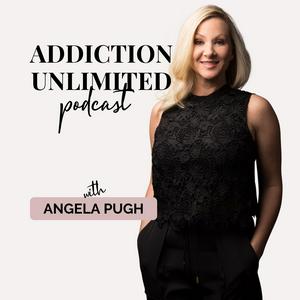
Are you ready to ditch daily drinking, reclaim your confidence, and create a life of freedom? Each week, Angela combines no-nonsense advice, personal stories, and science-backed strategies to tackle the challenges of sobriety. Angela Pugh is a globally-ranked Life Coach and podcast host, a professional Interventionist, and entrepreneur with more than 18 years of personal sobriety, helping people rebuild their lives since 2008. From navigating relationships to managing triggers, you’ll discover practical tools, empowering insights, and real-world solutions to thrive in sobriety. It’s time to stop feeling stuck and start feeling unlimited. Listen now for the inspiration, tools, and support you need to live a sober, confident, and happy life.
Podcast websiteListen to Addiction Unlimited Podcast, JIM ROHN and many other podcasts from around the world with the radio.net app
Get the free radio.net app
- Stations and podcasts to bookmark
- Stream via Wi-Fi or Bluetooth
- Supports Carplay & Android Auto
- Many other app features
Get the free radio.net app
- Stations and podcasts to bookmark
- Stream via Wi-Fi or Bluetooth
- Supports Carplay & Android Auto
- Many other app features
Addiction Unlimited Podcast
Scan code,
download the app,
start listening.
download the app,
start listening.
 South Africa