#344: Why "He'll Be Fine" Is the Most Dangerous Advice in Autism
2026/06/16 | 15 mins.
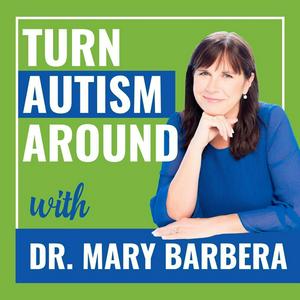
"He'll probably be fine." That's what most parents hear when their toddler shows early signs of autism. After 25 years in the field - and raising a son who looked "mild" at 2 but needs 24/7 care at 30 - Dr. Mary Barbera explains why that reassurance may be the most dangerous sentence in child development. In this video, Dr. Mary Barbera breaks down: Why the question "Can autism be prevented or reversed?" has become politically incorrect - and why it's the most important question to ask anyway The river parable: why we can't just keep pulling children from the water without going upstream The "golden year" of neuroplasticity - and why almost every autism family misses it Why kids who look "mild" at 2 can end up needing lifelong care - while kids who looked severe are graduating college Dr. Glenn Dunlap's career-changing advice: "Treat it like the most severe case of autism" Why early intervention systems haven't changed since the 1990s - and what parents can do right now Dr. Mary Barbera is an RN turned BCBA-D and bestselling author of Turn Autism Around. As both a doctoral-level behavior analyst and the mother of a 30-year-old son with severe autism, she bridges clinical credibility with lived experience to empower parents as the lead in their child's progress. 🤔 QUESTION OF THE DAY: Did someone tell you to "wait and see" when you first noticed delays? What happened next? Share your story below - we read every comment. 🔗 RESOURCES MENTIONED: 👉 Turn Autism Around book: https://marybarbera.com/new-book/ 👉 White paper with Dr. Rick Cabena - Elena's case study (2 words to 180 in 33 days): https://marybarbera.com/whitepaper 👉 2023 Boston study - 40% of early-diagnosed children no longer meeting criteria: https://marybarbera.com/can-you-outgrow-autism-study/ 👉 Dr. Ami Klin's eye tracking research: https://marybarbera.com/turn-autism-around-book-owners/ 👉 Five-minute questionnaire - find your best starting place: https://forms.gle/KW4TGN1xia4gqsrQ6 👉 Subscribe to the Dr. Mary Barbera Newsletter: https://marybarbera.com/ Monthly deep dives on where the autism field is headed, what the research actually says, and practical strategies you can start using today - from someone who's both a doctoral-level behavior analyst and an autism mom. 🔍 TIMESTAMPS: 0:00 Can autism be prevented or reversed? 0:29 The river parable - going upstream to find the cause 1:19 "I'm the person going upstream" 1:42 The most important question in the autism world 2:40 Why prevention became politically incorrect in 2026 3:23 The 2023 Boston study - 40% no longer meeting criteria 3:46 Dr. Ami Klin's eye tracking research 5:25 Waiting for a diagnosis is almost always a bad idea 5:41 The "golden year" of neuroplasticity - and why most miss it 7:08 There is no time to wait and worry 7:32 The danger of "he'll probably be fine" 8:31 Lucas's story - mild signs at 2, preschool with no issues 9:26 Lucas at 30 - and the kids who looked worse but thrived 942 Dr. Dunlap's advice treat it like the most severe case 10:48 Why Mary's approach puts parents in the lead 12:44 The Turn Autism Around approach - what makes it different 14:27 Can autism symptoms be prevented? Mary's verdict 15:11 Never too early, never too late
#343: Joint Attention Explained: The Foundation of Communication in Autism
2026/06/02 | 28 mins.
Joint attention is the shared focus between a child and another person, and it is one of the most important foundational communication skills for children with autism and developmental delays. Dr. Mary Barbera talks with Rose Griffin, who explains why joint attention matters, how it supports language, play, and social interaction, and how parents and professionals can build it through simple daily activities like books, songs, bubbles, and games. They also highlight the importance of collaboration between ABA and speech therapy so children get practical, individualized support that strengthens communication through connection and engagement.
#342: The Autism Tipping Point - 3 Trends Changing Everything
#341: What Is ABA Therapy… REALLY? (4 Myths Parents Need to Know)
2026/04/28 | 33 mins.
ABA therapy is the science of behavior and learning, not just a treatment for autism. Dr Mary Barbera clears up four common myths about ABA, explains why the science is always at work, and shows how quality, child-friendly implementation matters most. Mary also highlights that ABA can be used at home, in school, and in daily life as well so parents can learn practical strategies to increase talking, reduce tantrums, and support meaningful progress without relying only on intensive clinic-based services.
#340: 3 Mistakes When Teaching Manners to Kids with Autism (And What Works Instead)
2026/04/14 | 26 mins.
Teaching manners to children with autism is important, but teaching them too early can interfere with communication development. Before focusing on words like "please" and "thank you," children should first be able to request what they want, use simple phrases, and show basic learning skills like imitation and labeling. Dr. Mary Barbera explains common mistakes parents make, why phrases like "I'm sorry" can backfire, and how to teach manners like "thank you" and "excuse me" in natural, meaningful ways that support real progress.
If you're a parent with a child diagnosed with Level 1, 2, or Level 3 autism or worried about speech delays, tantrums, autism signs, hitting, potty training struggles, picky eating, meltdowns, sensory issues, or toddler behavior that feels confusing or overwhelming, you're in the right place: www.marybarbera.com
Hosted by Dr. Mary Barbera — RN, doctoral-level Board Certified Behavior Analyst (BCBA-D), best-selling author, and creator of widely used online programs for toddlers and preschoolers — this bi-weekly podcast breaks down complex child development topics into simple, actionable steps any parent or professional can use immediately.
Every other week, Mary shares her proven 4-step approach to help children (with and without autism or ADHD) make measurable progress at home, school, and in the community. Episodes cover highly searched topics such as:
🗣️ Speech & Language Development
How to get your toddler to talk
What to do when your toddler isn't talking
Late talking, first words, echolalia, scripting, and vocal stimming
Strategies to build interaction, joint attention, and social engagement
😭 Behavior & Tantrums
How to stop hitting, biting, throwing, and daily meltdowns
What causes tantrums and how to reduce them
Simple behavior plans any parent can use
Emotional regulation for toddlers and preschoolers
🧠 Autism, ADHD & Early Signs
Early signs of autism in toddlers
What to do if you suspect autism — or if someone told you to "wait and see"
Screening vs. diagnosis
Sensory processing disorder, hyperlexia, giftedness vs. autism traits
Navigating early intervention, speech therapy, OT, or ABA therapy
👶 Daily Life Skills
Potty training for toddlers with speech delays or autism
Picky eating and feeding challenges
Sleep issues and bedtime routines
Safety, wandering, transitions, and managing hard outings
Preparing for doctor, dentist, or haircut visits
👨👩👦 Parent Coaching & Real-Life Stories
Real parent success stories (like toddlers going from 0 words to hundreds)
How to create calm, confident routines at home
Reducing stress for the whole family
Mindset support for overwhelmed parents
This show is designed to help parents, but is also widely followed by behavior analysts, speech-language pathologists (SLPs), occupational therapists, teachers, pediatricians, nurses, and early-intervention professionals who want child-friendly, research-backed strategies that work in real homes.
Whether you're dealing with a diagnosis of autism or a late talker with frequent tantrums, sensory challenges, or early signs of autism… or you simply want a clear, compassionate, step-by-step plan to help your child thrive — this podcast is here to guide you.
Subscribe and learn how to improve talking, reduce problem behaviors, and help your child gain confidence, independence, and skills — starting today.
















 South Africa