
Listen to this podcast for free in the app: Download for free in the App Store
radio.net
Sleep timer
Save favourites
209 episodes
Nerva: Rome’s Reluctant Emperor
2026/11/08 | 1h 6 mins.Nerva is remembered as the first of Rome’s Five Good Emperors. This documentary focuses on his reign and his position in the history of imperial succession, examining the ruler behind that enduring designation.
Historical backgroundNerva became Roman emperor after Domitian’s assassination and ruled for a short period before Trajan’s succession. His reign is often presented as the beginning of the era of the Five Good Emperors. That retrospective label can hide the pressures surrounding imperial succession, military loyalty, and relations with the Senate. His adoption of Trajan is especially important to the way later accounts interpret the transfer of imperial power.
Related historyHannibal: Rome’s Formidable Foe
Boudicca’s Revolt Against Roman RuleCatherine De Medici: Queen of France
2026/11/07 | 1h 8 mins.Catherine de’ Medici’s path from Florentine orphan to Queen of France and queen mother is traced through court politics and religious conflict. The episode considers her efforts at conciliation, the St. Bartholomew’s Day Massacre, and the competing interpretations of her legacy.
Historical backgroundCatherine de’ Medici exercised influence in France as queen and queen mother during the sixteenth-century Wars of Religion. Her efforts to preserve Valois authority took place amid conflict between Catholics and Huguenots, aristocratic factions, and fragile royal succession. The St. Bartholomew’s Day Massacre remains central to debates about her responsibility and reputation. Hostile contemporary portrayals require careful treatment alongside evidence of diplomacy, patronage, and attempts at political compromise.Rob Roy MacGregor: Scotland’s Outlaw, Clan Feuds & Jacobite Risings
2026/11/02 | 39 mins.Born into the proscribed MacGregor clan, Rob Roy MacGregor rose from Highland drover to folk hero as he fought feuds, debt and political betrayal across early 18th-century Scotland. The episode traces his life: clan roots and skills, cattle raids and droving, clashes with powerful rivals like the Duke of Montrose, involvement in the Jacobite risings, dramatic escapes and raids, and his final years at Balquhidder. The story explores how Rob Roy's sense of honor, leadership and defiance against Lowland power made him both an outlaw and a lasting legend.Christopher Columbus’s First Letter from the New World (1493)
2026/11/01 | 19 mins.Christopher Columbus recounts his voyage into the Indian Sea, describing the discovery of many fertile islands—which he names Joanna, Hispania and others—remarkable harbors, rivers, mountains, and abundant resources such as spices and gold. He describes the native peoples as timid, generous, and without iron, notes successful exchanges and the construction of a fort at a town named the Nativity, and promises that with support he can bring gold, spices, cotton, slaves, and the spread of Christianity to benefit the Spanish crown and Christendom.Akhenaten: Aten Worship and Egypt’s Religious Revolution
2026/10/20 | 55 mins.Akhenaten, born Amenhotep, rose to the Egyptian throne in the mid-14th century BC and radically promoted the sun disk Aten as the state religion, changed his name, and built a new capital at Amarna.
His reforms centralized power, transformed art and worship, and were reversed after his death, yet they remain one of ancient Egypt’s most dramatic and debated episodes.
More Documentary podcasts
Trending Documentary podcasts





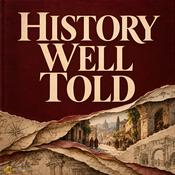
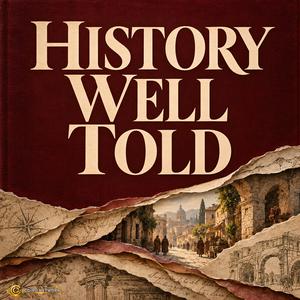
About History Well Told
Welcome to History Well Told, a world history podcast for curious minds. Explore ancient civilizations, powerful empires, remarkable leaders, and forgotten stories through immersive audio documentaries. Follow the show and join us as we uncover historical mysteries and discover the moments that shaped our world. Your next journey into the past starts here.
Podcast websiteListen to History Well Told, Spiral | Tortoise Investigates and many other podcasts from around the world with the radio.net app
Get the free radio.net app
- Stations and podcasts to bookmark
- Stream via Wi-Fi or Bluetooth
- Supports Carplay & Android Auto
- Many other app features
 South Africa

