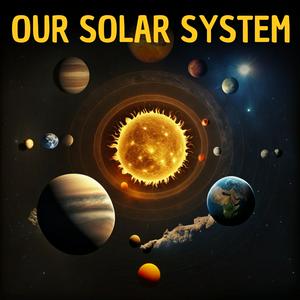
PodcastsAstronomyOur Solar System

Our Solar System

Sol Good Network
Our Solar System
Latest episode

15 episodes

  • Our Solar System

    Why the Universe is so quiet - A Deep Dive on the Fermi paradox & Drake Equation

    2026/05/02 | 20 mins.
  • Our Solar System

    The Fermi Paradox Explained

    2026/04/25 | 1 mins.
    The Fermi Paradox — Explained SimplyThe Fermi Paradox is the apparent contradiction between:The high probability that intelligent extraterrestrial life should exist, and
    The complete lack of evidence that we’ve ever encountered it
    It’s named after Enrico Fermi, who famously asked:“Where is everybody?”🌌 Why the Paradox ExistsOur galaxy, the Milky Way, contains:Hundreds of billions of stars
    Many of those stars have planets
    Some of those planets could support life
    Based on ideas like the Drake Equation, there should be many advanced civilizations out there.👉 So logically, we might expect:Signals from alien civilizations
    Space probes or megastructures
    Evidence of interstellar travel
    But… we see nothing.🤯 The Core QuestionIf intelligent life is common in the universe…Why haven’t we found any evidence of it?🧩 Popular Explanations1. 🚫 We’re Alone (Rare Earth)Life—or intelligent life—might be extremely rare.2. 💀 The “Great Filter”Something prevents civilizations from advancing far enough to spread through the galaxy.This could be:Life rarely starting
    Intelligence rarely evolving
    Civilizations destroying themselves
    3. 📡 They’re Out There, But QuietAdvanced civilizations might:Avoid contact
    Use communication we can’t detect
    Be too far away for signals to reach us
    4. 🛰️ We Haven’t Looked EnoughHumanity has only been searching seriously for a short time (e.g., projects like SETI Institute).5. 🧠 We Wouldn’t Recognize ThemAlien life or technology might be so different that we don’t even realize we’ve seen it.⚖️ Why It MattersThe Fermi Paradox forces scientists to think deeply about:The nature of life and intelligence
    The future of human civilization
    Whether advanced societies survive long-term
    🌠 Bottom LineThe Fermi Paradox highlights a profound mystery:The universe seems like it should be full of life…
    yet it appears completely silent.And we still don’t know why.
  • Our Solar System

    Calculating the Odds of Alien Civilizations - The Drake Equation

    2026/04/18 | 1 mins.
    🌌 The Drake Equation — Simple SummaryN=R∗⋅fp⋅ne⋅fl⋅fi⋅fc⋅LN=R∗⋅fp​⋅ne​⋅fl​⋅fi​⋅fc​⋅LThe Drake Equation is a formula proposed by Frank Drake in 1961 to estimate how many intelligent, communicative extraterrestrial civilizations might exist in our galaxy, the Milky Way.🧠 What It MeansRather than giving a single answer, the Drake Equation breaks the problem into key scientific factors that influence the likelihood of alien civilizations.Each part represents:
    R* → Rate of star formation in the galaxy
    fₚ → Fraction of stars with planets
    nₑ → Number of planets that could support life per system
    fₗ → Fraction of those planets where life actually develops
    fᵢ → Fraction where intelligent life evolves
    f𝚌 → Fraction that develop detectable technology
    L → Length of time such civilizations release signals
    🔍 Why It’s Important
    It provides a scientific framework for thinking about extraterrestrial life
    Helps guide research in fields like Astrobiology and astronomy
    Shows that the number of civilizations depends heavily on unknown biological and technological factors
    ⚖️ Key InsightSome parts of the equation (like star formation and planets) are now better understood thanks to discoveries of exoplanets. But others—especially how often life or intelligence arises—remain big unknowns.🌠 Bottom LineThe Drake Equation isn’t about giving a precise number—it’s about asking the right questions. It turns the mystery of alien life into a structured scientific discussion, highlighting just how many steps are required for intelligent civilizations to exist and communicate.
  • Our Solar System

    A Deep Dive on Artemis II

    2026/04/14 | 20 mins.
    The Artemis II mission serves as the first crewed flight of the Artemis program and the first mission to send humans beyond low Earth orbit since Apollo 17 in 1972,. Its primary purpose is to validate the Orion spacecraft’s systems, crew operations, and mission procedures in a deep space environment to ensure they are ready for future sustained lunar exploration and eventual missions to Mars,,. Specifically, this test flight evaluates critical capabilities such as life support, communication, and navigation with a crew of four astronauts aboard,.
    The mission followed a series of key milestones over a roughly 10-day duration:
    Launch and High Earth Orbit (Day 1)
    Launch: The mission launched on April 1, 2026, from Kennedy Space Center’s Launch Complex 39B using the Space Launch System (SLS) rocket,.
    Systems Checkout: Once in a highly elliptical high Earth orbit, the crew performed essential checkouts of life support systems, including the water dispenser and toilet,.
    Proximity Operations: Pilot Victor Glover took manual control of Orion to perform a proximity operations demonstration, maneuvering the spacecraft near the spent Interim Cryogenic Propulsion Stage (ICPS) to test handling qualities for future docking missions,.
    Trans-Lunar Injection and Outbound Flight (Days 2–5)
    TLI Burn: On the second day, Orion executed a trans-lunar injection (TLI) burn, setting the spacecraft on a trajectory toward the Moon,.
    Deep Space Testing: During the outbound journey, the crew conducted further tests, including manual piloting demonstrations to evaluate the spacecraft's performance in deep space,.
    Lunar Flyby and Record-Breaking Distance (Day 6)
    Lunar Flyby: On April 6, 2026, Orion performed a flyby, reaching a closest approach of approximately 4,067 miles from the lunar far-side surface,.
    Distance Record: The mission set a new record for the farthest humans have ever traveled from Earth, reaching a distance of 252,756 miles, surpassing the previous record held by Apollo 13,.
    Scientific Observations: During the flyby, the crew photographed geologic features and observed a solar eclipse while passing behind the Moon,.
    Return and Splashdown (Days 7–10)
    Free-Return Trajectory: Following the flyby, Orion naturally returned toward Earth on a free-return trajectory, requiring only minor course corrections,.
    Re-entry: On Day 10, the crew module separated from the European Service Module and entered Earth's atmosphere at a velocity of approximately 24,664 miles per hour,.
    Splashdown: The mission concluded with a splashdown in the Pacific Ocean southwest of San Diego on April 10, 2026 (local time), where the crew and capsule were recovered by the U.S. Navy,,.
  • Our Solar System

    Episode 10. The Sun - The Heart of Our Solar System

    2023/02/05 | 1 mins.
    https://www.solgood.org - Check out our Streaming Service for our full collection of audiobooks, podcasts, short stories, & 10 hour sounds for sleep and relaxation at our website

More Astronomy podcasts

About Our Solar System

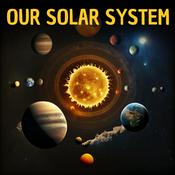
Embark on an awe-inspiring exploration with "Our Solar System," a captivating podcast that takes listeners on an enlightening journey through the vast wonders of our celestial neighborhood. This engaging series delves deep into the mysteries and marvels of each planet, offering insightful glimpses into their unique features, intriguing histories, and profound significance. From the gas giant Jupiter with its swirling storms to Mercury's scorching surface, each episode presents a compelling narrative that unravels the secrets of space. "Our Solar System" stands out as a must-listen for anyone curious about the universe, blending factual information with the latest discoveries and theories to keep you informed and entertained. Whether you're a seasoned space enthusiast or a curious newcomer, this podcast provides an accessible yet comprehensive understanding of the cosmos, revealing the interconnectedness of our planetary system and its impact on our understanding of the universe. With expert interviews, vivid storytelling, and cutting-edge science, "Our Solar System" is more than just a podcast—it's an essential guide to the final frontier. Tune in to expand your knowledge and ignite your imagination as we venture beyond the confines of Earth to explore the dynamic and ever-changing universe that surrounds us. Check out more shows at solgoodmedia.com.
Podcast website

Listen to Our Solar System, Universe Today Podcast and many other podcasts from around the world with the radio.net app

Get the free radio.net app

  • Stations and podcasts to bookmark
  • Stream via Wi-Fi or Bluetooth
  • Supports Carplay & Android Auto
  • Many other app features

Our Solar System: Podcasts in Family