

Listen to this podcast for free in the app: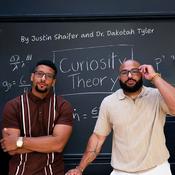 Download for free in the App Store
radio.net
Sleep timer
Save favourites
68 episodes
What Would Actually Kill You 100 Million Years Ago | The End Of Oak Street
2026/08/14 | 58 mins.This episode is brought to you by The End of Oak Street, in theaters August 14th.
In this special sponsored episode of Curiosity Theory, hosts Justin Shaifer and Dr. Dakotah Tyler break down the real science behind The End of Oak Street, in theaters August 14th.
The discussion moves from favorite dinosaurs and the basic premise of the film to the actual physics of what it would take to travel back in time, including the Kardashev scale, E=mc², and why you would need to convert roughly 50 Jupiters worth of mass into pure energy just to get started. From there they get into what prehistoric Earth actually looked like: a planet running hotter than today, with higher oxygen levels, no grass, and a North American interior that was completely underwater.
The conversation also covers what you would eat if modern food didn't exist, why the cycad plants that dominated the era would not exactly be a meal, why prehistoric insects could grow to the size of your arm, why a giant frog the size of a beach ball was a real animal, and why none of that is actually what would kill you. The biggest threat to any time traveler isn't the T-Rex — it's the bacteria your immune system has never encountered. They close on the asteroid that wiped out the dinosaurs 66 million years ago and what the world might have looked like if it had missed entirely.
Chapters
00:00:00 Intro and the premise of The End Of Oak Street
00:01:00 Favorite dinosaurs and what we actually know about them
00:03:02 North America used to be an ocean
00:04:37 The energy physics of time travel and the Kardashev scale
00:08:19 How long could you actually survive without modern technology
00:09:41 Prehistoric climate: how much hotter was it really
00:12:00 What water sources would even be safe to drink
00:15:22 What food was available and why most of it would starve you
00:21:23 Time travel mechanics in the film: wormholes and causality
00:28:31 Why prehistoric insects were gigantic and how oxygen made it possible
00:32:25 Beelzebufo: the giant frog that was very real
00:33:42 Humans vs. prehistoric predators — we were at the bottom
00:42:49 The bacteria and disease that would actually kill you first
00:46:26 Would prehistoric plants make good bio weapons?
00:49:00 Fire, survival skills, and your best chance of making it
00:55:17 What if the asteroid never hit 66 million years ago?
00:55:28 Birds are dinosaurs and why that matters
00:57:50 Final thoughts and why you should go see The End Of Oak Street
Follow us
@curiositytheorypod
@dr.starkid
@mr.fascinate
Sponsored by The End of Oak Street — in theaters August 14th.
Visit our Merch Store
https://www.curiositytheorypod.com/merch
Join our Patreon
https://www.patreon.com/c/CuriosityTheory
If you enjoy the conversation, subscribe and share Curiosity Theory with someone who's curious about the universe.What We Lose When We Separate Science From Emotion | Dr. Taylor Cummings
2026/07/13 | 1h 27 mins.In this episode of Curiosity Theory, hosts Dr. Dakotah Tyler and Justin Shaifer sit down with Dr. Taylor Cummings, educational psychologist and founder of The Self-Love Doc, for a conversation about what Western science gets wrong about knowledge, healing, and the human experience.
The discussion moves from her dissertation, titled The Miseducation of Taylor Cummings, and how colonial frameworks shaped what we call legitimate science, to what happens when you strip emotion, language, and African-centered ways of knowing out of the picture entirely. From there they get into embodiment and why most people have never been taught to understand their own bodies, how K-12 education kills curiosity before it ever gets started, and what self-love actually means when you look at it through the lens of educational psychology rather than a motivational caption.
The conversation also dives into her personal story of misdiagnosis, going on and then coming off an SSRI, and finding her own path to healing through identity and consciousness. She breaks down why depression and mental illness might be better understood as systems problems rather than individual failures, what evolutionary mismatch tells us about modern life, how African-centered and Akan healing traditions offer frameworks Western psychology is only beginning to catch up to, and why carbon, stardust, and the cosmos have more to do with self-knowledge than most people realize.
Chapters
00:00:00 Intro and meeting Dr. Taylor Cummings
00:03:00 The Miseducation of Taylor Cummings: her dissertation explained
00:04:20 How Western science stripped emotion and African knowledge from the picture
00:13:25 Embodiment: why we don't know our own bodies
00:14:17 How K-12 kills curiosity and what education gets wrong
00:19:00 What self-love actually means from a psychology perspective
00:22:00 Her personal journey: injury, community college, and trusted mentors
00:26:05 What psychology gets wrong about grief and loss
00:31:30 Her SSRI story: misdiagnosis, medication, and finding her own path
00:34:06 African-centered healing traditions and the Akan
00:42:14 Why depression might be a systems problem not a personal one
00:47:49 Evolutionary mismatch: we were never meant to live like this
00:56:00 Carbon, stardust, and what the cosmos has to do with consciousness
01:12:51 Consciousness, energy, and collective connection
01:25:13 The Decolonize Your Mind resource guide
01:26:06 Where to find Dr. Taylor
Follow us
@curiositytheorypod
@dr.starkid
@mr.fascinate
Guests
Dr. Taylor Cummings | @theselflovedoc
Visit our Merch Store
https://www.curiositytheorypod.com/merch
Join our Patreon
https://www.patreon.com/c/CuriosityTheory
If you enjoy the conversation, subscribe and share Curiosity Theory with someone who's curious about the universe.Skilled Trades Are Six Figure Careers That the World Needs | Joshua Regis
2026/07/03 | 1h 18 mins.In this episode of Curiosity Theory, hosts Dr. Dakotah Tyler and Justin Shaifer sit down with Joshua Regis, co-founder and CEO of KritKarr, an AI-powered platform for auto repair, for a conversation about fixing one of the most broken industries in America, what the trades are actually worth, and who gets to write the future.
The discussion moves from Josh's path out of traditional school and into automotive work, how he discovered that a car contains every trade skill in existence, and how the flat rate pay system exploits the mechanics who keep the industry running. From there they get into what KritKarr is building, how AI diagnostics and mobile mechanics can bring trust and transparency back to auto repair, and why skilled trades are a six-figure opportunity that almost nobody is talking about.
The conversation also dives into whether robots will replace mechanics and why the human touch still matters, how automation is set to widen the wealth gap, the SpaceX IPO and what commercializing space actually means for regular people, whether we should be trying to colonize Mars before fixing things on Earth, and what Afrofuturism has to say about who controls the narrative of the future. It opens on the Tulsa Race Massacre and the question of what Black Wall Street could have become, and that thread runs underneath everything.
Chapters
00:00:00 Intro and meeting Joshua Regis
00:03:00 Black Wall Street, the Tulsa Race Massacre, and what could have been
00:07:28 Sci-fi, anime, and the Tony Stark effect
00:14:50 How Josh went from struggling in school to becoming a mechanic
00:15:44 Why a car contains every trade skill in existence
00:20:35 Flat rate vs hourly: how the auto industry underpays mechanics
00:27:42 What KritKarr is and how it works
00:29:55 Skilled trades as a six-figure career opportunity
00:35:00 Will robots replace mechanics? The human touch debate
00:41:56 Automation, the wealth gap, and universal basic income
00:50:56 The SpaceX IPO and what commercializing space actually means
00:57:08 Mars colonies: who benefits and at what cost?
01:00:18 Solar panels in space and the future of energy
01:07:50 Should we fix Earth before trying to leave it?
01:14:18 Afrofuturism, Black culture, and who controls the future's narrative
01:17:00 Where to find Josh and KritKarr
Follow us
@curiositytheorypod
@dr.starkid
@mr.fascinate
Guests
Joshua Regis
Visit our Merch Store
https://www.curiositytheorypod.com/merch
Join our Patreon
https://www.patreon.com/c/CuriosityTheory
Check out KritKarr
https://www.kritkarr.com/
If you enjoy the conversation, subscribe and share Curiosity Theory with someone who's curious about the universe.The Cosmos Is A Black Aesthetic | Dr. Chanda Prescod-Weinstein
2026/06/22 | 1h 26 mins.In this episode of Curiosity Theory, hosts Dr. Dakotah Tyler and Justin Shaifer sit down with Dr. Chanda Prescod-Weinstein, astrophysicist, cosmologist, writer, and author of Disordered Cosmos and the new The Edge of Space-Time: Particles, Poetry and the Cosmic Dream Boogie, for one of the most wide-ranging conversations the pod has had yet.
The discussion moves from how a blog post at Perimeter Institute became the seed of her first book, to what neutrinos actually are, why they are among the strangest particles in the Standard Model, and why they may have played a quiet but essential role in making life on Earth possible. From there they get into Population III stars, how the first heavy elements ever got made, and the surprisingly contested question of what separates a galaxy from a globular cluster.
The conversation also dives into the philosophy of science and Dr. Prescod-Weinstein's concept of white empiricism, the idea that white supremacy and patriarchy shape what counts as legitimate knowledge and who gets treated as a credible scientist. She talks about what her new book offers readers who are skeptical that physics is for them, why the cosmos is a Black aesthetic, how hip hop and Big K.R.I.T. ended up in a physics book, and why access to a dark night sky is a social justice issue, not just an astronomy one.
Chapters
00:00:00 Intro and meeting Dr. Chanda Prescod-Weinstein
00:02:30 How a blog post became Disordered Cosmos
00:04:50 Blue Sky, Threads, and whiteness in online spaces
00:09:00 Being one of few Black women at the frontier of physics
00:11:45 Science communication, community accountability, and the book-before-tenure risk
00:15:27 What are neutrinos? Three flavors and oscillation explained
00:25:00 Why neutrinos may be essential to life on Earth
00:30:00 Population III stars and the origin of every heavy element
00:35:00 What makes a galaxy? Globular clusters, dark matter, and contested definitions
00:44:55 Neanderthal DNA and an unexpected dental tangent
00:49:40 Philosophy of science and the concept of white empiricism
00:52:00 How white supremacy and patriarchy shape what counts as valid science
01:02:30 The Edge of Spacetime: what readers can expect
01:04:48 Poetry, hip hop, and the cosmos as a Black aesthetic
01:08:40 Objectivity, mythology, and storytelling in science
01:14:00 Dark sky access as a social justice issue
01:19:52 Who science is written for and to
01:23:14 On courage, haters, and Kat Williams
01:25:18 Where to find Dr. Chanda and her books
Follow us
@curiositytheorypod
@dr.starkid
@mr.fascinate
Guests
Dr. Chanda Prescod-Weinstein
Visit our Merch Store
https://www.curiositytheorypod.com/merch
Join our Patreon
https://www.patreon.com/c/CuriosityTheory
If you enjoy the conversation, subscribe and share Curiosity Theory with someone who's curious about the universe.The Rocket Engines That Don't Burn Fuel | Dr. Naia Butler-Craig
2026/06/16 | 1h 12 mins.In this episode of Curiosity Theory, hosts Dr. Dakotah Tyler and Justin Shaifer sit down with Dr. Naia Butler-Craig, a newly minted aerospace engineer and NASA electric propulsion researcher, for a conversation about rocket science, how we actually move through space, and where humans are headed next.
The discussion moves from her path through grad school and into NASA to how electric propulsion works and why it beats chemical rockets on efficiency, what it would really take to get people to the Moon and Mars, and what living and working at the agency is like from the inside. Along the way, she breaks down what is happening inside a Krypton Hall effect thruster and why plasma, not combustion, is the future of deep space travel.
The conversation also dives into why astrology is not astronomy, how to think about trust and misinformation in science, the engineering and people behind the missions we take for granted, and the surprising ways space tech is advancing medicine on Earth through Avatar tissue chips. It closes on the sci-fi and the curious childhood that set her on this path in the first place.
Chapters
00:00:00 Intro and meeting Dr. Naia Butler-Craig
00:01:15 Her path into NASA and life inside the agency
00:11:43 Electric propulsion vs chemical rockets explained
00:17:23 Getting humans to the Moon and Mars
00:24:04 Why astrology is not astronomy
00:31:50 Trust, misinformation, and relying on science
00:37:00 Is NASA still competent? The engineering behind spaceflight
00:46:01 Avatar chips: how space tech advances medicine
00:58:50 How sci-fi and a curious childhood shaped her
01:03:34 Inside a Krypton Hall effect thruster
01:11:37 Where to find Naia and final thoughts
Follow us
@curiositytheorypod
@dr.starkid
@mr.fascinate
Guests
Dr. Naia Butler-Craig
Visit our Merch Store
https://www.curiositytheorypod.com/merch
Join our Patreon
/ curiositytheory
More Astronomy podcasts
 Astronomy Daily: Latest Space NewsAstronomy, Natural Sciences, Science
 Bedtime AstronomyAstronomy, Physics, Science
 Crash Course Pods: The UniverseAstronomy, Courses, Education, Physics, Science
 The Supermassive PodcastAstronomy, History, Physics, Science
 SpaceTime with Stuart GaryAstronomy, Natural Sciences, Science
 This Week in Space (Audio)Astronomy, Science, Technology
 Space Nuts: Astronomy Insights & Cosmic DiscoveriesAstronomy, Natural Sciences, Science
 Universe Today PodcastAstronomy, Natural Sciences, Physics, Science
Trending Astronomy podcasts
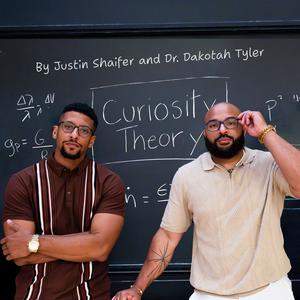
About Curiosity Theory
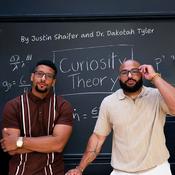
A podcast about sharpening your curiosity through science, stories, and bold questions. With Astrophysicist Dr. Dakotah Tyler & STEM Educator Justin Shaifer.Support the podcast by subscribing to our Patreon: https://www.patreon.com/CuriosityTheory
Podcast websiteListen to Curiosity Theory, Astronomy Daily: Latest Space News and many other podcasts from around the world with the radio.net app
Get the free radio.net app
- Stations and podcasts to bookmark
- Stream via Wi-Fi or Bluetooth
- Supports Carplay & Android Auto
- Many other app features
Get the free radio.net app
- Stations and podcasts to bookmark
- Stream via Wi-Fi or Bluetooth
- Supports Carplay & Android Auto
- Many other app features

Curiosity Theory
Scan code,
download the app,
start listening.
download the app,
start listening.
Curiosity Theory: Podcasts in Family
 South Africa