
Listen to this podcast for free in the app: Download for free in the App Store
radio.net
Sleep timer
Save favourites
29 episodes
Why M-Pesa's Next Act Is About More Than Payments - With Epimack Mbeteni
2026/08/20 | 46 mins.M-Pesa built mobile money's distribution advantage, but Vodacom's next growth phase depends on far more than cash-in and cash-out. Epimack Mbeteni, Chief Commercial Officer of Vodacom Fintech Group, explains how shared platforms, local execution and sector-specific products support a 103 million-customer business—and why Vodacom wants core and non-core fintech revenue to reach a 50/50 split by 2030. The conversation covers M-Pesa's two failed launches in South Africa, the super-app reset, the Safaricom shareholding change and whether innovation can defend the lead that distribution created.KSh25 Billion a Month: Kenya’s New Digital Credit Frontier, with Kevin Mutiso
2026/07/30 | 1h 13 mins.Kenya has broad financial access and a rapidly expanding digital-credit market, yet only a small minority of adults are financially healthy. Kevin Mutiso, Chairman of the Digital Financial Services Association of Kenya, explains how 2022 regulation unlocked capital, larger loan sizes and specialist lending for traders and boda-boda operators. Samora and Kevin examine the long tail beyond Fuliza and M-Shwari, the data-sharing challenge behind over-indebtedness, and whether digital lenders can help borrowers graduate from short-term liquidity to growth capital.Paga's Tayo Oviosu: Why You Can't Bank a Billion People by Building a Bank
2026/06/18 | 1h 2 mins.In 2009, Tayo Oviosu printed a 300-page regulatory application, packed it into a suitcase, and carried it to Abuja because Nigeria had no framework for mobile payments and someone had to ask the Central Bank to write one. Seventeen years later, the lesson he draws is the one most fintech founders still resist: you cannot bank a billion people by building a bank. You bank them by building the infrastructure other people build on.
Tayo is the founder and CEO of Paga, one of Nigeria's earliest and most enduring fintech companies, founded when M-Pesa was barely two years old. This conversation is a masterclass in strategic discipline; what Paga chose not to build, and why that restraint is the reason it is still standing.
We get into the real economics of agent banking (why roughly 80% of Nigerian agent transactions are cash withdrawals, and what that does to financial-inclusion timelines), why Paga stayed out of the card-gateway war when Paystack and Flutterwave emerged, the AWS/Netflix analogy behind Paga Engine, the Doroki thesis that African retailers need an operating system before they can be banked, and Paga's move into US rails. Through naira devaluations, funding droughts, and the rise of OPay and PalmPay, Paga stayed solvent and stayed focused.
Chapters
00:00 - Introduction
10:00 - The suitcase of binders: cold-calling the CBN in 2009
24:00 - Why Paga stayed out of the card-gateway market
33:00 - The 20-year business: real economics of agent banking
40:00 - "You cannot bank a billion people by building a bank" — the Paga Engine thesis
44:00 - The Doroki thesis: an operating system for African retailers
47:00 - US rails and hosted dollar accounts (Swift, ACH, Fedwire)
51:00 - Three hours to twelve seconds: reconciliation with Claude Code
Pinned quote "Revenue is vanity; gross profit pays the bills. We taught our team that everyone acts like an owner and negotiates the best deal for everything, from marketing to supplies." - Tayo Oviosu
Connect with Tayo & Paga Tayo Oviosu (LinkedIn): https://www.linkedin.com/in/oviosu/ Paga:https://www.mypaga.com/ Doroki: https://doroki.com/Africa Doesn't Have a Dollar Problem. It Has a Plumbing Problem.
2026/04/29 | 1hAfrican traders earn in Europe and pay in China. Stablecoins are finally solving that triangular liquidity gap — and reshaping how Africa-Asia trade finance works.
April Long spent thirteen years inside corridor banking — Standard Chartered, Gulf African Bank, and the Africa-Asia fintech ecosystem. She watched the cost of stablecoin liquidity fall from unworkable to roughly 50 basis points round-trip. This episode is her structural explanation of why that shift matters more than most people in African trade finance currently understand.
“Money needs to flow in a triangular structure — receiving from Europe, paying to China. Africa lacks a financial hub where money can flow in and out freely. Consequently, money is forced to find fragmented, inefficient ways to flow.” — April Long
What You Will Hear:
0:00 - Introduction
07:54 - The Corridor Banking Model.
14:01 - How Off-Ramp Costs Change the Game for Stablecoins
21:00 - The Triangular Liquidity Problem - Who is Africa Selling to and Where Are we Buying From?
28:00 - Compliance as Structural Barrier
33:20 - How Stablecoins Act Like a Financial Hub
37:30 - Why Nigeria Changed First
41:00 - The Velocity Argument — Turning Money Over Fast and How it Grows the Economy
53:09 - The China Shift — Why China-Africa trade grew 18% in 2025
Read by 16,000+ operators, investors, and practitioners across 126 countries.
Subscribe: https://frontierfintech.substack.com
Samora Kariuki (Host): https://www.linkedin.com/in/samorakariuki/
April Long (Guest): https://www.linkedin.com/in/longapril/
Frontier Fintech: https://frontierfintech.substack.com
If this episode was useful, a like or subscription takes four seconds and helps independent media reach more of the right people. The algorithm runs on signals — yours included.Building the Rails for African Trade: Inside Onafriq | Dare Okoudjou
2026/04/15 | 1h 20 mins.Africa's mobile money networks have over 800 million registered accounts spread across dozens of closed loops. Moving money between them; across borders, currencies, and regulatory jurisdictions, remains the unfinished infrastructure project of a generation. Onafriq was built on the thesis that someone had to connect the dots.
Samora Kariuki sits down with Dare Okoudjou, founder and CEO of Onafriq (formerly MFS Africa), the Pan-African payment network that connects mobile money wallets, bank accounts, cards, and now stablecoin rails across 40+ countries. Dare's path is unusual: an engineer who trained at PricewaterhouseCoopers in Paris, helped architect MTN Mobile Money across Africa from 2006 to 2009, and then left to build the interoperability layer he could see the market would eventually require. Sixteen years later, the vision has proven out, though the path there looked almost nothing like the original plan.
This conversation is a rare inside account of what it actually takes to build foundational financial infrastructure in Africa. Dare breaks down the layered architecture of cross-border payments (messaging, risk, currency, settlement), the strategic acquisitions of Beyonic and GTP that accelerated Onafriq's enterprise relationships, and why the platform is now placing simultaneous bets on mobile money interoperability, cards, PAPSS, and stablecoins. He also challenges the entire African fintech industry to ask whether mobile money, as currently architected, is still the right model.
In This Episode, You Will Hear:
The MTN Origin: How Dare helped build the foundations of MTN MoMo across Africa and why that experience made the MFS Africa opportunity obvious in retrospect.
The Fax Machine Problem: Why being early to a network business means spending years being nearly useless, and why the goal is simply not to die until the vision comes true.
The Remittance Framing Problem: Why calling intra-African cross-border payments "remittances" actively harms how banks, investors, and regulators engage with the industry.
The Acquisition Logic: Why Onafriq bought Beyonic and GTP, and what enterprise relationships with banks actually require that organic sales cannot deliver.
Payments Always Revert to Standard: Why Dare believes mobile money must achieve GSM-style interoperability or risk being absorbed into the card standard.
The Stablecoin Thesis: Why stablecoins are best understood as programmable mobile money for the internet, and why the dollar stablecoin narrative may create systemic risks for African banking systems.
If M-Pesa Were Built Today: The sharpest strategic question in African fintech, posed by someone who was in the room when the original was designed.
Key Quote: "The goal was simply not to die until it came true."
Connect with Us:
Samora Kariuki (Host): https://www.linkedin.com/in/samorakariuki/
Dare Okoudjou (Guest): https://www.linkedin.com/in/dare-okoudjou/
Frontier Fintech: https://frontierfintech.substack.com
More Technology podcasts






Trending Technology podcasts

















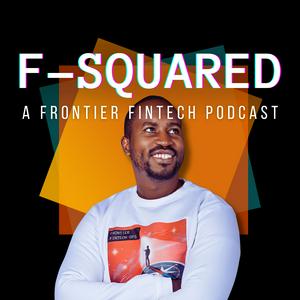
About F-Squared Podcast
Frontier Fintech is a podcast about the business of fintech in Africa. We speak with founders, executives, investors, and regulators who are shaping financial services across the continent—helping you connect the dots in Pan-African fintech.
Podcast websiteListen to F-Squared Podcast, Machine Gods and many other podcasts from around the world with the radio.net app
Get the free radio.net app
- Stations and podcasts to bookmark
- Stream via Wi-Fi or Bluetooth
- Supports Carplay & Android Auto
- Many other app features
Get the free radio.net app
- Stations and podcasts to bookmark
- Stream via Wi-Fi or Bluetooth
- Supports Carplay & Android Auto
- Many other app features
F-Squared Podcast
Scan code,
download the app,
start listening.
download the app,
start listening.
 South Africa
