

Listen to this podcast for free in the app: Download for free in the App Store
radio.net
Sleep timer
Save favourites
The Thinking Horse and Rider: Helping Riders Understand Their Horses | Anna Fox
Equus Enlightened
Latest episode
79 episodes
77. Why Trying Harder Makes Riding Harder | Emotional Tension & Better Feel
2026/09/18 | 41 mins.What happens when trying harder actually makes riding harder?
In this episode of The Thinking Horse & Rider, we’re digging into emotional tension—the pressure riders put on themselves to do everything correctly, remember every instruction, fix every mistake, and manage every part of the horse at once.
That tension doesn’t just make riding feel harder. It can also make your cues less clear, your body less sensitive, and your horse less certain about what you’re actually asking.
We’ll talk about:
Why emotional tension often looks like overthinking instead of obvious fear
How too many simultaneous cues can confuse the horse
Why rewarding the right answer matters just as much as asking the question
How pressure, release, repetition, and pauses affect learning
Why “more” is not always better
How tension narrows attention and reduces your ability to feel subtle information
Why curiosity is more useful than immediately labeling something right or wrong
How to stop correcting every little thing before your horse has a chance to respond
You’ll also get this week’s 10-Minute Experiment: a simple walking exercise where you count the horse’s footfalls, quiet the noise, and start developing better feel.
The goal isn’t to ride perfectly.
It’s to become quiet enough—physically, mentally, and emotionally—to actually hear what your horse is already telling you.
Sometimes your horse isn’t ignoring you. Sometimes they just can’t find the question in all of your noise.
Get the FREE Awareness workshop www.equusenlightened.com
Find me on social media as @equusenlightened.
Join the Horse and Rider Lab on Skool. It’s free!
https://www.skool.com/equus-enlightened-8966/about
Find out more about Reconnect, Rebuild, and Ride with Heart in the Skool Classroom
You can also view videos of the riding episodes or listen to all of them on YouTube under Come Ride with Me Riding Videos. My channel is https://www.youtube.com/@equusenlightened
Read blogs or find more links @ https://linktr.ee/equusenlightened
Articles:
https://www.sciencedirect.com/science/article/abs/pii/S1558787807001359
https://www.sciencedirect.com/science/article/pii/S1558787810000626
https://www.equitationscience.com/ises-training-principles?utm_source=chatgpt.com
Walk to Partnership Meditation
https://assets.cdn.filesafe.space/9ckgbm3alzfPQK2HDqho/media/6aac819d867721cb57117360.mp4
Email me at Anna@equusenlightened.com
Happy Riding!76. Your Horse Can Feel Your Anxiety | Here’s What to Do Before You Ride
2026/09/03 | 25 mins.If your brain is already rehearsing everything that could go wrong before you ever reach the mounting block, this episode is for you.
This week on The Thinking Horse & Rider, we’re continuing the conversation from Episode 75 and digging into mental tension and anticipatory anxiety—the fear of what might happen before anything has actually gone wrong.
You’ll learn why your thoughts and body can start rehearsing fear before you ride, how that changes the way you show up around your horse, and why your horse may notice those changes even though they have no idea what story is running through your head.
We’ll also talk about how to separate what’s actually happening from what you’re predicting, why present-moment narration can help interrupt anxious thought patterns, and how to start practicing the mental patterns you actually want to keep.
In this episode:
Why your thoughts are always practicing something
How anticipatory anxiety affects your brain and body
What your horse may be picking up from your fear
Why “don’t be afraid” usually isn’t useful advice
How to name anxiety without letting it run the ride
A practical 10-minute experiment to bring yourself back to the present
How to tell the difference between a real warning sign and a fearful prediction
The goal isn’t to convince yourself that nothing bad could ever happen.
It’s to become more aware, more present, and better able to respond to the horse you actually have—not the horse you’re afraid you might have.
And remember:
Your thoughts are always practicing something. The question is whether they’re practicing the pattern you want to keep.
Get the FREE Awareness workshop www.equusenlightened.com
Find me on social media as @equusenlightened.
Join the Horse and Rider Lab on Skool. It’s free!
https://www.skool.com/equus-enlightened-8966/about
Find out more about Reconnect, Rebuild, and Ride with Heart in the Skool Classroom
Walk to Partnership Meditation
https://assets.cdn.filesafe.space/9ckgbm3alzfPQK2HDqho/media/6aac819d867721cb57117360.mp4
You can also view videos of the riding episodes or listen to all of them on YouTube under Come Ride with Me Riding Videos. My channel is https://www.youtube.com/@equusenlightened
Read blogs or find more links @ https://linktr.ee/equusenlightened
Email me at Anna@equusenlightened.com
Happy Riding!75. The Hardest Part of Riding | How to Stay Relaxed on Your Horse
2026/08/25 | 37 mins.In this episode of The Thinking Horse and Rider, we're talking about something almost every rider experiences but few people know how to work through: fear and tension in the saddle.
After an unexpected run-in with a wasp (and a horse standing nearby), I realized just how quickly our brains jump into survival mode—and how similar that feels to what many riders experience before they even get on their horse.
We'll explore:
Why staying relaxed is the hardest part of riding
The difference between physical and mental relaxation
The four types of tension that affect riders and horses
Why "just be confident" and "push through it" often make fear worse
Simple exercises to build real balance, body awareness, and confidence
How breathing, visualization, and nervous system regulation can improve your riding
Why confidence is built through successful experiences—not by ignoring fear
Whether you're nervous about cantering, worried about your horse spooking, struggling with self-doubt, or simply want to become a calmer, more connected rider, this episode will give you practical tools to help both you and your horse stay in a learning mindset instead of a survival mindset.
Practice the standing exercise at the halt to improve your balance, body awareness, and confidence. Start with a helper if needed, focus on slow, controlled movement, and notice how learning to recover can change the way you ride.
💛 Join The Happy Horse & Rider Lab for more conversations, experiments, and support from riders learning to think differently about their horses.
If you enjoyed this episode, please follow the podcast, leave a rating or review, and share it with another horse person. It helps these conversations reach more riders who want a calmer, more connected partnership with their horses.
This Week's 10-Minute Experiment74. The Horse Training Mistake Almost Everyone Makes (Without Realizing It)
2026/08/18 | 27 mins.The Horse Training Mistake Almost Everyone Makes (Without Realizing It)
What if one of the biggest mistakes we make with our horses isn't what we teach...it's what we stop teaching?
When a horse becomes buddy sour, pushy for treats, anxious at the mounting block, spooky on the trail, or difficult to canter, many of us instinctively remove the problem. We stop taking them to horse shows. We stop feeding treats. We stay in the arena. We avoid the situation altogether.
Sometimes that's smart management.
But management isn't the same thing as education.
In this episode, Anna explores what she calls "The Keep Away Game"—our tendency to avoid the very situations that could help both horse and human learn and grow. Inspired by her recent conversation with animal communicator Ginny Horton, she challenges listeners to rethink whether they're solving the problem...or simply postponing it.
You'll learn:
Why avoidance is a management strategy—not a training method.
The difference between stopping a behavior and teaching a new skill.
How punishment and education create very different outcomes.
Why well-taught boundaries actually create more freedom for horses.
How to know whether your horse isn't ready—or you simply need a new way to teach.
What to look for when choosing the right trainer or coach for a specific problem.
Why the skills you build at home determine what happens under pressure at a horse show or on the trail.
If you've ever found yourself avoiding a situation because it feels easier than working through it, this episode will give you a new way to think about training—and remind you that every challenge is also an opportunity to learn.
Choose one thing you've been avoiding with your horse.
Then ask yourself:
Am I removing the opportunity because my horse isn't ready yet...or because I don't know how to help them become ready?
Spend ten minutes researching a new approach. Talk to your trainer. Read a book. Watch a video. Explore a different training modality.
Don't just keep the problem away.
Start educating yourself—and your horse.
If this episode resonated with you, follow The Thinking Horse & Rider Podcast, leave a review, and share it with another horse person who's ready to replace avoidance with education.
This Week's 10-Minute Experiment
Get the FREE Awareness workshop www.equusenlightened.com
Find me on social media as @equusenlightened.
Join the Horse and Rider Lab on Skool. It’s free!
https://www.skool.com/equus-enlightened-8966/about
Find out more about Reconnect, Rebuild, and Ride with Heart in the Skool Classroom
You can also view videos of the riding episodes or listen to all of them on YouTube under Come Ride with Me Riding Videos. My channel is https://www.youtube.com/@equusenlightened
Read blogs or find more links @ https://linktr.ee/equusenlightened
Email me at Anna@equusenlightened.com
Happy Riding!73. How about Animal Communicator Ginny Horton: What Horses Really Need From Humans | Soul Sketches
2026/08/10 | 55 mins.What do horses really need from humans?
In this episode of The Thinking Horse & Rider, Anna talks with animal communicator Ginny Horton, author and illustrator of Soul Sketches, about what horses may be trying to tell us about community, choice, safety, connection, and belonging.
Ginny shares how she became an animal communicator, how remote animal communication works, and some of the common themes she hears from horses during her sessions. The conversation explores why horses may struggle when their social needs are limited, whether humans can truly be part of a horse’s community, how horses experience our emotions and intentions, and why some behaviors we label as training problems may actually be relationship or environment problems.
They also talk about horse welfare, independence, competition, listening to subtle signals, and the importance of asking “why” before trying to correct behavior.
Plus, Ginny shares the story behind Soul Sketches and how the book brings together real animal communication stories and her illustrations of the emotional messages she receives from animals.
If you’ve ever wondered what your horse might want you to understand, this conversation will give you plenty to think about.
Find Soul Sketches: Sketches from the soul of real communications from real animals and their humans by Ginny Horton on Amazon https://a.co/d/0gDOah5c
Get the FREE Awareness workshop www.equusenlightened.com
Find me on social media as @equusenlightened.
Join the Horse and Rider Lab on Skool. It’s free!
https://www.skool.com/equus-enlightened-8966/about
Find out more about Reconnect, Rebuild, and Ride with Heart in the Skool Classroom
You can also view videos of the riding episodes or listen to all of them on YouTube under Come Ride with Me Riding Videos. My channel is https://www.youtube.com/@equusenlightened
Read blogs or find more links @ https://linktr.ee/equusenlightened
Email me at Anna@equusenlightened.com
Happy Riding!
More Kids & Family podcasts
 Storiebeer StoriesKids & Family
 The Motherhood NetworkKids & Family, Parenting
 Always HereKids & Family, Parenting, Society & Culture
 Circle RoundKids & Family, Stories for Kids
 Sleep Tight Stories - Bedtime Stories for KidsKids & Family, Stories for Kids
 Greeking Out from National Geographic KidsKids & Family, Stories for Kids
 Good Inside with Dr. BeckyEducation, Kids & Family, Parenting, Relationships, Self-Improvement, Society & Culture
 Snoop and Sniffy: Dog Detective Stories for KidsKids & Family, Stories for Kids
 Silly Stories for KidsFiction, Kids & Family, Stories for Kids
 Deep Sleep SoundsAlternative Health, Health & Wellness, Kids & Family, Mental Health
Trending Kids & Family podcasts
 Sleepytime PupsKids & Family, Stories for Kids
 The Arthur PodcastKids & Family, Stories for Kids
 But Why: A Podcast for Curious KidsKids & Family, Nature, Science
 Sleep Tight Science - A Bedtime Science Podcast For KidsEducation for Kids, Kids & Family
 Parenting Teens with Dr. CamEducation, Health & Wellness, Kids & Family, Mental Health, Parenting, Self-Improvement
 By Kids, For Kids Story Time - Children's Story PodcastArts, Fiction, Kids & Family
 Curious Kids Every Day: A Daily Educational PodcastEducation for Kids, Kids & Family, Stories for Kids
 Smologies with Alie WardEducation, Education for Kids, Kids & Family, Science
 Kids Bible Stories Told by a KidChristianity, Kids & Family, Religion & Spirituality, Spirituality, Stories for Kids
 Brains On! Science podcast for kidsEducation for Kids, Kids & Family
 Football For KidsFootball, Kids & Family, Soccer, Sports, Stories for Kids
 Koala Tots: Bedtime Stories for Kids & ToddlersKids & Family, Stories for Kids
 Squiz KidsDaily News, Kids & Family, News
 Parenting with Ginger HubbardChristianity, Education, Kids & Family, Parenting, Religion & Spirituality, Tutorials
 強哥為你說故事Kids & Family, Stories for Kids
 Bedtime ExplorersEducation, Education for Kids, Health & Wellness, Kids & Family, Mental Health, Self-Improvement
 Superhero Bedtime StoriesKids & Family, Stories for Kids
 Bible Stories for Kids PodcastKids & Family
 Mr. Bedtime StoriesKids & Family, Stories for Kids
 Julie’s LibraryKids & Family, Stories for Kids
 The Doggy Pod with Dr Rob ZammitKids & Family, Pets & Animals
About The Thinking Horse and Rider: Helping Riders Understand Their Horses | Anna Fox
Helping riders understand their horses through horse training, behavior, and connection. This equestrian podcast explores horse psychology, rider mindset, and practical horsemanship to solve common training problems like tension, miscommunication, and lack of trust. Learn how to build a calm, willing partnership using groundwork, riding, and awareness—so your horse isn’t something to control, but something to connect with.
Podcast websiteListen to The Thinking Horse and Rider: Helping Riders Understand Their Horses | Anna Fox, Storiebeer Stories and many other podcasts from around the world with the radio.net app
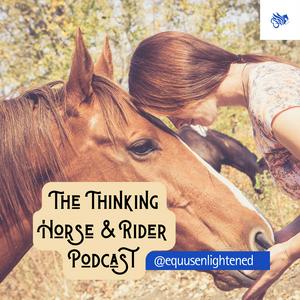
Get the free radio.net app
- Stations and podcasts to bookmark
- Stream via Wi-Fi or Bluetooth
- Supports Carplay & Android Auto
- Many other app features
Get the free radio.net app
- Stations and podcasts to bookmark
- Stream via Wi-Fi or Bluetooth
- Supports Carplay & Android Auto
- Many other app features
The Thinking Horse and Rider: Helping Riders Understand Their Horses | Anna Fox
Scan code,
download the app,
start listening.
download the app,
start listening.
 South Africa