

Listen to this podcast for free in the app: Download for free in the App Store
radio.net
Sleep timer
Save favourites
58 episodes
Extreme Heat Hits Trade, Ships Generate Green Hydrogen, and AI Content Gets Watermarked
2026/08/20 | 57 mins.Nick Chubb and Raal Harris examine how extreme heat is reshaping trade, from Rhine water levels and Panama Canal draught limits to pressure on energy systems. They also explore Drift Energy’s hydrogen-generating sailing vessels, Singapore’s Pier 71 startup programme, and the EU’s emerging rules on AI transparency and human oversight.
CHAPTERS
04:18 Rhine water levels and inland shipping
07:04 Panama Canal drought and draught restrictions
10:17 Drift Energy and green hydrogen at sea
18:39 Maritime innovation and the ocean economy
23:18 Singapore’s Pier 71 startup programme
30:52 The gap between research and commercialisation
35:14 The EU AI Act and transparency requirements
45:08 AI disclosure, watermarking and content quality
51:59 Human oversight and the future of knowledge work
The episode begins with extreme heat and an unlikely supply-chain indicator: Nick talks about its direct maritime consequences, with exceptionally low water levels at Kaub restricting cargo capacity on the Rhine and drought reducing permissible draughts through the Panama Canal.
The conversation then moves from climate impacts to potential solutions. Raal introduces Drift Energy’s concept for sailing vessels that generate electricity at sea and convert it onboard into green hydrogen.
The discussion broadens into tidal power, onboard carbon processing and the wider ocean economy, asking whether ships can become energy-producing assets rather than simply consumers of cleaner fuels.
Attention then turns to Singapore’s Pier 71 programme and what its alumni suggest about the value of sustained, government-backed maritime innovation.
Nick and Raal contrast that model with the persistent difficulty of moving promising technologies from research funding into viable commercial businesses, particularly in the UK and Europe.
The episode closes with the EU’s developing approach to AI transparency. They examine watermarking, disclosure obligations, human oversight and the implications for companies using generative AI professionally. The central question is less whether AI was involved than whether the finished work is accurate, useful and properly scrutinised.
EPISODE PARTNER
This episode is sponsored by Insight, in partnership with SmartSea.
Getting new technology onto one ship is an achievement. Getting every ship the same benefit is where most digital transformation programs lose momentum.
On the Aroya refit, Insight delivered the largest cruise IT transformation in EMEA — on schedule, in 11 months, across 33-plus workstreams — built on a single connected architecture designed to be repeated on the next vessel, not rebuilt from scratch.
That's the model Insight and SmartSea bring to fleet-wide rollouts: pilot once, deploy consistently, and cut the time and cost of getting every vessel to the same standard.
Because transformation only counts once it reaches the whole fleet.
Start your digital transformation journey with Insight.Why AI Could Make Markets More Volatile and Bridgetown’s $500k Port Transformation
2026/08/13 | 1h 1 mins.Nick and Raal examine what good maritime digital transformation looks like, from Bridgetown Port’s low-cost community system to shared vessel inspections and procurement pooling. They then explore AI’s tendency to flatten decisions, the value of proprietary data and primary research, and why real-world observation still matters in an automated industry.
CHAPTERS
03:38 Bridgetown Port’s $500k digital transformation
07:52 From 52 paper documents to a port community system
10:05 RightShip, NorthStandard and inspecting once
13:33 Can vessel inspections become a shared data standard?
18:59 The case for asking for maritime data only once
23:13 Oceanic Alliance and procurement pooling
27:18 What happens when AI starts making the decisions?
29:28 AI forecasting, broking and market feedback loops
37:31 Finding an edge when everyone has the same data
42:36 Marketing claims versus primary research
44:26 Where to look for maritime technology’s real frontier
47:29 Why asking customers to pay changes the feedback
52:01 Shadow AI and the EU AI Act
59:19 Why a subsea cable was rerouted for Dobby
The episode opens with a new candidate for Undocked’s “Under the Radar” series: Bridgetown Port in Barbados, which has built its own cloud-based port community system. The numbers make the case unusually tangible: a reported $500,000 investment, 52 physical documents reduced to none.
From there, Nick and Raal move onto a collaboration between RightShip and NorthStandard raises a deceptively simple proposition: inspect once, then make better use of trusted evidence.
The same logic appears in another form through Oceanic Alliance’s procurement pooling model. By aggregating purchasing demand across hundreds of vessels, smaller owners can potentially access some of the economies of scale traditionally associated with large third-party managers while retaining control of ship management.
The conversation then turns to AI and a more uncomfortable problem: what happens when everyone feeds similar data into similar models? In broking, product design, hiring, marketing and investment research, AI can improve analysis while simultaneously pushing participants towards the same conclusions. Once those conclusions begin influencing the underlying market, better forecasting can create new feedback loops and potentially new blind spots.
Finally there is the less predictable operational challenge of subsea infrastructure: a $600 million cable route reportedly altered to avoid the fictional grave of Dobby the House Elf.
EPISODE PARTNER
This episode is supported by Insight and SmartSea, powered by SITA.
AI is reshaping maritime — but a model is only as good as the data and systems behind it. Too many AI initiatives stall because fleet data is fragmented and disconnected from day-to-day operations.
Insight and SmartSea, powered by SITA, connect data, applications and onboard operations through one fleet architecture — so operators can identify opportunities, prove value, and scale what works, rather than running another isolated pilot.
The outcome isn't "we tried AI." It's AI embedded in daily operations, driving measurable efficiency, resilience and business results.
Turn AI ambition into measurable outcomes with Insight and SmartSea.Are We Making Seafaring Harder Than It Needs to Be? With Steven Jones
2026/08/06 | 57 mins.Steven Jones joins Nick Chubb and Raal Harris to examine what the latest Seafarers Happiness Index reveals about life at sea, crew relationships, shore-based wellbeing.
Chapters
02:16 The origins of the Seafarers Happiness Index
04:45 A decade of changing seafarer sentiment
08:16 What the latest results reveal
09:19 Technology overload and operational futility
11:34 Control, agency, and wellbeing at sea
14:08 Why younger seafarers have more choices
16:30 The erosion of shore leave
18:45 Making technology work with seafarers
22:12 Balancing traditional and digital skills
24:58 Understanding the futility trap
26:39 Wellbeing among shore-based teams
28:43 Compliance theatre and disconnected policies
31:47 Putting seafarers inside decarbonisation decisions
34:05 Training, competence, and personal investment
39:48 Trip length and emotional adjustment
41:46 Why crew relationships still matter
45:14 Food quality, weather, and life onboard
48:50 Why captains report lower happiness
50:16 Measuring welfare across the industry
54:01 The Seafarers Pledge
The episode opens with Steven Jones explaining how the Seafarers Happiness Index grew from a simple attempt to hear directly from crews into one of the industry’s most closely watched measures of life at sea. More than a decade of responses now provides a view across connectivity, shore leave, wages, food, workload, welfare, health and relationships onboard.
The latest results point to something deeper than routine quarterly movement. Steven describes a growing sense of futility as seafarers face geopolitical instability, expanding compliance demands and technology that is frequently added without removing existing work. The discussion examines the operational gap between systems sold ashore and the reality of implementing them onboard.
Nick, Raal and Steven also consider the loss of agency at sea, the decline of meaningful shore leave and the changing expectations of younger seafarers with credible career alternatives ashore.
The conversation closes on the areas where progress remains possible. Strong relationships between shipmates continue to underpin wellbeing, while better food, protected downtime and genuine consultation can make an immediate difference.
BE PART OF THE SURVEY
Contribute to the Seafarers Happiness Index
Take part in the Shore-Based Happiness Index
EPISODE PARTNER
This episode is sponsored by GTT Marine.
By 2027, EU ETS will cover 100% of reported emissions.
FuelEU Maritime will be in full force. And CII corrective action plans will be a regular part of the conversation. The operators best positioned for that moment aren't necessarily the ones buying new systems right now.
They're the ones using 2026 to connect what they already have. The Great Integration, the new report from GTT Marine and Thetius, is a practical blueprint for getting decision-ready before the deadlines stack up.
Download it now.The Trust Problem Behind Digital Training Records and Maritime’s Third Mobile Ecosystem
2026/07/30 | 50 mins.Mintra’s integration with Norway’s competence registry opens a wider discussion about digital training records, trust and interoperability in maritime. Nick and Raal revisit failed technology forecasts, consider AI’s long-term impact on work, and examine how Huawei’s HarmonyOS could create a third mobile ecosystem for maritime software providers worldwide and ashore.
CHAPTERS
00:36 Mintra connects 2.8 million training records
04:09 National competence registries and maritime careers
07:15 Who controls seafarer training data?
12:32 Creating an international trust layer
15:43 The career risk of lost paper certificates
18:24 Discharge books and multi-flag complexity
20:50 Mintra, Safebridge and digital credentials
21:56 Maritime technology predictions that failed
27:10 Weak signals and the next decade of shipping
31:21 AI, productivity and changing maritime jobs
37:44 Why maritime adopted native mobile apps
40:40 Huawei, HarmonyOS and a third ecosystem
45:58 Export controls and unintended consequences
50:00 Domestic systems meet international shipping
The episode begins with Mintra’s decision to connect 2.8 million training records to Norway’s national competence registry. The initiative raises a broader question for shipping: whether digital records can move securely between employers, industries and jurisdictions without replacing fragmented paper bureaucracy with equally fragmented digital systems.
Nick and Raal examine the distinction between certified qualifications and the wider training data held inside company learning systems. They discuss ownership, consent and the practical value of allowing records to follow an employee throughout a career. In a global industry without a single governing authority, the more difficult challenge is establishing trust between flags, training providers, employers and technology platforms.
The discussion then turns to maritime technology forecasting, before closing with Huawei’s HarmonyOS. Maritime software has largely been designed around two mobile ecosystems, Android and iOS. A credible third platform—particularly one supported by China’s large seafaring, shipbuilding and industrial base—could create substantial development and security choices for vendors relying on native apps and seafarers’ personal devices.
EPISODE PARTNER
This episode of UnDocked is brought to you by KVH.
Connectivity is critical, but it’s what sits behind it that makes the difference.
KVH goes beyond bandwidth, offering managed IT services, cybersecurity, and compliance support designed specifically for maritime operations. Combined with LEO connectivity and intelligent network management, this creates a complete communications ecosystem for your fleet.
Secure, scalable, and built to adapt as your needs evolve.
So whether you're upgrading your network or rethinking your entire communications strategy, KVH provides the foundation to do it right.
Discover more at kvh.comThe Battle for Shipbuilding Capacity and Private Equity Targets Vessel Operations
2026/07/23 | 58 mins.Nick and Raal explore shipbuilding’s geopolitical revival, friendshoring, autonomous vessel insurance, and the risks of an overheated global orderbook cycle ahead for shipping. They also examine how seafarers are already using AI beyond formal governance, why MF Shipping’s people-first digital strategy stands out, and what maritime technology consolidation means for operators.
CHAPTERS
00:44 The human element of maritime AI
04:03 Treating AI like a new employee
06:33 Seafarers, shadow AI and governance
13:55 MF Shipping’s people-first digital strategy
17:43 Transparent KPIs and operational priorities
27:50 Why most AI projects show no measurable return
32:39 Agentic AI at the Digital Ship Summit
35:17 A decade of maritime technology consolidation
40:19 Insurance pathways for autonomous vessels
46:45 A seven-billion-dollar week in shipbuilding
50:06 China’s dominance of the global orderbook
53:16 National shipbuilding strategies and friendshoring
55:39 AI-enabled shipyards and software-driven vessels
57:38 The risk of renewed vessel oversupply
The episode opens with Raal’s reflections from a maritime roundtable on AI and the human element. Seafarers are already using consumer AI tools for spreadsheets, emails, administrative work and personal support, often beyond the visibility of company policies.
MF Shipping offers a more deliberate model. After surveying around 900 seafarers, the company is shaping its digital strategy around simpler workflows, reduced administrative burden and better operational decisions. Its public KPIs also challenge the industry to measure digital success by its effect on people, rather than the number of systems deployed.
Nick and Raal then examine the accelerating consolidation of maritime technology, including private equity interest in vessel operations, autonomy, cybersecurity and safety. Broader platforms may simplify fragmented technology stacks, but they also raise questions about integration, competition and control of maritime data.
The episode closes with shipbuilding’s return as a geopolitical concern. New investments in India, Bangladesh and the United States sit against China’s dominant share of global orders.
Governments are responding with industrial policy, allied shipbuilding partnerships and friendshoring, while Korean and Chinese yards develop AI-enabled design and production systems. The strategic race is intensifying just as the global orderbook approaches another potential cycle of oversupply.
EPISODE PARTNER
This episode of UnDocked is brought to you by Insight Enterprises.
Every vessel runs its own mix of devices, software and support arrangements. Without a common view across the fleet, a small IT issue on one ship can turn into a major operational problem across all of them.
When the cruise ship Aroya was in refit, Insight tracked and deployed over 650 devices and 2,000 Wi-Fi access points on a single vessel — a day-in-the-life view of what's possible when every device on board sits on one architecture.
Insight's Ship-to-Shore IT Asset Management brings that same standardised architecture to your whole fleet, so shore teams get real visibility, digital assets are managed consistently, and vessels stay connected to shore instead of running blind.
Because better visibility leads to better decisions, made sooner.
Simplify your fleet IT with Insight and SmartSea.
More Technology podcasts
 All-In with Chamath, Jason, Sacks & FriedbergBusiness, Entrepreneurship, Health & Wellness, Investing, Technology
 Claude AI Genius Podcast w/ Claude Anthropic Expert Brandon GailleBusiness, Marketing, Technology
 AcquiredBusiness, Investing, Technology
 Hard ForkTechnology
 The AI Daily Brief: Artificial Intelligence News and AnalysisTechnology
 Lex Fridman PodcastPhilosophy, Science, Society & Culture, Technology
 Search EngineBusiness, Society & Culture, Technology
 Waveform: The MKBHD PodcastHobbies, Leisure, News, Tech News, Technology
 Dwarkesh PodcastScience, Technology
 Darknet DiariesTechnology
Trending Technology podcasts
 Triple ClickArts, Society & Culture, Technology
 This Week in Tech (Audio)News, Tech News, Technology
 What's Next with Aki AnastasiouTechnology
 American Alchemy with Jesse MichelsScience, Society & Culture, Technology
 Reply AllDocumentary, Society & Culture, Technology
- Dwarkesh PodcastScience, Technology
 Terms of Service with Clare DuffyBusiness, Technology
 AI + a16zBusiness, Entrepreneurship, Technology
 Infinite LoopsBusiness, Entrepreneurship, Technology
 There Are No Girls on the InternetSociety & Culture, Technology
 What's Your Problem?Business, Entrepreneurship, Technology
 Everyday AI Podcast – An AI and ChatGPT PodcastBusiness, Entrepreneurship, News, Tech News, Technology
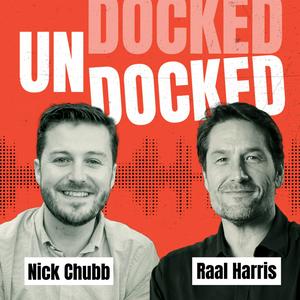
About UnDocked: The Maritime Transformation Show
Undocked is a weekly podcast where Nick Chubb and Raal Harris explore what’s changing in maritime and technology. Through candid conversations and guest interviews, the show unpacks emerging trends, overlooked stories, and strategic insights, offering a fresh, unfiltered perspective on the evolving future of one of the world’s oldest industries.
Podcast websiteListen to UnDocked: The Maritime Transformation Show, All-In with Chamath, Jason, Sacks & Friedberg and many other podcasts from around the world with the radio.net app
Get the free radio.net app
- Stations and podcasts to bookmark
- Stream via Wi-Fi or Bluetooth
- Supports Carplay & Android Auto
- Many other app features
Get the free radio.net app
- Stations and podcasts to bookmark
- Stream via Wi-Fi or Bluetooth
- Supports Carplay & Android Auto
- Many other app features

UnDocked: The Maritime Transformation Show
Scan code,
download the app,
start listening.
download the app,
start listening.
 South Africa