

Listen to this podcast for free in the app: Download for free in the App Store
radio.net
Sleep timer
Save favourites
148 episodes

S15E4: From Starlink to AI Marketing Agents with Doug Tallmadge, Co-Founder and CEO of Gradial
2026/10/13 | 54 mins.In this episode of The Room Podcast, we speak with Doug Tallmadge, co-founder and CEO of Gradial, a company building AI agents to help enterprise marketing teams execute work across their tools and campaigns. Doug traces his path from growing up in Cincinnati and studying physics at Dartmouth to joining SpaceX and helping build Starlink. He shares what working through seemingly impossible engineering challenges taught him and why finding a market for a startup can be a very different problem from building a product people already want.
After ChatGPT launched, Doug and his longtime friends left their jobs to start a company. He explains how their broad ambition to bring AI into enterprise work became a focused business in marketing, where campaign briefs, creative assets, tickets, and manual handoffs create a significant operational burden. In this conversation, Doug breaks down how Gradial’s agents have evolved alongside the models, what it takes to earn enterprise trust, and why marketers should be able to plan their budgets without worrying about tokens. He also reflects on fundraising setbacks, managing the emotional swings of building a company, and the professor who backed an unconventional student project that helped launch his career.
Learn more about Doug Tallmadge on LinkedIn and explore Gradial.
(04:04) Where did Doug grow up, and how did it shape his worldview?
(04:41) Did Doug always think he would become a founder?
(05:34) Studying physics at Dartmouth and choosing SpaceX over finance
(08:21) Building Starlink through existential engineering and business challenges
(11:42) Discovering product-market fit versus engineering a product people already want
(13:14) The moment Doug decided to start Gradial
(14:49) Why enterprise work runs on tickets—and why Gradial focused on marketing
(16:39) What goes into a marketing campaign, from brief to distribution
(20:33) Starting a company with longtime friends and roommates
(23:14) Narrowing the product after the first weeks of disillusionment
(24:32) Gradial’s first investor and lessons from early fundraising
(30:04) Managing the emotional swings of the founder journey
(32:32) When the original plan failed and it was time to focus on marketing
(34:46) How Gradial’s agent architecture evolved alongside the models
(38:52) Better models and the future of long-duration marketing work
(41:51) Enterprise security, procurement, and integration with existing systems
(43:32) Helping marketers spend more time on creative work
(44:29) Pricing AI agents and making marketing budgets predictable
(49:19) What’s next for Gradial
(50:30) What’s next for Doug outside the company
(50:46) A woman who has had a profound impact on Doug’s life and career
For The Room Podcast in your inbox every week, subscribe to our newsletter.
Follow us on Instagram
Follow us on TikTok
Check out our guide to podcasting here!
Don't forget to subscribe to our channel on YouTube, Spotify, and Apple Music!
Brought to you by: Rippling, Gradial, Ashurst Perkins Coie
WX ProductionsS15E3: Building the Future of Sleep with Hatch Co-Founder & CEO Ann Crady Weiss
2026/10/06 | 53 mins.In this episode of The Room Podcast, we sit down with Ann Crady Weiss, co-founder and CEO of Hatch, to trace the path from her Silicon Valley upbringing and early career in law and technology to building one of the most recognizable names in sleep. Ann shares how her family’s connection to Intel shaped her entrepreneurial ambition, what she learned at Wilson Sonsini and Yahoo, and how the acquisition of her first startup prepared her to build again.
Hatch began with a personal problem and evolved from a baby-focused hardware company into a broader sleep platform for children and adults. Ann explains how customer behavior led the team into the adult market, why emotional design and organic love became central to the brand, and how Hatch balances slower hardware cycles with a software-led organization and a growing library of bedtime content.
The conversation also covers Hatch’s appearance on Shark Tank, the long relationship with True Ventures, an early move into Costco, and the discipline of building with real unit economics. Ann shares what she has learned as both a founder and venture partner, why timing and luck matter more than entrepreneurs often admit, and why Hatch emphasizes better sleep habits, phone-free routines, and contactless tracking rather than scores or constant monitoring—even as AI changes how products are built.
Learn more about Ann Crady Weiss on LinkedIn and check out Hatch on their website.
(04:13) Ann’s Silicon Valley childhood and family connection to Intel
(05:05) How Ann’s uncle joined the early Intel team
(05:35) Did Ann always think she would become a founder?
(06:54) How law, Wilson Sonsini, and Yahoo shape Ann’s early career
(08:59) The acquisition of Ann’s first startup and the path to Hatch
(10:45) The personal need and original product behind Hatch
(12:47) Why Hatch expanded from baby products into the adult sleep market
(14:53) How founders can pursue a large opportunity without losing focus
(16:22) Building emotional connection through product and brand design
(18:14) What founders should understand about hardware iteration
(19:30) The Hatch Sleep Clock and a different approach to sleep tracking
(22:47) Pitching on Shark Tank and partnering with Chris Sacca
(26:03) True Ventures and the first investors to believe in Hatch
(29:27) Setbacks, Costco, and lessons from expanding too early
(32:09) Building a sustainable business with real unit economics
(34:05) Hatch+ content and the case for phone-free sleep
(37:37) Building customer trust and protecting bedroom privacy
(39:29) How Hatch differs from wearables and other sleep trackers
(41:05) What Ann has learned as a founder and venture partner
(44:24) The future of sleep technology in the age of AI
(46:47) Building products that make people feel calmer, not monitored
(48:17) What’s next for Hatch
(49:33) A woman who profoundly shaped Ann’s life and career
For The Room Podcast in your inbox every week, subscribe to our newsletter.
Follow us on Instagram
Follow us on TikTok
Check out our guide to podcasting here!
Don't forget to subscribe to our channel on YouTube, Spotify, and Apple Music!
Brought to you by: Rippling, Gradial, Ashurst Perkins Coie
WX ProductionsS15E2: Secure AI Agents for the Future of Work with NanoCo Co-Founder & CEO, Gavriel Cohen
2026/09/29 | 50 mins.In this season 15 opener of The Room Podcast, we speak with Gavriel Cohen, co-founder and CEO of NanoCo and creator of NanoClaw, an open-source framework designed to make powerful AI agents safer and more practical for real-world use.
NanoClaw emerged from Gavriel’s own experience using AI agents to run an AI-native marketing agency. After connecting an agent he called “Andy” to his company’s sales pipeline, Gavriel saw the potential for agents to operate less like chatbots and more like persistent digital coworkers—but also recognized the security challenges that come with giving autonomous agents access to sensitive tools, data, email, and business systems.
In this conversation, Gavriel shares the core idea behind NanoClaw: rather than weakening an AI agent, give it powerful capabilities while putting clear boundaries around what it can access—what he describes as putting the agent “in a box.” He also explains why he believes the future of work will involve humans becoming managers of increasingly capable teams of agents, rather than simply replacing people with AI.
Learn more about Gavriel Cohen on LinkedIn and explore NanoCo.
(04:08) Gavriel’s childhood and how it shaped his worldview
(05:33) Did Gavriel always think he would become a founder?
(06:40) Moving from New York to Israel and studying at Tel Aviv University
(08:08) The aha moment behind NanoClaw and Gavriel’s entry into AI agents
(12:52) Why the AI agent market was getting security wrong
(15:32) What is a “Claw” and how do AI agents fit into everyday work?
(20:03) The most surprising ways people are using NanoClaw
(23:50) Raising $12 million and finding NanoCo’s first investors
(35:20) Why Gavriel turned down acquisition interest and kept building independently
(38:04) NanoClaw’s architecture decisions and what still isn’t ready for primetime
(42:59) A woman who has had a profound impact on Gavriel’s life and career
For The Room Podcast in your inbox every week, subscribe to our newsletter.
Follow us on Instagram
Follow us on TikTok
Check out our guide to podcasting here!
Don't forget to subscribe to our channel on YouTube, Spotify, and Apple Music!
Brought to you by: Rippling, Gradial, Ashurst Perkins Coie
WX ProductionsS15E1: Building the Infrastructure for Voice AI with Russ d'Sa, Co-Founder and CEO of LiveKit
2026/09/22 | 1hIn this season 15 opener of The Room Podcast, we speak with Russ d'Sa, co-founder and CEO of LiveKit, a platform for building real-time voice, video, and AI agents. LiveKit began as an open-source project for live audio and video. As developers adopted it, the team built cloud infrastructure to help them scale. A second turning point came when OpenAI used LiveKit to build a voice interface for ChatGPT, revealing how technology built to connect people could also connect people with AI.
Russ traces his path from growing up around computers in Canada and Silicon Valley to founding a startup, working at 23andMe and Twitter, and building LiveKit. He shares the unexpected relationships and product decisions that shaped the company, including why he calls it the “accidental AI company.” In this conversation, Russ explains why speaking with an AI requires a different kind of infrastructure from typing to one. He also looks ahead to physical AI and reflects on how becoming a father has changed the way he thinks about success and his values.
Learn more about Russ on LinkedIn and explore LiveKit.
(03:54) Where did Russ grow up, and how did it shape him?
(06:42) Did Russ always expect to become a founder?
(07:30) What screen did Russ watch the documentary on?
(09:09) Has Russ read *Tomorrow, and Tomorrow, and Tomorrow*?
(09:17) What was Russ’s first Y Combinator company?
(09:24) Was Russ's company a gaming company?
(11:13) What year did Russ start that company?
(11:40) Did Russ join Twitter after his first startup?
(11:51) How did Russ make the transition to 23andMe?
(13:22) How did 23andMe eventually lead Russ to Twitter?
(16:51) Was Russ's Twitter role in software or content?
(22:45) What was the original idea behind LiveKit?
(30:17) Did LiveKit finally arrive at the right time?
(30:37) Who was LiveKit’s first investor?
(33:08) What has gone differently than planned while scaling LiveKit?
(35:07) Where does LiveKit fit between AI models and the software built around them?
(40:40) What makes building voice agents different from building text agents?
(45:24) What still prevents AI voice conversations from feeling fully natural?
(49:41) What is Russ excited about on LiveKit’s roadmap, and what can he share?
(53:16) Which woman has had a profound impact on Russ's life and career?
For The Room Podcast in your inbox every week, subscribe to our newsletter.
Follow us on Instagram
Follow us on TikTok
Check out our guide to podcasting here!
Don't forget to subscribe to our channel on YouTube, Spotify, and Apple Music!
Brought to you by: Rippling, Gradial, Ashurst Perkins Coie
WX ProductionsBuilding an Enterprise VC Firm with Jai Das, President and Co-Founder of Sapphire Ventures | Founding the Fund 4
2026/08/04 | 53 mins.In this bonus episode of The Room Podcast, we speak with Jai Das, President, Partner and Co-Founder of Sapphire Ventures, one of the world's leading enterprise venture capital firms backing category-defining B2B software and AI companies.
Sapphire Ventures has invested in companies including monday.com, Box, Square, MuleSoft, Fitbit, ExactTarget, and many others, while building one of the industry's most recognized enterprise-focused venture platforms. Before co-founding Sapphire Ventures, Jai's career spanned software engineering at Oracle, founding startups during the dot-com era, corporate venture investing, and leading the transformation of SAP Ventures into the independent firm it is today.
In this conversation, Jai reflects on the lessons learned across multiple technology cycles, from the early internet to today's AI revolution, sharing how his experiences as an engineer, founder, and investor shaped Sapphire's long-term strategy and investment philosophy.
Learn more about Jai on LinkedIn - https://www.linkedin.com/in/jaidas
Explore Sapphire Ventures on their website - https://sapphireventures.com/
(05:38) Jai's upbringing in India and journey to Silicon Valley
(08:20) Did Jai always think he would become a founder
(09:37) What was it like being an engineer at Oracle in the 1990s?
(11:51) Did Oracle miss its opportunity in cloud computing?
(13:10) Jai’s startup journey after Oracle and the path to SAP Ventures
(17:53) How did Jai’s first venture investing experience shape your career?
(18:50) What was early corporate venture capital like at Intel and SAP?
(20:57) How should founders think about taking money from corporate VCs?
(23:33) How did SAP Ventures become Sapphire Ventures?
(25:06) How did Sapphire differentiate itself in a crowded VC market?
(28:19) When did Sapphire experience its biggest growing pains?
(32:40) Who was Sapphire Ventures' first LP?
(34:18) Why did Sapphire build a fund-of-funds strategy?
(35:59) What was the first portfolio company that believed in Sapphire?
(37:37) Why has the developer become such an important buyer?
(39:58) How has AI changed who the modern "developer" really is?
(41:50) How does the rise of AI agents influence your investment thesis?
(44:42) How does venture capital stay relevant in the age of AI?
(48:11) What is Jai most excited about right now?
(49:37) Who is a woman that has had a profound impact on Jai’s life and career?
For The Room Podcast in your inbox every week, subscribe to our newsletter.
Follow us on Instagram
Follow us on TikTok
Check out our guide to podcasting here!
Don't forget to subscribe to our channel on YouTube, Spotify, and Apple Music!
WX Productions
More Business podcasts







Trending Business podcasts







About The Room Podcast
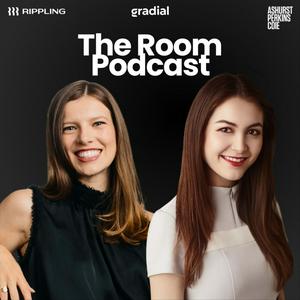
Welcome to the Room. A series interviewing your favorite tech founders and funders. Our guests were in the room where it happened and they’re sharing their stories.
Podcast websiteListen to The Room Podcast, Aspire with Emma Grede and many other podcasts from around the world with the radio.net app
Get the free radio.net app
- Stations and podcasts to bookmark
- Stream via Wi-Fi or Bluetooth
- Supports Carplay & Android Auto
- Many other app features
Get the free radio.net app
- Stations and podcasts to bookmark
- Stream via Wi-Fi or Bluetooth
- Supports Carplay & Android Auto
- Many other app features

The Room Podcast
Scan code,
download the app,
start listening.
download the app,
start listening.
The Room Podcast: Podcasts in Family
 South Africa