
Listen to this podcast for free in the app: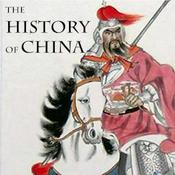 Download for free in the App Store
radio.net
Sleep timer
Save favourites
405 episodes
#351.2 – Strange Tales XI.2: The Body Won’t Behave
2026/10/23 | 34 mins.It’s one thing to go invading the resting places of the dead and reaping the well-deserved consequences of your own bad choices. But it’s a different kind of horror entirely when you don’t even need a shovel and the dead are perfectly capable of getting up all on their own. Hopping corpses, flying corpses, corpses sneaking out for a midnight rendezvous, and a few bodies that are still technically alive, but behaving very, very badly. So keep a broom handy... and a couple of bells... just in case. Because tonight, it turns out rigor mortis is... more of a suggestion...
Be sure to check out Arthur's Sleepy History Podcast:
https://open.spotify.com/show/4AMQOoqVGQVmbotdkcgn48?si=y72e22c0SuWPyyc8HM3YTw
Tonight’s Tales:
02:47 – “The Headless Horseman of Han” [漢武時蒼梧賈雍] – from Soushenji, Gan Bao04:26 – “Half-Baked” [批殭尸頰] – from Zibuyu, Yuan Mei07:13 – “Still Life” [畫工畫殭尸] – from Zibuyu, Yuan Mei10:35 – “It’s So Necromantic” [兩殭尸野合] – from Zibuyu, Yuan Mei14:25 – “Saved By the Bell” [飛殭] – from Zibuyu, Yuan Mei18:29 – “Truly Offal” [抽腸] – from Liaozhai zhiyi, Pu Songling22:03 – “An Empty Cocoon” [丐僧] – from Liaozhai zhiyi, Pu Songling25:55 – “Some Assembly Required” [負屍] – from Liaozhai zhiyi, Pu Songling28:06 – “Well, Well, Well...” [古瓶] – from Liaozhai zhiyi, Pu Songling
Major Works Cited:DeWoskin, Kenneth J., and J. I. Crump, Jr., trans. In Search of the Supernatural: The Written Record.Pu Songling. The Annotated Strange Tales From A Chinese Studio. Translated by Park Jongho.Pu Songling. Liaozhai zhiyi 聊齋志異.Santangelo, Paolo, with Yan Beiwen. Zibuyu, “What the Master Would Not Discuss,” according to Yuan Mei (1716–1798): A Collection of Supernatural Stories.
Learn more about your ad choices. Visit megaphone.fm/adchoices#351 - Strange Tales XI.1: Don't Wake the Grave
2026/10/17 | 40 mins.The leaves are blood-red once again, the coffee’s back to hot, and somewhere in old China, the dead begin to stir restlessly. Grave robbers, well-diggers, strange hobbyists... plenty of folks out there far too willing to go sticking a spade into dirt it doesn't belong. And, of course, consequences ensue...
Tonight’s Tales:
03:28: “A Coffin For Eighteen” [一棺藏十八人] – from Zibuyu, Yuan Mei
05:19: “Adding Insult to Injury” [漢桓帝馮貴人] – from Soushenji, Gan Bao
07:31: “Outfoxed” [漢廣川王好發冢] – from Soushenji, Gan Bao
09:56: “Does It Taste Good?” [骷髏報仇] – from Zibuyu, Yuan Mei
12:27: “I’d Like a Second Opinion” [掘塚奇報] – from Zibuyu, Yuan Mei
18:22: “The Tomb of Cao Cao” [曹操冢] – from Liaozhai zhiyi, Pu Songling
21:25: “Laundry Day” [噴水] – from Liaozhai zhiyi, Pu Songling
24:48: “A Grounded Education” [龍飛相公] – from Liaozhai zhiyi, Pu Songling
Learn more about your ad choices. Visit megaphone.fm/adchoices#350 - Taiping 25: Rings Within Rings
2026/10/09 | 47 mins.In the summer of 1861, the strangest siege of the war took shape on the banks of the Yangtze. As Heaven itself sent forth cosmic signs – of victory or disaster, no one could be quite sure – an imperial army had a rebel city completely surrounded.Only for a different rebel army to surround that imperial ringing army.But they were, all of them, deceived... for somewhere out past the hills, another ring was made...
Inside the walls, the gardens were planted, the rations were holding, and the markets were open for business.They would stay open to the very end…Time Period Covered:Apr.–Sept. 1861 CEMajor Historical Figures:The Qing:The Xianfeng Emperor [1831–1861]Yixin, Prince Gong [1833–1898]Imperial Commissioner Zeng Guofan [1811–1872]Zeng Guoquan, commander of the siege of Anqing [1824–1890]Zhu Hongzhang, commander of the Guizhou divisionCommander Bao Chao [1828–1886]Duolonga, Manchu cavalry general [1817–1864]Zuo Zongtang, general holding Jingdezhen [1812–1885]Hu Linyi, Governor of Hubei [1812–1861]The Taiping Heavenly Kingdom:Hong Xiuquan, the Heavenly King [1814–1864]Hong Rengan, the Shield King [1822–1864]Chen Yucheng, the Brave King [1837–1862]Li Xiucheng, the Loyal King [1823–1864]Li Shixian, the Attending King [1834–1865]Lai Wenguang, commander at Huangzhou [1827–1868]Liu Canglin, commander at the Jixian PassYang Fuqing, commander of the last relief armyCheng Xueqi, the Brave King's vanguard commander; defected to the Qing [1829–1864]The British:Frederick Bruce, British Minister to China [1814–1867]Harry Parkes, interpreter & negotiator [1828–1885]Major Works Cited:Fairbank, John K., ed. The Cambridge History of China, Vol. 10: Late Ch'ing, 1800–1911, Part 1.Jen, Yu-wen. The Taiping Revolutionary Movement.Platt, Stephen R. Autumn in the Heavenly Kingdom: China, the West, and the Epic Story of the Taiping Civil War.
Learn more about your ad choices. Visit megaphone.fm/adchoices#349 - Taiping 24: The Bouncer
2026/10/03 | 39 mins.By the autumn of 1860, the Qing Dynasty had run out of armies to lose. What was left of its war was being run out of a mountain valley in southern Anhui by a half-blind scholar-official who was, at that very moment, politely refusing a direct order from his emperor.
Downriver, the Taiping had a plan to end the whole thing. In March of 1861 the Brave King sprinted 200 miles in 11 days to pull it off, and arrived holding the strongest hand any Taiping commander ever would.
And then… the British showed up and had a little conversation. And everything went completely off the rails...
Time Period Covered:Oct. 1860–Apr. 1861 CE
Major Historical Figures:The Qing:Imperial Comissioner Zeng Guofan [1811–1872]Zeng Guoquan, commander of the siege of Anqing [1824–1890]Commander Bao Chao [1828–1886]Duolonga, Manchu cavalry general [1817–1864]Zuo Zongtang, general holding Jingdezhen [1812–1885]Senggelinqin, Mongol prince; commander in the north [1811–1865]
The Taiping Heavenly Kingdom:Hong Xiuquan, the Heavenly King [1814–1864]Chen Yucheng, the Brave King [1837–1862]Li Xiucheng, the Loyal King [1823–1864]Hong Rengan, the Shield King [1822–1864]Li Shixian, the Attending King [1834–1865]
The British:James Bruce, 8th Earl of Elgin, High Commissioner & Plenipotentiary [1811–1863]Frederick Bruce, British Minister to China [1814–1867]Rear Adm. Sir James Hope [1808–1881]Harry Parkes, interpreter & negotiator [1828–1885]
Visitors to Nanjing:Issachar Roberts, American missionary; once the Heavenly King's teacher [1802–1871]Griffith John, Welsh missionary of the London Missionary Society [1831–1912]Yung Wing, Yale graduate & tea trader [1828–1912]
Major Works Cited:Jen, Yu-wen. The Taiping Revolutionary Movement.Platt, Stephen R. Autumn in the Heavenly Kingdom: China, the West, and the Epic Story of the Taiping Civil War.
Learn more about your ad choices. Visit megaphone.fm/adchoices#348 - Arrow War 2: Ashes of Perfect Brightness
2026/09/25 | 43 mins.For two days in mid-October, ash fell like snow atop Beijing. All that remained of one of the greatest cultural storehouses in all of human history, put to the torch as an extremely personalized punishment... after everything not nailed down inside it had already been looted off, of course.
But the man it was meant to punish... wasn't even there. He'd already slipped out the back door of the Forbidden City weeks before - leaving an opera troupe to play on and cover his escape, as he left his own capital behind to its conquerors for the last time.
What was left was a city ready to be conquered, a conqueror who didn't want it at all, and who would negotiate a very favorable credit-extension deal instead... with a computable interest in the survival of the government he'd just humiliated, and in the quiet of the very ports the Taiping had spent all summer marching toward.
Time Period Covered:Aug.–Dec. 1860 CE
Major Historical Figures:The Qing:The Xianfeng Emperor [1831–1861]Prince Gong, the emperor's half-brother; imperial plenipotentiary [1833–1898]Senggelinqin, Mongol prince; commander in the north [1811–1865]Zaiyuan, Prince of Yi, imperial commissioner [1816–1861]Muyin, imperial commissionerHengqi, Qing officialZeng Guofan, imperial commissioner against the Taiping [1811–1872]The Qianlong Emperor [1711–1799]
The British:James Bruce, 8th Earl of Elgin, High Commissioner & Plenipotentiary [1811–1863]Frederick Bruce, British Minister to China [1814–1867]Harry Parkes, interpreter & negotiator [1828–1885]Henry Loch, Elgin's private secretary [1827–1900]Thomas Bowlby, correspondent of The Times [1818–1860]Gen. Sir James Hope Grant, commanding the British force [1808–1875]Rear Adm. Sir James Hope [1808–1881]Capt. Charles Gordon, Royal Engineers [1833–1885]Robert Swinhoe, interpreter [1836–1877]Lord Macartney, ambassador to the Qianlong court, 1793 [1737–1806]Lord Amherst, ambassador, 1816 [1773–1857]King George III [1738–1820]Queen Victoria [1819–1901]
The French:Baron Gros, French PlenipotentiaryGen. Charles Cousin-Montauban, afterward Comte de Palikao [1793–1877]Felice Beato, photographer [c. 1832–1909]Jean Denis Attiret, Jesuit painter at the Yuanmingyuan [1702–1768]
The Russians:Count Nikolay Ignatiev, Russian envoy [1832–1908]
The Taiping Heavenly Kingdom:Hong Rengan, the Shield King [1822–1864]
Major Works Cited:Giles, Herbert A. A Glossary of Reference on Subjects Connected with the Far East.Gros, Baron. Négociations entre la France et la Chine en 1860.Hake, Alfred Egmont. The Story of Chinese Gordon.Leavenworth, Charles S. The Arrow War with China.Platt, Stephen R. Autumn in the Heavenly Kingdom: China, the West, and the Epic Story of the Taiping Civil War.
Learn more about your ad choices. Visit megaphone.fm/adchoices
More History podcasts








Trending History podcasts















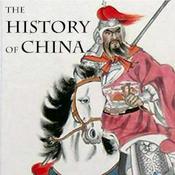
About The History of China
A journey through the 5000 years of history documented by one of the world's oldest continuous civilizations. For all the episodes for free, as well as additional content, please subscribe and/or visit http://thehistoryofchina.wordpress.com.
Podcast websiteListen to The History of China, History of South Africa podcast and many other podcasts from around the world with the radio.net app

Get the free radio.net app
- Stations and podcasts to bookmark
- Stream via Wi-Fi or Bluetooth
- Supports Carplay & Android Auto
- Many other app features
Get the free radio.net app
- Stations and podcasts to bookmark
- Stream via Wi-Fi or Bluetooth
- Supports Carplay & Android Auto
- Many other app features

The History of China
Scan code,
download the app,
start listening.
download the app,
start listening.
The History of China: Podcasts in Family
 South Africa