
Listen to this podcast for free in the app: Download for free in the App Store
radio.net
Sleep timer
Save favourites
43 episodes

Back to the Future of Advertising: Jesse Eisenberg on Rebuilding Trust With Strangers
2026/08/24 | 42 mins.Jesse Eisenberg has spent more than 18 years in digital media and performance marketing, starting hands-on in Google Ads and eventually leading growth at a $250 million-plus agency. He is now CEO and co-founder of StreetTalk, and his case is that advertising has looped back to where it began. Word of mouth gave way to celebrity endorsers, then to influencers, and both lost trust the same way. The one voice still worth believing, in his view, is a stranger who looks and thinks like you.
In this conversation with Adam Weil, Jesse walks through his first year leading StreetTalk as CEO: how he raised prices to match demand and restructured client contracts to keep them retained far longer, driving a 6x revenue increase in nine months. He also gets into the attribution problem chipping away at how the industry measures results, and the one thing about StreetTalk's process he refuses to automate.Make Your Business Work for You: Albert Banks on Ditching the Hero Complex
2026/08/11 | 26 mins.Albert Banks built and sold service firms for over two decades. His argument: most founders are solving the wrong problem. They chase revenue and headcount, when what actually needs to change is how much of the business depends on them personally. He calls the fix "who, not how": instead of learning to solve a problem yourself, find someone who already knows how to solve it.
In this conversation with Adam Weil, Albert explains the difference between delegation and abdication: delegation means you hand off the task but stay on the hook for it, abdication means someone else fully owns it. He also gets into why unclear expectations backfire on founders, in his words, "unexpressed or unagreed expectations are planned resentment." And he describes the coverage plans he built so leadership, himself included, could actually take a vacation without the business falling apart. The point of all of it, he says, is figuring out what "enough" looks like for you, not for whoever you're comparing yourself to.Always Be Inviting: Joe Rinaldi on Community as Your BizDev Engine
2026/06/22 | 1h 20 mins.Joe Rinaldi has spent his career around studio-sized agencies, as the biz dev guy at Happy Cog in its celebrity-agency years and now as a consultant who has worked with more than 90 of them. So while the industry tries to escape referrals, Joe runs the other way. Referrals were never the problem, he tells Adam Weil. Almost no agency has a plan to make more of them, so most owners just wait super hard, and great work stops being enough once your need outgrows your inbound.
His answer catches people off guard, because it is to never sell. You show up in community, you give things away, and you treat business development like a verb instead of a noun you sit on. Joe walks through the math he believes in, where you can't make one person 100% more likely to hire you, but you can make a hundred people 5% more likely to think of you when they need what you do, and over a year or two that becomes actual client work.
Joe and Adam swap real examples too, the content spreadsheet Happy Cog dressed up and gave clients for free, the biotech resource guide that grew into an AI-powered quiz, the iPhone templates Teehan+Lax dropped after every Apple launch. The thread through all of it is generosity over urgency and abundance over fear, the kind of partner energy from day minus one instead of begging for work. Stick around for where Joe thinks the strongest small agencies are heading, a tight ride-or-die core wrapped in a membrane of brilliant partners.The Churn Consultant: Max Traylor on Growing the Accounts You Already Have
2026/06/08 | 58 mins.Max Traylor has a job title that makes people read it twice. He's an agency churn consultant, which means agencies bring him in to figure out why their clients leave. His take reframes the whole growth question: the fastest growth an agency can find is usually sitting in the clients it already has, and most of it goes untouched because account managers only ever talk about marketing, which sits near the bottom of what a client cares about most.
In this conversation with Adam Weil, Max explains why three of marketing's old four P's drifted off to finance, product, and IT years ago, leaving promotion as most of what's left. So the budget an agency wants to grow into now sits with operations, sales, and the people who decide whether you stay. The account managers who reach those rooms are the ones who stay curious about the client's whole business and can hold a conversation that has nothing to do with marketing.
From there it gets practical: how to climb back from being treated as a vendor, why most quarterly business reviews are a recap the client never asked for, and how to read an account by mapping who would actually pick up the phone. Max is just as direct about AI, where some executives are canceling accounts because they believe a tool can replace marketing. His view is that the agencies who come through are the ones whose people are paid to grow relationships, not manage work a machine can already handle.The Honest Matchmaker: Daniel Weiner on Pairing Brands With Agencies
2026/05/14 | 34 mins.Daniel Weiner runs You Should Talk To, a consultancy that pairs brand marketers with the agencies that fit them. In this conversation with Adam Weil, Daniel lays out a take that earns him heat on LinkedIn pretty regularly: the work doesn't matter until it does. Sure, you have to be reasonably good at what you do, that's table stakes. But with over 100,000 agencies in the US alone, doing great work is the price of admission. What gets you hired is the relationship, the chemistry, and showing up consistently.
Daniel has spent the last six years sitting in the middle of brand and agency conversations, and he's earned a reputation for being "disgustingly honest" with both sides. He gets into where matches actually fall apart, and almost none of it has to do with the creative output. Misaligned expectations on budget. Account people who turn over every six months. Agencies who drink their own Kool-Aid and tell brands they're "the best at X" without ever explaining what that means in practice. When a brand fires an agency, the work is rarely the first thing they bring up. It's everything around the work that broke them.
The conversation also gets into what wins pitches: making it 99% about the brand and 1% about yourself, telling a cohesive story start to finish, and showing up so excited that the brand feels it in the room. Daniel and Adam talk about niching without going so far that every agency starts to look the same, why a CEO needs to be in the pitch without making it about themselves, and how AI has made everyone want everything yesterday without really moving prices much. If you're an agency leader wondering why some pitches close and others die, Daniel's answer is direct: pick up the phone, give without asking, throw the dinner you wish someone would invite you to, and remember that nobody hires you because you're brilliant. They hire you because they like you, trust you, and want to genuinely work with you.
More Technology podcasts








Trending Technology podcasts






















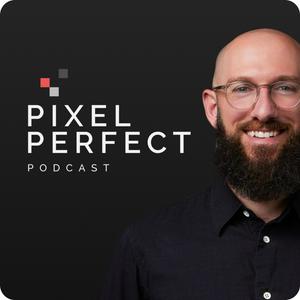
About Pixel Perfect Podcast
Welcome to The Pixel Perfect Podcast, presented by White Rabbit Group. Join us for engaging discussions with leading creatives and entrepreneurs. We delve into their experiences in design and business, offering you meaningful insights and advice.
Podcast websiteListen to Pixel Perfect Podcast, All-In with Chamath, Jason, Sacks & Friedberg and many other podcasts from around the world with the radio.net app
Get the free radio.net app
- Stations and podcasts to bookmark
- Stream via Wi-Fi or Bluetooth
- Supports Carplay & Android Auto
- Many other app features
Get the free radio.net app
- Stations and podcasts to bookmark
- Stream via Wi-Fi or Bluetooth
- Supports Carplay & Android Auto
- Many other app features

Pixel Perfect Podcast
Scan code,
download the app,
start listening.
download the app,
start listening.
 South Africa