
Listen to this podcast for free in the app: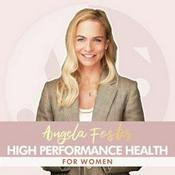 Download for free in the App Store
radio.net
Sleep timer
Save favourites
624 episodes
Professor Tim Spector - Perimenopause Mood Swings? Fix Your Gut First (3 Simple Steps)
2026/10/26 | 49 mins.Prof. Tim Spector and I talk about gut health, mood, inflammation and fermented foods in perimenopause, and the three diet changes he recommends to start today.
Microbiome pioneer, ZOE co-founder and Good Mood Food author Prof. Tim Spector explains why midlife mood changes are not psychosomatic: shifting hormones alter your gut microbes, which changes the inflammation and metabolic signals reaching your brain through the vagus nerve. He shares why serotonin was never the real lever, why inflammation and stable metabolism are, and why people in ZOE’s studies report better mood and energy within two weeks of changing their diet.
His three changes: 30 plants a week, three fermented foods a day and an overnight gut rest. We also cover ultra-processed food, protein versus fiber, HRT and dementia risk.
WHAT YOU’LL LEARN
- How perimenopause changes your gut and your mood
- Why inflammation matters more than serotonin
- Which ultra-processed foods to cut first
- His three gut changes to start today
TIMESTAMPS
00:00 Intro: Is Perimenopause Changing Your Gut and Your Mood?
07:20 Mood and Energy Lift Within Two Weeks of Changing Your Diet
09:32 How Shifting Hormones Change Your Gut Microbes
13:34 Why Serotonin Was the Wrong Target, and What Replaces It
19:07 30 Plants a Week, Gut Health and Dementia Risk
23:40 The Best Fermented Foods (and Is Cheese Good for You?)
30:32 Ultra-Processed Food, Diet Coke and What to Ignore on a Label
39:31 Protein vs Fiber: Why Chasing Protein Can Backfire
40:31 Diet, HRT and Exercise: What Each Does to Your Microbiome
45:39 Organic Food, Pesticides and What Actually Matters
48:48 His 3 Gut Changes to Start and 3 Things to Stop
VALUABLE RESOURCES
- Follow Prof. Tim on Instagram: https://www.instagram.com/tim.spector/
- Want to see what your gut microbes are doing? Try ZOE’s app and gut test: https://zoe.com/
- Explore Prof. Tim’s books, research and latest work: https://www.tim-spector.com/
- Prof. Tim’s new book has over 100 recipes, packed with plants and ferments, designed to lift your mood: https://www.amazon.co.uk/Good-Mood-Food-friendly-bestselling/dp/1787336476
ABOUT THE GUEST
Tim Spector, MD, is Professor of Epidemiology at King’s College London and co-founder of ZOE, the nutrition science company leading the gut health revolution. He is the bestselling author of The Diet Myth, Spoon-Fed, Food for Life, Food for Life Cookbook and Ferment. With a focus on cutting-edge science, and honoured with an OBE for his impactful work in fighting Covid-19, Tim stands at the forefront of his field. The original pioneer of microbiome research, he is among the top 100 most-cited scientists in the world.Does HRT Actually Help You Build Muscle And Lose Visceral Fat? - Dr. Federica Amati
2026/10/22 | 7 mins.Can HRT actually help women in midlife build muscle and reduce visceral fat — or is lifestyle still doing most of the heavy lifting? In this conversation, Dr. Federica Amati explains what her research found, where HRT may be helpful, and why it should be seen as one tool rather than the main driver of body composition.
She also explains why building muscle, eating well, moving regularly and protecting sleep before menopause can create a valuable buffer for later life. And for women already well into menopause, her message is equally important: meaningful change is still possible, but the fundamentals need to be built consistently into everyday life.
KEY TAKEAWAYS
HRT Is Not a Muscle-Building Shortcut — Dr. Amati says HRT alone will not increase muscle mass or reduce visceral fat.
HRT May Still Help Indirectly — Better symptom control and sleep can give women more energy to exercise and move regularly.
Lifestyle Remains the Biggest Driver — Exercise, nutrition, sleep and daily movement have a greater impact on muscle, bone and visceral fat.
Build Muscle Before Menopause If You Can — Going into menopause with more muscle and strong habits gives you a better starting point.
It Is Never Too Late — Women who are years into menopause can still transform their health.
Want to go deeper? Start here:
Take the BioSyncing Quiz to help you understand what’s actually happening in your body — and how to fix it.
👉 https://biosyncing.scoreapp.com/
🌸Reset your hormones, restore your energy, and reconnect with your body in just 21 days.
👉 https://www.highperformance-health.com
💌 Fresh Start Sunday Newsletter
Your weekly 3-minute guide to creating the healthiest, most vibrant version of you.
Each Sunday, get one simple habit to boost energy, balance hormones, and enhance longevity - joined by 25,000+ women worldwide.
👉 https://angelafosterperformance.com/
🥗The Ultimate Guide to Creatine for Women -
👉 https://academy.angelafosterperformance.com/creatine-guide
⚡️ 10 Habits that Helped me reverse my Biological Age by 25 years in Perimenopause -
👉 https://academy.angelafosterperformance.com/10-habits-optin-page
About Me:
Angela Foster is a corporate lawyer turned health and performance coach, keynote speaker, and creator of the BioSyncing:registered: Method. Host of the High Performance Health Podcast with 500+ episodes featuring world-leading experts in longevity, hormones, neuroscience, and female performance science.
The most accomplished women have everything handled on the outside, but their hormones, energy, and nervous system are quietly paying the price.
The old playbook stops working in midlife.
This channel is designed to help high-performing women optimise energy, hormones, cognitive performance, and longevity using science-backed strategies built around female biology.
Angela’s personal mission is to help 1 million ambitious women perform better, age slower, and never have to choose between success and their health.
If you want to be part of that mission, make sure you subscribe and share the channel with a woman you care about.
Follow me for daily health and performance tips:
Instagram: @angelasfoster
Facebook: @AngelaFosterPerformanceWhy Women Over 40 Shouldn't Skip Cardio (Even for Belly Fat) | Dr Alyssa Olenick
2026/10/18 | 56 mins.Dr. Alyssa Olenick on why cardio doesn't cause belly fat, what fasted training really does for fat loss, and how women in midlife should balance lifting, cardio and carbs.
Exercise physiologist and women's fitness researcher Dr. Alyssa Olenick breaks down the most common training myths aimed at women in midlife. She explains why the cortisol released during exercise is a fuel signal rather than a fat-storage trigger, why the extra fat burned in a fasted session adds up to grams rather than real fat loss, and why fat oxidation drops as estrogen declines in menopause. She also shares how to split 150 minutes of cardio between easy and hard sessions, why cutting volume rather than intensity helps recovery in perimenopause, and how much protein and carbohydrate active women actually need.
WHAT YOU'LL LEARN
- Why adding cardio reduces, rather than increases, body fat in midlife women
- The difference between fat burning and fat loss, and why fasted workouts only shift a few grams
- How to fit one or two harder sessions into a busy week and fill the rest with easy movement
- Why Dr. Olenick would rather you do two hard sets than five easy ones when recovery gets tougher
TIMESTAMPS
00:00 - Intro: Why Cardio Isn't Making Women Gain Belly Fat
05:41 - Cortisol, Fasted Training and the Best Time of Day to Work Out
10:42 - Fat Burning vs Fat Loss, Metabolic Flexibility and Refueling After Training
20:54 - Menopause, Fat Oxidation and What HRT Can and Can't Do
24:49 - How to Split 150 Minutes of Cardio Between Easy and Hard Sessions
31:37 - Programming Lifting and HIIT for Recovery: Less Volume, More Intensity
42:54 - Protein, Carbs and a Simple Plan to Start Lifting
52:16 - The Supplements Dr. Olenick Actually Takes
VALUABLE RESOURCES
Train With Alyssa: https://www.thelyssmethod.com/
Follow Alyssa on Instagram: https://www.instagram.com/doclyssfitness/
Subscribe on her YouTubechannel: https://www.youtube.com/@doclyssfitness
Listen to her Podcast: https://doclyssfitness.com/podcast/
Learn more at https://doclyssfitness.com/
A BIG thank you to our sponsor who makes the show possible:
🧬 Stride - Find out your biological age and how your daily habits are influencing it with DNA, bloodwork and microbiome testing with a Stride One membership 👉 https://www.getstride.com/angela/ for 10% off
ABOUT THE GUEST
Dr. Alyssa Olenick, PhD in Exercise Physiology, specializes in Exercise Science, Metabolism, and Female Physiology, bringing real, research-backed fitness insights to the everyday person looking to train smarter. Known for bridging the gap between strength and endurance, she helps people crush big fitness goals, get healthier, and have fun doing it. All while cutting through the noise of misinformation on how to train, recover, and feel your best.How much protein do you actually need to build muscle? | Eric Helms
2026/10/15 | 8 mins.How much protein do you really need to build muscle — and do women in perimenopause or menopause need more? In this conversation, Eric Helms breaks down the evidence behind some of the most common protein recommendations, including the widely quoted 1.6 grams per kilogram of body weight, when higher intakes may be useful, and why your starting point matters more than obsessing over a supposedly perfect number.
Eric also explains how protein needs change when you’re dieting and trying to preserve lean mass, why resistance training matters far more than squeezing out the last few percentage points from protein intake, and whether women really need 30–50 grams of protein at every meal to stimulate muscle protein synthesis.
KEY TAKEAWAYS
1.6 g/kg Is a Strong Target — For most people trying to build muscle, around 1.6 grams of protein per kilogram of body weight is a very reasonable daily target.
More Isn’t Always Better — Benefits continue to diminish as protein intake gets higher.
Dieting Changes Your Needs — When in a calorie deficit, moving closer to 2 g/kg may help preserve muscle mass.
Your Starting Point Matters — Moving from a low protein intake to a moderate one may produce a bigger benefit than pushing an already high intake even higher.
Training Comes First — Progressive, intense resistance training is more important for building muscle than maximising protein intake.
Per-Meal Protein Is Often Overcomplicated — Daily protein intake and distributing it across at least three meals matters more than chasing an exact dose at every sitting.
30–40 g Per Meal Can Work Well — If your daily protein target is around 120 grams, splitting it relatively evenly across three meals is a practical approach.
Want to go deeper? Start here:Take the BioSyncing Quiz to help you understand what’s actually happening in your body — and how to fix it. https://biosyncing.scoreapp.com/
Reset your hormones, restore your energy, and reconnect with your body in just 21 days. https://www.highperformance-health.com
Fresh Start Sunday NewsletterYour weekly 3-minute guide to creating the healthiest, most vibrant version of you.Each Sunday, get one simple habit to boost energy, balance hormones, and enhance longevity - joined by 25,000+ women worldwide. https://angelafosterperformance.com/
The Ultimate Guide to Creatine for Women - https://academy.angelafosterperformance.com/creatine-guide️
10 Habits that Helped me reverse my Biological Age by 25 years in Perimenopause - https://academy.angelafosterperformance.com/10-habits-optin-page
About Me:Angela Foster is a corporate lawyer turned health and performance coach, keynote speaker, and creator of the BioSyncing:registered: Method.
Host of the High Performance Health Podcast with 500+ episodes featuring world-leading experts in longevity, hormones, neuroscience, and female performance science.
The most accomplished women have everything handled on the outside, but their hormones, energy, and nervous system are quietly paying the price.The old playbook stops working in midlife.
This channel is designed to help high-performing women optimise energy, hormones, cognitive performance, and longevity using science-backed strategies built around female biology.
Angela’s personal mission is to help 1 million ambitious women perform better, age slower, and never have to choose between success and their health.If you want to be part of that mission, make sure you subscribe and share the channel with a woman you care about.
Follow me for daily health and performance tips:Instagram: @angelasfosterFacebook: @AngelaFosterPerformanceLow Energy After 40? Why Hormones Aren't the Whole Story | Dr. Kien Vuu
2026/10/13 | 50 mins.This episode is brought to you by Solaray
Solaray, is an eight-product longevity supplement system created to support cellular energy, muscle health, healthy ageing*.
👉 Save 30% on Unlimit -Targeted formulas to support cellular energy, muscle health, and healthy ageing* Click the link https://solaray.com/FOSTER and use code FOSTER
*These statements have not been evaluated by the Food and Drug Administration. These products are not intended to diagnose, treat, cure or prevent any disease. If you purchase using this link or discount code I may receive a small commission.
Dr. Kien Vuu and I talk about cellular energy, estrogen, NAD+ and spermidine in midlife, and how to build more energy today while staying strong and sharp at 80.
Physician and Thrive State author Dr. Kien Vuu breaks down the three parts of one energy system behind midlife fatigue: mitochondria, insulin sensitivity and metabolic flexibility. He explains why falling estrogen hits mitochondrial efficiency, glucose metabolism, muscle and bone at the same moment life demand peaks, why fasting glucose and HbA1c move late, and how he sorts longevity compounds into mapped, emerging and frontier science before deciding whether glutathione, NAD or spermidine earn a place on top of the foundations.
WHAT YOU'LL LEARN
- Why the felt sense of low energy shows up long before fasting glucose or HbA1c move
- What falling estrogen does to mitochondrial efficiency, glucose metabolism and muscle mass at the exact moment life demand peaks
- How to sort any longevity compound into mapped, emerging or frontier science before you spend a penny
- The four questions Dr. Vuu asks before adding a supplement, and why he says you have to earn it first
TIMESTAMPS
00:00 - Intro: Why Your Energy Drops in Midlife Before Anything Shows on a Blood Test
10:02 - Perimenopause, Estrogen and What Changes at the Cellular Level After 40
16:25 - Epigenetics, the Five Foundations, and How to Judge a Longevity Supplement
25:51 - Glutathione, NAD, NADH and NMN for Oxidative Stress and Cellular Energy
35:09 - Spermidine, Autophagy and the Senescent Cell Frontier
43:04 - Where a Busy Woman in Midlife Should Actually Start
VALUABLE RESOURCES
Dr. Kien Vuu’s website https://kienvuu.com/
Thrive State (Dr. Kien's book), free PDF: https://thrivestatestarter.com
Follow Dr. Kien Vuu on Instagram: https://www.instagram.com/doctorvmd
Listen to Dr. Kien Vuu’s Podcast: https://podcasts.apple.com/ph/podcast/thrive-state-podcast/id1548233524
ABOUT THE GUEST
Dr. Kien Vuu is a physician, human performance and longevity expert, and the author of Thrive State. He hosts the Thrive State podcast and is a brand partner and advisor to Solaray. A former chief of interventional radiology, he burnt out in his mid-30s and developed type 2 diabetes and high blood pressure. That experience drives his mission to help people build energy and longevity through five pillars of health: physical, mental, emotional, social and spiritual.
More Alternative Health podcasts



Trending Alternative Health podcasts
About High Performance Health
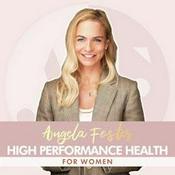
High Performance Health is the podcast for ambitious women in midlife who want to stop sacrificing their health for success.
I'm Angela Foster, a former corporate lawyer turned High Performance Health Coach and creator of the BioSyncing® Method.
After years in the corporate world, I realised there was no roadmap for women like me.
No one was talking about how our biology changes in midlife, or what to do when the strategies that always worked suddenly stopped working.
So I went searching for answers, and created this podcast to bring the best conversations together in one place.
Every week, I interview world-leading experts and share solo episodes to help you optimise your energy, hormones, metabolism, strength, sleep and longevity, strategies you can apply immediately.
Because the future of female performance isn't about pushing harder. It's about building your biological capacity.
To get your free personalised energy and resilience score, visit https://biosyncing.scoreapp.com/
Podcast websiteListen to High Performance Health, Grounded Wellness by Primally Pure and many other podcasts from around the world with the radio.net app

Get the free radio.net app
- Stations and podcasts to bookmark
- Stream via Wi-Fi or Bluetooth
- Supports Carplay & Android Auto
- Many other app features
Get the free radio.net app
- Stations and podcasts to bookmark
- Stream via Wi-Fi or Bluetooth
- Supports Carplay & Android Auto
- Many other app features

High Performance Health
Scan code,
download the app,
start listening.
download the app,
start listening.
High Performance Health: Podcasts in Family
 South Africa

