

Listen to this podcast for free in the app: Download for free in the App Store
radio.net
Sleep timer
Save favourites
7 episodes
Why Ethics Is Foundational for Cyber Resilience
2026/07/30 | 23 mins.In this episode of Decoding Ethics, host Jeanne Viljoen sits down with Caroline McGroary member of Chartered Accountants Ireland, and Fulbright Scholar in Cybersecurity Risk Management, to explore how organizations can build trust and resilience in a world reshaped by AI and cybersecurity risk.
Caroline traces her path from training with Deloitte in Ireland to a Fulbright Scholarship in the US, where she researched the accountancy profession's role in cybersecurity risk management — experience she has since carried into board, audit, and risk committee work. Drawing on the five fundamental principles of the Code — integrity, objectivity, professional competence and due care, confidentiality, and professional behaviour — she explains how they serve as a practical guide for organizations navigating AI adoption, from shadow AI risks to incident response planning, illustrated through her fire drill analogy.
The conversation also covers why AI is set to elevate, rather than replace, the accountant's role, the importance of tailoring cybersecurity training by function, and why psychological safety — not a culture of fear — is essential to managing cyber risk. Caroline closes with three takeaways for the profession: the role everyone has to play in building trust, the ethical code as a guiding framework, and the importance of committing to lifelong learning.
Takeaways
· Ethical leadership starts with the five fundamental principles — integrity, objectivity, professional competence and due care, confidentiality, and professional behaviour — as a practical framework for AI adoption, not just a compliance checklist.
· Shadow AI and shadow IT are growing risks: unapproved tools can expose confidential data with no oversight over where it resides.
· AI is elevating the accountant's role, not replacing it — professional judgment and skepticism matter more than ever.
· Cybersecurity training should be tailored by role, from general awareness to finance-specific risks like deep fake impersonation and voice cloning.
· Culture and psychological safety are key: people need to feel safe reporting mistakes rather than fearing blame.
· The profession's path forward rests on building trust, following the ethical code, and committing to lifelong learning.
Chapter Titles
00:09 Introduction to Caroline McGroary
01:32 From Deloitte to a Fulbright Scholarship in Cybersecurity Risk
03:38 The five ethical pillars as a guiding framework for AI
07:46 Shadow AI, evolving cyber threats, and the fire drill analogy
12:03 Why AI elevates, not replaces, the accountant's role
15:16 Tailoring cybersecurity training by role
16:52 Psychological safety and moving beyond a culture of fear
19:25 Skills for the next generation of finance professionals
21:06 Three takeaways: trust, ethics, and lifelong learning
#DecodingEthics #AccountingEthicsBuilding Trust in AI: Why Governance Matters More Than Speed
2026/06/26 | 24 mins.Trust is not a byproduct of AI adoption—it's a prerequisitefor scaling it successfully.
In this episode, Samantha Gloede, Global Head of RiskServices and Head of Trusted AI at KPMG, joins host Jeanne Viljoen to explore how organizations can govern AI responsibly while accelerating innovation. Together, they examine why leading companies are embedding governance directly into workflows, why accountability matters as AI systems coordinate across teams and decisions, and why the long-term competitive advantage belongs to those who can balance speed with strong governance. A conversation on trust, transparency, and what it takes to build confidence in an AI-enabled future.
Key Takeaways
Trust as a prerequisite for scaling AI, not a byproduct of it
Why governance enables innovation rather than slowing it down
Embedding accountability into workflows—not bolting it on afterward
The shift from trust being assured to trust being evidenced
Where AI systems fail: at the seams where they interact, not within single tools
Scaling governance alongside AI complexity to prevent trust erosion
What regulators and standard setters need to clarify about AI-enabled professional judgment
Chapter Titles
00:00 Welcome: Trust, Governance, and the Future of AI
03:55 The Shift from AI Adoption to Governance
08:49 Human Accountability in AI Decision-Making
13:41 AI-Enabled Professional Judgment: Where RegulationNeeds Clarity
18:33 Where Trust Breaks: The Seams Between Systems
22:20 The Core Message: Trust Is a Prerequisite, Not aByproductRethinking Accountancy Education in the Age of AI
2026/05/14 | 35 mins.As artificial intelligence reshapes the accountancyprofession, the question is no longer whether change is happening, but whether the profession is keeping pace.
In this episode, Jeanne Viljoen is joined by Bruce Vivian, Head of Education, MemberMonitoring and Development at IFAC, and a Chartered Accountant (SA) with deep expertise in accountancy education, capacity building, and global professional development, to explore how accountancy education must evolve to prepare ethical professionals for a rapidly changing world.
They discuss how technology is shifting the balance betweentechnical expertise and core capabilities such as critical thinking, curiosity, and communication, and why developing strong ethical judgment remains central to the profession’s role in serving the public interest.
The conversation also examines the shared responsibility ofuniversities, firms, and professional bodies in shaping the next generation of accountants, the expectations of emerging leaders, and the risks of failing to adapt education to the realities of technology-driven profession.
Takeways
- The shift from optimizing for efficiency to prioritizing quality,with efficiency as a byproduct
- The importance of understanding and identifying risks
- Rethinking professional competence in a world where no individualcan master all relevant knowledge
- The role of human oversight in technology-enabledworkflows, and how it should be applied based on risk
- The need for strong governance and process design toenable responsible innovation
Chapter Titles
00:00 Introduction to Ethics in the Accountancy Profession
03:17 How Technology Is Reshaping Accountancy Skills
08:40 The Role of Educational Institutions
13:37 How Firms can Reinforce Ethical Behavior
17:29 The Role of Professional Bodies in Guiding Ethics
19:44 Balancing Technical Expertise with CoreCapabilities
25:02 Using AI to Teach and Apply Ethics
28:55 Insights from Emerging Leaders
31:25 The Risks of Failing to Rethink Education
33:55 Final Reflections on Ethics and Education
#DecodingEthics #AccountingEthicsThe Biggest Risk Isn’t AI – It’s Missing the Risk
2026/04/09 | 41 mins.This episode explores how professionals can manage theimpact of emerging technologies, particularly AI and automation. A clear message emerges: navigating rapid change requires a return to basics and to the fundamental principles that underpin trust and the credibility of theprofession.
Jeanne Viljoen is joined by Danielle Supkis Cheek, a globalleader in cloud-enabled audit, financial reporting, and data analytics solutions. Together, they reflect on how, while technology is transforming how work is performed, the underlying ethical principles remain unchanged, offeringa stable lens through which professionals can reframe problems and manage the pressures these technologies place on judgment, risk management, and competence.
Takeways
- The shift from optimizing for efficiency to prioritizingquality, with efficiency as a byproduct
- The importance of understanding and identifying risks
- Rethinking professional competence in a world where noindividual can master all relevant knowledge
- The role of human oversight in technology-enabled workflows, and how it should be applied based on risk
- The need for strong governance and process design to enableresponsible innovation Chapters
00:00 Introduction to Ethics in Accountancy
01:48 Danielle’s Journey into AI, Analytics, and Assurance
04:26 The Impact of Technology on Accounting
07:07 Concerns and Misconceptions about AI and Automation
11:59 Ethical Risks in Emerging Technologies
14:22 Professional Competence and Due Care in the Age of AI
19:17 Human Oversight in AI: What “Human in the Loop” ReallyMeans
25:10 Navigating Automation Bias and Process Design
30:04 Balancing Innovation and Ethics
34:49 Adapting Ethical Standards for Emerging Technologies
38:18 Recognizing Bias and Expanding Decision-MakingPerspectives
40:57 Closing Remarks and Key Takeaways
#DecodingEthics #AccountingEthicsAI and Ethics in Accounting: The Need for Human Judgment
2026/03/12 | 29 mins.This episode explores the ethical implications of artificial intelligence in the accounting profession. Jeanne Viljoen is joined by Alistair Brisbourne and Sarah Lane from the ACCA Policy and Insights team to discuss real-world dilemmas finance professionals are beginning to face.
Drawing on insights from ACCA’s recent AI Monitor report, the conversation examines how AI is already embedded in everyday accounting tools, the ethical risks this creates, and why professional judgment remains essential. The discussion also highlights practical guidance for navigating issues such as data confidentiality, automation bias, and the governance challenges organizations face when adopting AI.
A central message emerges from the conversation: while AI is transforming how accountants work, ethical responsibility and accountability remain firmly human.
If this episode made you think differently about the future of technology and ethics, follow Decoding Ethics for more conversations on how trust is built in a tech‑driven world.
Takeaways
- How AI is already embedded in the daily work of professional accountants
- Ethical threats from AI, including bias, accountability, and data privacy
- Applying IESBA's fundamental principles (integrity, objectivity, professional competence, confidentiality, professional behavior) when using AI
- The importance of AI literacy and ethical judgment for accountants
- The role of ethical leadership and organizational culture in supporting responsible AI use
Chapters
00:00 Introduction to AI in Accountancy
05:44 Key Findings from the ACCA AI Monitor Report
11:59 Ethical Dilemmas Emerging from AI Use
18:04 Professional Competence and AI Literacy
23:50 Ethical Leadership in AI Adoption
28:22 Conclusion and Key Takeaways
#AIethics #ResponsibleAI #AccountingProfession #Ethics
More Technology podcasts
 Waveform: The MKBHD PodcastHobbies, Leisure, News, Tech News, Technology
 All-In with Chamath, Jason, Sacks & FriedbergBusiness, Entrepreneurship, Health & Wellness, Investing, Technology
 Dwarkesh PodcastScience, Technology
 Search EngineBusiness, Society & Culture, Technology
 Lex Fridman PodcastPhilosophy, Science, Society & Culture, Technology
 Darknet DiariesTechnology
 AcquiredBusiness, Investing, Technology
 Hard ForkTechnology
 The VergecastNews, Tech News, Technology
 The AI Daily Brief: Artificial Intelligence News and AnalysisTechnology
Trending Technology podcasts
 Triple ClickArts, Society & Culture, Technology
 This Week in Tech (Audio)News, Tech News, Technology
 What's Next with Aki AnastasiouTechnology
 American Alchemy with Jesse MichelsScience, Society & Culture, Technology
 Reply AllDocumentary, Society & Culture, Technology
- Dwarkesh PodcastScience, Technology
 Terms of Service with Clare DuffyBusiness, Technology
 AI + a16zBusiness, Entrepreneurship, Technology
 Infinite LoopsBusiness, Entrepreneurship, Technology
 There Are No Girls on the InternetSociety & Culture, Technology
 What's Your Problem?Business, Entrepreneurship, Technology
 Everyday AI Podcast – An AI and ChatGPT PodcastBusiness, Entrepreneurship, News, Tech News, Technology
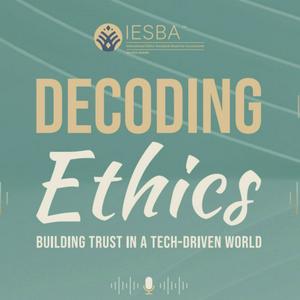
About Decoding Ethics: Building trust in a tech-driven world
A podcast of the International Ethics Standards Board for Accountants (IESBA) exploring the technological and ethical risks and opportunities shaping the future of accounting and finance. Through in-depth conversations with global thought leaders, Decoding Ethics helps professionals navigate change and lead with integrity in a tech-driven world.
Podcast websiteListen to Decoding Ethics: Building trust in a tech-driven world, Waveform: The MKBHD Podcast and many other podcasts from around the world with the radio.net app
Get the free radio.net app
- Stations and podcasts to bookmark
- Stream via Wi-Fi or Bluetooth
- Supports Carplay & Android Auto
- Many other app features
Get the free radio.net app
- Stations and podcasts to bookmark
- Stream via Wi-Fi or Bluetooth
- Supports Carplay & Android Auto
- Many other app features

Decoding Ethics: Building trust in a tech-driven world
Scan code,
download the app,
start listening.
download the app,
start listening.
 South Africa