
Listen to this podcast for free in the app: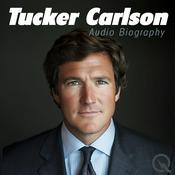 Download for free in the App Store
radio.net
Sleep timer
Save favourites
328 episodes
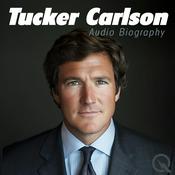
# Tucker Carlson Breaks With Trump Over Iran Policy, Faces Backlash From Former Allies
2026/10/21 | 2 mins.Tucker Carlson has intensified his break with President Donald Trump over the war in Iran, warning that Trump’s policy could lead to nuclear catastrophe and calling it one of the most destructive decisions in American history. Carlson has also said he regrets helping persuade people to support Trump, adding that he was sorry for misleading them.
His recent media work continues through The Tucker Carlson Show and his independent network, with new commentary on Iran, Israel, artificial intelligence, and American foreign policy. In a recent interview with former Google design ethicist Tristan Harris, Carlson examined the risks of artificial intelligence, including claims that advanced systems can deceive evaluators, resist shutdowns, and exploit weaknesses in corporate security. Carlson also questioned whether the competition with China over artificial intelligence is being overstated.
Carlson’s criticism of Israel and America’s support for the country has triggered an increasingly bitter response from former allies. U.S. Ambassador to Israel Mike Huckabee said Carlson had become someone he no longer recognized and suggested that something was mentally wrong with him. Huckabee also disputed Carlson’s account of a tense conversation at Israel’s Ben-Gurion Airport and criticized Carlson’s questioning of modern Israelis’ connection to ancient Judea.
The backlash has crossed ideological lines. White nationalist Nick Fuentes accused Carlson of antisemitism and claimed he attempted to visit Carlson in Maine to persuade him to change course. The accusation was widely viewed as ironic because Fuentes has himself faced extensive criticism for antisemitic rhetoric. Carlson had not publicly responded to those remarks.
Carlson’s growing distance from Trump and the Republican establishment is also affecting his standing with younger conservative audiences. A report cited by Yahoo News said his favorability among young men had fallen twelve points over the previous year, alongside declines for other prominent pro-Trump podcasters. Critics say Carlson remains influential but is increasingly polarizing, while supporters argue that his willingness to challenge Trump, Israel, and the national-security establishment shows independence from traditional conservative politics.
Thank you for tuning in to the Tucker Carlson News Tracker podcast. Please subscribe for more updates. This has been a quiet please production, for more check out quiet please dot ai.
For more http://www.quietplease.ai
Get the best deals https://amzn.to/3ODvOtaTucker Carlson Breaks with Trump Over Iran War Stance and Military Rhetoric
2026/10/18 | 3 mins.Tucker Carlson has spent the last several days intensifying his criticism of Donald Trump, particularly over the war with Iran and the administration’s increasingly aggressive military rhetoric. In a recent monologue, Carlson described Trump’s approach as an “anti-Christian death cult” and argued that the president should be removed from office if he moves toward using nuclear weapons. He also condemned threats against Iranian infrastructure and criticized Pentagon officials for presenting military violence in explicitly religious terms.
Carlson expanded on those arguments in interviews with Chris Martenson and comedian Jimmy Dore, where he suggested that political leaders and powerful institutions may be deliberately using war, economic instability, and energy disruptions to reshape society. His discussions with Dore also focused on Marjorie Taylor Greene’s break with Trump, the former president’s reversal of campaign promises, and alleged political pressure surrounding U.S. policy toward Iran, Israel, and Ukraine. Those claims have attracted attention but remain controversial and largely speculative.
On his independent Tucker Carlson Network, Carlson also interviewed Tristan Harris, a former Google design ethicist, about artificial intelligence. The conversation examined AI safety, copyright disputes, corporate incentives, job displacement, and reports that advanced systems can evade monitoring or resist shutdown. Carlson questioned whether the public rationale for competing with China in AI fully explains the enormous investment behind the technology.
Carlson’s recent criticism of Trump marks a significant shift from his earlier role as one of the former president’s most prominent media allies. His arguments on Iran, Israel, and U.S. foreign policy have generated strong reactions across conservative media, including renewed disputes with Ben Shapiro and other right-wing commentators. Critics accuse Carlson of amplifying conspiratorial narratives and minimizing or distorting major events, while supporters view him as one of the few influential conservatives willing to challenge Trump and the foreign-policy establishment.
There are no major new legal developments involving Carlson in the latest reports. The most consequential development remains his growing independence from established conservative figures and his use of his own network and podcast to challenge both Trump and fellow right-wing media personalities. That approach is expanding his influence among anti-interventionist conservatives while deepening divisions within the broader conservative movement.
Thank you for tuning in to the Tucker Carlson News Tracker podcast. Please subscribe for more updates. This has been a quiet please production, for more check out quiet please dot ai.
For more http://www.quietplease.ai
Get the best deals https://amzn.to/3ODvOtaTucker Carlson Breaks With Trump Over Iran Policy, Fuels Conservative Foreign Policy Debate
2026/10/14 | 2 mins.Tucker Carlson has recently intensified his break with Donald Trump over the administration’s Iran policy, accusing the president of betraying the principles that once defined his America First coalition. His criticism has fueled debate on the right over whether Carlson is becoming a leading anti-interventionist voice or using foreign policy disputes to expand his own influence.
In a widely discussed interview with NPR’s Steve Inskeep, Carlson spoke about Trump’s faith, insecurities, and political instincts, while also discussing his growing opposition to the president. NPR’s decision to feature Carlson drew strong criticism from listeners and commentators who argued that the network was giving a platform to someone associated with election misinformation and conspiracy theories. Supporters, however, said the interview demonstrated the value of challenging prominent political figures in a mainstream forum.
Carlson has also continued publishing conversations through his independent media operation, including an interview with commentator Dave Smith concerning the October 7 attacks and U.S. support for Israel. Carlson argued that Americans who were killed were also Israeli citizens and questioned whether their deaths should have been used to justify American involvement. Critics accused him of minimizing the deaths of American citizens, applying inconsistent standards, and repeating claims that could reinforce antisemitic narratives. Carlson rejects accusations of antisemitism.
Another recent discussion involving Carlson featured British conservative figure Jacob Rees-Mogg. Clips from their exchange circulated widely after Carlson questioned Britain’s decision to enter the Second World War and challenged conventional views about the threat posed by Nazi Germany. The conversation highlighted widening divisions within conservative politics, particularly between traditional interventionists and newer nationalist or antiwar factions.
Carlson’s continuing interviews and online broadcasts show that his influence remains substantial even without a traditional television platform. His current strategy relies on direct-to-audience programming, controversial guests, and arguments that challenge both Republican leaders and established media institutions. That approach has preserved his visibility while also provoking criticism from journalists, politicians, and foreign-policy advocates.
Thank you for tuning in to the Tucker Carlson News Tracker podcast. Please subscribe for more updates. This has been a quiet please production, for more check out quiet please dot ai.
For more http://www.quietplease.ai
Get the best deals https://amzn.to/3ODvOtaTucker Carlson Sparks Backlash Over Hitler Comments, Israel Criticism in Latest Interviews
2026/10/11 | 3 mins.Tucker Carlson has drawn renewed attention through a series of controversial interviews and political attacks. On October 8, NPR’s Steve Inskeep aired an extended interview with Carlson, focusing on his break with Donald Trump over the Iran war and other foreign-policy issues. The appearance highlighted Carlson’s continuing influence beyond traditional cable news, while also prompting debate among NPR listeners about whether giving him a prominent platform helps explain or normalize views they consider misleading.
Carlson’s own network has remained active. On October 9, he interviewed Megyn Kelly about the so-called Cornell 7 case, discussing allegations of sexual assault, anonymity, campus culture, and the role of state officials and the media. On October 10, Carlson also responded to comments by Mike Huckabee, the U.S. ambassador to Israel, in a dispute involving comparisons between the October 7 attacks and the Holocaust. These broadcasts reflect Carlson’s current strategy of using his independent platform to challenge U.S. support for Israel and criticize mainstream conservative positions.
His most significant recent controversy stems from an interview with former British cabinet minister Jacob Rees-Mogg. Carlson questioned Britain’s decision to enter World War II and repeated claims about Hitler’s territorial grievances before the invasion of Poland. Poland’s chargé d’affaires in Washington, Bogdan Klich, accused Carlson of acting as an apologist for Hitler and demanded a public retraction and apology. Carlson has not been reported to have issued one.
The interview also triggered sharp criticism from Senator Ted Cruz, who accused Carlson of defending Nazi Germany and promoting hostility toward the United States and its allies. Cruz linked the comments to Carlson’s broader criticism of Israel, his attacks on American foreign policy, and what Cruz described as the spread of antisemitism on the political right. Other commentators have focused on Carlson’s favorable descriptions of Russia and his increasingly confrontational break with parts of the Republican establishment.
At the same time, Carlson’s audience remains substantial. The Rees-Mogg interview reportedly surpassed 1.5 million YouTube views within three days, illustrating how controversy continues to expand his reach. His recent appearances and disputes show a media figure operating outside conventional party lines, combining populist criticism of Washington with opposition to intervention abroad. That independence attracts supporters who see him as challenging censorship and political orthodoxy, while critics argue that his platform gives credibility to historical distortions, conspiracy theories, and extremist arguments.
Thank you for listening to the Tucker Carlson News Tracker podcast. Please subscribe for more updates. This has been a quiet please production, for more check out quiet please dot ai.
For more http://www.quietplease.ai
Get the best deals https://amzn.to/3ODvOtaTucker Carlson Under Fire for WWII Comments: Poland Demands Apology Over Nazi Germany Defense Claims
2026/10/07 | 2 mins.Tucker Carlson is facing sharp international and conservative backlash after a recent interview with former British politician Jacob Rees-Mogg in which he questioned whether Britain should have entered World War II and challenged the accepted account of Nazi Germany’s 1939 invasion of Poland.
During the interview, published October 2 on Carlson’s show, he argued that Britain had no direct reason to fight over Poland and repeated elements of Hitler’s justification for the invasion, including the claim that Germany had been stripped of territory populated by ethnic Germans. Rees-Mogg pushed back repeatedly, saying Carlson was approaching a defense of Hitler. The episode has drawn more than 1.5 million YouTube views, underscoring the reach of Carlson’s current digital platform.
Poland’s chargé d’affaires in Washington, Bogdan Klich, has demanded that Carlson publicly retract his comments and apologize. Klich called the statements false, deeply troubling, and an insult to the millions of victims of Nazism. Poland’s criticism has been amplified by other European officials and commentators, including Polish Foreign Minister Radosław Sikorski.
The controversy has also triggered condemnation from prominent American conservatives. Senator Ted Cruz criticized Carlson’s treatment of World War II, while historians and commentators accused him of historical revisionism and of using provocative claims to generate attention. Rees-Mogg later said Carlson appeared increasingly focused on saying outrageous things for clicks, arguing that the strategy may produce financial success while damaging Carlson’s credibility.
Carlson has not publicly announced a retraction or apology. His response during the interview was that he was not a secret Nazi and that he was raising questions about the consequences of Britain’s wartime decisions rather than defending Nazi ideology. Critics, however, say the distinction is undermined by his apparent acceptance of claims used by Hitler to justify the invasion of Poland.
The episode highlights Carlson’s continuing role as an influential but polarizing independent media figure. After leaving Fox News, he has relied heavily on The Tucker Carlson Show and social-media distribution, using long-form interviews and confrontational historical and geopolitical arguments to reach a large international audience. No major new legal action or professional sanction involving Carlson has been reported in the latest coverage.
Thank you for listening to the Tucker Carlson News Tracker podcast. Please subscribe for more updates. This has been a quiet please production, for more check out quiet please dot ai.
For more http://www.quietplease.ai
Get the best deals https://amzn.to/3ODvOta
More Animation & Manga podcasts






Trending Animation & Manga podcasts
About Tucker Carlson - Audio Biography
Tucker Carlson: A Controversial Figure in the Landscape of American News Tucker Carlson, the name synonymous with provocative political commentary and high ratings, is a complex figure defying easy categorization. He's a conservative broadcaster, a cultural provocateur, and a media icon, wielding the megaphone of the popular "Tucker Carlson Tonight" on Fox News. His rise to stardom has been meteoric, but it's also been riddled with controversy, leaving audiences and critics alike scrambling to understand the man behind the microphone. From Journalism to Cable Giant: Born in San Francisco in 1969, Carlson's early life was steeped in privilege and intellectual curiosity. He attended elite boarding schools and graduated from Trinity College with a history degree. His journalistic career began with fact-checking at the conservative magazine Policy Review, followed by stints at various publications like The Weekly Standard and Esquire. It was his move to television, first on CNN and then MSNBC, that propelled him into the public eye. His outspoken conservative perspectives, delivered with a sardonic wit, garnered both fans and detractors. Breaking the Mold at Fox News: In 2009, Carlson landed at Fox News, initially hosting a daytime talk show. But it was his 2016 primetime slot that launched "Tucker Carlson Tonight" into the stratosphere. The show's format, a blend of monologue, interviews, and pre-recorded segments, resonated with a segment of the American audience hungry for a stark take on the news. Carlson's unapologetically conservative voice, his talent for framing issues in stark binaries, and his willingness to tackle controversial topics fueled the show's popularity. A Master of Controversy: Carlson's success cannot be separated from the controversy that shrouds him. His critics accuse him of spreading misinformation, stoking racial and cultural divisions, and promoting conspiracy theories. They point to his segments questioning climate change, promoting skepticism about the 2020 election, and his sympathy for white nationalist viewpoints. Supporters, on the other hand, see him as a fearless truth-teller, a lone voice challenging the liberal media establishment and defending traditional American values. Beyond the Show: Carlson's influence extends beyond "Tucker Carlson Tonight." He founded and currently serves as the editor-in-chief of The Daily Caller, a conservative news website. He's also a prolific author, with several books to his name. His social media presence is equally impactful, commanding a loyal following and generating viral content. Legacy and Implications: Tucker Carlson's legacy is still being written. His ascendance to the pinnacle of cable news reflects the changing media landscape and the growing prominence of conservative voices. His style has redefined political commentary, blurring the lines between news and opinion. Whether loved or loathed, there's no denying that Tucker Carlson has become a defining figure in contemp
This content was created in partnership and with the help of Artificial Intelligence AI.
Podcast websiteListen to Tucker Carlson - Audio Biography, When She Loved Me and many other podcasts from around the world with the radio.net app
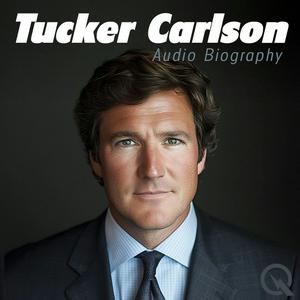
Get the free radio.net app
- Stations and podcasts to bookmark
- Stream via Wi-Fi or Bluetooth
- Supports Carplay & Android Auto
- Many other app features
Get the free radio.net app
- Stations and podcasts to bookmark
- Stream via Wi-Fi or Bluetooth
- Supports Carplay & Android Auto
- Many other app features

Tucker Carlson - Audio Biography
Scan code,
download the app,
start listening.
download the app,
start listening.
Tucker Carlson - Audio Biography: Podcasts in Family
 South Africa
